seamus dubhghaill

Promoting Irish Culture and History from Little Rock, Arkansas, USA


Leave a comment

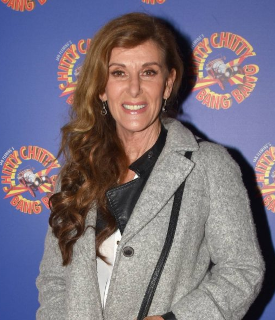
Birth of Linda Martin, Singer & Television Presenter

Linda Martin, Northern Irish singer and television presenter, is born in Belfast, Northern Ireland on March 27, 1952. She is best known as the winner of the 1992 Eurovision Song Contest during which she represents Ireland with the song “Why Me?,” the first of a record three consecutive wins by Ireland. She is also known within Ireland as a member of the band Chips.

Martin is of Irish, Scottish and Italian ancestry. Her father’s family’s surname is originally Martini. Her paternal great-grandfather, Francis Martini, is born in Dublin to immigrants from Saronno, north of Milan, Italy. Two of her maternal great-grandparents, William Green and Elizabeth Nangle, have a coal-mining background and transferred to Belfast from Larkhall, Scotland.

Martin begins her musical career when she joins the band Chips in Omagh in 1969. They quickly become one of the top bands in Ireland on the live circuit, and release hit singles “Love Matters,” “Twice a Week” and “Goodbye Goodbye” during the mid-to-late 1970s. In 1972, she leaves Chips to be a vocalist with the new group Lyttle People but rejoins her former bandmates the following year.

The group appears on Opportunity Knocks in 1974 and appears a number of times on British television promoting their singles, but never scores a UK hit. With multiple entries to the Irish National finals of the Eurovision Song Contest, the band carries on into the 1980s. They score a final Irish hit in 1982 with “David’s Song (Who’ll Come With Me),” after which Martin leaves when she wins the Castlebar Song Contest with “Edge of the Universe” in 1983. From this point, she concentrates on a solo career as well as occasional live appearances with Chips until they recruit a new lead singer, Valerie Roe, in the late 1980s.

Martin participates in the National Song Contest four times as a member of Chips; however, they do not score successfully. She participates another four times in the contest as a soloist and once more as part of the group “Linda Martin and Friends.” With nine participations, she has been the most frequent entrant in the National Song Contest’s history. She wins the contest twice, going on to represent Ireland twice at the Eurovision Song Contest.

The first of these victories is in 1984 with the song “Terminal 3,” written by Johnny Logan. The song comes in second in the final, being beaten by eight points. “Terminal 3” reaches No. 7 in the Irish charts. The second victory is in 1992 when her song “Why Me?,” also written by Logan, goes on to win the final in Sweden. This becomes Ireland’s fourth victory in the Eurovision Song Contest, and the song reaches No. 1 in the Irish chart as well as becoming a hit in many European countries.

Martin is, at the time, one of only three artists to finish both first and second at Eurovision, behind Lys Assia and Gigliola Cinquetti. Since then, only Elisabeth Andreassen and Dima Bilan have achieved this, raising the number to five.

Martin is one of the hosts on the RTÉ quiz show The Lyrics Board and also serves as one of Louis Walsh‘s behind-the-scenes team on the first series of ITV‘s The X Factor. She also serves as a judge on the first, second and fourth seasons of RTÉ’s You’re a Star and on Charity You’re a Star in 2005 and 2006. While she is dismissed from later seasons, speaking on Saturday Night with Miriam on RTÉ television on July 28, 2007, she says that she is “open” to being invited back to the show. She does not rule out a return to Eurovision following Ireland’s dismal performance in the 2007 contest, finishing last with only five points.

Martin is a guest performer at Congratulations: 50 Years of the Eurovision Song Contest concert in Copenhagen, Denmark, in October 2005. She is also the Irish spokesperson for Eurovision Song Contest 2007 and is one of the five judges for Eurosong 2009. In 2012, she is the mentor for Jedward in the Irish Eurovision final Eurosong 2012.

During the interval of Eurovision 2013, the host Petra Mede presents a light-hearted history of the contest, during which she explains to viewers that Johnny Logan had won the competition three times, in 1980, 1987 and 1992. Appearing alongside Linda Martin in some vintage footage she jokes that he had won the third time disguised as a woman, saying, “I recognise a drag queen when I see one.” The joke proves controversial, particularly in the Irish media. However, on June 1, 2013, during an appearance on RTÉ’s The Saturday Night Show Martin says that she has actually benefited from all the publicity. On the same show she performs a cover of the song “Get Lucky” by Daft Punk.

Martin also appears in pantomime, in Dublin. She stars in Cinderella as the Wicked Stepmother, Snow White as the Evil Queen and Robin Hood as herself, at the Olympia Theatre. She tours Menopause The Musical with Irish entertainer Twink. While on tour, Twink describes Martin as a “cunt” during a tirade in May 2010. The two had been friends for 30 years but both say afterwards that they have no plans to speak to each other again.


Leave a comment

Birth of Thomas Reynolds, United Irishman and Informant

Thomas Reynolds, United Irishman, informant, consul and heir to a fortune, is born at his father’s house, 9 West Park Street, Dublin, on March 12, 1771.

Reynolds’s family history is well documented. His great-great-grandfather was Connor Reynolds of Rhynn Castle, County Leitrim, who married the daughter of Sir Robert Nugent, by whom he leaves three sons, Conor, George Nugent and Thomas. The second of these renounces his family’s Catholicism and becomes a Protestant in order to obtain possession of the greater part of the family estates and was grandfather of the George Nugent Reynolds who was killed in a duel in 1786. The third son, Thomas, a successful wool-stapler in Dublin, married Margaret Lacy, the sister of the famous Austrian general, Franz Moritz von Lacy, and by her had three sons and one daughter. Thomas’s eldest son, James, inherited his business and was one of the seven Catholics who in 1757 met at the Globe coffee-house, Essex Street, to form a committee to request the removal of legal disabilities imposed on Catholics. Thomas’s second son, also Thomas, a manufacturer of woolen poplins, had three daughters, whose marriages connected him with several distinguished Catholic families, and an only son, Andrew, father of the main subject of this article. Andrew Reynolds, admitted into partnership with his father, later developed a new poplin “by having the warp of silk and the weft, or shoot, of worsted.” These poplins came to be “prized in foreign countries as Irish tabinets.” He had an annual turnover of £100,000 to £150,000 and eventually made profits of £15,000 to £20,000 a year. On April 20, 1767, Andrew Reynolds married as his second wife, a second-cousin, Rose Fitzgerald, eldest daughter of Thomas Fitzgerald of Kilmead, County Kildare, a distant kinsman and substantial creditor of the Duke of Leinster, and his wife Rose, daughter of Francis Lacy of Inns Quay, Dublin. By Rose he had two sons and twelve daughters.

Until the age of eight, Reynolds, the future United Irishman and the only son to survive to adulthood, lives at the seat of his maternal grandfather in the care of a Catholic priest, William Plunkett. He is then moved to the school of a Protestant clergyman named Crawford at Chiswick near London and by the age of twelve he spends all vacations in the house of Sir Joshua Reynolds, who appears to take pleasure in teaching him the first principles of drawing. From Chiswick, he moves to Liège in 1783 to be educated by Catholics priests, former Jesuits, returning to Ireland shortly before his father’s death, at the age of 44, on May 8, 1788.

After 1784, the introduction of cottons to Ireland spoiled Andrew Reynolds’s trade. Loans to his nephews, the O’Reilly brothers (Thomas, Patrick and Andrew), iron-smelters at Arigna, County Roscommon, worsen his losses, which reach £200,000 at the time of his death. Lodging with his mother in Dublin, 17-year-old Reynolds mixes with “dissipated idlers” such as Simon Butler and Valentine Lawless. He revisits the Continent and is in Paris in July 1789 when the Bastille is stormed. At the behest of his mother, he becomes a member of the Catholic Committee in succession to his father on February 9, 1791, and attends the Catholic Convention as a delegate of the Dublin parish of St. Nicholas Without in December 1792. He chooses not to enter his late father’s business, preferring, despite his small income, the carefree life of a gentleman, doing the rounds of his well-to-do country relations. On March 25, 1794, he marries Harriet Witherington, fourth daughter of William Witherington, a Dublin woolen merchant, and a younger sister of Matilda Tone. His mother thereupon assigns to him half of the capital in the family business – now carried on by a relation, Thomas Warren, formerly clerk to Andrew Reynolds – and one third of the profits. He has other property as well and expectations of more, including a life-interest in an estate in Jamaica and the promise from the Duke of Leinster of the reversion of Kilkea Castle in County Kildare. A poor manager, Warren is forced out and later testifies against him in a judicial process. He still has £18,500 in assets and in 1797 obtains possession of Kilkea Castle and winds up his business affairs.

On the eve of the rebellion of 1798, Reynolds is a gentleman “of ample fortune and of the first connexions in the country.” In January or February 1797, he is drawn into the United Irish organisation by Peter Sullivan, a confidential clerk in the Reynolds family business, who refers him to Richard Dillon, a Catholic linen-draper, and to Oliver Bond, in whose house in Bridge Street he is sworn in, believing, according to his son, that the sole objects of the organisation are Catholic emancipation and the reform of parliament. Soon he is attending meetings of a baronial committee, but only after meeting Lord Edward FitzGerald in November 1797 achieves a position of importance, that of County Kildare treasurer and membership of the Leinster provincial committee. After being informed of a plan for an insurrection and for the assassination of approximately eighty individuals, some of them his own relations, and knowing the provincial committee is to meet on March 12 at the house of Oliver Bond to decide finally on a general rising, he communicates the United Irishmen’s plan to Dublin Castle through William Cope, a merchant. Those present at Bond’s house are arrested and so the plan is spoiled. He resigns as county treasurer on March 18, to be replaced by John Esmonde. Known to the United Irish leadership as an informant and in danger of his life – at least two unsuccessful attempts on his life are made – but known to Dublin Castle only as an influential United Irishman, he suffers the ransacking of his house at Kilkea on April 20 by dragoons and militia, who believe FitzGerald is concealed there. Finally, he is arrested and is to face a court-martial at Athy but, his true identity being disclosed to Dublin Castle by Cope, he is delivered to a grateful Irish privy council on May 5.

During the rebellion, Kilkea Castle, which had been renovated by Reynolds in 1797 at an expense of over £2,500 and contains priceless paintings, is garrisoned by troops and attacked by insurgents, rendering it uninhabitable for many years. It is refitted in the late 1830s. He is the principal prosecution witness in the trials of John McCann, William Michael Byrne and Bond. There being few other grounds of defence, the defence counsel, John Philpot Curran, seeks to impeach his character and motives, which, with adverse remarks by Thomas Moore in his Life and Death of Lord Edward Fitzgerald (1831) and a hostile obituary in The Morning Chronicle, gives rise after his death to a two-volume apologia by his son, Thomas, based on family papers and a remarkably detailed source for the history of the Reynolds family. For his action in coming forward at a critical period to save Ireland from the wicked plans of the conspirators, he is honoured by Dublin Corporation with the Freedom of the City on October 19, 1798.

His life threatened, Reynolds resides for some months in Leinster Street, Dublin, then moves with his family to Britain, spending some time in Monmouthshire before settling in London in 1803. In 1810, he is appointed British postmaster-general in Lisbon, an onerous but lucrative appointment owing to the Peninsular War. In September 1814 he returns to England. In July 1817, favoured by Lord Castlereagh, he goes to Copenhagen as consul to Iceland. He has to visit that remote island part of the kingdom of Denmark only once (June–August 1818) and in January 1820 finally leaves Copenhagen leaving his younger son, Thomas, in charge of consular affairs. With his wife and daughters, he settles in Paris. There in 1825, his elder son, Andrew Fitzgerald, fights a duel with Thomas Warren, a French army officer and son of Thomas Warren who had been Reynolds’s clerk, and is later a United Irishman. In 1831, he undergoes a religious experience and embraces evangelical Protestantism.

Reynolds dies in Paris on August 18, 1836, and is buried in a vault in the churchyard at Welton, near Brough, East Riding of Yorkshire.

(From: “Reynolds, Thomas” by C. J. Woods, Dictionary of Irish Biography, http://www.dib.ie, October 2009)


8 Comments

Birth of Philanthropist Vere Foster

Vere Henry Louis Foster, English educationist and philanthropist is born in Copenhagen on April 25, 1819.

Foster is the third son of Sir Augustus John Foster, 1st Baronet and his wife, Albinia Jane, daughter of George Vere Hobart, and granddaughter of George Hobart, 3rd Earl of Buckinghamshire. He is educated at Eton College, and matriculated at Christ Church, Oxford, on May 30, 1838.

Leaving Oxford without a degree, Foster joins the diplomatic service. From 1842 to 1843 he is attached to the diplomatic mission of Sir Henry Ellis in Rio de Janeiro, and from 1845 to 1847 to that of Sir William Gore Ouseley in Montevideo.

In 1847 Foster visits a family estate in County Louth, Ireland at the time of the Great Famine, with his eldest brother, Sir Frederick George Foster. They become involved in famine relief. In 1848 their father dies and Foster undergoes a crisis in his life, and he comes to concentrate on philanthropy in Ireland.

Foster makes three voyages to the United States as a steerage passenger in a ship of emigrants, finding the accommodations bad, and the treatment of emigrants exploitative. Through his cousin Vere Hobart, Lord Hobart, he is able to influence parliament and the Passengers Act 1851. He also takes practical steps to promote Irish emigration to the United States.

Later, Foster takes up the improvement of education in Ireland. This is a time of Catholic suspicion of the national education system introduced by Richard Whately. Foster contributes to the provision of better school accommodation and apparatus, and gives grants in aid of building several hundred new school-houses. He agitates for improved wages and conditions for teachers, and develops the “Vere Foster copy-books” to improve and standardise the teaching of writing. The immense popularity of these texts draw him to the Belfast printing firm Marcus Ward & Company, and into personal friendship with John Ward, one of the firm’s owners.

In 1867, Foster settles permanently in Belfast where he continues to work as the president of the Congress of the Irish National Teachers’ Organisation. He fundraises for the Royal Belfast Hospital, and helps to establish a school of art in the town, while continuing to promote emigration.

In 1879, with the Land War in Ireland, Foster concentrates on promoting female emigration to the United States and the British colonies. He is supported in his projects by both Catholic and Protestant clergy.

Vere Foster dies, unmarried, in Belfast on December 21, 1900. He is buried in Belfast City Cemetery.