
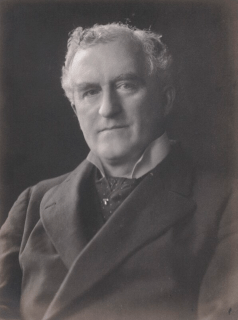
Jonathan Christian, SL, QC, PC (I), Irish judge, dies in Dublin on October 29, 1887. He serves as Solicitor-General for Ireland from 1856 to 1858. He is a judge of the Court of Common Pleas (Ireland) from 1858 to 1867 when he is appointed Lord Justice of Appeal in Chancery. On the creation of the new Irish Court of Appeal in 1878, he serves briefly on that Court, but retires after a few months.
Christian is considered one of the best Irish lawyers of his time, but as a judge, he regularly courts controversy. His bitter and sarcastic temper and open contempt for most of his colleagues leads to frequent clashes both in Court and in the Press. Though he is rebuked for misconduct several times by the House of Commons, no serious thought is given to removing him from office.
Christian is born in Carrick-on-Suir, County Tipperary, the third son of George Christian, a solicitor, and his wife Margaret Cormack. He is educated at the Trinity College Dublin, enters Gray’s Inn in 1831 and is called to the Irish Bar in 1834. He marries Mary Thomas in 1859 and they have four sons and four daughters. He lives at Ravenswell, Bray, County Wicklow.
Christian’s early years at the Bar are not successful, and he admits to being near to despair at times about his prospects. His practice lays in the Court of Chancery, with procedures that are extremely complex and he finds at first almost unintelligible. Gradually he masters the intricacies of Chancery practice becoming a leader of the Bar, and took silk in 1841. It is said that his expertise in Chancery procedures leave even the Lord Chancellor himself quite unable to argue with him.
Christian is appointed Law Adviser to the Lord Lieutenant of Ireland, an influential post which involves assisting the Attorney-General and Solicitor-General in advising the Crown in 1850, but resigns after only a few months on the grounds that it interferes with his private practice. He is appointed Third Sergeant later the same year but resigns in 1855, allegedly because he is disappointed at not receiving further promotion. Promotion does in time come his way. He is appointed Solicitor-General the following year and a judge of the Court of Common Pleas in 1858. He is unusual in having no strong political loyalty; it is said that his political allegiance is known only to himself.
As a judge of the Court of Common Pleas, Christian gets on well with his colleagues, and any dissenting judgements he writes are short and courteous. It is after his appointment as a Lord Justice of Appeal in Chancery in 1867 that his behaviour begins to attract unfavourable comment, as he goes out of his way to court controversy on a wide variety of topics.
His criticisms of legal rulings and arguments are invariably delivered in the form of a personal attack. Such exchanges are frequently continued through the letters page of The Times. Conservative in politics, he objects to the appointment of Thomas O’Hagan as Lord Chancellor in December 1868, dismissing him as a liberal “political necessity.” He goes to great lengths to point out legal flaws in the Landlord and Tenant (Ireland) Act 187, to the great annoyance of the Prime Minister, William Ewart Gladstone. His final public diatribe comes in 1877 when he launches an attack on the quality of law reporting, dismissing the contents of the Irish Reports as “a mass of utterly worthless rubbish.” He is vilified in the legal press and is the subject of cartoons in Dublin satirical journals. Pleading deafness, he retires in December 1878.
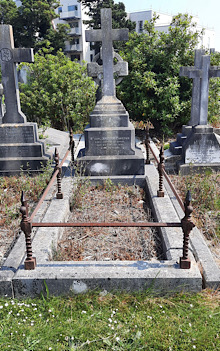
Christian dies on October 29, 1887, at his Dublin residence, 53 Merrion Square, and is buried in Dean’s Grange Cemetery, Deansgrange, County Dublin. In his will, approved in Dublin on December 3, 1887, he leaves an estate worth over £70,000. There is a fine portrait by Frank Reynolds in the dining hall of the Honourable Society of King’s Inns, Dublin.
 seamus dubhghaill