seamus dubhghaill

Promoting Irish Culture and History from Little Rock, Arkansas, USA


Leave a comment

Judith Ward Wrongfully Convicted of M62 Coach Bombing

Judith Ward is wrongfully convicted and sentenced to life imprisonment on November 4, 1974, for the Provisional Irish Republican Army‘s (IRA) M62 coach bombing, which took place on February 4, 1974, killing twelve.

Ward, 25, from Stockport in Cheshire, receives a life term for each of those who died when the coach exploded on the M62 motorway. The sentences are to run concurrently with three other sentences of up to twenty years for causing explosions. She remains impassive as Justice Waller passes sentence.

During the trial the court hears that Ward had joined the army – from which she later deserts – on the instructions of the republican group, the IRA. Her detailed knowledge of bases helps to facilitate the coach bombing, prosecution barrister John Cobb QC alleges. She also gives information to the IRA which leads to two attacks on army targets in which six people die, Cobb adds. 

Ward initially confesses her crimes in a statement to police which she later retracts. She denies being a member of the IRA but photographs of her in the outlawed organisation’s uniform are shown to the jury at Wakefield Crown Court.

It also emerges in court that Ward was arrested after the bombing of Euston railway station in September 1973 but is later released. Questions are raised as to why the police let her go even though traces of explosives were found on her hands. 

As Ward is led from the courtroom to the cells, the only member of her family present, sister-in-law Jean Ward, sobs. Her father, Thomas, says earlier he does not believe his daughter is capable of such “brutal and callous acts.” Her brother, Tommy, says none of the family think Judith has ever been in the IRA. “We don’t think she was so heavily involved. There has been a lot of romancing,” he says. 

That is a point echoed in court by Ward’s solicitor, Andrew Rankin QC, who highlights many improbabilities in her confessions. They include having been married to an IRA man and having borne a child by another.

Ward spends 18 years in jail before her conviction is quashed in 1992. Her lawyers argue that the trial jury should have been told of her history of mental illness.

Three Appeal Court judges conclude that Ward’s conviction had been “secured by ambush.” They say government forensic scientists had withheld information that could have changed the course of her trial. Her case is one of a spate of miscarriage of justices revealed in the early 1990s. 

Others released around the same time include the Birmingham Six and the Guildford Four.

After her release, Ward writes an autobiography, Ambushed, published in 1992. She subsequently starts a course in criminology and becomes a campaigner for prisoners’ rights.

(From: “On This Day – 4 November,” BBC News, news.bbc.co.uk)

Leave a comment

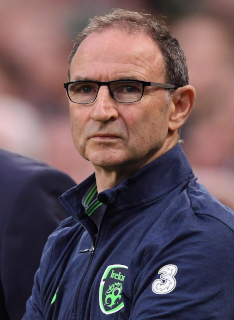
Birth of Martin O’Neill, Association Football Player & Manager

Martin Hugh Michael O’Neill, OBE, Northern Irish association football manager and former player who played as a midfielder, is born in Kilrea, County Londonderry, Northern Ireland, on March 1, 1952, the sixth child of nine siblings.

O’Neill’s father is a founding member of local GAA club Pádraig Pearse’s GAC Kilrea. He plays for both Kilrea and Derry at underage level. He also plays Gaelic football while boarding at St. Columb’s College, Derry, and later at St. Malachy’s College, Belfast.

Starting his career in Northern Ireland, O’Neill moves to England where he spends most of his playing career with Nottingham Forest, with whom he wins the European Cup twice, in 1979 and 1980. He is capped 64 times for the Northern Ireland national football team, also captaining the side at the 1982 FIFA World Cup.

During his managerial career O’Neill manage Grantham Town, Wycombe Wanderers, Norwich City, Leicester City, Celtic, Aston Villa and Sunderland. He guides Leicester City to the Football League Cup final three times, winning twice. As Celtic manager between 2000 and 2005, he leads that club to seven trophies including three Scottish Premier League titles and the 2003 UEFA Cup Final. After joining Aston Villa he achieves three consecutive sixth-place finishes in the English Premier League and guides them to the 2010 Football League Cup Final.

O’Neill becomes Republic of Ireland manager in 2013 and leads them to qualification for the 2016 UEFA European Football Championship for the third time in the nation’s history, beating the reigning world champions, Germany, in the process. He leaves the role with assistant Roy Keane by “mutual agreement” in November 2018. He is appointed as Nottingham Forest manager on January 15, 2019. He guides the club to a ninth-place finish in the Championship. However, he is sacked as manager on June 28, 2019, after reportedly falling out with some of the senior first team players.

Despite never completing his degree, O’Neill remains a follower of criminology. His fascination begins with the James Hanratty case of 1961. He has worked in television as an analyst for BBC and ITV at the FIFA World Cup, the UEFA European Championship and on UEFA Champions League matches.

In 2002, Norwich supporters voted O’Neill into the club’s Hall of Fame. He is awarded an OBE for services to sport in 2004. He is awarded the Nottingham Lifetime Achievement Award on November 3, 2013 for his services to football and achievements with Nottingham Forest.


Leave a comment

Inauguration of Mary McAleese as 8th President of Ireland

CREATOR: gd-jpeg v1.0 (using IJG JPEG v62), quality = 100

Mary Patricia McAleese (née Leneghan) is inaugurated as the eighth President of Ireland on November 11, 1997. She succeeds Mary Robinson, making her the second female president of Ireland and the first woman in the world to succeed another woman as president. She is the first president to come from Northern Ireland.

Leneghan is born into a Roman Catholic family on June 27, 1951, in Ardoyne, north Belfast. The eldest of nine children, she grows up in Northern Ireland through the violent times that have come to be known as “The Troubles.” She is educated at St. Dominic’s High School, Queen’s University Belfast, from which she graduates in 1973, and Trinity College Dublin. She is called to the Bar of Northern Ireland in 1974 and remains a member of the Bar Council of Ireland. In 1975, she is appointed Reid Professor of Criminal Law, Criminology and Penology at Trinity College Dublin.

Leneghan marries Martin McAleese, an accountant and dentist in 1976. They have three children, Emma, born 1982, and twins Justin and SaraMai, born in 1985.

In 1987, McAleese returns to her Alma Mater, Queen’s University Belfast, to become Director of the Institute of Professional Legal Studies. In 1994, she becomes the first female Pro-Vice-Chancellor of the university.

McAleese defeats former Taoiseach Albert Reynolds in an internal party election in 1997, held to determine the Fianna Fáil nomination for the Irish presidency. Her opponents in the 1997 presidential election are Mary Banotti of Fine Gael, Adi Roche of the Labour Party and two Independents, Dana Rosemary Scallon and Derek Nally.

McAleese wins the presidency with 45.2% of first preference votes. In the second and final count against Banotti, McAleese wins 55.6% of preferences. Within weeks of her November 1997 inauguration, she makes her first official overseas trip to Lebanon.

McAleese describes the theme of her presidency as “building bridges.” The first individual born in Northern Ireland to become President of Ireland, McAleese is a regular visitor to Northern Ireland throughout her presidency, where she is on the whole warmly welcomed by both communities, confounding critics who had believed she would be a divisive figure. While on an official visit to the United States in 1998, Archbishop of Boston Cardinal Bernard Francis Law tells her he is “sorry for Catholic Ireland to have you as President.” She tells the cardinal that she is the “President of Ireland and not just of Catholic Ireland.”

McAleese’s initial seven-year term of office ends in November 2004, but she stands for a second term in the 2004 presidential election. She is re-elected on October 1, 2004, being the only validly nominated candidate.

McAleese is an experienced broadcaster, having worked as a current affairs journalist and presenter in radio and television with Radio Telefís Éireann. She has a longstanding interest in many issues concerned with justice, equality, social inclusion, anti-sectarianism and reconciliation.