seamus dubhghaill

Promoting Irish Culture and History from Little Rock, Arkansas, USA


Leave a comment

Birth of John O’Callaghan, Musician & Disc Jockey

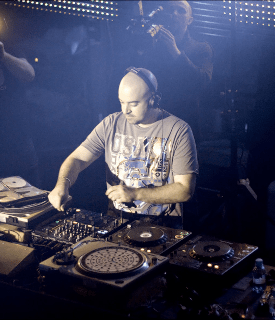
John O’Callaghan, Irish musician and disc jockey who mainly produces trance music, is born in Navan, County Meath, on September 24, 1981. He also produces music under the aliases of Joint Operations Centre, Mannix, Henrik Zuberstein, and Stenna.

O’Callaghan has collaborated with fellow Discover Recordings artists such as Bryan Kearney, Neal Scarborough (as Inertia), Thomas Bronzwaer (as Lost World), and Greg Downey as well as, more recently, trance hero Leon Bolier. His best-known tracks are “Exactly” with Bryan Kearney, “Big Sky”, in collaboration with vocalist Audrey Gallagher of the alternative metal band Scheer, and “Find Yourself” (featuring Sarah Howells). He has received remixes by trance artists such as The Thrillseekers, Sean Tyas, Gareth Emery, Cosmic Gate, Markus Schulz and Indecent Noise. He has also worked with Heatbeat and Aly & Fila.

O’Callaghan formerly has the majority of his work released on Discover Recordings, the British record label set up by John Askew. Later, his work is released by Armada Music and its sublabels — primarily on Armind and Soundpiercing. The remix of his vocal trance production “Big Sky” by Agnelli & Nelson is voted “Tune of The Year” by listeners of Armin van Buuren‘s A State of Trance radio show in 2007.

In 2008, O’Callaghan enters the DJ Magazine 100 at number 60 and picks up two awards at the Irish Dance Music Awards, winning Best Producer and Best DJ. He also becomes the first Irishman to play Trance Energy. In 2009, he rises 36 places to 24th in the DJ Magazine 100.

In addition to numerous single releases, O’Callaghan has released a live album (Discover “Live As” Volume 2) and two artist albums, Something To Live For and Never Fade Away.

Never Fade Away is released in 2009 on the Armada Music label shortly following the single release of “Find Yourself.” “Find Yourself” is tipped a future favorite on A State of Trance. The track receives recognition from many DJs, including Armin van Buuren, Tiësto, Judge Jules, Matt Hardwick and Gareth Emery. The track also receives a remix from Cosmic Gate, which makes a lot of headway in many DJs’ set lists following its release. He also releases another single from the album, “Surreal,” which includes vocals from an artist known as Jaren. In 2010, O’Callaghan starts his very own sublabel on Black Hole Recordings called Subculture.


Leave a comment

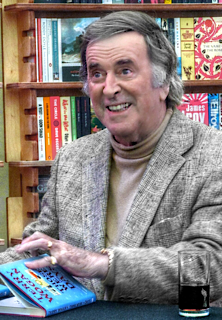
Birth of Terry Wogan, Irish-British Radio & Television Broadcaster

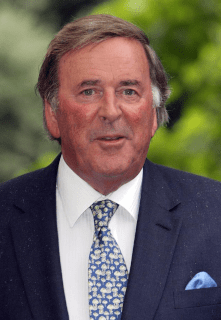
Sir Michael Terence Wogan KBE DL, Irish-British radio and television broadcaster who works for the BBC in the United Kingdom (UK) for most of his career, is born at Cleary’s Nursing Home, Elm Park, Limerick, County Limerick, on August 3, 1938. Between 1993 and his semi-retirement in December 2009, his BBC Radio 2 weekday breakfast programme Wake Up to Wogan regularly draws an estimated eight million listeners. He is believed at the time to be the most listened-to radio broadcaster in Europe.

Wogan is the elder of two children. He is the son of the manager of Leverett & Frye, a high-class grocery store in Limerick, and is educated at Crescent College, a Jesuit school, from the age of eight. He experiences a strongly religious upbringing, later commenting that he had been brainwashed into believing by the threat of going to hell. Despite this, he often expresses his fondness for the city of his birth, commenting on one occasion that “Limerick never left me, whatever it is, my identity is Limerick.”

At the age of 15, after his father is promoted to general manager, Wogan moves to Dublin with his family. While living there he attends Crescent College’s sister school, Belvedere College. He participates in amateur dramatics and discovers a love of rock and roll. After leaving Belvedere in 1956, he has a brief career in the banking profession, joining the Royal Bank of Ireland. Still in his twenties, he joins the national broadcaster of Ireland, Raidió Teilifís Éireann (RTÉ), as a newsreader and announcer, after seeing a newspaper advertisement inviting applicants.

Wogan conducts interviews and presents documentary features during his first two years at RTÉ, before moving to the light entertainment department as a disc jockey and host of TV quiz and variety shows such as Jackpot, a top-rated quiz show on RTÉ in the 1960s.

Wogan is a leading media personality in Ireland and Britain from the late 1960s, and is often referred to as a “national treasure.” In addition to his weekday radio show, he is known for his work on television, including the BBC One chat show Wogan, presenting Children in Need, the game show Blankety Blank and Come Dancing. He is the BBC’s commentator for the Eurovision Song Contest from 1971 to 2008 (radio in 1971, 1974–1977; television in 1973, 1978, 1980–2008) and the Contest’s host in 1998. From 2010 to 2015 he presents Weekend Wogan, a two-hour Sunday morning show on BBC Radio 2.

In 2005, Wogan acquires British citizenship in addition to his Irish nationality and is awarded a knighthood in the same year and is therefore entitled to use the title “Sir” in front of his name.

Wogan’s health declines after Christmas 2015. He does not present Children in Need in November 2015, citing back pain as the reason for his absence from the long-running annual show. One of his friends, Father Brian D’Arcy, visits him during January and notices he is seriously ill. He dies of cancer at the age of 77 on January 31, 2016 at his home.

British Prime Minister David Cameron says, “Britain has lost a huge talent.” President of Ireland Michael D. Higgins praises Wogan’s career and his frequent visits to his homeland. Taoiseach Enda Kenny and Tánaiste Joan Burton remember Wogan for his role in helping Anglo-Irish relations during the Troubles. D’Arcy speculates that a public funeral would be logistically difficult, as there would be too many people wanting to pay their respects.

After Wogan’s death and his private funeral a few weeks later, a public memorial service is held on September 27 the same year. This is held at Westminster Abbey and is opened by a recording of Wogan himself, and features a number of his celebrity friends making speeches, such as Chris Evans and Joanna Lumley. The service is broadcast live on BBC Radio 2.

On November 16, 2016, the BBC renames BBC Western House, home of BBC Radio 2, in his memory, to BBC Wogan House.
Leave a comment

The Stardust Nightclub Fire

stardust-ballroom-artane

The Stardust nightclub in Artane, Dublin goes up in flames in the early hours of February 14, 1981. Some 841 people had attended a disco there, of whom 48 die and 214 are injured as a result of the fire.

The fire starts due to an electrical fault in a first-floor storeroom inside the building that is open to the roof space. The non-compliant storage room contains dangerously flammable materials including drums of cooking oil. The staff observes a small fire outbreak on a seat in an alcove behind a curtain and fail in an attempt to extinguish it. This fire apparently starts after fire in the roof space comes through the roof tiles and falls onto the seat. The fire then spreads to tables and chairs and patrons notice smoke. The disc jockey announces that there is a small fire and requests a calm evacuation.

Outside, the fire is first spotted by a lady 200 metres from the Stardust and she calls the Dublin Fire Brigade. Within the same minute of her call, two other calls are made from the Stardust building to tell the Fire Brigade that there is a small fire on a seat in the ballroom. The fire is very small when first seen in the ballroom. Within two minutes a ferocious burst of heat and lots of thick black smoke quickly start coming from the ceiling, causing the material in the ceiling to melt and drip on top of patrons and other highly flammable materials including the seats and carpet tiles on the walls. The fire flashover envelopes the club and the lights fail.

The attendees at a trade union function taking place in the same building make their escape but the escape of some of the Stardust patrons is hampered by a number of obstructions. Some of the main fire exits are padlocked around the push bars and consequently are impossible to open.

The failure of the lighting in the club leads to widespread panic causing mass trampling as many of the patrons instinctively run for the main entrance. Many people mistake the entrance to the men’s toilets for the main entrance doors but the windows there have metal plates fixed on the inside and iron bars on the outside. Firemen attempt in vain to pull off the metal bars using a chain attached to a fire engine. Firemen rescue 25 to 30 of those trapped in the front toilets.

Ambulances from Dublin Fire Brigade, the Eastern Health Board, Civil Defence Ireland, the Irish Red Cross, the Order of Malta Ambulance Corps and St. John Ambulance Ireland are dispatched to the scene. Many ambulances leave the scene carrying up to 15 casualties. CIÉ also sends buses to transport the injured, and local radio stations ask people in the vicinity with cars to come to the club. The city’s hospitals are overwhelmed by the influx of injured and dying, in particular Mater Misericordiae University Hospital, Jervis Street Hospital and Dr. Steevens’ Hospital.

The investigation at the time reports that the cause of the fire is arson. The finding of arson has recently been ruled out by investigators, as there was never any evidence to support the arson finding, even at the time of the tragedy.

There are allegations of a huge cover-up as to the cause of so many fatalities. There is a meeting before the public inquiry in 1981 of all of the experts including the Judge when the concept of arson is determined to be the cause to protect the Dublin Corporation from having to pay out millions in compensation to the victims and families. The Coolock Garda investigation is excellent, but the Tribunal distorts the evidence. The Inquiry Report and the team of experts and coached witnesses conspire to conceal the truth and determine arson to be the cause without any evidence.

The club was located where Butterly Business Park now lies, opposite Artane Castle Shopping Centre.