seamus dubhghaill

Promoting Irish Culture and History from Little Rock, Arkansas, USA


Leave a comment

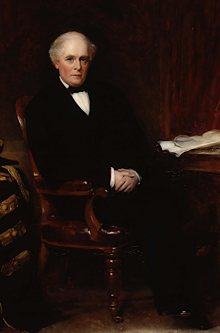
Birth of Physician Sir Dominic Corrigan, 1st Baronet

Sir Dominic John Corrigan, 1st Baronet, Irish physician known for his original observations in heart disease, is born in Thomas Street, Dublin, on December 2, 1802. The abnormal “collapsing” pulse of aortic valve insufficiency is named Corrigan’s pulse after him.

Corrigan is the son of a dealer in agricultural tools. He is educated in St. Patrick’s College, Maynooth, which then has a department for secular students apart from the ecclesiastical seminary. He is attracted to the study of medicine by the physician in attendance, and spends several years as an apprentice to the local doctor, Edward Talbot O’Kelly. He studies medicine in Dublin later transferring to Edinburgh Medical School where he receives his degree as MD in August 1825.

Corrigan returns to Dublin in 1825 and sets up a private practice at 11 Ormond Street. As his practice grows, he moves to 12 Bachelors Walk in 1832, and in 1837 to 4 Merrion Square West. Apart from his private practice, he holds many public appointments. He is a physician to St. Patrick’s College, Maynooth, the Sick Poor Institute, the Charitable Infirmary Jervis Street (1830–43) and the House of Industry Hospitals (1840–66). His work with many of Dublin’s poorest inhabitants leads to him specialising in diseases of the heart and lungs, and he lectures and published extensively on the subject. He is known as a very hard-working physician, especially during the Great Famine of Ireland. At the 1870 Dublin City by-election he is elected a Liberal Member of Parliament for Dublin City. In parliament he actively campaigns for reforms to education in Ireland and the early release of Fenian prisoners. He does not stand for re-election in 1874. His support for temperance and Sunday closing (of pubs) antagonises his constituents and alcohol companies

In 1847, Corrigan is appointed physician-in-ordinary to the Queen in Ireland. Two years later he is given an honorary MD from Trinity College Dublin (TCD). In 1846, his application to become a fellow of the Royal College of Physicians of Ireland (RCPI) is blocked. In 1855, he gets around this opposition by sitting the college’s entrance exam with the newly qualified doctors. He becomes a fellow in 1856, and in 1859 is elected president, the first Catholic to hold the position. He is re-elected president an unprecedented four times. There is a statue of Corrigan in the Graves’ Hall of the college by John Henry Foley.

Corrigan is President of the Royal Zoological Society of Ireland, the Dublin Pathological Society, and the Dublin Pharmaceutical Society. From the 1840s he is a member of the senate of the Queen’s University and in 1871 becomes its vice-chancellor. In 1866, he is created a baronet, of Cappagh and Inniscorrig in County Dublin and of Merrion Square in the City of Dublin, partly as a reward for his services as Commissioner of Education for many years. He is a member of the board of Glasnevin Cemetery and a member of the Daniel O’Connell Memorial Committee. Armand Trousseau, the French clinician, proposes that aortic heart disease should be called Corrigan’s disease.

The Corrigan Ward, a cardiology ward in Beaumont Hospital, Dublin is named in his honour. Part of his family crest is also part of the Beaumont Hospital crest.

Corrigan marries Joanna Woodlock, the daughter of a wealthy merchant, and sister of the Bishop Dr. Bartholomew Woodlock, in 1827. They have six children, three girls and three boys. Hus eldest son, Captain John Joseph Corrigan, Dragoon Guards, dies on January 6, 1866, aged 35 years and is interred at the Melbourne General Cemetery, Melbourne, Australia.

Corrigan dies at Merrion Square, Dublin, on February 1, 1880, having suffered a stroke the previous December. He is buried in the crypt of St. Andrews Church on Westland Row, Dublin. His grandson succeeds him to the baronetcy.

Leave a comment

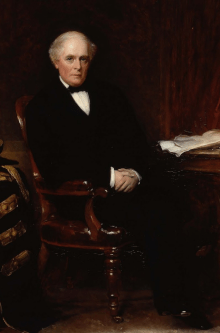
Death of Sir Dominic Corrigan, 1st Baronet, Irish Physician

Sir Dominic John Corrigan, 1st Baronet, an Irish physician known for his original observations in heart disease, dies in Dublin on February 1, 1880, following a stroke. The abnormal “collapsing” pulse of aortic valve insufficiency is named Corrigan’s pulse after him.

Corrigan is born in Thomas Street, Dublin, on December 2, 1802, the son of a dealer in agricultural tools. He is educated in St. Patrick’s College, Maynooth, which then has a department for secular students apart from the ecclesiastical seminary. He is attracted to the study of medicine by the physician in attendance and spends several years as an apprentice to the local doctor, Edward Talbot O’Kelly. He studies medicine in Dublin later transferring to Edinburgh Medical School where he receives his degree as MD in August 1825.

Corrigan returns to Dublin in 1825 and sets up a private practice at 11 Ormond Street. As his practice grows, he moves to 12 Bachelors Walk in 1832, and in 1837 to 4 Merrion Square West. Apart from his private practice, he holds many public appointments; he is a physician to St. Patrick’s College, Maynooth, the Sick Poor Institute, the Charitable Infirmary Jervis Street (1830–43) and the House of Industry Hospitals (1840–66). His work with many of Dublin’s poorest inhabitants leads to him specialising in diseases of the heart and lungs, and he lectures and publishes extensively on the subject. He is known as a very hard-working physician, especially during the Great Famine. At the 1870 Dublin City by-election he is elected a Liberal Member of Parliament for Dublin City. In parliament he actively campaigns for reforms to education in Ireland and the early release of Fenian prisoners. He does not stand for re-election in 1874. His support for temperance and Sunday closing of pubs apparently antagonises his constituents and alcohol companies.

In 1847, Corrigan is appointed physician-in-ordinary to the Queen in Ireland. Two years later he is given an honorary MD from Trinity College Dublin (TCD). In 1846 his application to become a fellow of the Royal College of Physicians of Ireland (RCPI) is blocked. In 1855 he gets around this opposition by sitting the college’s entrance exam with the newly qualified doctors. He becomes a fellow in 1856, and in 1859 is elected president, the first Catholic to hold the position. He is re-elected president an unprecedented four times. There is a statue of him in the Graves’ Hall of the college by John Henry Foley.

Corrigan is President of the Royal Zoological Society of Dublin, the Dublin Pathological Society, and the Dublin Pharmaceutical Society. From the 1840s he is a member of the senate of the Queen’s University and in 1871 becomes its vice-chancellor. In 1866 he is created a baronet, of Cappagh and Inniscorrig in the County of Dublin and of Merrion Square in the City of Dublin, partly as a reward for his services as Commissioner of Education for many years. He is a member of the board of Glasnevin Cemetery and a member of the Daniel O’Connell Memorial Committee. Armand Trousseau, the French clinician, proposes that aortic heart disease should be called Corrigan’s disease.

Corrigan marries Joanna Woodlock, the daughter of a wealthy merchant, and sister of the Bishop Dr. Bartholomew Woodlock, in 1827. They have six children, three girls and three boys. His eldest son, Captain John Joseph Corrigan, Dragoon Guards, dies on January 6, 1866, and is interred at the Melbourne General Cemetery, Melbourne, Australia.

Corrigan dies at Merrion Square, Dublin, on February 1, 1880, having suffered a stroke the previous December. He is buried in the crypt of St. Andrew’s Church, Westland Row, Dublin. His grandson succeeds him to the baronetcy.

The Corrigan Ward, a cardiology ward in Beaumont Hospital, Dublin, is named in his honour. Part of his family crest is also part of the Beaumont Hospital crest.


Leave a comment

Birth of Cornelius Denvir, Mathematician & Lord Bishop of Down and Connor

Cornelius Denvir, Roman Catholic Prelate, mathematician, natural philosopher and Lord Bishop of Down and Connor, is born on August 13, 1791, at Ballyculter, County Down. He is noted for ministering in Belfast amidst growing sectarian tension, taking a moderate and non-confrontational stance, to the annoyance of his pro-Catholic followers. He is also a professor at Maynooth College as well as Down and Connor Diocesan College, and is active in the local scientific community.

Denvir is educated at Dr. Nelson’s Classical School in Downpatrick, being described by peers as an enthusiastic child with a love for sight-seeing. According to one biographer, young Denvir also shows interest in the catechism by attending local visits from the then Bishop of Down and Connor, Dr. Patrick MacMullan, who is resident in Downpatrick. In September 1808, he enrolls at Maynooth College, and is appointed chair of Natural Philosophy and Mathematics there in August 1813.

As chair of mathematics and natural philosophy at Maynooth College, Denvir is noted for changing the style of education at the college from pure logic-based reasoning in Mathematics to a more holistic, topical approach. He is also noted for emphasising experimentation and the importance of the scientific method in teaching natural philosophy, with several sources noting his well-stocked labs.

While at Maynooth College Denvir teaches both Nicholas Callan, the inventor and physicist, and Dominic Corrigan, the noted Irish physician. According to several accounts, both speak fondly of their old professor, to the point of Callan gifting Denvir one of his induction coils in thanks.

Denvir is ordained first as deacon in June 1813, then a priest in May 1814, performing his liturgical duties in conjunction with his academic ones. In 1826, he leaves Maynooth College to become the parish priest of Downpatrick. In 1833 he becomes a professor at the newly founded St. Malachy’s College, teaching classes in Latin, Greek and Mathematics. He continues his duties as parish priest and professor until 1835, when he is appointed Bishop of Down and Connor in succession to Dr. William Crolly.

As 22nd Lord Bishop of Down and Connor, Denvir emphasises the teaching of the Catechism to youth as well as emphasising the importance of scripture to the diocese. In 1841 he helps fund the start of construction of St. Malachy’s Church in Belfast, which is completed in 1845. In his later years, he falls under criticism by other Belfast Catholics, who claim he is neglectful of his duties, especially those relating to expanding and defending Catholicism in the face of growing Protestant influence. Some accounts attribute his shortcomings to poor health and temperament, while others suggest that he backs away from expansion to avoid conflict with Protestant groups.

Denvir suffers from personal finance problems during his time as Bishop. The construction of St. Malachy’s Church puts him into deep personal debt, which he is apparently arrested for some time after 1844. He is also criticised for selling seats in the newly constructed church to offset costs. He is also described as reluctant in asking for funds from parishioners, severely limiting his resources with which to care for the church.

Denvir is appointed Commissioner of National Education in 1853. He is noted for being supportive of non-denominational education and investigating reports of proselytism in public primary education. He later resigns this position in 1857 on request of the Holy See to focus on expanding the local Catholic school system.

In 1860, after years of illness compounded by age, Denvir is assigned Dr. Patrick Dorrian as a coadjutor bishop to assist in his episcopal duties. While ill health is said to be the predominant reason for the appointment of a coadjutor, contemporary newspaper accounts suggest there also might be an ideological reason for the appointment. In The Spectator it is noted in December 1859 “it may be, because he is too liberal for the Cullen epoch.”

In May 1865, Denvir resigns as Bishop and is succeeded by Dorrian. He dies one year later on July 10, 1866, in his residence on Donegall St., after suffering from fainting fits a few days prior. He is buried in Ballycruttle Church.