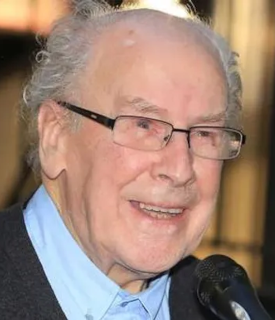
Wilson begins his priestly career as a hospital chaplain, where he becomes aware of the systemic neglect and exploitation of women. This experience shapes his later advocacy for marginalized groups. In 1966, he is assigned to St. John’s parish in Ballymurphy, a heavily working class and nationalist area. Confronted with poverty, deprivation, and social neglect, he rejects a purely clerical role and chooses to live among his parishioners, earning deep community trust.
Wilson facilitates grassroots initiatives such as the Springhill Community House and the Conway Education Centre, establishing spaces for alternative education, vocational training, small business incubators, and cultural engagement. These efforts emphasize the empowerment of local communities, adult education, and economic development, drawing inspiration from liberation theology and Worker Priest models.
Wilson’s ministry coincides with some of the most violent years of the Northern Ireland Troubles. He provides support to families affected by violence, offers shelter and practical assistance, and maintains dialogue channels between republican and loyalist communities. He criticizes the Catholic Church for its detachment from the struggles of working class Catholics and refuses to condemn paramilitary groups acting as “alternative police and armies,” reflecting his nuanced approach to community protection and justice. Alongside figures like Fr. Alec Reid, he is instrumental in mediating discussions that contribute toward the peace process.
Wilson’s work earns widespread admiration for his courage, humanity, and commitment to justice. He hosts Mother Teresa in west Belfast, helping to establish charitable outreach in the community. Despite periods of estrangement with his bishop and being barred from celebrating Mass in churches, he continues his ministry at home and through community projects.
Wilson is also a prolific writer, recording diaries, pamphlets, and weekly columns, later commemorated in the documentary “Fr. Des – The Way He Saw It” narrated by Stephen Rea, and in theatre productions celebrating his life. PresidentMichael D. Higgins and countless individuals recognize his significant role in civil rights, education, and peacemaking.
Wilson dies in Belfast on November 5, 2019, at the age of 94, leaving a lasting impact on Belfast and a model for socially committed clergy worldwide. His approach to ministry stands as a testament to living faith in solidarity with marginalized communities, emphasizing education, dialogue, and justice over institutional authority.
The institutions Wilson helps create, notably the Springhill Community House and Conway Mill, continue to support education, enterprise, and community engagement in Belfast, embodying Wilson’s vision of an empowered, inclusive society. His life remains an inspiration for those committed to social justice, peacebuilding, and community-centered ministry.
Wilson is remembered as a priest,educator, community activist, and mediator, whose dedication to the underprivileged and commitment to peace has left an indelible mark on Northern Ireland.
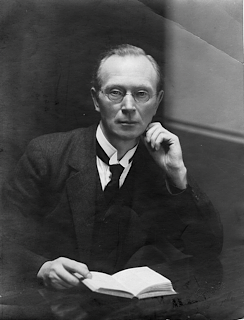
MacNeill is one of five children born to Archibald McNeill, a Roman Catholic working-class baker, sailor and merchant, and his wife, Rosetta McNeill (née McAuley), also a Catholic. He is raised in Glenarm, an area which “still retained some Irish-language traditions.” His niece is nationalist and teacher, Máirín Beaumont.
MacNeill marries Agnes Moore on April 19, 1898. The couple has eight children, four sons and four daughters (though the 1911 census entry for MacNeill notes eleven children, seven of whom are still alive).
The Gaelic League is from the start strictly non-political, but in 1915, a proposal is put forward to abandon that policy and become a semi-political organisation. MacNeill strongly supports this and rallies to his side a majority of delegates at the 1915 Oireachtas. Douglas Hyde, a non-political Protestant, who had co-founded the League and been its president for 22 years, resigns immediately afterward.
Through the Gaelic League, MacNeill meets members of Sinn Féin, the Irish Republican Brotherhood (IRB), and other nationalists and republicans. One such colleague, The O’Rahilly, runs the league’s newspaper An Claidheamh Soluis, and in October 1913 asks MacNeill to write an editorial for it on a subject broader than Irish language issues. He submits a piece called “The North Began,” encouraging the formation of a nationalist volunteer force committed to Irish Home Rule, much as the unionists had done earlier in the year with the Ulster Volunteers to thwart Home Rule in Ireland. In July 1915, he comments on the threat that the unarmed nationalists in Ulster might face: “…a demented…English driven Orange Army would be let loose upon the helpless Catholic people of Ulster, who would be driven out of the province or massacred where they stood.”
Bulmer Hobson, a member of the IRB, approaches MacNeill about bringing the idea to fruition, and, through a series of meetings, MacNeill becomes chair of the council that forms the Irish Volunteers, later becoming its chief of staff. Unlike the IRB, he is opposed to the idea of an armed rebellion, except in resisting any suppression of the Volunteers, seeing little hope of success in open battle against the British army.
The Irish Volunteers have been infiltrated by the Irish Republican Brotherhood, which plan on using the organisation to stage an armed rebellion, to separate Ireland from the United Kingdom and establishing an Irish Republic. The entry of the UK into World War I is, in their view, a perfect opportunity to do that. With the cooperation of James Connolly and the Irish Citizen Army, a secret council of IRB officials plan a general rising at Easter 1916. On the Wednesday before Easter, they present MacNeill with a letter, allegedly stolen from high-ranking British staff in Dublin Castle, indicating that the British are going to arrest him and all the other nationalist leaders. Unbeknownst to MacNeill, the letter—called the Castle Document—is a forgery.
When MacNeill learns about the IRB’s plans, and when he is informed that Roger Casement is about to land in County Kerry with a shipment of German arms, he is reluctantly persuaded to go along with them, believing British action is now imminent and that mobilization of the Irish Volunteers will be justified as a defensive act. However, after learning that the German arms shipment has been intercepted and Casement arrested, and having confronted Patrick Pearse, who refuses to relent, MacNeill countermands the order for the Rising by sending written messages to leaders around the country, and placing a notice in the Sunday Independent cancelling the planned “manoeuvres.” This greatly reduces the number of volunteers who report for duty on the day of the Easter Rising.
Pearse, Connolly and the others agree that the uprising will go ahead anyway, but it begins one day later than originally intended to ensure that the authorities are taken by surprise. Beginning on Easter Monday, April 24, 1916, the Rising lasts less than a week. After the surrender of the rebels, MacNeill is arrested although he has taken no part in the insurrection. The rebel leader Tom Clarke, according to his wife Kathleen, warns her on the day before his execution, “I want you to see to it that our people know of his treachery to us. He must never be allowed back into the National life of this country, for so sure as he is, so sure will he act treacherously in a crisis. He is a weak man, but I know every effort will be made to whitewash him.”
In 1923, MacNeill, a committed internationalist, is also a key member of the diplomatic team that oversees Ireland’s entry to the League of Nations.
MacNeill’s family is split on the treaty issue. One son, Brian, takes the anti-Treaty side and is killed in disputed circumstances near Sligo by Free State troops during the Irish Civil War in September 1922. Two other sons, Niall and Turloch, as well as nephew Hugo MacNeill, serve as officers in the Free State Army. One of his brothers, James McNeill, is the second and penultimate Governor-General of the Irish Free State.
In 1924, the three-man Irish Boundary Commission is set up to settle the border between Northern Ireland and the Irish Free State. MacNeill represents the Irish Free State. He is the only member of the Commission without legal training and has been described as being “pathetically out of his depth.” However, each of the Commissioners is selected out of political expediency rather than for any established competence or insight into boundary making. On November 7, 1925, a conservative British newspaper, The Morning Post, publishes a leaked map showing a part of eastern County Donegal (mainly The Laggan district) that is to be transferred to Northern Ireland, the opposite of the main aims of the commission. Perhaps embarrassed by that, especially since he said that it had declined to respect the terms of the Treaty, MacNeill resigns from the commission on November 20. Hus performance in the Boundary Commission has been deemed highly negative in a 2025 study The Root of All Evil: The Irish Boundary Commission.
On November 24, 1925, MacNeill also resign as Minister for Education, a position unrelated to his work on the commission.
On December 3, 1925, the Free State government agrees with the governments in London and Belfast to end its onerous treaty requirement to pay its share of the United Kingdom’s “imperial debt” and, in exchange, agrees that the 1920 boundary will remain as it is, overriding the commission. This angers many nationalists and MacNeill is the subject of much criticism, but in reality, he and the commission have been sidestepped by the intergovernmental debt renegotiation. In any case, despite his resignations, the intergovernmental boundary deal is approved by a Dáil vote of 71–20 on December 10, 1925, and MacNeill is listed as voting with the majority in favour. He loses his Dáil seat at the June 1927 Irish general election.
MacNeill is an important scholar of Irish history and among the first to study Early Irish law, offering both his interpretations, which at times are coloured by his nationalism, and translations into English. He is also the first to uncover the nature of succession in Irish kingship, and his theories are the foundation for modern ideas on the subject.
MacNeill is a contributor to the Royal Irish Academy‘s Clare Island Survey, recording the Irish place names of the island. His disagreements and disputes with Goddard Henry Orpen, particularly over the latter’s book Ireland under the Normans, generate controversy.
MacNeill retires from politics completely and becomes Chair of the Irish Manuscripts Commission. In his later years he devotes his life to scholarship and publishes several books on Irish history. He dies in Dublin of natural causes, aged 78, on October 15, 1945. He is buried in Kilbarrack Cemetery.
Dorrian is born in Downpatrick, County Down, on March 29, 1814, one of four sons of Patrick Dorrian and his wife Rose (née Murphy). He is educated first by a Unitarian minister in the classical school in the town, where he excels, and then in St. Patrick’s College, Maynooth, where he is ordained in 1833.
Dorrian’s first appointment is as a curate in the then developing town of Belfast, attached to St Patrick’s Church, Belfast, where he ministers for ten years. At a relatively young age he is appointed parish priest in Loughinisland, County Down, (1847-60) at which time he becomes Bishop of Gabala (Qabala) and Coadjutor Bishop of the Diocese of Down and Connor to assist the ailing, frail and irenic Bishop Cornelius Denvir.
Dorrian is consecrated bishop on August 19, 1860, in St. Malachy’s Church, Belfast, and eventually succeeds as bishop five years later on May 4, 1865. He is known for his authoritarian style of leadership, referred to as “Cullenite“. As the post-famine population of Belfast grows, so too does sectarian attitudes, especially among those moving into the city from rural districts all over Ulster looking for work. He seeks to defend Catholic interests, insisting on the necessity of separate Catholic education and seeking, where possible, to influence the social and political interests of his church.
In this respect, historiansSean Connolly and Gillian McIntosh refer to Dorrian’s “pugnacious” presiding over the rapid expansion in priests, churches and religious houses in contrast to the “scholarly but ineffective” Bishop Denvir.
It is estimated Dorrian is responsible for doubling the number of Catholic churches in the city of Belfast, and in 1866, early in his episcopate, St. Peter’s Cathedral, Belfast in Derby Street in the Lower Falls area is first used as a pro-cathedral. His episcopal chair, placed in that church for the occasion, is still in use by the bishops of the Diocese of Down and Connor. He attends the First Vatican Council and is one of the leading Irish delegation to the event.
Dorrian dies at the Episcopal Palace, Chichester Park, Belfast, at 7:00 a.m., on November 3, 1885. His remains are interred within the chancel of St. Patrick’s Church, Belfast, on Friday, November 6.
At a meeting of the parish priests held in the chapel of St. Malachy’s College, on November 6, 1885, immediately after Dorrian’s funeral, Patrick MacAlister is elected Vicar Capitular of Down and Connor. McAllister is then named by Pope Leo XIII as Dorrian’s successor as the 24th Lord Bishop of Down and Connor.
In November 2017, the historic chapel of Belfast’s Mater Infirmorum Hospital is re-opened after extensive refurbishment. It has, as a result of its connection with Dorrian, become known as the Dorrian Chapel.
Daly studies Classics at Queen’s University Belfast (QUB). He earns his BA with Honours and also the Henry Medal in Latin Studies in 1937 and completes his MA the following year. He enters St. Patrick’s College, Maynooth and is ordained to the priesthood on June 22, 1941. He continues studies in theology in Maynooth, from where he obtains a doctorate in divinity (DD) in 1944. His first appointment is as Classics Master in St. Malachy’s College (1944–45).
In 1945, Daly is appointed Lecturer in Scholastic Philosophy at Queen’s University, Belfast, retaining the post for 21 years. In the academic year 1952–53 QUB grants him sabbatical leave, which he spends studying at the Catholic University of Paris where he receives a licentiate in philosophy. He returns to France at many points, particularly for holidays. He persists with his studies well into his retirement. He is a popular figure with the university and fondly remembered by his students. He is named a Canon of the Cathedral Chapter of Diocese of Down and Connor in 1966.
Daly is a peritus, or theological expert, at the Second Vatican Council (1962–65) to Bishop William Philbin during the first session of the Council and to Cardinal William Conway for the rest of the council. He dedicates himself to scholarship for 30 years, and publishes several books seeking to bring about understanding between the warring factions in Northern Ireland.
Daly is appointed Reader in Scholastic Philosophy at QUB in 1963, a post he holds until 1967, when he is appointed Bishop of Ardagh and Clonmacnoise on May 26.
Daly spends 15 years as bishop in Longford and is diligent about parish visitation and confirmations gradually assume a greater national profile. From 1974 onward, he devotes himself especially to ecumenical activities for the Pontifical Council for Promoting Christian Unity. His pastoral letter to Protestants, written in 1979, pleads for Christian unity.
Daly succeeded William Philbin as the 30th Bishop of Down and Connor when he is installed as bishop of his native diocese at a ceremony in St. Peter’s Cathedral, Belfast, on October 17, 1982.
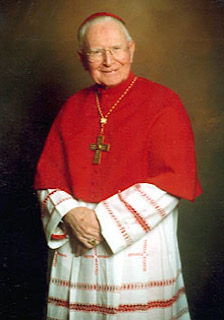
On November 6, 1990, Daly is appointed Archbishop of Armagh and, as such, Primate of All Ireland. His age makes him an unexpected occupant of the post. Despite this it is requested that he stay in the role for three years before usual age of episcopal retirement at 75. Cardinal Daly takes a notably harder line against the Irish Republican Army (IRA) than his predecessor, Cardinal Tomás Ó Fiaich.
Daly is respectful of Protestant rights and opposes integrated education of Catholics and Protestants. This policy is criticised by those who see segregated education as one of the causes of sectarianism in Northern Ireland, but is seen by the Catholic clergy as important for passing on their faith to future generations. He is utterly orthodox in opposing divorce, contraception, abortion, the ordination of women and any idea of dropping clerical celibacy.
Daly is heckled by the audience on live television during a broadcast of The Late Late Show on RTÉ One on the topic of pedophilia in the 1990s. After his retirement in 1996, he makes no public statement on the issue.
Daly retires as Archbishop of Armagh on his 79th birthday, October 1, 1996, and subsequently suffers ill health. Although it is announced that he will attend the funeral of Pope John Paul II, he stays home on the advice of his doctors. His age makes him ineligible to participate in the 2005 conclave that elects Pope Benedict XVI.
Daly is admitted to the coronary unit of Belfast City Hospital on December 28, 2009. His health has already been declining, leading to prayers being ordered for him. He dies in hospital in Belfast on December 31, 2009, aged 92. His family are at his bedside at the time. His death brings to an end a two-year period during which Ireland has, for the first time in its history, three living Cardinals.
Daly lay in state in Belfast and then his remains are taken to Armagh. Pope Benedict XVI pays tribute at this stage. Large numbers of people travel from as far as County Westmeath to attend Mass at Armagh on January 4, at which Monsignor Liam McEntaggart, the former parish priest of Coalisland, says, “When the history of peace making in Ireland comes to be written, the contribution of Cardinal Daly will be accorded a high place.” Monsignor McEntaggart himself dies on August 22, 2010, aged 81, less than eight months after Cardinal Daly’s passing.
Farquhar is assistant priest at Dunsford and Ardglass Parish. He is a hospital chaplain in 1966. He is later assigned to teach Latin at St. MacNissi’s College, Garron Tower, where he stays as a teacher from 1966 to 1970. From 1970 to 1975 he is assistant chaplain, along with Ambrose Macaulay, to Queen’s University Belfast, and finally as Chaplain/Lecturer at the University of Ulster from 1975 to 1983.
On April 6, 1983, aged 42, Farquhar is appointed Titular Bishop of Hermiana and, with Patrick Walsh, as Auxiliary Bishop of Down and Connor. The principal consecrator is the Bishop of Down and Connor, Cahal Daly, (later Cardinal Archbishop of the Archdiocese of Armagh) and principal co-consecrators are Archbishop Gaetano Alibrandi, the Apostolic Nuncio to Ireland and William J. Philbin (Bishop Emeritus of Down and Connor). During the ordination ceremony, the assistant Priests to Bishop Farquhar are his priest uncles, Canon Walter Larkin and Fr. Thomas Aquinas Larkin O.C.D.
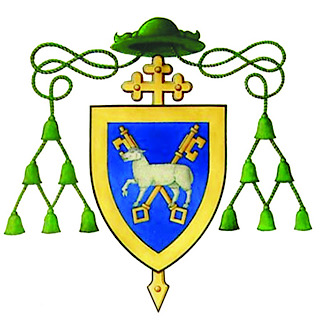
Farquhar’s episcopal motto is “Sapientia Proficere” (“to increase in wisdom”) from Luke 2:52. He takes an active and ongoing interest in interchurch relations and serves as Chairman of the Irish Catholic Bishops’ Conference on Ecumenism.
In December 2007, he officiates at the dedication of the new altar in the Church of the Good Shepherd in his native parish of the Most Holy Rosary, Belfast, following the renovation programme.
A book titled Inter-Church Relations: Developments and Perspectives, published by Veritas Communications to mark the 25th anniversary of Farquhar’s ordination as a bishop, contains contributions by a number of people praising Farquhar’s work. Seán Brady notes he was “engaged actively in promoting bonds of friendship and understanding at times when it has been far from easy to do so.”
On December 3, 2015, Pope Francis accepts Farquhar’s resignation on the grounds of age. He is at the time the longest serving bishop in Ireland.
Farquhar dies in Belfast on November 18, 2023, at the age of 83. His funeral requiem mass is celebrated in the Church of the Good Shepherd, Ormeau Road, Belfast, on November 23 followed by interment in the adjoining cemetery.
Denvir is educated at Dr. Nelson’s Classical School in Downpatrick, being described by peers as an enthusiastic child with a love for sight-seeing. According to one biographer, young Denvir also shows interest in the catechism by attending local visits from the then Bishop of Down and Connor, Dr. Patrick MacMullan, who is resident in Downpatrick. In September 1808, he enrolls at Maynooth College, and is appointed chair of Natural Philosophy and Mathematics there in August 1813.
As chair of mathematics and natural philosophy at Maynooth College, Denvir is noted for changing the style of education at the college from pure logic-based reasoning in Mathematics to a more holistic, topical approach. He is also noted for emphasising experimentation and the importance of the scientific method in teaching natural philosophy, with several sources noting his well-stocked labs.
While at Maynooth College Denvir teaches both Nicholas Callan, the inventor and physicist, and Dominic Corrigan, the noted Irish physician. According to several accounts, both speak fondly of their old professor, to the point of Callan gifting Denvir one of his induction coils in thanks.
Denvir is ordained first as deacon in June 1813, then a priest in May 1814, performing his liturgical duties in conjunction with his academic ones. In 1826, he leaves Maynooth College to become the parish priest of Downpatrick. In 1833 he becomes a professor at the newly founded St. Malachy’s College, teaching classes in Latin, Greek and Mathematics. He continues his duties as parish priest and professor until 1835, when he is appointed Bishop of Down and Connor in succession to Dr. William Crolly.
As 22nd Lord Bishop of Down and Connor, Denvir emphasises the teaching of the Catechism to youth as well as emphasising the importance of scripture to the diocese. In 1841 he helps fund the start of construction of St. Malachy’s Church in Belfast, which is completed in 1845. In his later years, he falls under criticism by other Belfast Catholics, who claim he is neglectful of his duties, especially those relating to expanding and defending Catholicism in the face of growing Protestant influence. Some accounts attribute his shortcomings to poor health and temperament, while others suggest that he backs away from expansion to avoid conflict with Protestant groups.
Denvir suffers from personal finance problems during his time as Bishop. The construction of St. Malachy’s Church puts him into deep personal debt, which he is apparently arrested for some time after 1844. He is also criticised for selling seats in the newly constructed church to offset costs. He is also described as reluctant in asking for funds from parishioners, severely limiting his resources with which to care for the church.
Denvir is appointed Commissioner of National Education in 1853. He is noted for being supportive of non-denominational education and investigating reports of proselytism in public primary education. He later resigns this position in 1857 on request of the Holy See to focus on expanding the local Catholic school system.
In 1860, after years of illness compounded by age, Denvir is assigned Dr. Patrick Dorrian as a coadjutor bishop to assist in his episcopal duties. While ill health is said to be the predominant reason for the appointment of a coadjutor, contemporary newspaper accounts suggest there also might be an ideological reason for the appointment. In The Spectator it is noted in December 1859 “it may be, because he is too liberal for the Cullen epoch.”
In May 1865, Denvir resigns as Bishop and is succeeded by Dorrian. He dies one year later on July 10, 1866, in his residence on Donegall St., after suffering from fainting fits a few days prior. He is buried in Ballycruttle Church.