seamus dubhghaill

Promoting Irish Culture and History from Little Rock, Arkansas, USA


Leave a comment

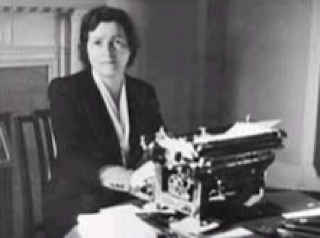
Birth of Kathleen O’Connell, Activist & de Valera’s Personal Secretary

Kathleen O’Connell, an Irish republican activist and Éamon de Valera‘s personal secretary, is born Catherine O’Connell at Caherdaniel, County Kerry, on October 5, 1888.

O’Connell is one of eleven children of farmer John O’Connell and Mary Ann O’Connell (née O’Sullivan). She is educated in County Kerry, and emigrates to Chicago in 1904 where she trains to be a secretary. She leaves a well-paid commercial job in 1912 to become secretary to the American delegation of the Gaelic League in New York City. She works closely with Thomas Ashe and Diarmuid Lynch on fund-raising and handles their secret Irish Republican Brotherhood (IRB) correspondence. She returns to Ireland briefly in 1915 to attend the Gaelic League Oireachtas na Gaeilge and ardfheis, voting in favour of the politicisation of the organisation. During the same visit she brings money and messages to the Irish Volunteers from John Devoy. She attends the New York Irish Race Convention, going on to work for the Friends of Irish Freedom. In this position she organises and collects for the “victory fund” for Irish independence. She is also a typist for Clan na Gael. After the 1916 Easter Rising, she becomes a member of Cumann na mBan in the United States, raising money for the widows and children of those killed or wounded during the Rising. It is through this work that she becomes a close friend of Arthur Griffith and his family.

Éamon de Valera requests that O’Connell join his “consular staff” on October 2, 1919, to support his tour of the United States. She works closely with him during this tour, traveling with him, assisting with speeches and dealing with his private and public correspondence. She is privy to secrets of the independence movement due to handling Harry Boland‘s correspondence as well. In November 1920, she returns to Ireland with de Valera and goes into hiding immediately. From February 1921 she lives at his secret headquarters at Strand Road, living in dangerous conditions until a truce is called in the Irish War of Independence. After this she lives with de Valera at Dr. Farnan’s house at Merrion Square and later in Blackrock. On June 22, 1921, she is arrested with him, and they are both released the next day. She is a member of the delegation that meets David Lloyd George in July 1921, and shares de Valera’s opposition to the Anglo-Irish Treaty. She joins de Valera and her sister Teresa in Suffolk Street in June 1922 when the Irish Civil War breaks out.

When fighting ends in Dublin in July 1922, she travels south, working closely with Dorothy Macardle, Robert Brennan, and Erskine Childers establishing a publicity department and publishing Poblacht na hÉireann. In September 1922, she returns to Dublin, and goes into hiding at 11 Upper Mount Street. She is a loyal follower of de Valera throughout the civil war, and is present at his arrest in Ennis in August 1923. She acts as his messenger and agent during his imprisonment, working with him on an Irish translation of shorthand which they later abandon. During this time she also works for the Sinn Féin TD for Mayo North P. J. Ruttledge.

O’Connell is present at the first meeting of the provisional organising committee of de Valera’s new political party, Fianna Fáil. During this time she continues to travel with de Valera, nationally and internationally. There are rumours regarding the nature of their relationship, leading to de Valera vehemently denying any impropriety in Dáil Éireann in 1928. The letter between O’Connell and de Valera’s wife, Sinéad, are cited as evidence there is no intimate relationship between O’Connell and de Valera. She resigns from her permanent civil service position of personal secretary to the Taoiseach when de Valera is defeated in 1948, returning in 1951 when he regains power. For her involvement in the Irish War of Independence, she is awarded an Irish military pension.

O’Connell is forced to retire in 1954 as she has developed cancer. Her niece, Maire O’Kelly, takes up her position. She dies on April 7, 1956, and is buried in Glasnevin Cemetery. Her funeral is attended by a guard of honour from the national executive of Fianna Fáil and the Old IRA. She receives full military honours and Seán MacEntee delivers the panegyric. During the writing of their biography of de Valera, Frank Pakenham, 7th Earl of Longford, and Thomas P. O’Neill use her papers, which are held in the University College Dublin archives, extensively.

In 2016, a plaque is unveiled to O’Connell at her birthplace in Caherdaniel by Eamon Ó Cuív, de Valera’s grandson.


Leave a comment

Birth of Cathal Goan, Former Director-General of RTÉ

Cathal Séamus Goan, Director-General of RTÉ from 2003 to 2011, is born on May 5, 1954, in Ardoyne, Belfast, Northern Ireland. He also plays a leading role in the launch of TG4.

Goan is an Irish language speaker. He studies Celtic studies at University College Dublin (UCD). He joins RTÉ in 1979 as an archivist with RTÉ Radio. He becomes a producer and senior producer on RTÉ Radio. In 1988, he moves to RTÉ Television and works on Today Tonight. Remaining in current affairs, he becomes editor of Cúrsaí, an Irish language television programme about arts and current affairs. He becomes Editor of Irish Language Programming in 1990.

Four years after being appointed Editor, Goan is approached to become “Ceannasaí” of the new Teilifís na Gaeilge. From August 1994, he manages the commencement of the new television channel. After a successful launch of the channel, where award-winning programming is produced during his tenure, he returns to RTÉ in 2000. He is appointed Director of Television and becomes a member of the RTÉ Executive Board.

Bob Collins retires as Director-General of RTÉ in 2003 to pursue a career elsewhere. It is announced in July 2003 that Goan will fill this position. He becomes the Director-General in October 2003. In 2008, he has a salary of €280,000, but it is reduced by €35,000. In 2006, he is announced as member of the board of National Concert Hall and serves there until May 2011. After the broadcast of a news item on nude pictures of Taoiseach Brian Cowen, Minister Michael Kennedy calls for Goan to “consider his position” as Director-General of RTÉ. He also receives criticism from Minister Éamon Ó Cuív in February 2010, when Sunday Mass is reduced to being broadcast just once a month on RTÉ Raidió na Gaeltachta.

Goan announces in July 2010 that he intends to step down at the end of his seven-year term. His resignation is accepted by the RTÉ Board.

Goan is married to Irish singer Maighread Ní Dhomhnaill.


Leave a comment

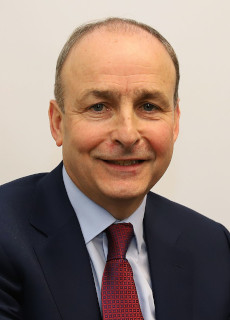
Micheál Martin Elected Leader of Fianna Fáil

Micheál Martin is elected leader of Fianna Fáil on January 26, 2011. He beats the competition of finance minister Brian Lenihan Jnr, tourism minister Mary Hanafin, and social protection minister Éamon Ó Cuív. He replaces Brian Cowan who stepped down on January 22. During his acceptance speech, the new leader apologises for mistakes he and the Government made in managing the economy but says the most important thing is to learn from these mistakes.

Martin has been a Teachta Dála (TD) for the Cork South-Central constituency since 1989. He previously serves as Minister for Education and Science and Lord Mayor of Cork from 1992 to 1993, Minister for Health and Children from 2000 to 2004, Minister for Enterprise, Trade and Employment from 2004 to 2008, Minister for Foreign Affairs from 2008 to 2011, and Leader of the Opposition in Ireland from 2011 to 2020.

While Martin is Minister for Health and Children in 2004, he introduces a ban on tobacco smoking in all Irish workplaces and establishes the Health Service Executive (HSE). Ireland is the first country to introduce a full workplace smoking ban. As Foreign Minister, in 2009, he travels to Latin America for the first time and makes the first official visit to Cuba by an Irish Minister. That same year, he travels to Khartoum following the kidnapping of Sharon Commins and Hilda Kawuki. In 2010, he becomes the first Western foreign minister to visit Gaza since Hamas took control there in 2007.

In January 2011, Martin resigns as Minister for Foreign Affairs and is subsequently elected as the eighth leader of Fianna Fáil following Cowen’s resignation as party leader. In the 2011 Irish general election, he leads the party to its worst showing in its 85-year history, with a loss of 57 seats and a drop in its share of the popular vote to 17.4%. In the 2016 Irish general election, Fianna Fáil’s performance improves significantly, more than doubling their Dáil representation from 20 to 44 seats. In the 2020 Irish general election, Fianna Fáil becomes the largest party, attaining the most seats at 38, one seat ahead of Sinn Féin with 37 seats. He is appointed Taoiseach on June 27, 2020, leading a grand coalition with longtime rival Fine Gael and the Green Party as part of a historic deal. Under the terms of the agreement, Martin’s predecessor, Leo Varadkar, becomes Tánaiste, and will swap roles with Martin in December 2022.