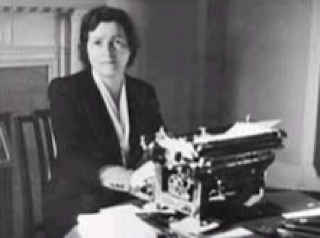
O’Connell is one of eleven children of farmer John O’Connell and Mary Ann O’Connell (née O’Sullivan). She is educated in County Kerry, and emigrates to Chicago in 1904 where she trains to be a secretary. She leaves a well-paid commercial job in 1912 to become secretary to the American delegation of the Gaelic League in New York City. She works closely with Thomas Ashe and Diarmuid Lynch on fund-raising and handles their secret Irish Republican Brotherhood (IRB) correspondence. She returns to Ireland briefly in 1915 to attend the Gaelic League Oireachtas na Gaeilge and ardfheis, voting in favour of the politicisation of the organisation. During the same visit she brings money and messages to the Irish Volunteers from John Devoy. She attends the New York Irish Race Convention, going on to work for the Friends of Irish Freedom. In this position she organises and collects for the “victory fund” for Irish independence. She is also a typist for Clan na Gael. After the 1916 Easter Rising, she becomes a member of Cumann na mBan in the United States, raising money for the widows and children of those killed or wounded during the Rising. It is through this work that she becomes a close friend of Arthur Griffith and his family.
Éamon de Valera requests that O’Connell join his “consular staff” on October 2, 1919, to support his tour of the United States. She works closely with him during this tour, traveling with him, assisting with speeches and dealing with his private and public correspondence. She is privy to secrets of the independence movement due to handling Harry Boland‘s correspondence as well. In November 1920, she returns to Ireland with de Valera and goes into hiding immediately. From February 1921 she lives at his secret headquarters at Strand Road, living in dangerous conditions until a truce is called in the Irish War of Independence. After this she lives with de Valera at Dr. Farnan’s house at Merrion Square and later in Blackrock. On June 22, 1921, she is arrested with him, and they are both released the next day. She is a member of the delegation that meets David Lloyd George in July 1921, and shares de Valera’s opposition to the Anglo-Irish Treaty. She joins de Valera and her sister Teresa in Suffolk Street in June 1922 when the Irish Civil War breaks out.
When fighting ends in Dublin in July 1922, she travels south, working closely with Dorothy Macardle, Robert Brennan, and Erskine Childers establishing a publicity department and publishing Poblacht na hÉireann. In September 1922, she returns to Dublin, and goes into hiding at 11 Upper Mount Street. She is a loyal follower of de Valera throughout the civil war, and is present at his arrest in Ennis in August 1923. She acts as his messenger and agent during his imprisonment, working with him on an Irish translation of shorthand which they later abandon. During this time she also works for the Sinn FéinTD for Mayo NorthP. J. Ruttledge.
O’Connell is present at the first meeting of the provisional organising committee of de Valera’s new political party, Fianna Fáil. During this time she continues to travel with de Valera, nationally and internationally. There are rumours regarding the nature of their relationship, leading to de Valera vehemently denying any impropriety in Dáil Éireann in 1928. The letter between O’Connell and de Valera’s wife, Sinéad, are cited as evidence there is no intimate relationship between O’Connell and de Valera. She resigns from her permanent civil service position of personal secretary to the Taoiseach when de Valera is defeated in 1948, returning in 1951 when he regains power. For her involvement in the Irish War of Independence, she is awarded an Irish military pension.
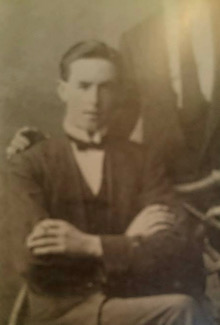
Pilkington is born to John Pilkington and Margaret Mary Pilkington (née Torsney), the second of twelve children born to the couple. Only nine of his siblings survive into adulthood. He receives his education at the local Marist Brothers convent school and the Day Trades Preparatory School. Later he is a student at the Department of Agriculture Forestry College in County Wicklow. When the Irish War of Independence begins, the college is closed and he is forced to return to Sligo. He then gains employment with Wehrly Brothers Ltd., a jewelry and watchmaking store in Sligo.
Several notable incidents occur in Pilkington’s military career. On October 25, 1920, at Moneygold, eight miles from Sligo (between Grange and Cliffoney), IRA men led by him ambush a nine-man Royal Irish Constabulary (RIC) patrol, killing four (Sergeant Patrick Perry, Constables Patrick Keown, Patrick Laffey, Patrick Lynch) and wounding two others (Constables Clarke and O’Rourke). In January 1922, he makes clear his opposition to the IRAs General Headquarters (GHQ) support for the Anglo-Irish Treaty. “We intend to cut away from this headquarters, all of you (pointing to the staff and officers of the GHQ) want to build up a Free State Army so you can march in step into the British Empire. Do it openly. We stand by the Republic.” On April 6, 1922, a meeting addressed by Arthur Griffith in Sligo, is proclaimed illegal by Pilkington, who is the local Anti-Treaty IRA divisional commander. His troops take over a number of buildings in the town. Seán Mac Eoin brings Provisional Government troops from Athlone and on the day of the meeting, he is joined by further troops led by J. J. “Ginger” O’Connell. A tense situation ensues but, at the last minute, Pilkington backs down and the meeting goes ahead. On September 4, 1922, an Anti-Treaty IRA unit under Pilkington takes the Dromhaire barracks in County Sligo after the Free State garrison surrenders.
On August 27, 1923, Pilkington runs unsuccessfully in the general election for the 4th Dáil as a Republican candidate, polling 2,089 first preference votes.
Pilkington is a prominent member of the Anti-Treaty IRA for many years, but his most important role as part of the Anti-Treaty IRA comes on April 20, 1923. The Executive of the Anti-Treaty IRA meets in Poulacappal (four miles southwest of Callan and three miles from Mullinahone). Present in addition to Pilkington (who is replacing Liam Lynch) are Frank Aiken, Sean Hyde, Sean Dowling, Bill Quirke, Tom Barry, Tom Ruane (replacing Michael Kilroy), Tom Sullivan (replacing Sean Lehane), Sean McSwiney, Tom Crofts, P. J. Ruttledge and Sean O’Meara (substitute for Séumas Robinson). Frank Aiken is elected Chief-of-Staff and an Army Council of Aiken, Pilkington and Barry is appointed. Aiken proposes that peace should be made with the Pro-Treaty Government on the basis that “the sovereignty of the Irish Nation and the integrity of its territory is inalienable.” This is passed by nine votes to two.
Pilkington becomes a Catholic priest after his foray into politics and due to the disillusionment of the Irish War of Independence. He joins the Redemptorist Order and becomes known as Father William Pilkington CSsR. He serves as a priest in the Archdiocese of Cape Town, South Africa, priest of Monmouthshire, Wales, and retires to Bishop Eton Monastery, Liverpool.
In 1954, Pilkington is guest of honour at a dinner sponsored by Clan na Gael and the IRA Veterans of America in New York City where he says he is returning to the mission fields of Africa, but he remains faithful to the All Ireland Republic. He dies at Bishop Eton Monastery on March 26, 1977, and is buried in Liverpool.
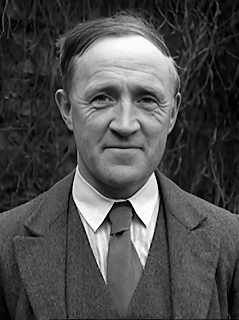
Boland is enrolled in the IRB along with his younger brothers Harry in 1904, following in the footsteps of his father. He and his brothers Harry and Ned subsequently join the Irish Volunteers when that organisation is established in 1913, serving in the same company as Arthur Griffith. When news breaks out of the Easter Rising in 1916 he immediately leaves his job, however, he is bitterly disappointed when he finds out that the order has been countermanded. When the rebellion begins in earnest on Easter Monday, he makes his way to Jacob’s Mill where he fights under Thomas MacDonagh. Following the official surrender, he is arrested and interned at Frongoch internment camp in Wales, where he comes into contact with other notable revolutionary leaders, including his brother Harry’s friend Michael Collins.
Boland is released after a general amnesty in December 1916, however, he remains involved in revolutionary circles, although he declines to rejoin the IRB, believing the organisation is no longer needed. He is arrested and imprisoned in Belfast from May to December 1918 for practising military drills in the Dublin Mountains. Meanwhile, a number of his colleagues secure their release by winning seats in the 1918 United Kingdom general election.
Boland and his brothers are opposed to the Anglo-Irish Treaty of 1921. He is Battalion Commandant of 3 Battalion, 2 Dublin Brigade (South Dublin) in Blessington, County Wicklow, but is captured early on in the Irish Civil War on July 7, 1922, and is interned until his release in July 1924. On the outside, his brother Harry dies some days after being shot, in August 1922, after two National Army officers attempt to arrest him at the Grand Hotel in Skerries, County Dublin. Boland applies to the Irish government for a service pension under the Military Service Pensions Act of 1934 and is awarded 11 and 5/12 years of service at Grade C for his service with the Irish Volunteers and the IRA between April 1, 1916 and September 30, 1923.
Following the end of the Irish Civil War, Boland helps to build up Sinn Féin as the main Republican party. While still imprisoned, he is selected to stand for Dáil Éireann as the Teachta Dála (TD) for Roscommon, Harry’s old seat, for the 1923 Irish general election, in which he is successful. He is among those in Kilmainham Gaol who go on hunger strike in October 1923. The hunger strike does not result in his release and he credits his practice of yoga with keeping him alive at the time.[3]
Boland is eventually released from the custody of the state in July 1924. Upon his release, he becomes secretary of Sinn Féin and stands on the executive of the party.
Boland is among the first in Sinn Féin to call for an end to the party’s abstentionism from DáilÉireann, believing it to be a political dead end. Party leader Éamon de Valera proposes that the party abandon this policy and take their seats in the Dáil if changes are made to the oath of allegiance to the British monarch. His proposal is defeated and de Valera and his supporters, including Boland, leave Sinn Féin. Shortly after this split, a new party emerges called Fianna Fáil, with de Valera acting as leader and the other disillusioned Republican TDs joining. Boland is vital in transferring many members from Sinn Féin to Fianna Fáil. Fianna Fáil briefly also has an abstentionist policy but in 1927 a new law forces Fianna Fáil TDs to take the oath of allegiance and take their seats in the Dáil. Fianna Fáil dismisses the oath as “an empty formula.”
Boland works alongside Seán Lemass in building up Fianna Fáil’s grassroots support and organisation, giving particular attention to the party’s rural apparatus. In the September 1927 Irish general election Fianna Fáil comes within four seats of the ruling Cumann na nGaedheal party. The latter forms a coalition of sorts with the Farmers’ Party and returns to government.
Following the 1932 Irish general election, Fianna Fáil forms a new government. Boland is appointed Government Chief Whip, a position which allows him to attend cabinet meetings but not vote at them.
Fianna Fáil remains in power with an increased mandate following the 1933 Irish general election and Boland is promoted to the position of Minister for Posts and Telegraphs. Despite being the Minister in charge of the postal service, he does not own a telephone until some time later. During his tenure, the postal service makes considerable progress. It is also during this time that the Post Office becomes a paying concern. During his time as minister, he oversees a major expansion of the telephone service in Ireland, improvements in the transmission capacity of Radio Éireann, and construction of new provincial post offices and a new central postal sorting office.
Boland is acting Minister for Justice briefly for a time when P. J. Ruttledge is ill. It is during this time that he declares the Irish Republican Army a proscribed organisation.
A cabinet reshuffle in 1936 sees Boland become Minister for Lands. The Land Act 1939 reforms land distribution, broadening the criteria by which the state can take control over undeveloped land while offering the tenant of the land more favourable terms of compensation. He is critical of the policy of the Minister for Industry and Commerce, Seán Lemass, of centralising industrial development in Dublin. He instead wishes to see a more decentralised economy based around food production. The differing viewpoint causes a rift between Boland and Lemass, but despite this Boland favoured Lemass’s policy of state intervention in the economy over Seán MacEntee‘s more laissez-faire approach.
In 1937 Boland is highly vocal during the drafting of a new constitution of Ireland by Fianna Fáil against any word which would give the Catholic Church special status, something heavily considered at the time. He declares that if the constitution elevates the position of the Catholic Church above others, it would be sectarian, anti-republican, and a hindrance to any prospects of Irish reunification. As a compromise, the term “special position” is used in the approved text of the Constitution.
Following the outbreak of World War II in 1939, known in Ireland as the Emergency, there is a cabinet reshuffle, and Boland is appointed as Minister for Justice. He takes over at a time when the IRA has once again declared war against the British state and has begun their Sabotage Campaign. He is charged with the task of crushing the organisation and preventing the IRA from drawing the Irish state into conflict with the United Kingdom. Although he always considers himself a republican, he takes a hardline against the IRA and uses his powers to order the internment of hundreds of IRA members before introducing military courts and special criminal courts.
In 1940, several imprisoned IRA members go on hunger strike but Boland refuses to grant their release. Two of the men eventually die, one of whom is the nephew of one of his Fianna Fáil colleagues. Tony D’Arcy dies at the age of 32 on April 16, 1940, as a result of a 52-day hunger strike, and Jack McNeela dies three days later after 55 days on hunger strike. These deaths spark reprisals by the IRA on the Garda Síochána. Boland subsequently introduces tougher measures by setting up a military court with the death penalty and no provision for appeal except for a review by the government. In all, twelve men are found guilty with six of them facing death and the remaining six having their sentences changed to imprisonment. Among those executed is Charlie Kerins, an acting Chief of Staff of the IRA.
As Minister of Justice, Boland is also asked to enforce policies of wartime censorship, however, finding the idea of the state censorship distasteful he establishes a censorship board to avoid accusations of bias.
During the Emergency, Boland is also responsible for the detention of several foreign agents in pursuit of Ireland’s strict policy of neutrality. During this time some 500 individuals are interned and 600 are sentenced under the newly introduced Offences against the State Act, 1939. By 1943 the IRA is in disarray, particularly after the Chief of Staff is arrested and imprisoned, leaving the organisation without leadership. Boland and Fianna Fáil feel their hardline is backed by the electorate following strong returns for the party at the 1944 Irish general election.
In 1947, Boland is among four leading Fianna Fáil figures (including de Valera) involved in the “Locke’s Distillery Scandal”, an accusation brought by Oliver J. Flanagan that foreign businessmen are bribing members of Fianna Fáil to gain the right to purchase the distillery. A tribunal of inquiry finds no evidence to support the claims, but the event taints the public’s view of Fianna Fáil.
By 1948, Fianna Fáil has been in government for an uninterrupted 16 years. With World War II finally over, the electorate seeks change and a fresh start. Arising to meet this desire is the new political party Clann na Poblachta. Led by Seán MacBride, this new party seeks to kick off a new post-war political era in Ireland, and to do this means removing Fianna Fáil from power. Many in Clann na Poblachta have republican backgrounds and in some ways, the party can be partially described as an organic reaction to Fianna Fáil and Boland’s hardline stance during the war years. Many in political circles, including inside Fianna Fáil, believe Clann na Poblachta can be a new force to reckon with.
However, de Valera always holds a reputation for being cunning in selecting the dates of general elections, and he once again cements that notion, when he calls for a general election in early 1948 before Clann na Poblachta is completely ready to contest a national election. At the 1948 Irish general election Clann na Poblachta and other Fianna Fáil opponents do well, but not as well as expected. To remove Fianna Fáil from government, every single party in the Dáil and several independents have to form the unwieldy “First Inter-Party Government.” The coalition sees Clann na Poblachta forced to work with Fine Gael, considered the traditional “enemy” of Irish republicanism. By 1951, the coalition collapses and Fianna Fáil returns to government following that year’s election, with Boland re-appointed Minister for Justice.
Boland does not seek ministerial office in 1957 when Fianna Fáil returns to power after its defeat in 1954. However, his son, Kevin, is appointed to the cabinet as Minister for Defence at the beginning of his first term in the Dáil. By this stage, Boland is beginning to be seen as an aging warhorse, with his base in Roscommon starting to slip and Fianna Fáil unhappy that he is unable to get a Fianna Fáil running mate elected alongside himself.
At the 1961 Irish general election, Boland is defeated for the first time in fourteen general election campaigns. Despite losing his Dáil seat, he subsequently secures election to Seanad Éireann. Four years later in 1965, he returns to the Seanad, this time as a nominee by the Taoiseach Seán Lemass.
In 1970, the outbreak of the Arms Crisis sees Kevin Boland resign as a Minister and as Secretary of Fianna Fáil in protest at the government’s policy on Northern Ireland and in response to the sackings of Charles Haughey and Neil Blaney from the cabinet over allegations they had arranged for weapons to be provided to the Provisional IRA. Gerald Boland, in a similar protest, resigns as a vice president and as a trustee of Fianna Fáil, although he remains a member of the party. He also articulates his loss of confidence in the leadership of TaoiseachJack Lynch.
Boland dies in Dublin at the age of 87 on January 5, 1973. He is buried in the republican plot in Glasnevin Cemetery, Glasnevin, County Dublin. His wife, Annie Boland, predeceases him in 1970. He is survived by his three daughters and four sons.
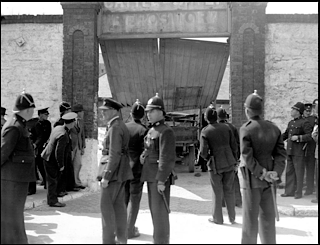
The Copley Street riot occurs on August 13, 1934, at the Copley Street Repository, Cork, County Cork, after Blueshirts opposed to the collection of annuities from auctioned cattle ram a truck through the gate of an ongoing cattle auction. The Broy Harriers open fire and one man, 22 year old Michael Lynch, is killed and several others injured.
Following the Irish War of Independence (1919–21), Britain relinquishes its control over much of Ireland. However, aspects of the Anglo-Irish Treaty, which had marked the end of the war, lead to the Irish Civil War (1922–23). The aftermath leaves Ireland with damaged infrastructure and hinders its early development.
Éamon de Valera, who had voted against the Anglo-Irish treaty and headed the Anti-Treaty movement during the civil war, comes to power following the 1932 Irish general election and is re-elected in 1933. While the treaty stipulates that the Irish Free State should pay £3.1 million in land annuities to Great Britain, and despite advice that an economic war with Britain could have catastrophic consequences for Ireland (as 96% of exports are to Britain), de Valera’s new Irish government refuses to pay these annuities – though they continue to collect and retain them in the Irish exchequer.
This refusal leads to the Anglo-Irish trade war (also known as the “Economic War”), which persists until 1935, when a new treaty, the Anglo-Irish Trade Agreement, is negotiated in 1938. During this period, a 20% duty is imposed on animals and agricultural goods, resulting in significant losses for Ireland. Specifically, poultry trade declines by 80%, butter trade by 50% and cattle prices drop by 50%. Some farmers are forced to kill and bury animals because they cannot afford to maintain them.
In 1933, Fine Gael emerges as a political party—a merger of Cumann na nGaedheal and the National Centre Party. Fine Gael garners substantial support from rural farmers who are particularly affected by the Economic War. They strongly object to the collection of land annuities by the Fianna Fáil government. The Blueshirts, a paramilitary organisation founded as the Army Comrades Association in 1932 and led by former Garda CommissionerEoin O’Duffy, transforms into an agrarian protest organisation, mobilising against seizures, cattle auctions, and those tasked with collecting annuities.
O’Duffy, a key figure in Irish politics, encourages farmers to withhold payment of land annuities to the government. Arising from this stance, Gardaí start to seize animals and farm equipment, auctioning them to recover the outstanding funds. While seized cattle are auctioned, local farmers rarely participate. Instead, Northern Ireland dealers, often associated with the name O’Neill, are the primary buyers. These auctions are protected by the Broy Harriers, an armed auxiliary group linked to the police.
By 1934, tensions escalate, and a series of anti-establishment incidents are attributed to the Blueshirts. These incidents range from minor acts of violence, such as breaking windows, to more serious offenses like assault and shootings.
On August 13, 1934, an auction takes place at Marsh’s Yard on Copley Street in Cork, featuring cattle seized from farms in Bishopstown and Ballincollig. The police establish a cordon by 10:00 a.m., with 300 officers on duty. Lorries arrived at 11:00 a.m.
Around noon, three thousand protestors assemble. Within twenty-five minutes, an attempt is made to breach the yard gate by ramming it with a truck. According to Oireachtas records, there are approximately 20 men in the truck which they run against the gate. The Minister for JusticeP. J. Ruttledge, says that the truck “with those people in it charged through those cordons of Guards; that several Guards jumped on to the lorry and tried to divert the driver by catching hold of the steering wheel and trying to twist it.” Some contemporary news sources suggest that the ramming truck knocked down the surrounding police cordon “like ninepins and crush[ed] a police inspector against a gate.” Later sources suggest that the senior officer (a superintendent) was injured in a fall, while attempting to avoid being struck, rather than being hit directly by the truck.
A man named Michael Lynch, wearing the distinctive blue shirt, and approximately 20 others reportedly manage to enter the yard. As soon as they enter the yard they are fired upon by armed “special branch” police detectives who are in the yard. Lynch later succumbs to his injuries at the South Infirmary. Thirty-six others are wounded. Despite the violence, the auction proceeds after a one-hour delay.
Following the shooting, a riot ensues, but when news of Lynch’s death reaches the participants, they cease rioting, kneel, and recited a Rosary.
The funeral of Michael Lynch occurs on August 15, 1934. The funeral procession is planned to depart from Saints Peter and Paul’s Church, Cork at 2:30 PM.
The occasion allows for a significant show of force for Eoin O’Duffy and the Blueshirts, and features Roman salutes and military drills. Farmers in Munster reportedly stop work for an hour, and Blueshirt members ask shopkeepers to close their businesses, as a show of respect for the “martyr.” Lynch is afforded a “full Blueshirt burial,” and the coffin is adorned with the flag of the Blueshirts (the Army Comrades Association).
According to the Minister for Justice, at the funeral W. T. Cosgrave stands beside O’Duffy as the Blueshirt leader gives an oration saying, “We are going to carry on until our mission is accomplished […] those 20 brave men, whose deed will live for ever, not only in Cork but in every county in Ireland, broke through in the lorry […] all Blueshirts should try to emulate his bravery and nobleness. Every Blueshirt is prepared to go the way of Michael for his principles.”
The court grants the family £300 in 1935. This is appealed to the High Court, followed by the Supreme Court, which dismisses the case. In the Supreme Court, Henry Hanna describes the Broy Harriers as “an excrescence” upon the Garda Síochána.
When the matter is discussed in the Seanad in September 1934, and before a vote is taken to “[condemn] the action of the members of the special branch of the Gárda Síochána […] on Monday, the 13th August 1934,” the senators who support Éamon de Valera’s government walk out.
In August 1940, a memorial is unveiled on the tomb of Lynch in Dunbulloge Cemetery in Carrignavar, County Cork, consisting of a limestone Celtic cross and pedestal. The pedestal is engraved with a quote from the American orator, William Jennings Bryan: “The humblest citizen of all the land, when clad in the armour of a righteous cause is stronger than all the hosts of error.”
(Pictured: Aftermath of the ramming of Marsh’s Yard, Copley Street, that leads to the death of Michael Lynch and the Copley Street Riot on August 13, 1934)