seamus dubhghaill

Promoting Irish Culture and History from Little Rock, Arkansas, USA


Leave a comment

The First Irish Expedition Reaches the South Pole

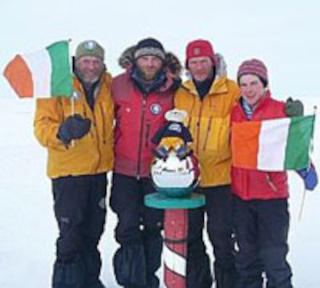
The first Irish expedition arrives at the South Pole on January 8, 2008. Team leader Pat Falvey (50), Dr. Clare O’Leary (35), Jonathan Bradshaw (36) and Shaun Menzies (42) arrive at their destination after covering the final 23 kilometres.

The expedition has been trekking since November through some of the harshest known conditions, battling icy winds, sub-zero temperatures and snowstorms. The squad, who make up the Beyond Endurance expedition, travel approximately 1,100 km (680 miles), with each member hauling a sledge weighing over 150 kg (330 lbs.).

“We’re so happy to be here, we can’t believe it,” says Falvey. “We’re ecstatic but totally exhausted, shattered, and worn away. It’s now -32.5 degrees Celsius (-26.5 F) and I’m chattering from the cold but so excited. All of the meridians and all of the longitudes passed through the point where my hand was. By walking around the South Pole, I could go back in time to yesterday or go a day ahead to tomorrow.”

A spokesman for the team confirms their arrival at their destination at around 7:30 p.m. Irish time.

Deputy team leader, Dr. O’Leary, is the first Irish woman to make it to the South Pole. She is also the first Irish woman to climb Mount Everest and the first to complete the Seven Summits Challenge. A specialist in gastroenterology and general internal medicine, she is based in Tipperary University Hospital, Clonmel, where she works as a consultant.

Menzies and Bradshaw are relatively inexperienced high-altitude trekkers who are invited to join the expedition.

“This a very historic occasion. It is very exciting. It shows that Ireland can play its part in polar exploration,” spokesman Niall Foley says from the team’s base in Killarney, County Kerry. The team is in good spirits and resting at the Amundsen-Scott South Pole Station, he adds. “They’re well and being taken care of by the researchers there. They’re having a cup of cocoa I think.”

The team flies from the South Pole back to Ireland, via Chile, arriving on January 16. The Beyond Endurance Expedition begins in 2006 with an ambitious adventure by a group of “ordinary” people aged from 21 to 61 traveling across South Georgia, landing on Elephant Island, a mountainous ice-covered island off the Antarctic coast.

The purpose of the expedition is to give budding explorers the chance to see Antarctica. From this group, Menzies, a Dublin IT consultant, is selected for rigorous training in Greenland for the South Pole expedition. There they meet up with Bradshaw, a budding adventurer who has explored remote parts of the Himalayas, Africa and New Zealand, who is on a separate trek.

The four adventurers retrace the steps of some of the best-known Irish Antarctic explorers, including Ernest Shackleton and Tom Crean. In 2004, County Kerry native Mike Barry becomes the first Irish man to trek to the South Pole as part of an international expedition. However, Falvey’s squad has now become the first Irish-led team to perform the feat.

President Mary McAleese says the achievement, which coincides with the one hundredth anniversary of Ernest Shackleton’s first attempt on the South Pole, is “particularly poignant.” “I congratulate Pat Falvey, Clare O’Leary, Jonathon Bradshaw and Shaun Menzies on their remarkable accomplishment, and send my very best wishes to their many supporters in this mammoth undertaking.”

Taoiseach Bertie Ahern says he has been following the team’s expedition since the team set out. “Total admiration is perhaps the best way to sum up my thoughts on what you have achieved,” Ahern says. “You are continuing a proud tradition of Irish adventurers, and you should be very proud of your wonderful achievement.”

(From: “Irish team reaches South Pole” by Paul Anderson, The Irish Times, http://www.irishtimes.com, January 9, 2008)
Leave a comment

Birth of Sir Ernest Shackleton, Antarctic Explorer

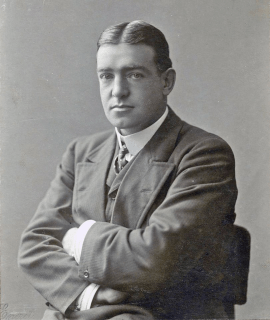
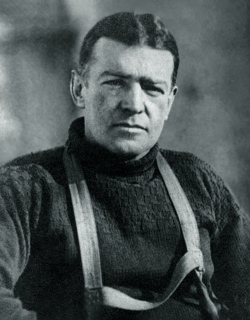
Sir Ernest Henry Shackleton, Anglo-Irish Antarctic explorer who leads three British expeditions to the Antarctic, is born on February 15, 1874, in Kilkea, County Kildare. He is one of the principal figures of the period known as the Heroic Age of Antarctic Exploration.

Shackleton is the second of ten children and the first of two sons. His father, Henry Shackleton, tries to enter the British Army, but his poor health prevents him from doing so. He becomes a farmer instead, settling in Kilkea. Shackleton’s mother, Henrietta Letitia Sophia Gavan, is descended from the Fitzmaurice family. His brother Frank achieves notoriety as a suspect, later exonerated, in the 1907 theft of the so-called Irish Crown Jewels, which have never been recovered.

The Shackleton family moves to Sydenham, London when he is ten. His first experience of the polar regions is as third officer on Captain Robert Falcon Scott‘s Discovery Expedition of 1901–04, from which he is sent home early on health grounds, after he and his companions Scott and Edward Adrian Wilson set a new southern record by marching to latitude 82°S. During the Nimrod Expedition of 1907–09, he and three companions establish a new record Farthest South latitude at 88°S, only 97 geographical miles from the South Pole, the largest advance to the pole in exploration history. Also, members of his team climb Mount Erebus, the most active Antarctic volcano. For these achievements, he is knighted by King Edward VII on his return home.

After the race to the South Pole ends in December 1911, with Roald Amundsen‘s conquest, Shackleton turns his attention to the crossing of Antarctica from sea to sea, via the pole. To this end, he makes preparations for what becomes the Imperial Trans-Antarctic Expedition, 1914–17. Disaster strikes this expedition when its ship, Endurance, becomes trapped in pack ice and is slowly crushed before the shore parties can be landed. The crew escapes by camping on the sea ice until it disintegrates, then by launching the lifeboats to reach Elephant Island and ultimately South Georgia island, a stormy ocean voyage of 720 nautical miles and Shackleton’s most famous exploit.

In 1921, Shackleton returns to the Antarctic with the Shackleton–Rowett Expedition on a 125-ton Norwegian sealer, named Foca I, which he renames Quest. When the party arrives in Rio de Janeiro, he suffers a suspected heart attack. He refuses a proper medical examination, so Quest continues south, and on January 4, 1922, arrives at South Georgia. In the early hours of the next morning, Shackleton summons the expedition’s physician, Alexander Macklin, to his cabin, complaining of back pains and other discomfort. According to Macklin’s own account, he tells Shackleton he has been overdoing things and should try to “lead a more regular life,” to which Shackleton answers, “You are always wanting me to give up things, what is it I ought to give up?” “Chiefly alcohol, Boss,” replies Macklin. A few moments later, at 2:50 AM on January 5, 1922, he suffers a fatal heart attack. At his wife’s request, he is buried there.

Away from his expeditions, Shackleton’s life is generally restless and unfulfilled. In his search for rapid pathways to wealth and security, he launches business ventures which fail to prosper, and he dies heavily in debt. Upon his death, he is lauded in the press but is thereafter largely forgotten, while the heroic reputation of his rival Scott is sustained for many decades. Later in the 20th century, Shackleton is “rediscovered”. He rapidly becomes a role model for leadership as one who, in extreme circumstances, kept his team together in a survival story described by cultural historian Stephanie Barczewski as “incredible.”

In his 1956 address to the British Science Association, Sir Raymond Priestley, one of his contemporaries, says “Scott for scientific method, Amundsen for speed and efficiency but when disaster strikes and all hope is gone, get down on your knees and pray for Shackleton,” paraphrasing what Apsley Cherry-Garrard had written in a preface to his 1922 memoir The Worst Journey in the World. In 2002, Shackleton is voted eleventh in a BBC poll of the 100 Greatest Britons.


Leave a comment

Death of Antarctic Explorer Ernest Shackleton

Sir Ernest Henry Shackleton, Anglo-Irish Antarctic explorer who led three British expeditions to the Antarctic, dies of a heart attack in Grytviken, South Georgia on January 5, 1922. He is one of the principal figures of the period known as the Heroic Age of Antarctic Exploration.

Born in Kilkea, County Kildare, Shackleton and his Anglo-Irish family move to Sydenham, London when he is ten. His first experience of the polar regions is as third officer on Captain Robert Falcon Scott‘s Discovery Expedition of 1901–04, from which he is sent home early on health grounds, after he and his companions Scott and Edward Adrian Wilson set a new southern record by marching to latitude 82°S. During the Nimrod Expedition of 1907–09, he and three companions establish a new record Farthest South latitude at 88°S, only 97 geographical miles from the South Pole, the largest advance to the pole in exploration history. Also, members of his team climb Mount Erebus, the most active Antarctic volcano. For these achievements, he is knighted by King Edward VII on his return home.

After the race to the South Pole ends in December 1911, with Roald Amundsen‘s conquest, Shackleton turns his attention to the crossing of Antarctica from sea to sea, via the pole. To this end, he makes preparations for what becomes the Imperial Trans-Antarctic Expedition, 1914–17. Disaster strikes this expedition when its ship, Endurance, becomes trapped in pack ice and is slowly crushed before the shore parties can be landed. The crew escapes by camping on the sea ice until it disintegrates, then by launching the lifeboats to reach Elephant Island and ultimately South Georgia Island, a stormy ocean voyage of 720 nautical miles and Shackleton’s most famous exploit.

In 1921, Shackleton returns to the Antarctic with the Shackleton–Rowett Expedition on a 125-ton Norwegian sealer, named Foca I, which he renames Quest. When the party arrives in Rio de Janeiro, he suffers a suspected heart attack. He refuses a proper medical examination, so Quest continues south, and on January 4, 1922, arrives at South Georgia. In the early hours of the next morning, Shackleton summons the expedition’s physician, Alexander Macklin, to his cabin, complaining of back pains and other discomfort. According to Macklin’s own account, he tells Shackleton he has been overdoing things and should try to “lead a more regular life,” to which Shackleton answers, “You are always wanting me to give up things, what is it I ought to give up?” “Chiefly alcohol, Boss,” replies Macklin. A few moments later, at 2:50 AM on January 5, 1922, he suffers a fatal heart attack. At his wife’s request, he is buried there.

Away from his expeditions, Shackleton’s life is generally restless and unfulfilled. In his search for rapid pathways to wealth and security, he launches business ventures which fail to prosper, and he dies heavily in debt. Upon his death, he is lauded in the press but is thereafter largely forgotten, while the heroic reputation of his rival Scott is sustained for many decades. Later in the 20th century, Shackleton is “rediscovered”. He rapidly becomes a role model for leadership as one who, in extreme circumstances, kept his team together in a survival story described by cultural historian Stephanie Barczewski as “incredible.”

In his 1956 address to the British Science Association, Sir Raymond Priestley, one of his contemporaries, says “Scott for scientific method, Amundsen for speed and efficiency but when disaster strikes and all hope is gone, get down on your knees and pray for Shackleton,” paraphrasing what Apsley Cherry-Garrard had written in a preface to his 1922 memoir The Worst Journey in the World. In 2002, Shackleton is voted eleventh in a BBC poll of the 100 Greatest Britons.


Leave a comment

Birth of Antarctic Explorer Tom Crean

Tom Crean

Thomas “Tom” Crean, Irish seaman and Antarctic explorer, is born on February 25, 1877 in the farming area of Gurtuchrane near the village of Annascaul on the Dingle Peninsula in County Kerry.

Crean leaves the family farm to enlist in the Royal Navy at the age of fifteen. In 1901, while serving on Ringarooma in New Zealand, he volunteers to join Captain Robert Falcon Scott‘s 1901–04 Discovery Expedition to Antarctica, thus beginning his exploring career.

He is a member of three major expeditions to Antarctica during the Heroic Age of Antarctic Exploration, including Captain Scott’s 1911–13 Terra Nova Expedition. This sees the race to reach the South Pole lost to Roald Amundsen and ends in the deaths of Scott and his polar party. During this expedition, Crean’s 35 statute miles solo walk across the Ross Ice Shelf to save the life of Edward Evans leads to him receiving the Albert Medal for Lifesaving.

After his Terra Nova experience, Crean’s third and final Antarctic venture is as second officer on Ernest Shackleton‘s Imperial Trans-Antarctic Expedition, on Endurance. After Endurance becomes beset in the pack ice and sinks, Crean and the ship’s company spend months drifting on the ice before a journey in boats to Elephant Island. He is a member of the crew which makes an open boat journey of 800 nautical miles from Elephant Island to South Georgia, to seek aid for the stranded party.

Crean’s contributions to these expeditions seals his reputation as a polar explorer and earns him a total of three Polar medals. After the Endurance expedition, he returns to the navy. When his naval career ends in 1920 he moves back to County Kerry. In his home town of Annascaul, Crean and his wife Ellen live quietly and unobtrusively and open a pub called The South Pole Inn.

In 1938 Crean becomes ill with a ruptured appendix. He is taken to the nearest hospital in Tralee, but as no surgeon is available to operate, he is transferred to the Bon Secours Hospital in Cork where his appendix is removed. Because of the delay of the operation an infection develops and after a week in the hospital he dies on July 27, 1938, shortly after his sixty-first birthday. He is buried in his family’s tomb at the cemetery in Ballynacourty.

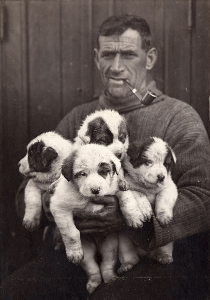
Crean’s name is commemorated in at least two places – 8,630 foot Mount Crean in Victoria Land and the Crean Glacier on South Georgia. A one-man play, Tom Crean – Antarctic Explorer, has been widely performed since 2001 by its author Aidan Dooley, including a special showing at the South Pole Inn, Annascaul, in October 2001. In July 2003, a bronze statue of Crean is unveiled across from his pub in Annascaul. It depicts him leaning against a crate whilst holding a pair of hiking poles in one hand and two of his beloved sled dog pups in the other.


Leave a comment

Death of Antarctic Explorer Tom Crean

Tom Crean

Thomas “Tom” Crean, Irish seaman and Antarctic explorer, dies on July 27, 1938 from complications of appendicitis.

Crean was born 1877 in the farming area of Gurtuchrane near the village of Annascaul on the Dingle Peninsula in County Kerry. He leaves the family farm to enlist in the Royal Navy at the age of fifteen. In 1901, while serving on Ringarooma in New Zealand, he volunteers to join Captain Robert Falcon Scott‘s 1901–04 Discovery Expedition to Antarctica, thus beginning his exploring career.

He is a member of three major expeditions to Antarctica during the Heroic Age of Antarctic Exploration, including Captain Scott’s 1911–13 Terra Nova Expedition. This sees the race to reach the South Pole lost to Roald Amundsen and ends in the deaths of Scott and his polar party. During this expedition, Crean’s 35 statute miles solo walk across the Ross Ice Shelf to save the life of Edward Evans leads to him receiving the Albert Medal for Lifesaving.

After his Terra Nova experience, Crean’s third and final Antarctic venture is as second officer on Ernest Shackleton‘s Imperial Trans-Antarctic Expedition, on Endurance. After Endurance becomes beset in the pack ice and sinks, Crean and the ship’s company spend months drifting on the ice before a journey in boats to Elephant Island. He is a member of the crew which makes an open boat journey of 800 nautical miles from Elephant Island to South Georgia, to seek aid for the stranded party.

Crean’s contributions to these expeditions seals his reputation as a polar explorer and earns him a total of three Polar medals. After the Endurance expedition, he returns to the navy. When his naval career ends in 1920 he moves back to County Kerry. In his home town of Annascaul, Crean and his wife Ellen live quietly and unobtrusively and open a pub called The South Pole Inn.

In 1938 Crean becomes ill with a ruptured appendix. He is taken to the nearest hospital in Tralee, but as no surgeon is available to operate, he is transferred to the Bon Secours Hospital in Cork where his appendix is removed. Because of the delay of the operation an infection develops and after a week in the hospital he dies on July 27, 1938, shortly after his sixty-first birthday. He is buried in his family’s tomb at the cemetery in Ballynacourty.

Crean’s name is commemorated in at least two places – 8,630 foot Mount Crean in Victoria Land and the Crean Glacier on South Georgia. A one-man play, Tom Crean – Antarctic Explorer, has been widely performed since 2001 by its author Aidan Dooley, including a special showing at the South Pole Inn, Annascaul, in October 2001. In July 2003, a bronze statue of Crean is unveiled across from his pub in Annascaul. It depicts him leaning against a crate whilst holding a pair of hiking poles in one hand and two of his beloved sled dog pups in the other.