seamus dubhghaill

Promoting Irish Culture and History from Little Rock, Arkansas, USA


Leave a comment

Birth of Mary Robinson, 1st Female President of Ireland

mary-robinson

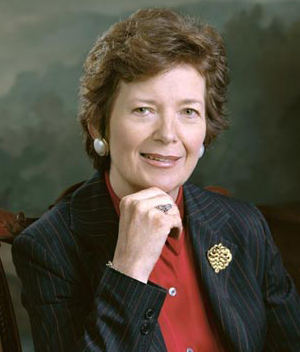
Mary Therese Winifred Robinson, seventh and first female President of Ireland (1990-1997), is born on May 21, 1944, in Ballina, County Mayo. Robinson also serves as the United Nations High Commissioner for Human Rights from 1997 until 2002.

Robinson first rises to prominence as an academic, barrister, campaigner, and member of the Irish Senate (1969–1989). Running as an Independent candidate nominated by the Labour Party, the Workers’ Party, and independent senators, Robinson defeats Fianna Fáil‘s Brian Lenihan and Fine Gael‘s Austin Currie in the 1990 presidential election becoming the first elected president in the office’s history not to have had the support of Fianna Fáil.

Robinson is widely regarded as a transformative figure for Ireland, and for the Irish presidency, revitalising and liberalising a previously conservative, low-profile political office. She resigns the presidency two months before the end of her term in office in order to take up her post in the United Nations. During her UN tenure, she visits Tibet in 1998, the first High Commissioner to do so. She criticises Ireland’s immigrant policy and criticises the use of capital punishment in the United States. She extends her intended single four-year term by a year to preside over the World Conference against Racism 2001 in Durban, South Africa. The conference proves controversial, and under continuing pressure from the United States, Robinson resigns her post in September 2002.

After leaving the UN in 2002, Robinson forms Realizing Rights: The Ethical Globalization Initiative, which comes to a planned end at the end of 2010. Its core activities are fostering equitable trade and decent work, promoting the right to health and more humane migration policies, and working to strengthen women’s leadership and encourage corporate social responsibility. The organisation also supports capacity building and good governance in developing countries. Robinson returns to live in Ireland at the end of 2010, and sets up The Mary Robinson Foundation – Climate Justice, which aims to be “a centre for thought leadership, education, and advocacy on the struggle to secure global justice for those many victims of climate change who are usually forgotten – the poor, the disempowered, and the marginalised across the world.”

Robinson is Chair of the Institute for Human Rights and Business and Chancellor of the University of Dublin. Since 2004, she has also been Professor of Practice in International Affairs at Columbia University, where she teaches international human rights. Robinson also visits other colleges and universities where she lectures on human rights. Robinson sits on the Board of the Mo Ibrahim Foundation, an organisation which supports good governance and great leadership in Africa and is a member of the Foundation’s Ibrahim Prize Committee. Robinson is an Extraordinary Professor in the Centre for Human Rights and the Centre for the Study of AIDS at the University of Pretoria. Robinson serves as Oxfam’s honorary president from 2002 until she steps down in 2012 and is the honorary president of the European Inter-University Centre for Human Rights and Democratisation EIUC since 2005. She is Chair of the International Institute for Environment and Development (IIED) and is also a founding member and Chair of the Council of Women World Leaders (2003-2009). Robinson was a member of the European members of the Trilateral Commission.

In 2004, she receives Amnesty International‘s Ambassador of Conscience Award for her work in promoting human rights.

In July 2009, Robinson is awarded the Presidential Medal of Freedom, the highest civilian honour awarded by the United States. In presenting the award to Robinson, U.S. President Barack Obama says, “Mary Robinson learned early on what it takes to make sure all voices are heard. As a crusader for women and those without a voice in Ireland, Mary Robinson was the first woman elected President of Ireland, before being appointed U.N. High Commissioner for Human Rights. When she traveled abroad as President, she would place a light in her window that would draw people of Irish descent to pass by below. Today, as an advocate for the hungry and the hunted, the forgotten and the ignored, Mary Robinson has not only shone a light on human suffering but illuminated a better future for our world.”


Leave a comment

Birth of Irish Folk Singer Christy Moore

Christopher Andrew “Christy” Moore, Irish folk singer, songwriter, and guitarist, is born in Newbridge, County Kildare, on May 7, 1945.

After attending Newbridge College, Moore works as a bank employee and has a desire to express himself using traditional music. During a twelve-week bank strike in 1966, he goes to England, as do many striking officials, but he does not return when the strike is settled. Doing general labouring work, he frequents the folk clubs and the Irish music pubs where he meets Séamus Ennis, Margaret Barry, Luke Kelly, Martin Byrnes, and many other traditional musicians.

Moore’s first album, Paddy on the Road, a minor release of 500 copies, is recorded with Dominic Behan in 1969. In 1972, his first major release, Prosperous, brings him together with three musicians, Liam O’Flynn, Andy Irvine, and Dónal Lunny, who shortly thereafter form the Irish folk music band Planxty. For a short time, they called themselves “CLAD,” an acronym of their names, but soon decide on Planxty.

After leaving Planxty in 1975, Moore continues his solo career, reforming his old band on occasion. He also forms the band Moving Hearts with Lunny and five other musicians in 1980. In 1987, he appears on Gay Byrne‘s The Late Late Show performing with The Dubliners for their 25th anniversary. In 2000, he publishes his autobiography, One Voice.

Moore’s earlier years of heavy drinking, sleeping dysfunctional hours, continual traveling, and often eating takeout foods results in a decline in health and several operations. Moore’s battle with alcohol and subsequent heart operations takes their toll. At the end of the 1990s, Moore reduces his workload for medical reasons.

Moore releases his first new studio album in four years on April 17, 2009, entitled Listen, and promotes it through a series of live gigs. In December 2011, he releases the album, Folk Tale. His most recent album, Where I Come From, is released in November 2013 and features a new protest song called Arthur’s Day. The album peaks at No. 3 on the Irish album charts.

Moore is best known for his political and social commentary which reflects a left-wing, Irish republican perspective, despite the fact that his mother was a Fine Gael county councillor and parliamentary candidate in Kildare. He supports the republican H-Block protestors with the albums H-Block in 1978, the launch of which is raided by the police, and The Spirit of Freedom. He also records songs by hunger striker Bobby Sands, including Back Home in Derry. Moore ceases support of the military activities of the Irish Republican Army (IRA) in 1987 as a result of the Enniskillen bombing.

Political songs Moore has performed throughout his career include Mick Hanly’s On the Blanket about the protests of republican prisoners, Viva la Quinta Brigada about Irish volunteers who fought against the Fascists in the Spanish Civil War, and Minds Locked Shut about Bloody Sunday in Derry.

In 2007, Moore is named Ireland’s greatest living musician in RTÉ‘s People of the Year Awards.


Leave a comment

The Founding of Fianna Fáil

fianna-fail

Fianna Fáil, the centrist to centre-right and conservative political party in the Republic of Ireland, is founded on March 23, 1926, after a split with Sinn Féin on the issue of abstentionism. Historically, Fianna Fáil has been seen as to the left of Fine Gael and to the right of Sinn Féin and the Labour Party. It is generally seen as a “catch all” populist party, representing a broad range of people from all social classes.

When his motion calling for elected members to be allowed to take their seats in Dáil Éireann if and when the controversial Oath of Allegiance is removed fails to pass at the Sinn Féin Ardfheis in 1926, Éamon de Valera resigns from the presidency of the party and, with Seán Lemass, Constance Markievicz, and others, forms a new party, Fianna Fáil (The Warriors of Destiny), a party that is to dominate 20th-century Irish politics. The party adopts its name on April 2 of the same year.

Though the new party is also opposed to the Treaty settlement, it adopts a different approach of aiming to make the Irish Free State a republic. Fianna Fáil’s platform of economic autarky has appeal among the farmers, working-class people, and the poor, whilst alienating more affluent classes.

From the formation of the first Fianna Fáil government on March 9, 1932, until the election of 2011, the party is in power for 61 of 79 years. Its longest continuous period in office is 15 years and 11 months (March 1932 – February 1948). Its single longest period out of office in the 20th century, is four years and four months (March 1973 – July 1977). Seven of the party’s eight leaders, including de Valera, serve as Taoiseach.

Fianna Fáil joins the Alliance of Liberals and Democrats for Europe (ALDE) party on April 16, 2009, and the party’s Members of the European Parliament (MEPs) sit in the ALDE Group during the 7th European Parliament term from June 2009 until 1 July 1, 2014. The party is an observer affiliate of the Liberal International.

It is the largest party in the Dáil at every general election from the 1932 general election until the 2011 general election, when it suffers the worst defeat of a sitting government in the history of the Irish state. This loss is described as “historic” in its proportions, and “unthinkable.” The party moves from being the largest party to the third-largest party in the Dáil.