seamus dubhghaill

Promoting Irish Culture and History from Little Rock, Arkansas, USA


1 Comment

Final Rally of the Peace People’s Campaign

A rally of twelve to fifteen thousand Peace People from both north and south takes place at the new bridge over the River Boyne at Drogheda, County Louth, on December 5, 1976. In general, the Peace People’s goals are the dissolution of the Irish Republican Army (IRA) and an end to violence in Northern Ireland. The implicit goals of the Peace People rallies are delegitimization of violence, increasing solidarity, and gaining momentum for peace.

In the 1960s, Northern Ireland begins a period of ethno-political conflict called the Troubles. Through a series of social and political injustices, Northern Ireland has become a religiously divided society between historically mainland Protestants and Irish Catholics. Furthermore, the Irish people have become a fragmented body over a range of issues, identities, circumstances and loyalties. The conflict between Protestants and Catholics spills over into violence, marked by riots and targeted killings between the groups beginning in 1968. In addition, paramilitary groups, including the prominent IRA, launch attacks to advance their political agendas.

The violence continues to escalate. On August 10, 1976, Anne Maguire and her children are walking along Finaghy Road North in Belfast. Suddenly, a Ford Cortina slams into them. The car is being driven by Danny Lennon, who moments before had been shot dead by pursuing soldiers.  The mother is the only survivor. The collision kills three of her four children, Joanne (8), John (2), and Andrew (6 months). Joanne and Andrew die instantly while John is injured critically.

The next day, immediately following John’s death, fifty women from the Republican neighborhoods of Andersonstown and Stewartstown protest Republican violence by marching with baby carriages. That evening, Mairead Corrigan, Anne Maguire’s sister, appears on television pleading for an end to the violence. She becomes the first leader of the Peace People to speak publicly.

However, she was not the only one to initiate action. As soon as she hears Mairead speak on the television, Betty Williams begins petitioning door-to-door for an end to sectarian violence. She garners 6,000 signatures of support within a few days.  This support leads directly into the first unofficial action of the Peace People. On 14 August, only four days after the incident, 10,000 women, both Protestant and Catholic, march with banners along Finaghy Road North, the place of the children’s death, to Milltown Cemetery, their burial site.  This march mostly includes women along with a few public figures and men. The marchers proceed in almost utter silence, only broken by short bouts of singing from the nuns in the crowd and verbal and physical attacks by Republican opposition.

The following day, the three who become leaders of the Peace People – Mairead Corrigan, Betty Williams, and journalist Ciaran McKeown – come together for their first official meeting.  During these initial meetings they establish the ideological basis of nonviolence and goals for the campaign.  The essential goals for the movement are the dissolution of the IRA and an end to the violence in Northern Ireland.  The goals of the campaign implicit in their declaration are awareness, solidarity, and momentum. 
Peace People’s declaration:

“We have a simple message to the world from this movement for Peace. We want to live and love and build a just and peaceful society. We want for our children, as we want for ourselves, our lives at home, at work, and at play to be lives of joy and peace. We recognise that to build such a society demands dedication, hard work, and courage. We recognise that there are many problems in our society which are a source of conflict and violence. We recognise that every bullet fired, and every exploding bomb make that work more difficult. We reject the use of the bomb and the bullet and all the techniques of violence. We dedicate ourselves to working with our neighbours, near and far, day in and day out, to build that peaceful society in which the tragedies we have known are a bad memory and a continuing warning.”

During the four-month campaign, Peace People and partners organize and participate in 26 marches in Northern Ireland, Britain, and the Republic of Ireland. In order to organize these marches effectively they establish their main headquarters in Belfast.

After the initial Finaghy Road March, the Peace People, both Protestants and Catholics, rally in Ormeau Park on August 21. The official Declaration of the Peace People is first read at this rally, the largest rally of the entire campaign.   The group numbers over 50,000. The rally even includes some activists from the Republic of Ireland, most notably Judy Hayes from the Glencree Centre of Reconciliation near Dublin. After the rally, she and her colleagues return to the south to organize solidarity demonstrations.     

In the few days before the next march, the organization “Women Together” request Peace People to call off the march, disapproving of Catholics and Protestants participating in a joint march. The Peace People are not dissuaded. The next Saturday, 27,000 people march along Shankill Road, the loyalist/Protestant neighborhood.

In the next three months, Peace People organize and participate in a rally every Saturday; some weeks even have two. Some of the most notable marches include the Derry/Londonderry double-march, the Falls march, the London march, and the Boyne march.

The Saturday following the Shankill march marks the Derry/Londonderry double-march. At this march, Catholics march on one side of the River Foyle and Protestants on the other.  The groups meet on the Craigavon Bridge.  Simultaneously, 50,000 people march in solidarity in Dublin.

On October 23, marchers meet in the Falls, Belfast, in the pouring rain on the same Northumberland street corner where the Shankill March had started.  The Falls Road rally is memorable for the fear and violence that ensues. During this rally Sinn Féin supporters throw stones and bottles at the marchers.  The attackers escalate the violence as the marchers near Falls Park. The marchers are informed by others that more attackers await them at the entrance to the park, inciting fear within the body of the rally.  The leaders decide that this is an important moment of conflict in the rally and that they must push on.  They continue verbally encouraging the marchers through the cloud of bottles, bricks, and stones.

The leaders plan to escalate the campaign momentum for the last two major symbolic rallies in London and Boyne, Drogheda.  A week before the rallies, on November 20-21, they plan a membership drive. Over 105,000 people sign within two days.

The symbolic week of the culminating rallies begins on November 27 at the glamorous London Rally. They begin to march at Hyde Park, cut through Westminster Abbey, and end at Trafalgar Square. Some groups sing “Troops Out,” and others resound with civil rights songs.  

On December 5, Peace People holds its final march of the campaign, along the River Boyne. The Northern and Southern Ireland contingents met at the Peace Bridge. This is an important point in the legacy of the Peace People movement. Now that the enthusiastic rallies are over, the people are responsible for the tedious local work and continuing the momentum and solidarity that the rallies have inspired. The shape of the Peace People is changing.

After the planned marches are over, the rally portion of the campaign fades and the Peace People take a new shape. Corrigan, Williams, and McKeown stop planning marches, but continue to be involved in action that takes the form of conferences and traveling overseas. However, the leaders begin doing more separated work. Ciaran McKeown increases his focus on radical political restructuring.

In 1977, Betty Williams and Mairead Corrigan receive the Nobel Peace Prize.  Issues regarding the use of the monetary award impact the two leaders’ relationships in an irreconcilable manner.  

Due to the fact that many people, unlike McKeown, are less interested in the political side of the equation, the People continue actions along the lines of rallies and social work. Actions continue through the People’s initiative in the form of Peace Committees that each does separate work in local areas.

The Peace People makes a substantial impact.  They help to de-legitimize violence, increase solidarity across sectarian lines, and develop momentum for peace.  Although the violence does not fully subside until 1998 with the negotiation of political change, Ireland sees in 1976 one of its most dramatic decreases in political violence, accompanying the Peace People’s marches and rallies. The campaign dramatizes how tired the people are of bloodshed, their desperate desire for peace, and the clear possibility of alternatives.

(From: “Peace People march against violence in Northern Ireland, 1976” by Hannah Lehmann, Global Nonviolent Action Database, https://nvdatabase.swarthmore.edu/, 2011 | Pictured: The Peace People organisation rally in Drogheda, County Louth, December 5, 1976)

6 Comments

The 1973 Old Bailey Bombing

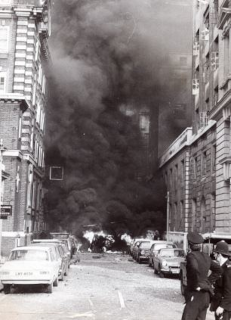
The 1973 Old Bailey bombing, a car bomb attack carried out by the Provisional Irish Republican Army (IRA) and dubbed as Bloody Thursday by newspapers in Britain, takes place outside the Central Criminal Court of England and Wales, commonly referred to as the Old Bailey, in London on March 8, 1973. This is the Provisional IRA’s first major attack in England since the Troubles began in the late 1960s. The unit also explodes a second bomb outside the Ministry of Agriculture building near Whitehall at around the same time the bomb at the Old Bailey explodes.

The Troubles had been ongoing in Northern Ireland and to a lesser extent in the Republic of Ireland since the late 1960s. Rioting, protests, gun battles, sniper attacks, bombings and punishment beatings became part of everyday life in many places in Northern Ireland, especially in the poorer working-class areas of Belfast and Derry. These events and others help to heighten sectarianism and boost recruitment into Irish republican and Ulster loyalist paramilitary groups and the security forces, mainly the newly created Ulster Defence Regiment (UDR).

England had been relatively untouched by the violence up until the beginning of 1973, but the IRA Army Council draws up plans for a bombing campaign to take place in England some time early in 1973. In the late 1960s and early 1970s, loyalist paramilitaries had bombed Dublin and other parts of the Republic of Ireland a number of times before the IRA began its bombing campaign in England. Following the Dublin bombings in late 1972 and in January 1973 carried out by Loyalists which killed three people and injured over 150, the media attention these bombings received helped the IRA decide to take its campaign to Britain in return. The arrest of top IRA personnel in both the Republic and Northern Ireland like Máire Drumm, Seán Mac Stíofáin, Ruairí Ó Brádaigh and Martin McGuinness in late 1972 help to convince the IRA to bomb England to take the heat off of the IRA in Ireland.

The IRA selects the volunteers who constitute the Active Service Unit (ASU) for the England bombing operation, which is scheduled to take place on March 8, 1973, the same day that a border poll, boycotted by Nationalists and Roman Catholics, is being held in Belfast. Volunteers from all three of the IRA’s Belfast Brigade Battalions are selected for the bombing mission. The team includes Gerry Kelly (19), Robert “Roy” Walsh (24), an expert bomb maker from Belfast, Hugh Feeney, a Belfast-born IRA volunteer and explosives expert, and two sisters, Marian (19) and Dolours Price (22) from Belfast and are from a staunchly Republican family, along with five other lesser-known volunteers from Belfast: Martin Brady (22), William Armstrong (29), Paul Holmes (19), William McLarnon (19), and Roisin McNearney (18).

Several days before the bombing, the leaders of the IRA ASU, which includes sisters Marian and Dolours Price, go to London and pick out four targets: the Old Bailey, the Ministry of Agriculture, an army recruitment office near Whitehall and New Scotland Yard. They then report back to their Officer Commanding (OC) in Belfast, and the IRA Army Council gives the go ahead. The bombs are made in Ireland and transported to London via ferry, according to Marian Price.

The Royal Ulster Constabulary (RUC) warns the British that the ASU is traveling to England, but are unable to provide specifics as to the target.

The drivers and the volunteers who are to prime the bombs wake up at 6:00 a.m. and drive the car bombs to their various targets. Gerry Kelly and Roy Walsh drive their car bomb to the Old Bailey. It is planned that by the time the bombs go off around 3:00 p.m., the ASU will be back in Ireland. The bomb at New Scotland Yard is found at 8:30 a.m. by a policeman who notices a discrepancy in the licence plate. The bomb team starts lifting out 5-pound (2.3 kg) bags of explosives and separates them, so that if the bomb does go off, the force of the explosion will be greatly reduced. The bomb squad eventually finds the detonating cord leads, which run under the front passenger seat of the car. Peter Gurney, a senior member of New Scotland Yard, cuts the detonator cord leads, defusing the bomb.

However, at the Old Bailey the bomb explodes, injuring many and causing extensive damage. Scotland Yard states it had warned the City of London police at 2:01 p.m. to search near the Old Bailey for a green Ford Cortina. The car is not located until 2:35 p.m. and explodes at 2:49 p.m. while police are evacuating the area. Several more people are injured by the car bomb near the Ministry of Agriculture, which brings the total number injured to over two hundred. A British man, Frederick Milton (60), dies of a heart attack. Dolours Price writes in her memoir, “There were warnings phoned in but people had stood about, curious to see… If people ignored the warnings and stood around gawking, they were stupid. The numbers of injured came about through curiosity and stupidity.” The ASU is caught trying to leave the country at Heathrow Airport prior to the explosions, as the police had been forewarned about the bombings and are checking all passengers to Belfast and Dublin. All ten give false names that do not match their documents and they are detained. The IRA Volunteer who gave a warning about the bombs an hour before they exploded is the only one not captured.

The IRA volunteers have to be tried at Winchester Crown court in Winchester Castle as the Old Bailey is wrecked by the car bomb. The trial takes ten weeks and is set amid extremely strict security. William McLarnon pleads guilty to all charges on the first day of the trial. On November 14, 1973, a jury convicts six men and two women of the bombings. The jury acquits Roisin McNearney in exchange for information and she is given a new identity. As her verdict is handed down, the other defendants begin to hum the “Dead March” from Saul, and one throws a coin at her, shouting, “Take your blood money with you” as she leaves the dock in tears. Six of the nine people convicted admit to Provisional IRA membership.

The judge sentences the eight to life imprisonment for the bombings and 20 years for conspiracy, while William McLarnon, whose family was forced out of their home in August 1969, is sentenced to 15 years. When his sentence is read he shouts, “Up The Provisional IRA.” As the eight are led to the cells below the court, several give raised fist salutes to relatives and friends in the public gallery. The Price sisters immediately go on hunger strike, soon followed by Feeney and Kelly, for the right not to do prison work and to be repatriated to a jail in Ireland. The bombers on hunger strike are eventually moved to jails in Ireland as part of the 1975 IRA truce agreed with the British. In 1983, Kelly escapes from Maze Prison and becomes part of an IRA ASU in the Netherlands. He is recaptured three years later by the Dutch authorities and extradited.

The Old Bailey bomb is the beginning of a sustained bombing campaign in England. The next major bombing by the IRA in England is the King’s Cross station and Euston station bombings which injured 13 people and do widespread damage. Another significant attack that year is the 1973 Westminster bombing which injures 60 people. Two more people die in England from IRA bombings in 1973, bringing the total to three for the year in that part of United Kingdom. The next year, 1974, is the bloodiest year of the Troubles outside of Northern Ireland with over 70 people being killed in the Republic of Ireland and England combined. Thirty-four are killed in the Dublin and Monaghan bombings, 21 from the Birmingham pub bombings, 12 from the M62 coach bombing, and several people are killed by the IRA’s Balcombe Street Gang.

One of the Old Bailey bombers, Marian Price, explains the IRA’s reasoning for bombing England. “It doesn’t seem to matter if it’s Irish people dying.” So if the armed struggle was to succeed then it was necessary to “bring it to the heart of the British Establishment.” Hence symbolic targets such as the Old Bailey “were carefully chosen.”


Leave a comment

The Donegall Street Bombing

The Donegall Street bombing takes place in Belfast, Northern Ireland on March 20, 1972, when, just before noon, the Provisional Irish Republican Army (IRA) detonates a car bomb in Lower Donegall Street in Belfast City Centre when the street is crowded with shoppers, office workers, and many schoolchildren.

Seven people are killed in the explosion, including two members of the Royal Ulster Constabulary (RUC), who say they had evacuated people to what was considered to have been a safe area following misleading telephone calls, which had originally placed the device in a nearby street. The Provisional IRA Belfast Brigade admits responsibility for the bomb, which also injures 148 people, but claims that the security forces had deliberately misrepresented the warnings in order to maximise the casualties. This is one of the first car bombs the IRA uses in their armed campaign.

On Monday, March 20, 1972, at 11.45 a.m., a local carpet dealer receives a telephone call warning that a bomb will explode in Belfast city centre’s Church Street which is crowded with shoppers, office workers on lunch breaks, and schoolchildren. British Army troops and the RUC are alerted and immediately begin to evacuate the people into nearby Lower Donegall Street. The second call to The Irish News newspaper seven minutes later also gives Church Street as the location for the device. A final call comes at 11:55 a.m. advising the News Letter newspaper that the bomb is instead placed outside its offices in Lower Donegall Street where the crowds have been sent. Thus, the warning arrives too late for the security forces to clear the street. Staff working inside the News Letter building are told by the caller that they have 15 minutes in which to leave the building, but they never have a chance to evacuate.

At 11:58 a.m. a 100-pound gelignite bomb explodes inside a green Ford Cortina parked in the street outside the offices of the News Letter, shaking the city centre with the force of its blast, and instantly killing the two RUC constables, Ernest McAllister (31) and Bernard O’Neill (36), who had been examining the vehicle. The remains of the two policemen are allegedly found inside a nearby building. Minutes earlier they had been helping to escort people away from Church Street.

The explosion sends a ball of flame rolling down the street and a pall of black smoke rising upward. The blast wave rips into the crowds of people who had run into Donegall Street for safety, tossing them in all directions and killing another four men outright: Ernest Dougan (39), James Macklin (30), Samuel Trainor (39) and Sydney Bell (65). Trainor is also an off-duty Ulster Defence Regiment (UDR) soldier and a member of the Orange Order. A seriously wounded pensioner, Henry Miller (79) dies in hospital on April 5. Most of the dead are mutilated beyond recognition. With the exception of Constable O’Neill, who is a Catholic, the other six victims are Protestants.

The explosion blows out all the windows in the vicinity, sending shards of glass into people’s bodies as they are hit by falling masonry and timber. The ground floor of the News Letter offices and all buildings in the area suffer heavy damage. The News Letter library in particular sustains considerable damage with many priceless photographs and old documents destroyed. Around the blast’s epicentre, the street resembles a battlefield. About one hundred schoolgirls lay wounded on the rubble-strewn, bloody pavement covered in glass and debris, and screaming in pain and fright. A total of 148 people are injured in the explosion, 19 of them seriously. Among the injured are many of the News Letter staff.

One of the wounded is a child whose injuries are so severe a rescue worker at the scene assumes the child has been killed. A young Czech art student, Blanka Sochor (22), receives severe injuries to her legs. She is photographed by Derek Brind of the Associated Press as a British Paratrooper holds her in his arms. Passerby Frank Heagan witnesses the explosion and comes upon what is left of two binmen who had been “blown to pieces.” He adds that “there was blood everywhere and people moaning and screaming. The street was full of girls and women all wandering around.” The injured can be heard screaming as the ambulances transport them to hospital. Emergency amputations are performed at the scene.

While the security forces and firemen pull victims from the debris in Donegall Street, two more bombs go off elsewhere in the city centre, however, nobody is hurt in either attack. On the same day in Derry, a British soldier, John Taylor, is shot dead by an IRA sniper. In Dublin, Chief of Staff of the Irish Republican Army, Seán Mac Stíofáin, suffers burns to his face and hands after he opens a letter bomb sent to him through the post. Cathal Goulding, head of the Official Irish Republican Army, also receives a letter bomb but escapes injury by having dismantled the device before it exploded.

This is amongst the first car bombs used by the Provisional IRA during The Troubles in its militant campaign to force a British military withdrawal and reunite the six counties of Northern Ireland with the rest of the island of Ireland. It is part of the IRA’s escalation of violence to avenge the Bloody Sunday killings in which 13 unarmed Catholic civilian men were killed by the British Army’s Parachute Regiment when the latter opened fire during an anti-internment demonstration held in Derry on January 30, 1972.

The bombing is carried out by the North Belfast unit of the Provisional IRA’s Third Battalion Belfast Brigade. The OC of the Brigade at that time is the volatile Seamus Twomey, who orders and directs the attack.

On March 23, the IRA admits responsibility for the bomb with one Belfast Brigade officer later telling a journalist, “I feel very bad when the innocent die.” The IRA, however, tempers the admission by claiming that the caller had given Donegall Street as the correct location for the bomb in all the telephone calls and that the security forces had deliberately evacuated the crowds from Church Street to maximise the casualties. The IRA’s official statement claiming responsibility for the blast is released through the Irish Republican Publicity Bureau.

The IRA follows the Donegall Street attack two days later with a car bomb at a carpark adjacent to the Belfast Great Victoria Street railway station and close to the Europa Hotel. Seventy people are treated in hospital for injuries received mainly by flying glass, but there are no deaths. The blast causes considerable damage to two trains, parked vehicles, the hotel, and other buildings in the area.

Although many members of the Provisional IRA are rounded up by police in the wake of the Donegal Street attack, none of the bombers are ever caught nor is anyone ever charged in connection with the bombing.


Leave a comment

Home of British PM Edward Heath Damaged by Bomb

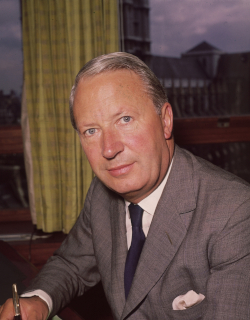
The London home of the Conservative leader and former Prime Minister of the United Kingdom Edward Heath is damaged from the impact of a bomb planted by the Irish Republican Army (IRA) on December 22, 1974. The attack comes just hours before a Christmas ceasefire is due to come into effect. Heath is not at home at the time of the blast but arrives ten minutes later. His housekeeper, Mrs. Crawford, and her daughter are both in the house at the time but are not injured.

The 21-pound bomb breaks glass, smashes the front door and damages the front room. The only damage to anything valuable is to a painting done in the south of France by Sir Winston Churchill. No one initially admits carrying out the attack, but the IRA is immediately suspected.

Witnesses describe seeing a man emerging from a Ford Cortina and throwing what is believed to have been the bomb onto the first-floor balcony of the house. Two policemen and a patrol car chase the vehicle as it drives off. The Cortina crashes a few minutes later in Chelsea and several men flee from the vehicle.

The police are fearful that the explosion is a “come‐on” tactic where an initial smaller bomb is followed by a larger one after the first has attracted crowds. They seal off all streets around the house for several hours. Heath’s home is about half a mile from Harrods, in Knightsbridge, where a more powerful bomb had gone off the previous night as Christmas shoppers were being evacuated.

Heath tells waiting reporters that Prime Minister Harold Wilson had sent him a message which was “very much appreciated.” Addressed “Dear Ted,” Wilson says, “This attack will only strengthen our united resolve to bring these things to justice.”

Heath, who had been conducting a carol service at his hometown of Broadstairs, Kent, carrying an overnight bag is driven off by police to an undisclosed location after his arrival at home. He returns later to inspect the damage with bomb squad chief, Commander Robert Huntley.

Heath says the attack will not deter him from traveling to Ulster the following day for talks with security forces and Ulster political leaders as previously scheduled. As Leader of the Opposition, Heath has a Special Branch police bodyguard with him at all times. The house is under “short” police patrol which means there are extra cars and foot patrols in the area but not directly outside the building.