seamus dubhghaill

Promoting Irish Culture and History from Little Rock, Arkansas, USA


Leave a comment

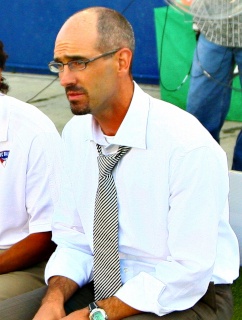
Birth of Steve Morrow, Professional Footballer & Manager

Stephen Joseph Morrow, Northern Irish former professional footballer and manager, is born on July 2, 1970, in Belfast, Northern Ireland.

Morrow makes his full international debut for Northern Ireland in May 1990 against Uruguay. He goes on to win 39 caps for his country from then until 1999.

Morrow becomes a semi-regular with Arsenal in 1992–93. He plays most of his matches in midfield, replacing the injured Paul Davis as Arsenal reaches the League Cup and FA Cup finals. He starts the League Cup final against Sheffield Wednesday. After falling behind to a John Harkes goal, Arsenal equalises through Paul Merson, and then Merson sets up Morrow to score the winner, which is also his first for the club. In the celebrations after the match, Arsenal skipper Tony Adams attempts to pick up Morrow and parade him on his shoulders, but Adams slips, and Morrow awkwardly hits the ground. He breaks his arm and has to be rushed to hospital.

As a result, Morrow misses the rest of that season, including the 1993 FA Cup Final, where Arsenal completes the Cup Double. Before the final kicks off, he receives his League Cup winners’ medal.

Morrow is fit enough by the start of the next season but plays only 13 matches, compared to 25 the previous season. One of those is the scene of an Arsenal triumph, the club’s 1994 European Cup Winners’ Cup Final win over Parma. In an Arsenal midfield depleted of John Jensen and David Hillier, he makes his first appearance in the competition that season partnering 20-year-old Ian Selley in central midfield as Arsenal beats Parma 1–0 with an Alan Smith goal.

Morrow nearly leaves the club in March 1994, following an approach from the Premier League‘s bottom club Swindon Town, but the transfer falls through and he signs a new contract with Arsenal, where he spends three more years.

Morrow goes on to play over 20 matches the following season, including a second Cup Winners’ Cup final, which Arsenal loses to Real Zaragoza. He scores his second Arsenal goal in the League Cup once again against Sheffield Wednesday, and scores his first Arsenal league goal in a 3–1 defeat at Blackburn Rovers, who win the Premier League that season. However, he never finds favour under new Arsenal boss Bruce Rioch, who only gives the Irishman five matches in 1995–96.

After the arrival of Arsène Wenger in 1996, Morrow is told he is surplus to requirements at Highbury, and he is loaned to Queens Park Rangers (QPR) in March 1997, the deal being made permanent that summer. He plays 85 games for Arsenal in total, scoring three goals.

At QPR, Morrow is initially a regular, but the club struggles, going from contenders for promotion to the Premiership to facing relegation to the Football League Second Division. Injuries to his shoulder ligaments ruled him out for most of the 1999–2000 season, and he loses his place in the side. He later has a loan spell at Peterborough United, but it does not become permanent, and he is released on a free transfer in the summer of 2001.

Struggling to find a club in the United Kingdom, Morrow moves to the United States to play for Major League Soccer (MLS) side Dallas Burn. He spends two seasons at Dallas, who rename themselves FC Dallas in 2004, before retiring because of a persistent neck injury.

On February 3, 2004, Morrow is named as an assistant coach to FC Dallas but resigns in late May due to personal reasons. However, he returns to the club on January 27, 2005, under coach Colin Clarke. When Clarke is fired on November 7, 2006, Morrow is named interim head coach. On December 11, 2006, FC Dallas removes the ‘interim’ from his title. He is fired as coach on May 20, 2008.

On September 12, 2008, Morrow returns to Arsenal as International Partnerships – Performance Supervisor, managing Arsenal’s international partnerships, which includes the Colorado Rapids of Major League Soccer in the United States, BEC Tero of Thailand and Hoàng Anh Gia Lai of Vietnam, and assisting Arsenal’s academies in countries such as Egypt and Ghana. From 2014, he works as Arsenal’s head of youth development. He leaves Arsenal in 2019 following a coaching staff shake up.

On May 7, 2021, Morrow is appointed The FA’s head of player selection and talent strategy working across England men’s teams.

Leave a comment

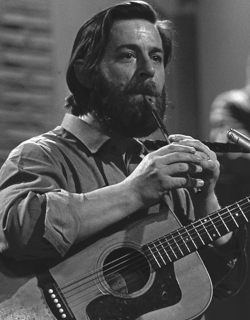
Birth of Ciarán Bourke, Founding Member of The Dubliners

Ciarán Bourke, Irish musician and one of the founding members of the Irish folk band The Dubliners, is born in Dublin on February 18, 1935.

Although born in Dublin, Bourke lives most of his life in Tibradden, County Dublin. His father, a doctor, is in practice in the city. The children have an Irish-speaking nanny. His early exposure to Irish continues throughout his education, attending Colaiste Mhuire, Parnell Square, Dublin. He later attends University College Dublin for a course in Agricultural Science. He does not take his degree but always retains an interest in farming.

After leaving university Bourke meets two of his future bandmates in The Dubliners, Ronnie Drew and Barney McKenna, who invite him to join their sessions in O’Donoghue’s Pub where he plays tin whistle, mouth organ and guitar, and sings. Luke Kelly, who had been singing around the clubs in England, returns to Dublin and joins them, with the four gaining local popularity. Taking the name The Dubliners, the group puts together the first folk concert of its kind in Dublin. The concert is a success, then a theatrical production called “A Ballad Tour of Ireland” is staged at the Gate Theatre shortly afterwards. In 1964 fiddle player John Sheahan joins the band and this becomes known as the original Dubliners line-up.

Bourke is responsible for bringing a Gaelic element to The Dubliners’ music with songs such as “Peggy Lettermore” and “Sé Fáth Mo Bhuartha” being performed in the Irish language. He also sings a number of the group’s more lighthearted and humorous numbers such as “Jar of Porter,” “The Dublin Fusiliers,” “The Limerick Rake,” “Mrs. McGrath,” “Darby O’Leary,” “All For Me Grog” and “The Ballad of Ronnie’s Mare,” as well as patriotic songs such as “Roddy McCorley,” “The Enniskillen Dragoons,” “Take It Down From The Mast” and “Henry Joy.”

On April 5, 1974 The Dubliners travel to Eastbourne where they are to appear in concert. Kelly is worried by the way Bourke keeps moving his head about, as if trying to alleviate increasing pain. Four minutes into the second half, it is decided he cannot continue with the show. Kelly insists that a doctor should be phoned and instructs to await their return to the Irish Club at Eaton Square. The roadie for the trip, John Corry, thinks that it is better to drive straight to St. George’s Hospital in London, where the doctors diagnose a brain aneurysm. He is transferred to the Atkinson Morley Hospital in Wimbledon, while doctors wait for his wife to return from a trip to Ghana, to get her signature before operating. She is told that there is danger of further haemorrhaging. He is operated on at the earliest opportunity. The bleeding begins again while he is on the table which means that they cannot repair the damage, only staunch the bleeding. This leaves him paralysed down his left side and confused as to where he is and what has happened.

Bourke receives intensive therapy, attending a clinic in Dún Laoghaire, County Dublin. He is heartened by his progress and insists on rejoining The Dubliners on their next tour of the Continent in November that year.

Bourke’s continued insistence that he is fit enough to join them on the forthcoming German tour causes them considerable disquiet. They prefer he ease himself back to work, with a few small shows in Ireland. The tour gradually begins to take its toll on him, and it is decided that for the sake of his health he should return home. He flies from Brussels to Dublin.

Bourke makes his last public appearance on Ireland’s RTÉ One during The Late Late Show‘s tribute to The Dubliners in 1987. Despite his lingering paralysis he recites “The Lament for Brendan Behan” after which everyone in the studio, led by Ronnie Drew, sing “The Auld Triangle.”

Bourke dies on May 10, 1988, after a long illness. From 1974 until his death, he is continued to be paid by the band. A fifth member of the group is not recruited until after his death.


2 Comments

Birth of Geoffrey Henry Cecil Bing, Barrister & Politician

geoffrey-henry-cecil-bing

Geoffrey Henry Cecil Bing, British barrister and politician who serves as the Labour Party Member of Parliament for Hornchurch from 1945 to 1955, is born on July 24, 1909, at Craigavad near Belfast in what is now Northern Ireland.

Bing is educated at Rockport School and Tonbridge School before going on to Lincoln College, Oxford, where he reads history. He graduates with a second-class degree in 1931, before attending Princeton University, where he is a Jane Eliza Procter Visiting Fellow between 1932 and 1933. He is called to the bar from the Inner Temple in 1934.

Always a radical and a member of the socialist left, Bing is active in the Haldane Society of Socialist Lawyers and the National Council for Civil Liberties. During the Spanish Civil War, he joins the International Brigades as a journalist, barely avoiding capture at Bilbao. He is also an early anti-Nazi.

During World War II, Bing serves in the Royal Corps of Signals, attaining the rank of major. A 1943 experiment with parachutes at the GSO2 Airborne Forces Development Centre leaves him disfigured and he bears the scars for many years.

At the 1945 general election, Bing stands for Labour in Hornchurch, winning the seat. He is re-elected in 1950 and 1951, serving until 1955. He serves briefly as a junior whip in 1945-1946 but this is widely thought to have been the unintended result of confusion on the part of Clement Attlee, who confuses him for another Labour MP of a similar name.

On the backbenches, Bing is, according to his Times obituary, “the unrestrained leader of a small group of radicals, never fully trusted by their colleagues and known as ‘Bing Boys.'” He takes a particular interest in the cases of Timothy Evans and John Christie, and he supports the campaign to overturn the conviction of Evans, which is ultimately successful. He supports Communist China and takes a keen interest in Northern Ireland, the brewers’ monopoly and parliamentary procedure.

Bing also builds a practice in West Africa. He becomes close to Kwame Nkrumah, the first post-colonial president of Ghana and is appointed Ghana’s attorney-general, a post he holds until 1961. When Nkrumah is ousted in 1966, Bing is arrested and ill-treated, before being sent home some months later. His memoir of Nkrumah’s Ghana, Reap the Whirlwind, is published in 1968.

Geoffrey Henry Cecil Bing dies in London on April 24, 1977, at the age of 67.