seamus dubhghaill

Promoting Irish Culture and History from Little Rock, Arkansas, USA


Leave a comment

Birth of James Sheridan Knowles, Dramatist & Actor

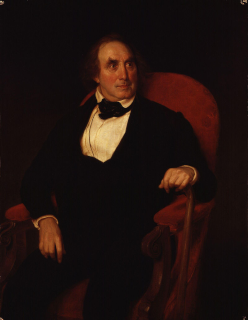
James Sheridan Knowles, Irish dramatist and actor, is born in Cork, County Cork, on May 12, 1784. A relative of Richard Brinsley Sheridan, he enjoys success writing plays for the leading West End theatres. Later in his career he also produces several novels.

Knowles’s father is the lexicographer James Knowles, cousin of Richard Brinsley Sheridan. The family moves to London in 1793, and at the age of fourteen he publishes a ballad entitled The Welsh Harper, which, set to music, is very popular. His talents secure him the friendship of William Hazlitt, who introduces him to Charles Lamb and Samuel Taylor Coleridge. He serves for some time in the Wiltshire and afterwards in the Tower Hamlets militia, leaving the service to become a pupil of Dr. Robert Willan. He obtains the degree of M.D. and is appointed vaccinator to the Jennerian Society.

Although Dr. Willan offers him a share in his practice, Knowles decides to give up medicine for the stage, making his first appearance as an actor probably at Bath, and plays Hamlet at the Crow Street Theatre, Dublin. At Wexford he marries, in October 1809, Maria Charteris, an actress from the Edinburgh Theatre. In 1810, he writes Leo, a successful play in which Edmund Kean appears. Another play, Brian Boroihme, written for the Belfast Theatre in the next year, attracts crowds. Nevertheless, his earnings are so small that he is obliged to become assistant to his father at the Royal Belfast Academical Institution. In 1817 he moves from Belfast to Glasgow, where, besides keeping a flourishing school, he continues to write for the stage.

Knowles first important success is Caius Gracchus, produced at the Belfast Theatre in 1815. His Virginius, written for William Charles Macready, is first performed in 1820 at Covent Garden. In William Tell (1825), he writes for Macready one of his favourite parts. His best-known play, The Hunchback, is produced at Covent Garden in 1832, and he wins praise acting in the work as Master Walter. The Wife is brought out at the same theatre in 1833. The Daughter, better known as The Wrecker’s Daughter, in 1836, and The Love Chase in 1837. His 1839 play Love is praised by Mary Shelley for its “inspiring situations founded on sentiment and passion.” His second wife is the actress, Emma Knowles.

In his later years Knowles forsakes the stage for the pulpit and, as a Baptist preacher, attracts large audiences at Exeter Hall and elsewhere. He publishes two polemical works: the Rock of Rome and the Idol Demolished by Its Own Priests in both of which he combats the special doctrines of the Roman Catholic Church. He is for some years in the receipt of an annual pension of £200, bestowed by Sir Robert Peel in 1849. In old age he befriends the young Edmund Gosse, whom he introduces to Shakespeare. He makes a happy appearance in Gosse’s Father and Son.

Knowles dies at Torquay on November 30, 1862. He is buried under a huge tomb at the summit of the Glasgow Necropolis.

A full list of the works of Knowles and of the various notices of him can be found in The Life of James Sheridan Knowles (1872), privately printed by his son, Richard Brinsley Knowles (1820–1882), who is well known as a journalist. It is translated into German.
Leave a comment

Birth of Irish Mathematician James Thomson

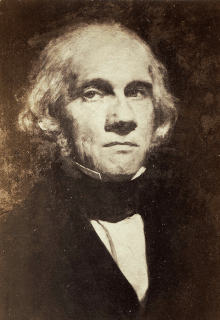
James Thomson, Irish mathematician notable for his role in the formation of the thermodynamics school at the University of Glasgow, Is born on November 13, 1786, in Ballynahinch, County Down, in what is now Northern Ireland. He is the father of the engineer and physicist James Thomson and the physicist William Thomson, 1st Baron Kelvin.

Born into an Ulster Scots family, Thomson is the fourth son of Agnes Nesbit and James Thomson, a small farmer, at Annaghmore, near Ballynahinch, County Down, in Ulster. His early education is from his father. At the age of 11 or 12 he finds out for himself the art of dialling. His father sends him to a school at Ballykine, near Ballynahinch, kept by Samuel Edgar, father of John Edgar. Here he soon rises to be an assistant.

Wishing to become a minister of the Presbyterian church, Thomson enters the University of Glasgow in 1810, where he studies for several sessions, supporting himself by teaching in the Ballykine school during the summer. He graduates MA in 1812, and in 1814 he is appointed headmaster of the school of arithmetic, bookkeeping, and geography in the newly established Royal Belfast Academical Institution. In 1815 he is Professor of Mathematics in its collegiate department. Here he proves himself as a teacher. In 1829 the honorary degree of LL.D. is conferred upon him by the University of Glasgow, where in 1832 he is appointed Professor of Mathematics. He holds this post until his death on January 12, 1849.

Thomson is buried with his family on the northern slopes of the Glasgow Necropolis to the east of the main bridge entrance. The grave is notable due to the modern memorial to Lord Kelvin at its side.

Thomson is the author of schoolbooks that have passed through many editions including Arithmetic (1819), Trigonometry, Plane and Spherical (1820), Introduction to Modern Geography (1827), The Phenomena of the Heavens (1827), The Differential and Integral Calculus (1831), and Euclid (1834).

A paper, “Recollections of the Battle of Ballynahinch, by an Eye-witness,” which appears in the Belfast Magazine for February 1825, is from his pen.


Leave a comment

Birth of James Thomson, Engineer & Physicist

james-thomson

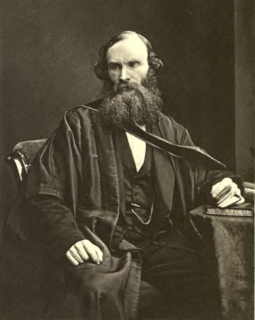
James Thomson, engineer and physicist whose reputation is substantial though overshadowed by that of his younger brother William Thomson (Lord Kelvin), is born in Belfast on February 16, 1822.

Thomson spends much of his youth in Glasgow. His father James is professor of mathematics at the University of Glasgow from 1832 onward. He attends Glasgow University from a young age and graduates in 1839 with high honors in his late teens. After graduation, he serves brief apprenticeships with practical engineers in several domains. He then gives a considerable amount of his time to theoretical and mathematical engineering studies, often in collaboration with his brother, during his twenties in Glasgow. In his late twenties he enters into private practice as a professional engineer with special expertise in water transport. In 1855, he is appointed professor of civil engineering at Queen’s University Belfast. He remains there until 1873, when he accepts the Regius professorship of Civil Engineering and Mechanics at the University of Glasgow in which he is successor to the influential William Rankine. He serves in this position until he resigns with failing eyesight in 1889.

In 1875 Thomson is elected a Fellow of the Royal Society of Edinburgh. His proposers are his younger brother William, Peter Guthrie Tait, Alexander Crum Brown and John Hutton Balfour. He is elected a Fellow of the Royal Society of London in June 1877. He serves as President of the Institution of Engineers and Shipbuilders in Scotland from 1884 to 1886.

Thomson dies of cholera in Glasgow on May 8, 1892. He is buried on the northern slopes of the Glasgow Necropolis overlooking Glasgow Cathedral. One obituary describes Thomson as “a man of singular purity of mind and simplicity of character,” whose “gentle kindness and unfailing courtesy will be long remembered.”

Thomson is known for his work on the improvement of water wheels, water pumps and turbines. He is also known for his innovations in the analysis of regelation, i.e., the effect of pressure on the freezing point of water, and his studies in glaciology including glacial motion, where he extends the work of James David Forbes. He studies the experimental work of his colleague Thomas Andrews concerning the continuity of the liquid and gaseous states of matter, and strengthens understanding of it by applying his strong knowledge of thermodynamics. He derives a simplified form of the Clapeyron equation for the solid-liquid phase boundary. He proposes the term triple point to describe the conditions for which solid, liquid and vapour states are all in equilibrium.

Thomson also makes contributions in the realm of fluid dynamics of rivers. It is claimed that the term torque is introduced into English scientific literature by Thomson in 1884.