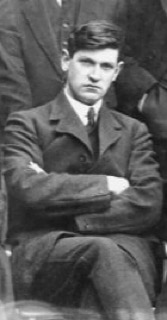
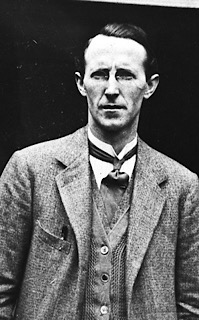
By mid-August 1922, the Irish Free State, under Michael Collins, has launched a decisive offensive to re-take towns and strongholds in the south and west. The anti-Treaty IRA, led by figures such as Liam Lynch, has been holding areas like County Cork, County Limerick, and much of County Kerry, including Killarney, in defiance of the Anglo-Irish Treaty. The Free State’s campaign aims to consolidate control over the territory and end the conventional phase of the war.
The ambush at Glenflesk is one of several IRA actions in County Kerry during this period. It occurs as Free State forces advance in the west, seeking to secure supply lines and isolate remaining anti-Treaty strongholds. The Anti-Treaty IRA, using guerrilla tactics, targets convoys and patrols to disrupt Free State operations.
While the exact casualty figures for this specific engagement are not detailed in the available records, such ambushes are part of a wider pattern of republican resistance. In County Kerry alone, Free State forces suffer multiple engagements in August, including a sniper kill at Tralee and ambushes on supply columns.
The Glenflesk ambush reflects the shift from conventional warfare to mobile, hit-and-run tactics by the anti-Treaty IRA after the Free State’s conventional offensives begin. County Kerry remains a contested area, with Killarney and surrounding towns serving as republican bases. Ambushes like this one aim to delay Free State advances and protect supply routes. While the Free State’s overall campaign succeeds in capturing major towns by late August, such ambushes prolong the conflict and keep republican forces active until the “dump arms” order in 1923.
In summary, the Glenflesk ambush of August 27, 1922, is a localized but significant IRA resistance action in County Kerry, emblematic of the guerrilla warfare that follows the Free State’s conventional offensives and contributes to the prolonged nature of the Irish Civil War.
(Pictured: Michael Collins (left) and Liam Lynch (right))
O’Connell is tutored at home in Latin and Greek, and before he is sixteen, he leaves with his cousin, Murty O’Connell, to join the French army. On February 13, 1760, he becomes a cadet in the Régiment de Royal Suédois. He spends almost his entire career in France or serving abroad with French regiments, but remains in close contact with his family, being in constant correspondence with the head of the clan, his brother Maurice O’Connell, who is almost twenty years his senior, and later arranging army appointments for a host of young nephews and cousins.
O’Connell serves with the Royal Suédois in the last two campaigns of the Seven Years’ War and is made assistant adjutant (sous-aide-major) of the regiment. At the close of the war, he is recommended for the military academy of Strasbourg (1765–66). He has a talent for self-advancement and is well regarded by his seniors, being tall, strong, handsome, disciplined, industrious, and sober. He has an almost morbid horror of drink, and his great boast is that he has never wasted a moment of his time or a farthing of his money.
Appointed to Col. Meade’s regiment of Lord Clare’s Irish Brigade with the rank of captain in October 1769, he sets sail immediately for Mauritius. Two years later he is allowed a visit home to Kerry for the first time in eleven years. In 1775 the death of Lord Clare’s son and the extinction of the title results in the reduction of the Irish Brigade and destroys O’Connell’s chance of promotion. He devotes himself to the study of chemistry, literature, and the military. A published study, Discipline of the army, comes under the notice of the military authorities, who obtain for him a Cross of Saint Louis, a pension of 2,000 livres a year, and the rank of lieutenant-colonel with which he is posted to his old regiment, the Royal Suédois, in 1778. With them he serves at the taking of Menorca in 1781 and is severely wounded at the Great Siege of Gibraltar in 1782 but manages to save the life of Charles Philippe, Count of Artois, the future Charles X. For these services he is made a count, one of only twenty-two people outside the royal family to receive this honour, and is made colonel of the German regiment of Salm-Salm in French pay, which at a grand review of 30,000 French troops in Alsace in 1785 is pronounced the best regiment. He begins to move in court circles and in 1788 kisses the hand of Marie Antoinette and rides in the king’s coach.
In 1788 O’Connell recommends to his brother Maurice the college of Saint-Omer as a suitable school for his nephews, Maurice and Daniel O’Connell, but taking belated notice of the gathering revolutionary storm, tries unsuccessfully to dissuade them. During the French Revolution of 1789 he allegedly announces his readiness to move his regiment into the capital to disperse revolutionary mobs but is not able to obtain the king’s permission. In 1790 his men mutiny, leaving him in the anomalous position of a colonel without a regiment. A protégé of the Ancien Régime, he nevertheless remains in Paris in 1790–91, serving the nouveau régime as a member of a commission engaged in revising army regulations.
In 1792 O’Connell joins Charles William Ferdinand, Duke of Brunswick‘s émigré army at Koblenz and takes part in the disastrous Battle of Valmy in Berchini’s regiment. Ever cautious, he serves as a private, refusing any command so that his name would not be mentioned in France. In November 1792 he is in London, almost penniless and bent on concealing that he had served against the republic. An alibi is procured and attested at Tralee to the effect that O’Connell had been in Ireland all the time and was forwarded to Paris to prevent the confiscation of property.
In London O’Connell petitions William Pitt the Younger to reconstruct the Irish Brigade in the service of George III. Six regiments are raised, with O’Connell appointed colonel of the 4th, but the scheme is only partially realised as three of the regiments are sent to the West Indies and Nova Scotia, where they succumb to pestilence. By 1798 the brigade has entirely ceased to exist, though he retains his full pay as a British colonel, which he draws to the end of his life. At this period his name is mooted by Gen. Henry Clarke and Theobald Wolfe Tone as a possible commander of their troops. Clarke gives his opinion that O’Connell is a good parade officer but has no genius in command, to which Wolfe Tone replies that he “was in favour of his being employed for I know he hates England.”
In 1796, O’Connell marries Martha, comtesse de Bellevue (née Drouillard de Lamarre; d. 1807), a young widow with three children, at the French chapel in Covent Garden. In 1802 he takes advantage of the peace of Amiens to return to France. On the renewal of war, the couple is detained by Napoleon as British subjects, and remain virtual prisoners in France until the restoration of the Bourbons in 1814. Back in favour, O’Connell receives the rank of lieutenant-general in the French army and commander of the Order of Saint Louis. His fortunes revive, he advances a large sum to his nephew Daniel to save him from bankruptcy in 1815 and comes to his rescue again in 1818, though by this date he has already settled the bulk of his fortune on his great-nephews. He follows his namesake’s career with keen interest, but his advice is invariably cautious and is not much heeded. After the French Revolution of 1830 he refuses to take the oath of allegiance to Louis Philippe I and is struck off the military list, though he becomes a naturalised French citizen in 1831.
O’Connell dies on July 9, 1833, at the Château de Bellevue at Meudon, near Blois, and is buried at the cemetery at Coudé. He has no children and his title, though not his fortune, descends to his godson, the Baron d’Eschegoyen’s second son, who takes the name O’Connell. A portrait by Paul Guérin hangs in Derrynane House.
(From: “O’Connell, Count Daniel Charles” by Bridget Hourican, Dictionary of Irish Biography, http://www.dib.ie)