seamus dubhghaill

Promoting Irish Culture and History from Little Rock, Arkansas, USA


Leave a comment

Paul Muldoon Wins the Pulitzer Prize for Poetry

Irish poet Paul Muldoon wins the Pulitzer Prize for Poetry on April 8, 2003, for his work Moy Sand and Gravel (2002). Additionally, he has published more than thirty collections and won the T. S. Eliot Prize. At Princeton University he has been both the Howard G. B. Clark ’21 University Professor in the Humanities and Founding Chair of the Lewis Center for the Arts. He holds the post of Professor of Poetry at the University of Oxford from 1999 to 2004 and has also served as president of The Poetry Society (UK) and poetry editor at The New Yorker.

Muldoon, the eldest of three children, is born on June 20, 1951, on a farm in County Armagh, Northern Ireland, outside The Moy, near the boundary with County Tyrone. His father works as a farmer (among other jobs) and his mother is a school mistress. In 2001, Muldoon says of the Moy:

“It’s a beautiful part of the world. It’s still the place that’s ‘burned into the retina,’ and although I haven’t been back there since I left for university 30 years ago, it’s the place I consider to be my home. We were a fairly non-political household; my parents were nationalists, of course, but it was not something, as I recall, that was a major area of discussion. But there were patrols; an army presence; movements of troops; and a sectarian divide. And that particular area was a nationalist enclave, while next door was the parish where the Orange Order was founded; we’d hear the drums on summer evenings. But I think my mother, in particular, may have tried to shelter us from it all. Besides, we didn’t really socialise a great deal. We were ‘blow-ins’ – arrivistes – new to the area, and didn’t have a lot of connections.”

Talking of his home life, Muldoon continues, “I’m astonished to think that, apart from some Catholic Truth Society pamphlets, some books on saints, there were, essentially, no books in the house, except one set, the Junior World Encyclopedia, which I certainly read again and again. People would say, I suppose that it might account for my interest in a wide range of arcane bits of information. At some level, I was self-educated.” He is a “Troubles poet” from the beginning.

In 1969, Muldoon reads English at Queen’s University Belfast (QUB), where he meets Seamus Heaney and becomes close to the Belfast Group of poets which include Michael Longley, Ciaran Carson, Medbh McGuckian and Frank Ormsby. He says of the experience, “I think it was fairly significant, certainly to me. It was exciting. But then I was 19, 20 years old, and at university, so everything was exciting, really.” He is not a strong student at QUB. He recalls, “I had stopped. Really, I should have dropped out. I’d basically lost interest halfway through. Not because there weren’t great people teaching me, but I’d stopped going to lectures, and rather than doing the decent thing, I just hung around.” During his time at QUB, his first collection New Weather (1973) is published by Faber & Faber. He meets his first wife, fellow student Anne-Marie Conway, and they are married after their graduation in 1973. The marriage breaks up in 1977.

For thirteen years (1973–86), Muldoon works as an arts producer for the BBC in Belfast. In this time, which sees the most bitter period of the Troubles, he published the collections Why Brownlee Left (1980) and Quoof (1983). After leaving the BBC, he teaches English and Creative Writing at the University of East Anglia and at Gonville and Caius College and Fitzwilliam College, Cambridge, where his students include Lee Hall (Billy Elliot) and Giles Foden (The Last King of Scotland). In 1987, he emigrates to the United States, where he teaches in the creative writing program at Princeton University. He is Professor of Poetry at Oxford University for the five-year term 1999–2004, and is an Honorary Fellow of Hertford College, Oxford.

Muldoon has been awarded fellowships in the Royal Society of Literature and the American Academy of Arts and Sciences, the 1994 T. S. Eliot Prize, the 1997 The Irish Times Literature Prize for Poetry, and the 2003 Griffin International Prize for Excellence in Poetry. He is also shortlisted for the 2007 Poetry Now Award. His poems have been collected into four books: Selected Poems 1968–1986 (1986), New Selected Poems: 1968–1994 (1996), Poems 1968–1998 (2001) and Selected Poems 1968–2014 (2016). In September 2007, he is hired as poetry editor of The New Yorker.

Muldoon is married to novelist Jean Hanff Korelitz, whom he meets at an Arvon Foundation writing course. He has two children, Dorothy and Asher, and lives primarily in New York City.

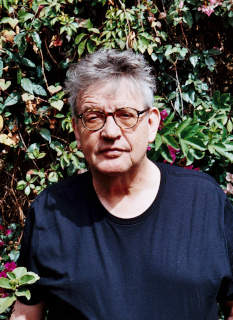
(Pictured: Paul Muldoon in Tepoztlán, Morelos, Mexico, 2018. Photograph by Alejandro Arras.)


Leave a comment

Birth of Alfred Denis Godley, Scholar & Poet

Alfred Denis Godley, Anglo-Irish classical scholar and author of humorous poems is born on January 22, 1856, at Ashfield, County Cavan.

Godley is the eldest son of Rev. James Godley, rector of Carrigallen, County Leitrim, and Eliza Frances Godley (née La Touche). After attending Tilney Basset’s preparatory school in Dublin, he goes to Harrow College and Balliol College, Oxford, graduating BA in 1878. At Oxford he becomes known for his classical scholarship and wins several prizes, including the Craven scholarship and the Gaisford Prize for Greek Verse. In 1879 he is appointed assistant classical master at Bradfield College. He returns to Oxford in 1883 as tutor and fellow of Magdalen College (1883–1912). Serving as deputy public orator of Oxford (1904–06), he is elected public orator in 1910, a post he holds until his death.

Godley also enjoys renown as a writer of satiric verse and prose, beginning his literary career as a contributor to The Oxford Magazine in 1883. In 1890 he becomes its editor, and two years later publishes his first book of poems, Verses to Order (1892). Later publications include Lyra Frivola (1899), Second Strings (1902) and The Casual Ward (1912). His work is very popular and two volumes, Reliquiae (1926) and Fifty Poems (1927), are published posthumously. He also publishes numerous works of serious scholarship including Socrates and Athenian Society in His Day (1896) and Oxford in the Eighteenth Century (1908). Noted as a translator of Herodotus, Tacitus, and Horace, he serves as joint-editor of The Classical Review (1910–20). He also edits and publishes volumes of the poetry of Thomas Moore and Winthrop Mackworth Praed.

Active in political life, Godley serves as an alderman on Oxford City Council. During the Second Boer War (1899–1901) he organises volunteer forces, commanding a battalion of the 4th Oxfordshire Light Infantry (1900–05). He serves in this capacity again during World War I and is lieutenant-colonel of the Oxfordshire Volunteer Corps (1916–19). A staunch unionist, during the Home Rule Crisis, he supports the formation of the Ulster Volunteer Force (UVF) and writes some political verse, notably The Arrest, which is popular among unionists. A pioneer in the sport of mountaineering, he is a founding member of the Alpine Club and a committee member (1908–11). He is also a member of the governing body of Harrow School. Towards the end of his career he is awarded honorary doctorates from Princeton (1913) and Oxford (1919).

In 1925 Godley goes on a tour of the Levant and contracts a fever which ultimately leads to his death on June 27, 1925, at his Oxford home, 27 Norham Road. He is buried at Wolvercote Cemetery.

In 1894 Godley marries Amy Hope Cay, daughter of Charles Hope Cay, fellow of Gonville and Caius College, Cambridge. They have no children.

(From: “Godley, Alfred Denis” by David Murphy, Dictionary of Irish Biography, http://www.dib.ie, October 2009)


Leave a comment

Birth of Classical Scholar Sir William Ridgeway

Sir William Ridgeway, FBA, Anglo-Irish classical scholar and the Disney Professor of Archaeology at the University of Cambridge, is born on August 6, 1853, at Ballydermot, Kings County (now County Offaly).

Ridgeway is the son of Rev. John Henry Ridgeway and Marianne Ridgeway. He is a direct descendant of one of Oliver Cromwell’s settlers in Ireland. He is educated at Portarlington School and Trinity College Dublin, after which he studies at Peterhouse, Cambridge then Gonville and Caius College, Cambridge, completing the Classical tripos there in 1880.

In 1880, Ridgeway marries Lucinda Maria Kate Samuels in Rathdown, County Dublin. Their daughter Lucy Marion Ridgeway (1882–1958) marries economist John Archibald Venn in 1906.

In 1883, Ridgeway is elected Professor of Greek at Queen’s College, Cork, then Disney Professor of Archaeology at Cambridge in 1892. He also holds tenure as Gifford lecturer in Religion at the University of Aberdeen from 1909 to 1911 from which is published The Evolution of Religions of Ancient Greece and Rome.

Ridgeway contributes articles to the Encyclopedia Biblica (1903), Encyclopædia Britannica (1911) and writes The Origin of Metallic Currency and Weight Standards (1892), and The Early Age of Greece (1901) which are significant works in Archaeology and Anthropology.

Ridgeway is President of the Royal Anthropological Institute of Great Britain and Ireland from 1908-10 and is instrumental in the foundation of the Cambridge school of Anthropology.

Ridgeway receives an honorary Doctorate of Letters (D.Litt.) from the University of Dublin in June 1902 and is elected a Fellow of the British Academy in 1904. For his research on horses, he receives the Doctor of Science (Sc.D.) of Cambridge in 1909. He is knighted in the 1919 Birthday Honours list.

Ridgeway dies on August 12, 1926.

(Pictured: “Sir William Ridgeway” by Richard Jack (1866-1952), oil on canvas, 1921, Gonville & Caius College, University of Cambridge)


Leave a comment

Birth of Bob Tisdall, Olympic Gold Medalist

bob-tisdall

Robert (“Bob”) Morton Newburgh Tisdall, gold medalist in the 400 metres hurdles at the 1932 Summer Olympics in Los Angeles, is born on May 16, 1907, in Nuwara Eliya, Ceylon (now Sri Lanka).

Born to a family of Irish landed gentry, he lives on his father’s plantation in Ceylon until the age of five, when they return to the family home in Nenagh, County Tipperary. Following prep school at Mourne Grange, he goes on to Shrewsbury School, where he wins the Public Schools 402 metres, and at Gonville and Caius College, Cambridge, where he wins a record four events – 402 metres and 110 metres hurdles, long jump and shot put – in the annual match against Oxford. This record is only equaled nearly 60 years later.

Tisdall sets South African and Canadian records in the 201 metres low hurdles in 1929, a year later setting Greek records in the same event. While at Cambridge in March 1932, he decides to try for a place on the Irish Olympic squad and, after he runs a record 54.2 seconds for the Irish Championship 402 metres hurdles in June that year, the authorities agree to let him run in his new event at the Los Angeles Olympic Games.

Tisdall had run only six 400 metres hurdles when he wins the gold medal at the 1932 Olympic Games in a world record time of 51.7 seconds, which is not recognised under the rules of the time because he had a hit a hurdle. Later, because of the notoriety of this incident, the rules are changed and the President of the International Olympic Committee, Juan Antonio Samaranch, presents Tisdall with a Waterford Crystal rose bowl with the image of him knocking over the last hurdle etched into the glass. Though the International Amateur Athletic Federation (IAAF) did not recognise the record at the time, they now recognise the mark, giving Tisdall credit for setting the milestone of being the first man under 52 seconds.

Following his victory, Tisdall is invited to a dinner in Los Angeles where he is seated next to Amelia Earhart on one side and Douglas Fairbanks, Jr. on the other.

Later in life, Tisdall lives in South Africa, where he runs a gymnasium during the day, which he converts to a night club after dark. He grows coffee in Tanzania, but moves to Nambour, Queensland in 1969 with his wife Peggy, where he farms fruit crops and cattle. He admits to running his last race at the age of 80, though he runs in the Sydney Olympics torch relay at age 93. At that point he is the oldest living recipient of an individual track and field Olympic medal。

At the age of 96 Tisdall falls down a steep set of rock stairs and breaks his shoulder, ribs and ruptures his spleen. He never completely recovers and dies on July 27, 2004. At that time, he is the world’s oldest track and field Olympic Gold medalist. He does not want a funeral because “they are altogether too sad.” His wake is attended by family and a few friends.

In 2002, three statues honouring Olympic champions with links to Nenagh, Matt McGrath, Johnny Hayes and Bob Tisdall, are unveiled in front of the Nenagh Courthouse.


2 Comments

Birth of Charles Wood, Composer & Teacher

Charles Wood, composer and teacher, is born in Vicars’ Hill in the Cathedral precincts of Armagh, County Armagh on June 15, 1866. His pupils include Ralph Vaughan Williams at Cambridge and Herbert Howells at the Royal College of Music. For most of his adult life he lives in England, but preserves a lively interest in Ireland.

Wood is the fifth child and third son of Charles Wood, Sr. and Jemima Wood. He is a treble chorister in the choir of the nearby St. Patrick’s Cathedral. His father sings tenor as a stipendiary “Gentleman” or “Lay Vicar Choral” in the Cathedral choir and is also the Diocesan Registrar of the church. He is a cousin of Irish composer Ina Boyle.

Wood receives his early education at the Cathedral Choir School and also studies organ with two Organists and Masters of the Boys of Armagh Cathedral, Robert Turle and his successor Dr. Thomas Marks. In 1883 he becomes one of fifty inaugural class members of the Royal College of Music, studying composition with Charles Villiers Stanford and Charles Hubert Hastings Parry primarily, and horn and piano secondarily. Following four years of training, he continues his studies at Selwyn College, Cambridge through 1889, where he begins teaching harmony and counterpoint.

In 1889 he attains a teaching position at Gonville and Caius College, Cambridge, first as organ scholar and then as fellow in 1894, becoming the first Director of Music and Organist. He is instrumental in the reflowering of music at the college, though more as a teacher and organiser of musical events than as composer. After Stanford dies in 1924, Wood assumes his mentor’s vacant role as Professor of Music in the University of Cambridge.

Like his better-known colleague Stanford, Wood is chiefly remembered for his Anglican church music. As well as his Communion Service in the Phrygian mode, his settings of the Magnificat and Nunc dimittis are still popular with cathedral and parish church choirs, particularly the services in F, D, and G, and the two settings in E flat. During Passiontide his St. Mark Passion is sometimes performed, and demonstrates Wood’s interest in modal composition, in contrast to the late romantic harmonic style he more usually employs.

Wood’s anthems with organ, Expectans expectavi, and O Thou, the Central Orb are both frequently performed and recorded, as are his unaccompanied anthems Tis the day of Resurrection, Glory and Honour and, most popular of all, Hail, gladdening light and its lesser-known equivalent for men’s voices, Great Lord of Lords. All of Wood’s a cappella music demonstrates fastidious craftsmanship and a supreme mastery of the genre, and he is no less resourceful in his accompanied choral works which sometimes include unison sections and have stirring organ accompaniments, conveying a satisfying warmth and richness of emotional expression appropriate to his carefully chosen texts.

Wood collaborates with priest and poet George Ratcliffe Woodward in the revival and popularisation of renaissance tunes to new English religious texts, notably co-editing three books of carols. He also writes eight string quartets, and is co-founder of the Irish Folk Song Society in 1904.

He marries Charlotte Georgina Wills-Sandford, daughter of W. R. Wills-Sandford, of Castlerea, County Roscommon on March 17, 1898. Their son is killed in World War I.

Charles Wood dies on July 12, 1926 and is buried at the Ascension Parish Burial Ground in Cambridge alongside his wife.