seamus dubhghaill

Promoting Irish Culture and History from Little Rock, Arkansas, USA


Leave a comment

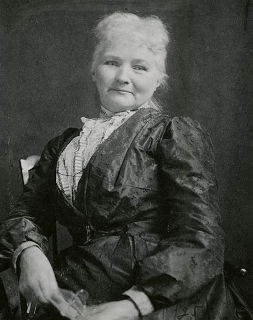
Death of Mary Harris “Mother” Jones, Union Organizer & Activist

Mary G. Harris Jones, known as Mother Jones, an Irish-born American schoolteacher and dressmaker who becomes a prominent union organiser, community organiser, and activist, dies in Silver Spring, Maryland, on November 30, 1930. She is once deemed “the most dangerous woman in America” because of her union activities.

Jones is the daughter of Richard Harris, a Roman Catholic tenant farmer and railway labourer, and Ellen (née Cotter) Harris. She is baptised on August 1, 1837, in Cork, County Cork. Her exact date of birth is uncertain. She and her family are victims of the Great Famine, as are many other Irish families of the time. The famine forces more than a million families, including the Harrises, to immigrate to North America when she is ten years old. She lives in the United States and Canada, where she attends and later teaches in a Roman Catholic normal school in Toronto. In the United States she teaches in a convent school in Monroe, Michigan and works as a seamstress. In 1861 she marries George Jones, an iron-moulder and labour union member in Memphis, Tennessee. After the death of her husband and their four children in a yellow fever epidemic in 1867, she relocates to Chicago, Illinois, where she becomes involved with an early industrial union, the Knights of Labor. Her seamstress shop is destroyed in the Great Chicago Fire of 1871.

In the 1890s Jones becomes known as ‘Mother’ Jones and begins a long association with socialist causes and the United Mine Workers of America. She attends the founding convention of Social Democracy of America, later known as the Cooperative Brotherhood, in 1897 and in the same year organises support and publicity for striking bituminous coal miners in West Virginia, including a children’s march and parades of farmers delivering food to the miners’ camp. These types of defiant mass action become her trademark. Notable activities include organising women in support of an 1899 anthracite coal strike in eastern Pennsylvania, directing strikes of young women working in textile mills, a 1903 ‘children’s crusade’ against child labour which includes a ninety-mile march from Philadelphia to New York City, participating in 1905 in the founding convention of the Industrial Workers of the World, a radical labour union committed to the organisation of unskilled workers, campaigning for the release of Mexican revolutionaries imprisoned in American jails, and testifying in 1915 in congressional hearings against the abuse of corporate power by Rockefeller interests.

Jones reportedly meets with James Connolly, Irish socialist and labour organiser, in New York City in 1910. She is arrested for the first time for violating a federal injunction during a miners’ strike in West Virginia in 1902. In 1904, during a Colorado miners’ campaign, she has to avoid the authorities to escape possible deportation. During a 1914 strike in Ludlow, Colorado, she is imprisoned without trial for nine weeks. In 1919 she is arrested in Pennsylvania during a steelworkers’ strike for defending freedom of speech and the right of workers to organise unions. She remains active in the labour movement and radical causes into her nineties.

During her later years, Jones lives with her friends Walter and Lillie May Burgess on their farm in what is now Adelphi, Maryland. She celebrates her self-proclaimed 100th birthday there on May 1, 1930, and is filmed making a statement for a newsreel.

Jones dies on November 30, 1930, at the Burgess farm then in Silver Spring, Maryland, though now part of Adelphi. There is a funeral Mass at St. Gabriel’s Catholic Church in Washington, D.C. She is buried in the Union Miners Cemetery in Mount Olive, Illinois, alongside miners who died in the 1898 Battle of Virden.

In 1932, about 15,000 Illinois mine workers gather in Mount Olive to protest against the United Mine Workers, which soon becomes the Progressive Mine Workers of America. Convinced that they have acted in the spirit of Mother Jones, the miners decide to place a proper headstone on her grave. By 1936, the miners have saved up more than $16,000 and are able to purchase “eighty tons of Minnesota pink granite, with bronze statues of two miners flanking a twenty-foot shaft featuring a bas-relief of Mother Jones at its center.” On October 11, 1936, also known as Miners’ Day, an estimated 50,000 people arrive at Mother Jones’s grave to see the new gravestone and memorial. Since then, October 11 is not only known as Miners’ Day but is also referred to and celebrated in Mount Olive as “Mother Jones’s Day.”

The farm where she died begins to advertise itself as the “Mother Jones Rest Home” in 1932, before being sold to a Baptist church in 1956. The site is now marked with a Maryland Historical Trust marker, and a nearby elementary school is named in her honor.


Leave a comment

The Great Chicago Fire

The Great Chicago Fire, a conflagration that destroys roughly 3.3 square miles of Chicago, Illinois, including over 17,000 structures, kills approximately 300 people and leaves more than 100,000 residents homeless, starts at about 8:30 p.m. on October 8, 1871, in or around a small barn belonging to the Irish immigrant O’Leary family that borders the alley behind 137 W. DeKoven Street.

The shed next to the barn is the first building to be consumed by the fire. City officials never determine the cause of the blaze, but the rapid spread of the fire due to a long drought in that year’s summer, strong winds from the southwest, and the rapid destruction of the water pumping system, explain the extensive damage of the mainly wooden city structures. There has been much speculation over the years on a single start to the fire. The most popular tale blames Catherine O’Leary‘s cow, who allegedly knocked over a lantern; others state that a group of men were gambling inside the barn and knocked over a lantern. Still other speculation suggests that the blaze was related to other fires in the Midwest that day.

The fire’s spread is aided by the city’s use of wood as the predominant building material in a style called balloon framing. More than two-thirds of the structures in Chicago at the time of the fire are made entirely of wood, with most of the houses and buildings being topped with highly combustible tar or shingle roofs. All of the city’s sidewalks and many roads are also made of wood. Compounding this problem, Chicago receives only 1 inch of rain from July 4 to October 9, causing severe drought conditions before the fire, while strong southwest winds help to carry flying embers toward the heart of the city.

In 1871, the Chicago Fire Department has 185 firefighters with just 17 horse-drawn steam pumpers to protect the entire city.  The initial response by the fire department is timely, but due to an error by the watchman, Matthias Schaffer, the firefighters are initially sent to the wrong place, allowing the fire to grow unchecked.  An alarm sent from the area near the fire also fails to register at the courthouse where the fire watchmen are, while the firefighters are tired from having fought numerous small fires and one large fire in the week before. These factors combined to turn a small barn fire into a conflagration.

When firefighters finally arrive at DeKoven Street, the fire has grown and spread to neighboring buildings and is progressing toward the central business district. Firefighters hope that the South Branch of the Chicago River and an area that had previously thoroughly burned would act as a natural firebreak.  All along the river, however, are lumber yards, warehouses, and coal yards, and barges and numerous bridges across the river. As the fire grows, the southwest wind intensifies and becomes superheated, causing structures to catch fire from the heat and from burning debris blown by the wind. Around midnight, flaming debris blows across the river and lands on roofs and the South Side Gas Works. 

With the fire across the river and moving rapidly toward the heart of the city, panic sets in. About this time, Mayor Roswell B. Mason sends messages to nearby towns asking for help. When the courthouse catches fire, he orders the building to be evacuated, and the prisoners jailed in the basement to be released. At 2:30 a.m. on October 9, the cupola of the courthouse collapses, sending the great bell crashing down.  Some witnesses report hearing the sound from a mile away.

As more buildings succumbed to the flames, a major contributing factor to the fire’s spread is a meteorological phenomenon known as a fire whirl. As overheated air rises, it comes into contact with cooler air and begins to spin, creating a tornado-like effect. These fire whirls are likely what drives flaming debris so high and so far. Such debris is blown across the main branch of the Chicago River to a railroad car carrying kerosene. The fire has jumped the river a second time and is now raging across the city’s north side.

Despite the fire spreading and growing rapidly, the city’s firefighters continue to battle the blaze. A short time after the fire jumps the river, a burning piece of timber lodges on the roof of the city’s waterworks. Within minutes, the interior of the building is engulfed in flames and the building is destroyed. With it, the city’s water mains go dry and the city is helpless. The fire burns unchecked from building to building, block to block.

Finally, late into the evening of October 9, it starts to rain, but the fire has already started to burn itself out. The fire had spread to the sparsely populated areas of the north side, having thoroughly consumed the densely populated areas.

Once the fire has ended, the smoldering remains are still too hot for a survey of the damage to be completed for many days. Eventually, the city determines that the fire destroyed an area about 4 miles long and averaging 3⁄4 mile wide, encompassing an area of more than 2,000 acres. Destroyed are more than 73 miles of roads, 120 miles of sidewalk, 2,000 lampposts, 17,500 buildings, and $222 million in property, which is about a third of the city’s valuation in 1871.

On October 11, 1871, General Philip H. Sheridan comes quickly to the aid of the city and is placed in charge by a proclamation, given by mayor Roswell B. Mason.

To protect the city from looting and violence, the city is put under martial law for two weeks under Gen. Sheridan’s command structure with a mix of regular troops, militia units, police, and a specially organized civilian group “First Regiment of Chicago Volunteers.”

For two weeks Sheridan’s men patrol the streets, guard the relief warehouses, and enforce other regulations. On October 24, the troops are relieved of their duties and the volunteers are mustered out of service.

Of the approximately 324,000 inhabitants of Chicago in 1871, 90,000 residents (about 28% of the population) are left homeless. One hundred twenty bodies are recovered, but the death toll is believed to possibly exceed 300. The county coroner speculates that an accurate count is impossible, as some victims may have drowned or been incinerated, leaving no remains.

In the days and weeks following the fire, monetary donations flow into Chicago from around the country and abroad, along with donations of food, clothing, and other goods. These donations come from individuals, corporations, and cities.

Almost from the moment the fire breaks out, various theories about its cause begin to circulate. The most popular and enduring legend maintains that the fire began in the O’Leary barn as Mrs. O’Leary is milking her cow. The cow kicks over a lantern (or an oil lamp in some versions), setting fire to the barn. The O’Leary family denies this, stating that they were in bed before the fire started, but stories of the cow begin to spread across the city. Catherine O’Leary seems the perfect scapegoat: she is a poor, Irish Catholic immigrant. During the latter half of the 19th century, anti-Irish sentiment is strong in Chicago and throughout the United States. This is intensified as a result of the growing political power of the city’s Irish population.

Furthermore, the United States has been distrustful of Catholics since its beginning, carrying over attitudes in England in the 17th century. As an Irish Catholic, Mrs. O’Leary is a target of both anti-Catholic and anti-Irish sentiment. This story is circulating in Chicago even before the flames die out and is noted in the Chicago Tribune‘s first post-fire issue. In 1893, the reporter Michael Ahern retracts the “cow-and-lantern” story, admitting it is fabricated, but even his confession is unable to put the legend to rest. Catherine O’Leary turns into a recluse after the fire and dies in 1895. Although the O’Learys are never officially charged with starting the fire, the story becomes so engrained in local lore that Chicago’s city council officially exonerates them — and the cow — in 1997.

(Pictured: A Currier & Ives lithograph showing people fleeing across the Randolph Street Bridge)


Leave a comment

Baptism of Mary Harris “Mother” Jones, Union Organizer & Activist

Mary G. Harris Jones, known as Mother Jones, an Irish-born American schoolteacher and dressmaker who becomes a prominent union organiser, community organiser, and activist, is baptised on August 1, 1837, in Cork, County Cork. Her exact date of birth is uncertain. She is once deemed “the most dangerous woman in America” because of her union activities.

Jones is the daughter of Richard Harris, a Roman Catholic tenant farmer and railway labourer, and Ellen (née Cotter) Harris. She and her family are victims of the Great Famine, as are many other Irish families of the time. The famine forces more than a million families, including the Harrises, to immigrate to North America when she is ten years old. She lives in the United States and Canada, where she attends and later teaches in a Roman Catholic normal school in Toronto. In the United States she teaches in a convent school in Monroe, Michigan and works as a seamstress. In 1861 she marries George Jones, an iron-moulder and labour union member in Memphis, Tennessee. After the death of her husband and their four children in a yellow fever epidemic in 1867, she relocates to Chicago, Illinois, where she becomes involved with an early industrial union, the Knights of Labor. Her seamstress shop is destroyed in the Great Chicago Fire of 1871.

In the 1890s Jones becomes known as ‘Mother’ Jones and begins a long association with socialist causes and the United Mine Workers of America. She attends the founding convention of Social Democracy of America, later known as the Cooperative Brotherhood, in 1897 and in the same year organises support and publicity for striking bituminous coal miners in West Virginia, including a children’s march and parades of farmers delivering food to the miners’ camp. These types of defiant mass action become her trademark. Notable activities include organising women in support of an 1899 anthracite coal strike in eastern Pennsylvania, directing strikes of young women working in textile mills, a 1903 ‘children’s crusade’ against child labour which includes a ninety-mile march from Philadelphia to New York City, participating in 1905 in the founding convention of the Industrial Workers of the World, a radical labour union committed to the organisation of unskilled workers, campaigning for the release of Mexican revolutionaries imprisoned in American jails, and testifying in 1915 in congressional hearings against the abuse of corporate power by Rockefeller interests.

Jones reportedly meets with James Connolly, Irish socialist and labour organiser, in New York City in 1910. She is arrested for the first time for violating a federal injunction during a miners’ strike in West Virginia in 1902. In 1904, during a Colorado miners’ campaign, she has to avoid the authorities to escape possible deportation. During a 1914 strike in Ludlow, Colorado, she is imprisoned without trial for nine weeks. In 1919 she is arrested in Pennsylvania during a steelworkers’ strike for defending freedom of speech and the right of workers to organise unions. She remains active in the labour movement and radical causes into her nineties.

During her later years, Jones lives with her friends Walter and Lillie May Burgess on their farm in what is now Adelphi, Maryland. She celebrates her self-proclaimed 100th birthday there on May 1, 1930, and is filmed making a statement for a newsreel.

Jones dies on November 30, 1930, at the Burgess farm then in Silver Spring, Maryland, though now part of Adelphi. There is a funeral Mass at St. Gabriel’s in Washington, D.C. She is buried in the Union Miners Cemetery in Mount Olive, Illinois, alongside miners who died in the 1898 Battle of Virden.

In 1932, about 15,000 Illinois mine workers gather in Mount Olive to protest against the United Mine Workers, which soon becomes the Progressive Mine Workers of America. Convinced that they have acted in the spirit of Mother Jones, the miners decide to place a proper headstone on her grave. By 1936, the miners have saved up more than $16,000 and are able to purchase “eighty tons of Minnesota pink granite, with bronze statues of two miners flanking a twenty-foot shaft featuring a bas-relief of Mother Jones at its center.” On October 11, 1936, also known as Miners’ Day, an estimated 50,000 people arrive at Mother Jones’s grave to see the new gravestone and memorial. Since then, October 11 is not only known as Miners’ Day but is also referred to and celebrated in Mount Olive as “Mother Jones’s Day.”

The farm where she died begins to advertise itself as the “Mother Jones Rest Home” in 1932, before being sold to a Baptist church in 1956. The site is now marked with a Maryland Historical Trust marker, and a nearby elementary school is named in her honor.