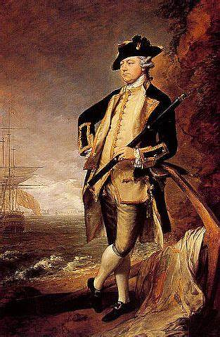
Luttrell was a captain in the Royal Navy but retires in 1789. He is returned to Parliament for Stockbridge in 1774, a seat he holds until 1775, and again between 1780 and 1785. Between 1785 and 1826 he is a commissioner of HM Customs and Excise. He succeeds his elder brother to the earldom in 1821. This is an Irish peerage and does not entitle him to an automatic seat in the House of Lords.
In 1766, Lord Carhampton marries the Honorable Elizabeth Olmius (1742-97), daughter of John Olmius, 1st Baron Waltham. In 1787, out of respect after the death of his father-in-law, he assumes by Royal Licence the additional surname of “Olmius.” In 1798, he sells the Olmius family seat of Newhall to the founding nuns of New Hall School. There are three children from his first marriage (however only his daughter survives to adulthood):
Lady Frances Maria Luttrell (b. 1768), married Sir Simeon Stuart, 4th Baronet
James Luttrell (d. 1772)
John Luttrell (d. 1769)
Lord Carhampton marries secondly Maria Morgan, daughter of John Morgan, in 1798. They have one child:
Lady Maria Anne Luttrell (1799–1857), married Lieutenant-Colonel Hardress Robert Saunderson
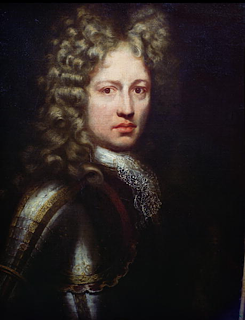
There are few surviving records of Sarsfield’s early life, although it is generally agreed he is brought up on the family estates at Tully. While some biographies claim he is educated at a French military college, there is no evidence for this.
Sarsfield fights at Entzheim, Turckheim and Altenheim. He and Hamilton are standing next to Turenne when he is killed by a chance shot at Salzbach in July 1675. He remains in France until the war ends in 1678, then returns to London to join a new regiment being recruited by Thomas Dongan, 2nd Earl of Limerick. However, the Popish Plot then results in Sarsfield and other Catholics being barred from serving in the military.
This leaves Sarsfield short of money, and he becomes involved in an expensive legal campaign to regain Lucan Manor from the heirs of his brother William, who dies in 1675. This ultimately proves unsuccessful amid allegations of forged documents, and in 1681 he returns to London, where he makes two separate attempts to abduct an heiress and is lucky to escape prosecution. When Charles’s Catholic brother James becomes king in 1685, Sarsfield rejoins the army and fights in the decisive Battle of Sedgemoor, which ends the Monmouth Rebellion. James is keen to promote Catholics, whom he views as more loyal, and by 1688 Sarsfield is colonel of a cavalry unit.
After Richard Talbot, 1st Earl of Tyrconnell, is appointed Lord Deputy of Ireland in 1687, he begins creating a Catholic-dominated Irish army and political establishment. Aware of preparations for invasion by his nephew and son-in-law William of Orange, James sends Sarsfield to Dublin in September to persuade Tyrconnell to provide him with Irish troops. This proves unsuccessful, and in November James is deposed by the Glorious Revolution. Sarsfield takes part in the Wincanton Skirmish, one of the few military actions during the invasion. He remains in England until January when he is allowed to join James in France.
Accompanied by French troops and English exiles, James lands in Ireland in March 1689, beginning the Williamite War in Ireland. Sarsfield is promoted brigadier, elected to the 1689 Irish Parliament for County Dublin, and commands cavalry units in the campaign in Ulster and Connacht. When an Irish brigade is sent to France in October, French ambassador Jean-Antoine de Mesmes proposes Sarsfield as its commander. He notes that while “not…of noble birth […], (he) has distinguished himself by his ability, and (his) reputation in this kingdom is greater than that of any man I know […] He is brave, but above all has a sense of honour and integrity in all that he does”.
James rejects this, stating that although unquestionably brave, Sarsfield is “very scantily supplied with brains.” His role at the Battle of the Boyne is peripheral, although the battle is less decisive than often assumed, Jacobite losses being around 2,000 from a force of 25,000. James returns to France, leaving Tyrconnell in control. He is the leader of the “Peace Party,” who want to negotiate a settlement preserving Catholic rights to land and public office. Sarsfield heads the “War Party,” who feel they can gain more by fighting on. It includes the Luttrell brothers, Nicholas Purcell and English Catholic William Dorrington, a former colleague from Monmouth’s Regiment.
The position of the War Party is strengthened by the Declaration of Finglas, which offers the rank and file amnesty but excludes senior officers. French victories in the Low Countries briefly increases hopes of a Stuart restoration, and the Jacobites establish a defensive line along the River Shannon. Sarsfield cements his reputation with an attack on the Williamite artillery train at Ballyneety, widely credited with forcing them to abandon the first siege of Limerick. The Jacobites also retain Athlone, offset by the loss of Kinsale and Cork, which make resupply from France extremely difficult.
With Tyrconnell absent in France, Sarsfield takes control and in December 1690, arrests several leaders of the peace faction. He then bypasses James by asking Louis XIV directly for French support, and requesting the removal of Tyrconnell and the army commander James FitzJames, 1st Duke of Berwick, James’ illegitimate son. The latter, who later describes Sarsfield as “a man […] without sense”, albeit “very good-natured,” leaves Limerick for France in February.
Tyrconnell returns in January 1691, carrying letters from James making Sarsfield Earl of Lucan, an attempt to placate an “increasingly influential and troublesome figure.” A large French convoy arrives at Limerick in May, along with Charles Chalmot de Saint-Ruhe, appointed military commander in an attempt to end the conflict between the factions. Saint-Ruhr and 7,000 others die at Aughrim in July 1691, reputedly the bloodiest battle ever on Irish soil. Sarsfield’s role is unclear: one account claims he quarrels with Saint-Ruhe and is sent to the rear with the cavalry reserves.
The remnants of the Jacobite army regroup at Limerick. Tyrconnell dies of a stroke in August, and in October, Sarsfield negotiates terms of surrender. He is criticised for this, having constantly attacked Tyrconnell for advocating the same thing, while it is suggested the Williamite army is weaker than he judged. However, the collapse of the Shannon line and surrender of Galway and Sligo leaves him little option. Without French supplies, the military position is hopeless, and defections mean his army is dissolving.
The military articles of the Treaty of Limerick preserve the Jacobite army by allowing its remaining troops to enter French service. About 19,000 officers and men, including Sarsfield, choose to leave in what is known as the Flight of the Wild Geese. Sarsfield’s handling of the civil articles is less successful. Most of its protections are ignored by the new regime, although Sarsfield possibly views it as temporary, hoping to resume the war.
On arrival in France, Sarsfield becomes Major-General in the army of exiles, an appointment James makes with great reluctance. In addition to other acts of perceived insubordination, Sarsfield allegedly tells William’s negotiators at Limerick “change but kings with us, and we will fight it over again.” After the planned invasion of England is abandoned in 1692, the exiles become part of the French army, and Sarsfield a French maréchal de camp.
Sarsfield fights at Steenkerque in August 1692, and is fatally wounded at the Battle of Landen in 1693, dying at Huy on August 21, 1693. Despite several searches, no grave or burial record has been found, although a plaque at St. Martin’s Church, Huy, has been set up in commemoration and an announcement in 2023 states that, pending exhumation and identification, his remains have been located. Like much else, his reputed last words, “Oh that this had been shed for Ireland!” are apocryphal.
Father and son, both accounted “notorious womanizers,” have a bitter relationship. His father once challenges him to a duel, but he declines, observing that his father is not a gentleman.
With the support of the Grafton ministry and of the Court, in 1769 Luttrell stands in Middlesex against John Wilkes, the radical and popular figure who had already been the constituency’s three-time democratic choice. He loses the poll (1,143 votes to 269) but is seated in Parliament, Wilkes having once again been barred as an adjudged felon. As a result of the affair, for some months, Luttrell dares not appear in the street and is “the most unpopular man in the House of Commons.”
The government rewards Luttrell by appointing him Adjutant General for Ireland in 1770. He continues to sit in the Commons, where he describes the Whigs in their opposition to the conduct of the American War, as “the abetters of treason and rebellion combined purposely for the ruin of their country.”
In 1788, Luttrell is publicly accused in Dublin of the rape of a 12-year-old girl. Having been paid to deliver a message, Mary Neal claims she is bundled into a brothel and there assaulted throughout the night by Luttrell. The keeper of the house, Maria Llewellyn, is charged in a case marked by accusations of witness tampering, the death in prison of Mary’s mother and newborn baby sister and by the insinuation that Mary was already working as a prostitute. The affair becomes a cause célèbre with the public intervention of Archibald Hamilton Rowan, later a founding member of the Dublin Society of United Irishmen. To clear Mary’s name he brings her to Dublin Castle to see the Lord Lieutenant, John Fane, 10th Earl of Westmorland. Westmorland, unmoved, pardons Llewellyn and sets her at liberty. Luttrell is never asked to answer for raping Mary Neal. In 1790 he re-enters the British Parliament as Member for Plympton Erle.
In 1791 and 1792, Luttrell helps vote down bills to abolish the slave trade. Negroes, he proposes, only want “to murder their masters, ravish their women, and drink all their rum.” At the same time, he opposes lifting civil disabilities on Roman Catholics by abolishing the Test Act in Scotland and speaks scathingly of parliamentary reform.
In October 1793, a younger brother, Temple Simon Luttrell, is arrested in Boulogne and, until February 1795, is held in Paris where, on the strength of their sister Anne Luttrell being married to Prince Henry, Duke of Cumberland, he is publicly exhibited as the brother of the king of England.
In 1795, Luttrell is entrusted with the breakup and disarming of Defenders, the agrarian semi-insurgency, in Connacht. His proceedings and impressment of some 1,300 “rebels” into the British navy elicits criticism in otherwise loyal circles.
In 1796, with the leaders of the democratic party, the United Irishmen, preparing for a French-assisted insurrection, Luttrell is given overall command of the Crown forces in Ireland. He demonstrates still greater ruthlessness in attempting to “pacify” the country and suppress the eventual rising in the summer of 1798. His command has the unusual distinction of being upbraided by his successor as Commander in Chief, Sir Ralph Abercromby, for an army “in a state of licentiousness, which must render it formidable to everyone but the enemy.”
Luttrell is seen by his critics as having “fanned the flame of disaffection into open rebellion” by “the picketings, the free quarters, half hangings, flogging and pitch-cappings” he directs.
In July 1799, Luttrell sells his Irish property and by his own later account, he takes no part in the Acts of Union. He claims to be “disgusted at the scene that was passing before me”, and to abandon Ireland because, under a “cowardly” government, he sees “the country likely to become Catholic.” When the Dublin Post of May 2, 1811, erroneously reports his death, he demands a retraction which they print under the headline Public Disappointment.
Luttrell purchases an estate at Painshill Park in Surrey and lives for several years in relative obscurity. From 1813 he harries the government of Robert Jenkinson, 2nd Earl of Liverpool, with the claim that George III had promised him a secure seat in the Commons. In June 1817, five weeks short of his eightieth birthday, he finds his own way back to Parliament as Member for Ludgershall and revenges himself, in the four years remaining to him, by voting with the opposition. This, however, does not extend to joining in the attacks on the domestic spy system in 1818 nor to voting for parliamentary reform in 1819. Moreover, in the wake of the Peterloo Massacre, he supports the government, lauding the use of deadly force against “the Radicals and their system.”
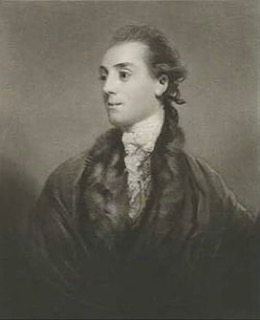
Luttrell is born in 1713, the second son of Henry Luttrell, of Luttrellstown Castle (whose family had held Luttrellstown Castle and the demesne and adjoining lands since the land had been granted to Sir Geoffrey de Luterel in about 1210 by King John of England) and his wife Elizabeth Jones. His father is a noted commander in the JacobiteIrish Army between 1689 and 1691. He later receives a pardon from the Williamite authorities and is accused by his former Jacobite comrades of having betrayed them. He is murdered when his sedan chair is attacked in Dublin on October 22, 1717.
On October 13, 1768, Luttrell is created Baron Irnham of Luttrellstown in the Peerage of Ireland. As his title is an Irish peerage, he is able to keep his seat in the British House of Commons. He is elevated to the title of Viscount Carhampton on January 9, 1781, and is made Earl of Carhampton on June 23, 1785. He lives at Four Oaks Hall, Four Oaks, Sutton Coldfield, from 1751 to 1766.
On January 22, 1735, Luttrell marries Judith Maria Lawes, daughter of Sir Nicholas Lawes, Governor of Jamaica and Elizabeth Cotton (née Lawley), by whom he has eight children:
John Luttrell-Olmius, 3rd Earl of Carhampton (c. 1745 – 1829), marries the Honorable Elizabeth Olmius and in 1787 by Royal Licence the additional surname of ‘Olmius’ out of respect after death of his father-in-law.
Temple Simon Luttrell (c. 1738 – 1803)
James Luttrell (c. 1751 – 1788), naval officer, dies of consumption.
Luttrell’s rakish behaviour earns him the nickname “King of Hell,” with “Hell” being a district of Dublin notorious for its brothels. He reputedly starts the courtesanMary Nesbitt in her career by seducing her.
Luttrell dies at Four Oaks, Warwick, England, on January 14, 1787. He is buried at Kingsbury, Warwick, England.
Henry Luttrell, Irish soldier known for his service in the Jacobite cause, is murdered in Dublin on October 22, 1717, a case that has never been solved. A career soldier, he serves James II in England until his overthrow in 1688. In Ireland he continues to fight for James, reaching the rank of General in the Irish Army.
Luttrell is born in 1655, the second son of Thomas Luttrell of Luttrellstown Castle in County Dublin, an Irish landowner of Catholic heritage. He spends his early life on the Continent, where he kills the so-called 3rd Viscount Purbeck in a duel at Liège.
Following the disintegration of the English Army and William’s capture of London, Luttrell goes to Ireland. He joins the Irish Army under the command of Richard Talbot, 1st Earl of Tyrconnell, which has remained loyal to James and is undergoing a major expansion. He and other Catholic officers flock to the army, while Protestants are purged. Protestant inhabitants in Ireland rise, proclaiming their loyalty to William of Orange. While an uprising at Bandon in County Cork is quickly put down, a lengthy Siege of Derry begins. He is given command of a cavalry regiment. He also sits in the Patriot Parliament called by King James, as a representative for County Carlow.
In 1689 Luttrell is made Governor of Sligo, which had recently been recaptured from the enemy by Patrick Sarsfield. He immediately sets about improving the town’s fortifications. He is a friend and supporter of Sarsfield and backs his policy of continued resistance following the Jacobite defeat the Battle of the Boyne in 1690.
Luttrell’s precipitate withdrawal with the cavalry of the left flank at the Battle of Aughrim gives rise to suspicions of disloyalty. During the Siege of Limerick, he is found to be in correspondence with the besiegers, and scarcely escapes hanging, bringing his regiment of horse over to the Williamite side after the surrender of the city. As a reward, he receives the forfeited estates of his elder brother, Simon Luttrell, including Luttrellstown, and is made a major general in the Dutch army.
Luttrell attempts to deprive his brother’s widow, Catherine, of her jointure by discreditable means, but is ultimately obliged to yield it to her.
On October 13, 1704, Luttrell marries Elizabeth Jones and has two sons: Robert Luttrell (d. 1727), and Simon Luttrell, 1st Earl of Carhampton (1713–1787).
Luttrell is shot and mortally wounded in his sedan chair on the night of October 21, 1717, on the Blind-quay in Dublin as he is proceeding from Lucas’ Coffee House on Cork-hill to his house in Stafford Street. He dies the following day, at the age of sixty-three. Despite large rewards, the murderers are never apprehended.
His grandson, Henry Luttrell, 2nd Earl of Carhampton, sells Luttrellstown Castle which the family had owned for almost 600 years in 1800. After Luttrellstown Castle is sold Luttrell’s grave is opened and the skull smashed.
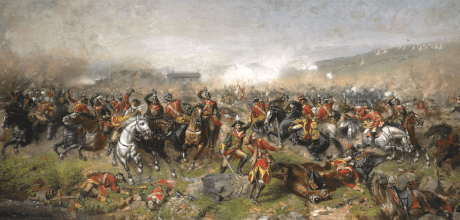
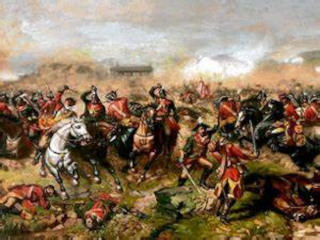
(Pictured: Depiction of the Battle of Aughrim (1691) by John Mulvany (c. 1839 – 1906). Luttrell’s conduct during the 1691 battle becomes a subject of historical debate.)
The Battle of Aughrim (Irish: Cath Eachroma), the decisive battle of the Williamite War in Ireland, is fought on July 22, 1691, near the village of Aughrim, County Galway. It is fought between the largely Irish Jacobite army loyal to James II and the forces of William III. The battle is possibly the bloodiest ever fought in the British Isles with 5,000–7,000 people being killed. The Jacobite defeat at Aughrim means the effective end of James’s cause in Ireland, although the city of Limerick holds out until the autumn of 1691.
After heavy mist all morning, Dutch officer Godert de Ginkel, who is leading William’s forces, moves his forces into position by about two o’clock in the afternoon, and both sides cannonade each other for the next few hours. Ginkel planns to avoid fully joining battle until the next day. He orders a probing attack on the Jacobites’ weaker right flank led by a captain and sixteen Danish troopers, followed by 200 of Sir Albert Cunningham‘s 6th (Inniskilling) Dragoons. The Jacobite response demonstrates the strength of their defence, but also means that the attackers are no longer able to break off the engagement as Ginkel had planned. A conference is held at about 4:00 p.m. Ginkel still favours withdrawing, but the Williamite infantry general Hugh Mackay argues for an immediate full-scale attack.
The battle is joined in earnest between five and six o’clock. In the centre, the largely English and Scots regiments under Mackay attempt a frontal assault on Major-GeneralWilliam Dorrington‘s infantry on Kilcommadan Hill. The attackers have to contend with waist-deep water and a tenacious Irish defence of the reinforced hedgelines. They withdraw with heavy losses as the Jacobites pursue them downhill, capturing colonels Thomas Erle and Henry Herbert.
On their left centre, the Williamites advance across low ground exposed to Jacobite fire and take a great number of casualties. The Williamite assault in this area, led by St. John’s and Tiffin’s regiments and the Huguenot foot, is driven back into the bog by the Irish foot fighting with clubbed (reversed) muskets. Many of the attackers are killed or drowned. In the rout, the pursuing Jacobites manage to spike a battery of Williamite guns. The Jacobite regiments of the Royal Irish Regiment of Foot Guards and Gordon O’Neill are said to have fought particularly strongly. The musketry is so intense that “the ridges seemed to be ablaze” according to Andreas Claudianus, a Norwegian fighting with the Danish infantry.
The Jacobite right and centre holding firm, Ginkel tries to force a way across the causeway on the Jacobite left, where any attack would have to pass along a narrow lane covered by Walter Burke’s regiment from their positions in Aughrim castle. Four battalions led by Lieutenant GeneralPercy Kirke secure positions near the castle, following which Sir Francis Compton‘s Royal Horse Guards get across the causeway at the third attempt. Dorrington, having earlier withdrawn two battalions of infantry from this area to reinforce the Jacobite centre, are faced only with weak opposition, reaching Aughrim village. While a force of Jacobite cavalry and dragoons under Henry Luttrell have been tasked with covering this flank, their commander orders them to fall back, following a route now known locally as “Luttrell’s Pass.” He is later alleged to have been in the pay of William, though it seems most probable that Luttrell withdrew as he had little or no infantry support. The cavalry regiments of Henri de Massue, Lanier, Langston and Robert Byerley also cross the causeway, attacking Dorrington’s flank.
Most commentators, even those sympathetic to William, judge that the Irish foot fought exceptionally well. Appearing to believe that the battle could be won, General Charles Chalmot de Saint-Ruhe is heard to shout, “they are running, we will chase them back to the gates of Dublin,” before riding across the battlefield to direct the defence against the Williamite cavalry on his left wing. However, as he rides over to rally his cavalry, he pauses briefly to direct the fire of a battery and is decapitated by a cannonball. His death is said to have occurred around sunset, shortly after eight o’clock.
After Saint-Ruhe’s death the Jacobite leave, devoid of a senior commander, collapse very quickly. The regiment of Horse Guards leave the field almost immediately, followed shortly by the cavalry and dragoon regiments of Luttrell, Dominic Sheldon and Piers Butler. Chevalier de Tessé attempts to head a cavalry counterattack but is seriously wounded shortly afterwards. The Jacobite left flank is now exposed. Mackay and Thomas Tollemache also attack again in the centre, pushing the Jacobites towards the hilltop. Burke and his regiment, still holding the castle, are forced to surrender. Most of the infantry remain unaware of Saint-Ruhe’s death, however, and John Hamilton‘s infantry on the Jacobite right continues to counter-attack, fighting the Huguenot foot to a standstill in an area still known locally as the “Bloody Hollow.” At around nine o’clock towards nightfall the Jacobite infantry is finally pushed to the top of Killcommadan hill and broke, fleeing towards a bog in the left rear of their position, while their cavalry retreat towards Loughrea.
Patrick Sarsfield and Butler briefly try to organise a rearguard action but as in many battles of the period most of the Jacobite casualties occur in the pursuit, which is ended only by darkness and the onset of mist and rain. The defeated infantry is cut down by the Williamite cavalry as they try to get away, many of them having thrown away their weapons in order to run faster.
In addition to the rank and file the Jacobite casualties and prisoners include many of its most experienced infantry officers. The dead include brigadiers Barker, O’Neill and O’Connell, and colonels Moore, Talbot, O’Mahony, Nugent, Felix O’Neil and Ulick Burke, Lord Galway. The two major generals commanding the Jacobite centre, Hamilton and Dorrington, are both taken prisoner, Hamilton dying of wounds shortly afterwards. Though the killing of prisoners to prevent rescue is a common practice at the time, Jacobite soldiers are accused of having “cut to pieces” colonel Herbert after his capture. One contemporary Jacobite source, Charles Leslie, alleges that about 2,000 Jacobites are killed “in cold blood” with many, including Lord Galway and colonel Charles Moore, killed after being promised quarter.
An eyewitness with the Williamite army, George Story, writes that “from the top of the Hill where [the Jacobite] Camp had been,” the bodies “looked like a great Flock of Sheep, scattered up and down the Countrey for almost four Miles round.”
Estimates of the two armies’ losses vary, but they are extremely heavy overall. It is generally agreed that 5,000–7,000 men were killed at Aughrim. Aughrim has been described as “quite possibly the bloodiest battle ever fought in the British Isles,” but earlier medieval battles, although poorly recorded, may rival this battle in casualty numbers. At the time, the Williamites claimed to have lost only 600 and to have killed fully 7,000 Jacobites. Some recent studies put the Williamite losses as high as 3,000, but they are more generally given as between 1,000–2,000, with 4,000 Jacobites killed. Another 4,000 Jacobites deserted, while Ginkel recorded 526 prisoners taken of all ranks. While Ginkel had given word to Dorrington that the captives would be treated as prisoners of war, general officers were instead taken to the Tower of London as prisoners of state, while the majority of the rank and file were incarcerated on Lambay Island where many died of disease and starvation.
Aughrim is the decisive battle of the conflict. The Jacobites lost many experienced officers, along with much of the army’s equipment and supplies. The remnants of the Jacobite army retreat to the mountains before regrouping under Sarsfield’s command at Limerick. Many of their infantry regiments are seriously depleted. The city of Galway surrenders without a fight after the battle, on advantageous terms, while Sarsfield and the Jacobites’ main army surrender shortly afterwards at Limerick after a short siege.


 seamus dubhghaill