seamus dubhghaill

Promoting Irish Culture and History from Little Rock, Arkansas, USA


Leave a comment

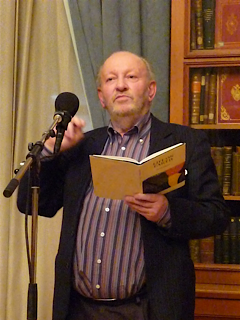
Birth of Derek Mahon, Northern Irish Poet

Norman Derek Mahon, Irish poet, is born in Belfast, Northern Ireland, on November 23, 1941, but lives in a number of cities around the world. At his death it is noted that his “influence in the Irish poetry community, literary world and society at large, and his legacy, is immense.” President of Ireland Michael D. Higgins says of Mahon, “he shared with his northern peers the capacity to link the classical and the contemporary but he brought also an edge that was unsparing of cruelty and wickedness.”

Mahon is the only child of Ulster Protestant working class parents. His father and grandfather work at Harland and Wolff while his mother works at a local flax mill. During his childhood, he claims he is something of a solitary dreamer, comfortable with his own company yet aware of the world around him. Interested in literature from an early age, he attends Skegoneill Primary School and then the Royal Belfast Academical Institution, known locally as Inst.

At Inst Mahon encounters fellow students who share his interest in literature and poetry. The school produces a magazine in which he produces some of his early poems. According to the critic Hugh Haughton, his early poems are highly fluent and extraordinary for a person so young. His parents cannot see the point of poetry, but he sets out to prove them wrong after he wins his school’s Forrest Reid Memorial Prize for the poem ”The power that gives the water breath.”

Mahon pursues third level studies at Trinity College Dublin (TCD) in French, English, and Philosophy and where he edits Icarus, and forms many friendships with writers such as Michael LongleyEavan Boland and Brendan Kennelly. He starts to mature as a poet. He leaves TCD in 1965 to take up studies at the Sorbonne in Paris.

After leaving the Sorbonne in 1966, Mahon works his way through Canada and the United States. In 1968, while spending a year teaching English at Belfast High School, he publishes his first collection of poems, Night Crossing (1968, Oxford University Press). He later teaches in a school in Dublin and works in London as a freelance journalist. He lives in Kinsale, County Cork. On March 23, 2007, he is awarded the David Cohen Prize for Literature. He wins the Poetry Now Award in 2006 for his collection, Harbour Lights, and again in 2009 for his Life on Earth collection.

At times expressing anti-establishment values, Mahon describes himself as an “aesthete” with a penchant “for left-wingery […] to which, perhaps naively, I adhere.”

In March 2020, at the beginning of the COVID-19 pandemicRTÉ News ends its evening broadcast with Mahon reading his poem Everything Is Going to Be All Right.

Mahon dies in Cork, County Cork, on October 1, 2020, after a short illness, aged 78. He is survived by his partner, Sarah Iremonger, and his three children, Rory, Katy, and Maisie. His papers are held at Emory University.

Mahon features on the Irish Leaving Certificate course with ten of his poems (Grandfather, Day Trip to Donegal, Ecclesiastes, After the Titanic, As It Should Be, A Disused Shed in Co. Wexford, Rathlin, The Chinese Restaurant in Portrush, Kinsale and Antarctica)

Leave a comment

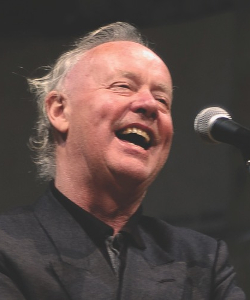
Birth of Poet Michael Longley

Michael Longley, one of Northern Ireland’s foremost contemporary poets, is born in Belfast on July 27, 1939. He is educated at the Royal Belfast Academical Institution and subsequently reads Classics at Trinity College, Dublin, where he edits the student literary magazine Icarus.

Longley is renowned for the quiet beauty of his compact, meditative lyrics. Known for using classical allusions to cast provocative light on contemporary concerns, including Northern Ireland’s “Troubles,” his poetry is also marked by sharp observation of the natural world, deft use of technique, and deeply felt emotion. His debut volume, No Continuing City (1969), heralds the arrival of a new talent from a region which has already produced recognized talents like Seamus Heaney and Derek Mahon. However, his early influences are English poets like Philip Larkin, Louis MacNeice, and the First World War poets, as well as masters from the classical tradition. The critic Langdon Hammer describes Longley’s poems as masterpieces of “lucidity, economy, sincerity…by means of meticulous, unpretentious technique.”

Longley’s work engages diverse subjects, including Homeric literature, the landscape of Carrigskeewaun, jazz, Walter Mitty, and the politics of Northern Ireland. On the public and political responsibilities of being a Northern Irish poet, he says, “Though the poet’s first duty must be to his imagination, he has other obligations, and not just as a citizen. He would be inhuman if he did not respond to tragic events in his own community, and a poor artist if he did not seek to endorse that response imaginatively.” Reviewing his Selected Poems (1993), critic Fran Brearton praises in particular Longley’s more political poems, noting his “use of a compassionate yet unsentimental voice, and an attention to detail which restores specificity at a point in history when it is most in danger of being lost in abstraction – numbers, dates, death-tolls counted beyond comprehension.”

After a 12-year publishing silence, Longley’s 1991 return, Gorse Fires, wins the Whitbread Poetry Prize. Subsequently, The Weather in Japan (2000) wins The Irish Times Literature Prize for Poetry, the Hawthornden Prize, and the T.S. Eliot Prize. Other publications include Snow Water (2004) and Collected Poems (2006). In 2001 Longley is awarded the Queen’s Gold Medal for Poetry. He is a fellow of the Royal Society of Literature.

Longley is Professor of Poetry for Ireland from 2007 to 2010, a cross-border academic post set up in 1998, previously held by John Montague, Nuala Ní Dhomhnaill, and Paul Durcan. He is succeeded in 2010 by Harry Clifton.


Leave a comment

Birth of Brendan Kennelly, Poet & Novelist

Brendan Kennelly, Irish poet and novelist, is born in BallylongfordCounty Kerry, on April 17, 1936. Now retired from teaching, he serves as Professor of Modern Literature at Trinity College, Dublin until 2005. Since his retirement he has been titled “Professor Emeritus” by Trinity College.

Kennelly is educated at the inter-denominational St. Ita’s College, Tarbert, County Kerry, and at Trinity College, Dublin where he edits the student literary magazine Icarus. He graduates from Trinity and writes his PhD thesis there. He also studies at Leeds University. Brendan is married for 18 years to Margaret (Peggy) O’Brien, a colleague in the English Department at Trinity College. They live together in SandymountDublin, with daughter Doodle for 12 years before separating. Brendan and Peggy remain friends and Peggy is now remarried. Peggy is a published poet and Professor of English at the University of Massachusetts Amherst.

Kennelly’s poetry can be scabrous, down-to-earth and colloquial. He avoids intellectual pretension and literary posturing, and his attitude to poetic language can be summed up in the title of one of his epic poems, “Poetry my Arse.” A 400-page long epic poem, “The Book of Judas”, published in 1991, tops the Irish best-seller list.

A prolific and fluent writer, he has more than twenty books of poetry to his credit, including My Dark Fathers(1964), Collection One: Getting Up Early (1966), Good Souls to Survive (1967), Dream of a Black Fox (1968), Love Cry(1972), The Voices (1973), Shelley in Dublin (1974), A Kind of Trust (1975), Islandman (1977), A Small Light (1979) and The House That Jack Didn’t Build (1982).

Kennelly has edited several other anthologies, including “Between Innocence and Peace: Favourite Poems of Ireland” (1993), “Ireland’s Women: Writings Past and Present, with Katie Donovan and A. Norman Jeffares” (1994), and “Dublines,” with Katie Donovan (1995).

Kennelly has also written two novels, “The Crooked Cross” (1963) and “The Florentines” (1967), and three plays in a Greek Trilogy, Antigone, Medea and The Trojan Women.

Kennelly is an Irish language speaker, and has translated Irish poems in “A Drinking Cup” (1970) and “Mary” (Dublin 1987). A selection of his collected translations is published as “Love of Ireland: Poems from the Irish” (1989).

Language is important in Kennelly’s work – in particular the vernacular of the small and isolated communities in North Kerry where he grew up, and of the Dublin streets and pubs where he becomes both roamer and raconteur for many years. Kennelly’s language is also grounded in the Irish-language poetic tradition, oral and written, which can be both satirical and salacious in its approach to human follies.

Regarding the oral tradition, Kennelly is a great reciter of verse with tremendous command and the rare ability to recall extended poems by memory, both his own work and others, and recite them on call verbatim.

Kennelly has commented on his own use of language: “Poetry is an attempt to cut through the effects of deadening familiarity and repeated, mechanical usage in order to unleash that profound vitality, to reveal that inner sparkle. In the beginning was the Word. In the end will be the Word…language is a human miracle always in danger of drowning in a sea of familiarity.”