The Hot Press Irish Music Hall of Fame is created to celebrate and preserve the best of Irish musical talent over decades, from traditional acts like Christy Moore and The Dubliners to modern icons such as U2, Boyzone, and Ash. It is based around a new multimedia exhibition in Dublin city centre, highlighting the history and development of Irish rock and pop.
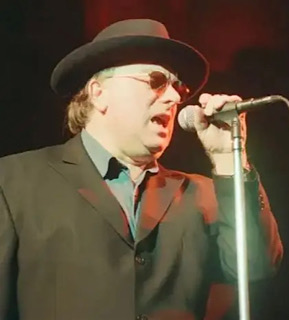
Morrison, born in Belfast, Northern Ireland, is widely regarded as Ireland’s greatest living legend. Hall of Fame director Niall Stokes, the editor of Hot Press, praises him as a “multi-talented creative force” with an “astonishing body of work of great depth and beauty.” Geldof calls him “the only genius in Irish music.”
This induction marks Morrison’s first major honour in Ireland, though he has already been inducted into the Rock and Roll Hall of Fame in Cleveland, Ohio, in 1993. The Hot Press Irish Music Hall of Fame is distinct from the U.S. Rock and Roll Hall of Fame, which has been operating since 1983.
The 1999 induction cements Morrison’s status not only as a global rock icon but also as a defining figure in Irish music history. It is a milestone moment for the Hall of Fame, setting the stage for future inductees chosen by a panel of industry experts.
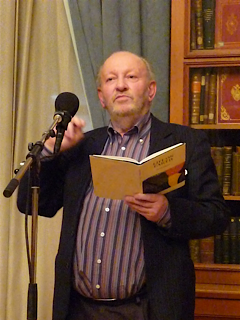
Norman Derek Mahon, Irish poet, is born in Belfast, Northern Ireland, on November 23, 1941, but lives in a number of cities around the world. At his death it is noted that his “influence in the Irish poetry community, literary world and society at large, and his legacy, is immense.” President of IrelandMichael D. Higgins says of Mahon, “he shared with his northern peers the capacity to link the classical and the contemporary but he brought also an edge that was unsparing of cruelty and wickedness.”
At Inst Mahon encounters fellow students who share his interest in literature and poetry. The school produces a magazine in which he produces some of his early poems. According to the critic Hugh Haughton, his early poems are highly fluent and extraordinary for a person so young. His parents cannot see the point of poetry, but he sets out to prove them wrong after he wins his school’s Forrest Reid Memorial Prize for the poem ”The power that gives the water breath.”
At times expressing anti-establishment values, Mahon describes himself as an “aesthete” with a penchant “for left-wingery […] to which, perhaps naively, I adhere.”
In March 2020, at the beginning of the COVID-19 pandemic, RTÉ News ends its evening broadcast with Mahon reading his poem Everything Is Going to Be All Right.
Mahon dies in Cork, County Cork, on October 1, 2020, after a short illness, aged 78. He is survived by his partner, Sarah Iremonger, and his three children, Rory, Katy, and Maisie. His papers are held at Emory University.
Mahon features on the Irish Leaving Certificate course with ten of his poems (Grandfather, Day Trip to Donegal, Ecclesiastes, After the Titanic, As It Should Be, A Disused Shed in Co. Wexford, Rathlin, The Chinese Restaurant in Portrush, Kinsale and Antarctica)
Large crowds turned out for the proceedings including VIP guests, members of the Fianna Fáil party and members of the Oireachtas, who begin arriving at the church at 10:00 AM, although some members of the public begin queuing for a chance to get into the church as early as 8:00 AM. Taoiseach Bertie Ahern, accompanied by his aide-de-camp, arrive at 11:45 AM, followed shortly afterwards by the Lord Mayor of Dublin, Cllr. Catherine Byrne. Many members of the public watch and listen to the service outside the church on loudspeakers and big screens.
Approximately 2,000 people pack into the large church for the two-hour service, which includes contributions from members of Haughey’s family and from the Fianna Fail Teachta Dála (TD) Brian Lenihan, Haughey’s friend P.J. Mara and the poet Brendan Kennelly. The majority of seating in the church is reserved for friends of the Haughey family and members of the public from the Dublin North Central constituency that he represented for nearly 40 years.
The requiem Mass is celebrated by the Archbishop of Dublin, Dr. Diarmuid Martin, and by Haughey’s brother, Fr. Eoghan Haughey, OMI. Minister of State Brian Lenihan, the son of former tánaisteBrian Lenihan, conducts the first reading, while the second reading is delivered by Haughey’s daughter Eimear Mulhern. Members of Haughey’s family, including his son, Ciarán, and old friends such as his former political adviser, P.J. Mara, read prayers. Haughey’s son, Seán, who inherited his father’s seat in Dáil Éireann, gives his personal reflections on his father’s life as does poet Brendan Kennelly near the end of the ceremony.
After the solemn Requiem Mass, the coffin is removed from the church by Military Police pallbearers from the 2nd Military Police Company at Cathal Brugha Barracks, followed by President Mary McAleese and her husband, the immediate Haughey family, the Lord Mayor, the Taoiseach and Tánaiste Mary Harney.
The funeral cortege forms outside the church. Soldiers drawn from the 2nd Eastern Brigade battalion carry the Tricolour and the brigade’s flag, escorted by 24 military cadets from the Curragh Military College. Military Police pallbearers carry the coffin to the graveside, where they remove the Tricolour before the prayer service begins.
Taoiseach Bertie Ahern delivers a graveside oration in which he says Haughey was “blessed with a strong intellect, natural charisma and driving spirit which was to make him the dominant public figure in the late 20th century Ireland.” A Naval Service firing party fires three volleys over the grave, while the Defence Forces‘ Band plays the Last Post and Reveille.
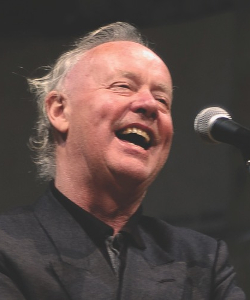
Brendan Kennelly, Irish poet and novelist, is born in Ballylongford, County Kerry, on April 17, 1936. Now retired from teaching, he serves as Professor of Modern Literature at Trinity College, Dublin until 2005. Since his retirement he has been titled “Professor Emeritus” by Trinity College.
Kennelly is educated at the inter-denominational St. Ita’s College, Tarbert, County Kerry, and at Trinity College, Dublin where he edits the student literary magazineIcarus. He graduates from Trinity and writes his PhD thesis there. He also studies at Leeds University. Brendan is married for 18 years to Margaret (Peggy) O’Brien, a colleague in the English Department at Trinity College. They live together in Sandymount, Dublin, with daughter Doodle for 12 years before separating. Brendan and Peggy remain friends and Peggy is now remarried. Peggy is a published poet and Professor of English at the University of Massachusetts Amherst.
Kennelly’s poetry can be scabrous, down-to-earth and colloquial. He avoids intellectual pretension and literary posturing, and his attitude to poetic language can be summed up in the title of one of his epic poems, “Poetry my Arse.” A 400-page long epic poem, “The Book of Judas”, published in 1991, tops the Irish best-seller list.
A prolific and fluent writer, he has more than twenty books of poetry to his credit, including My Dark Fathers(1964), Collection One: Getting Up Early (1966), Good Souls to Survive (1967), Dream of a Black Fox (1968), Love Cry(1972), The Voices (1973), Shelley in Dublin (1974), A Kind of Trust (1975), Islandman (1977), A Small Light (1979) and The House That Jack Didn’t Build (1982).
Kennelly has edited several other anthologies, including “Between Innocence and Peace: Favourite Poems of Ireland” (1993), “Ireland’s Women: Writings Past and Present, with Katie Donovan and A. Norman Jeffares” (1994), and “Dublines,” with Katie Donovan (1995).
Kennelly has also written two novels, “The Crooked Cross” (1963) and “The Florentines” (1967), and three plays in a Greek Trilogy, Antigone,Medea and The Trojan Women.
Kennelly is an Irish language speaker, and has translated Irish poems in “A Drinking Cup” (1970) and “Mary” (Dublin 1987). A selection of his collected translations is published as “Love of Ireland: Poems from the Irish” (1989).
Language is important in Kennelly’s work – in particular the vernacular of the small and isolated communities in North Kerry where he grew up, and of the Dublin streets and pubs where he becomes both roamer and raconteur for many years. Kennelly’s language is also grounded in the Irish-language poetic tradition, oral and written, which can be both satirical and salacious in its approach to human follies.
Regarding the oral tradition, Kennelly is a great reciter of verse with tremendous command and the rare ability to recall extended poems by memory, both his own work and others, and recite them on call verbatim.
Kennelly has commented on his own use of language: “Poetry is an attempt to cut through the effects of deadening familiarity and repeated, mechanical usage in order to unleash that profound vitality, to reveal that inner sparkle. In the beginning was the Word. In the end will be the Word…language is a human miracle always in danger of drowning in a sea of familiarity.”