Owen is first elected to Dublin County Council in 1979 for the Malahide local electoral area. She is later elected as a Fine Gael TD for the first time in 1981, serving until the 1987 Irish general election when she loses her seat. That year she becomes a member of the executive of Trócaire, an International Non-Governmental Organisation (INGO) which is based in Ireland. She returns to Dáil Éireann following the 1989 Irish general election. In 1993, she becomes Deputy leader of Fine Gael. The following year she becomes Minister for Justice, remaining in that post until 1997. She undertakes a significant programme of criminal law reform. Among the major changes she implements is the referendum on bail in 1996, leading to the Bail Act of 1997, which allows a court to refuse bail to those charged with a serious offence where it is considered necessary to prevent them committing a serious offence. Journalist Veronica Guerin was murdered in 1996 and in its aftermath, Owen introduces the highly successful Criminal Assets Bureau to crack down on organised crime. In 2002, she becomes the first high-profile Fine Gael TD to lose her seat in Dublin North in the party’s disastrous general election result.
Owen is the patron of the Collins 22 Society, which works to keep the memory and legacy of Michael Collins in living memory. She occasionally works as an election pundit. In August 2011, it is announced she is to present the Irish version of Mastermind on TV3.
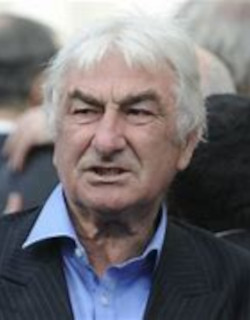
O’Shea’s father, a banker, moves the family to Dublin when he is age 11. He is schooled in CBC Monkstown and is a sports fanatic playing rugby at school and a keen golfer and tennis player in Monkstown. He remains a keen fan of rugby, tennis and golf, playing tennis every Saturday and also giving opinions on Irish sports to radio and newspapers. He goes on to study Economics, English and Philosophy at University College Dublin (UCD) and has a career as a sports journalist in the Evening Press for many years after meeting Tim Pat Coogan while studying.
In 1977, O’Shea begins his charitable organisation with a 10,000 punts donation for a feeding project in Calcutta after which he founds GOAL. The charity has a major sporting backbone. John McEnroe, Pat Cash and Gordon D’Arcy are amongst the sport stars to have become “Goalies”(volunteers).
In its 36 years of operation, GOAL has distributed €790 million and has had over 1,400 volunteers. It has operated in over 50 countries worldwide. O’Shea cites watching the “Goalies” working around the world as the best part of his years involved in the charity. He believes that governments of developed countries should be far more involved in the distribution of aid.
A sometimes controversial figure, O’Shea is known for his forthright public statements, particularly when he feels political correctness is getting in the way of assisting those in need, and a hands on approach to tackling poverty related issues. He has been criticised by some in the INGO community for advocating military invasion and intervention in Sudan by the United States, UK and NATO, under the guise of humanitarian intervention. He has also been critical of perceived inaction by the UN in humanitarian crises in conflict zones and of governmental aid agencies in giving aid directly to allegedly corrupt African governments. He has advocated using private companies to provide aid and military forces to directly force aid on countries. Most other Irish Aid agencies disagree stating that every type of aid channels must be used and have described his policies as recolonisation.
In 2012, O’Shea is asked to slow down by his doctor. In November 2012, former Fianna Fáil politician, Barry Andrews, is appointed chief executive of GOAL.
O’Shea currently gives talks at NUI Galway and interpersonal skills class UCD. He has become involved with the university for a few years where he shares his story. He is an advocate for social (non-profit) entrepreneurs and tries to convince students to go down that path.


 seamus dubhghaill