seamus dubhghaill

Promoting Irish Culture and History from Little Rock, Arkansas, USA


Leave a comment

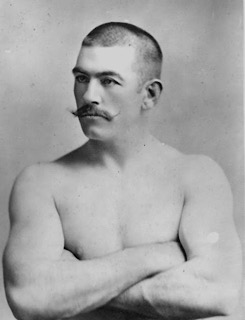
Birth of Heavyweight Boxing Champion John L. Sullivan

John Lawrence Sullivan, heavyweight boxing champion from 1892 to 1892, is born on October 15, 1858, in the Roxbury neighborhood of Boston, Massachusetts. Known as “The Boston Strong Boy,” he becomes one of the most iconic figures in boxing history.

Sullivan is the son of Michael Sullivan from Abbeydorney, County Kerry, and Catherine Kelly from Drum, County Roscommon. He attends public schools in his native Boston, attending the Dwight Grammar School and performing well academically. His parents aspire for their son to enter the priesthood as a Catholic priest. To this end he enrolls at Boston College, but his passion for sports leads him to abandon formal education for professional baseball and later boxing. He quickly gains a reputation for raw power and aggression, earning the nickname “The Boston Strong Boy” during exhibition tours.

On February 7, 1882, Sullivan defeats Paddy Ryan in Mississippi City, Mississippi, winning the bare-knuckle championship of America. On August 29, 1885, he wins the Marquess of Queensberry Rules title from Dominick McCaffrey, becoming the first heavyweight champion under gloved rules. His 1889 knockout of Jake Kilrain under the old rules makes him the last bare-knuckle heavyweight champion.

Sullivan holds the gloved heavyweight title from 1882 to 1892, with a record of 41–1–3 and 33 knockouts.

Sullivan’s fights are widely covered by newspapers, helping to launch modern sports journalism in the United States. He is one of the highest-paid athletes of his era, earning over $75,000 for a single bout. His “I can lick any man in the house” challenge becomes a symbol of Irish American defiance and determination.

After retiring in 1892, Sullivan opens the John L. Sullivan’s Theatre in New York City. He marries Annie Bates Lord in 1883 and has one daughter, Helen. He struggles with alcohol after his defeat to James J. Corbett in 1892 but later lectures against alcoholism. He dies at the age of 59 on February 2, 1918, in Abington, Plymouth County, Massachusetts. He is buried at Mount Calvary Cemetery in Roslindale, Suffolk County, Massachusetts.

Sullivan’s career transforms boxing from an underground, often illegal pastime into a national spectacle. He remains a cultural icon, celebrated in literature, film, and sports history.

Leave a comment

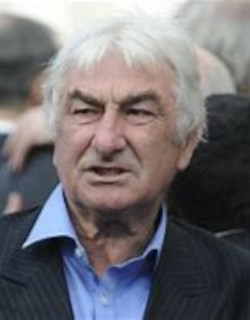
Birth of Sportswriter Con Houlihan

Con Houlihan, Irish sportswriter, is born on December 6, 1925, in Castleisland, County Kerry. Despite only progressing to national journalism at the age of 46, he becomes “the greatest and the best-loved Irish sports journalist of all.”

Over a lengthy career, Houlihan covers many Irish and international sporting events, from Gaelic football and hurling finals, to soccer and rugby World Cups, the Olympic Games and numberless race meetings inside and outside Ireland.

Houlihan is a journalist with the Irish Press group writing for The Irish Press, Evening Press and sometimes The Sunday Press, until the group’s demise in 1995. He writes the “Tributaries” column and Evening Press back sports page “Con Houlihan” column.

Houlihan dies on the morning of August 4, 2012, in St. James’s Hospital in Dublin. Often considered one of Ireland’s finest writers, he leaves behind a legacy of immense sports journalism that spans over 60 years. A minute’s silence is observed in his memory ahead of Kerry GAA‘s All-Ireland Senior Football Championship quarter-final defeat to Donegal GAA at Croke Park the following day. His last column, in which he wishes Irish Olympic boxer Katie Taylor well, is published the day after his death. His funeral takes place on August 8, 2012.

Ireland’s president, Michael D. Higgins, leads the tributes to Houlihan, describing him as a “most original writer, with a unique style based on his extensive knowledge of literature, politics, life and sport.” He adds, “He had that special quality and ability to identify with the passion, pain and celebration of Irish community life.”

A bronze bust of Houlihan is unveiled in his hometown of Castleisland in 2004. In 2011, another sculpture is erected outside The Palace bar in Dublin.


Leave a comment

Birth of Humanitarian John O’Shea

John O’Shea, founder and former CEO of GOAL, an Irish non-governmental organization devoted to assisting the poorest of the poor, is born in Limerick, County Limerick on February 28, 1944.

O’Shea’s father, a banker, moves the family to Dublin when he is age 11. He is schooled in CBC Monkstown and is a sports fanatic playing rugby at school and a keen golfer and tennis player in Monkstown. He remains a keen fan of rugby, tennis and golf, playing tennis every Saturday and also giving opinions on Irish sports to radio and newspapers. He goes on to study Economics, English and Philosophy at University College Dublin (UCD) and has a career as a sports journalist in the Evening Press for many years after meeting Tim Pat Coogan while studying.

In 1977, O’Shea begins his charitable organisation with a 10,000 punts donation for a feeding project in Calcutta after which he founds GOAL. The charity has a major sporting backbone. John McEnroe, Pat Cash and Gordon D’Arcy are amongst the sport stars to have become “Goalies”(volunteers).

In its 36 years of operation, GOAL has distributed €790 million and has had over 1,400 volunteers. It has operated in over 50 countries worldwide. O’Shea cites watching the “Goalies” working around the world as the best part of his years involved in the charity. He believes that governments of developed countries should be far more involved in the distribution of aid.

A sometimes controversial figure, O’Shea is known for his forthright public statements, particularly when he feels political correctness is getting in the way of assisting those in need, and a hands on approach to tackling poverty related issues. He has been criticised by some in the INGO community for advocating military invasion and intervention in Sudan by the United States, UK and NATO, under the guise of humanitarian intervention. He has also been critical of perceived inaction by the UN in humanitarian crises in conflict zones and of governmental aid agencies in giving aid directly to allegedly corrupt African governments. He has advocated using private companies to provide aid and military forces to directly force aid on countries. Most other Irish Aid agencies disagree stating that every type of aid channels must be used and have described his policies as recolonisation.

In 2012, O’Shea is asked to slow down by his doctor. In November 2012, former Fianna Fáil politician, Barry Andrews, is appointed chief executive of GOAL.

O’Shea’s list of achievements and awards include the People of the Year Awards 1987 and 1992, The Ballygowan Outstanding Achievement Award 1988, MIR Award 1992, The Late Late Show Tribute 1995 and 2007, Texaco Outstanding Achievement Award 1995 and the Tipperary International Peace Award 2003, Ernst & Young Social Entrepreneur of the Year 2005.

In 2008, O’Shea is conferred with an honorary doctorate of laws from the University of Notre Dame in recognition of his work. He is shortlisted in the top 40 of the 2010 RTÉ poll to find Ireland’s Greatest person.

O’Shea currently gives talks at NUI Galway and interpersonal skills class UCD. He has become involved with the university for a few years where he shares his story. He is an advocate for social (non-profit) entrepreneurs and tries to convince students to go down that path.