seamus dubhghaill

Promoting Irish Culture and History from Little Rock, Arkansas, USA


Leave a comment

Birth of John Edgar, Minister & Professor of Theology

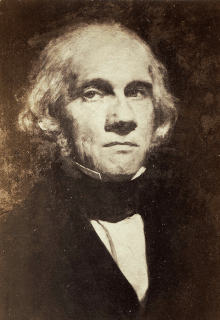
John Edgar, minister, professor of theology, moderator of the Secession Synod in 1828 and moderator of the Presbyterian Church in Ireland in 1842 is born near Ballynahinch, County Down, on June 13, 1798. He is Honorary Secretary to the Presbyterian Home Mission during the Great Famine in 1847.

Edgar is the eldest son of Samuel Edgar (1766-1826) and Elizabeth McKee (1771-1839). He attends the Royal Belfast Academical Institution where he excels as a student. He is ordained a minister in the Presbyterian church in 1820. He becomes D.D. of Hamilton College in Kirkland, New York, in 1836, is elected moderator of the Presbyterian Church in Ireland for 1842–43, and obtains LL.D. of New York in 1860.

Edgar is known as the origin of the Temperance movement in Ireland because he pours alcohol out his window in 1829. On August 14, 1829, he writes a letter in the Belfast Telegraph advocating temperance.

Edgar forms the Ulster Temperance Movement. In 1834, he tells a parliamentary committee inquiring into the causes and consequences of drunkenness in the United Kingdom that there are 550 “dram shops” in Belfast and 1,700 shops selling intoxicants in Dublin as well as numerous illicit distillers “even in the most civilised districts of Ulster.”

Edgar is also the founder of the Ulster Female Penitentiary in 1839 which is a residential home for prostitutes. He is also instrumental in getting the Deaf, Dumb and Blind Institute set up in Belfast. A meeting which leads to the establishment of the Presbyterian Orphan Society is held in 1866 in his drawing room.

Edgar is also involved in the relief effort by the Presbyterian church in Connacht during the Irish famine. The church is accused of proselytizing during the famine period. In the May Street Presbyterian Church he says, “I hope soon to have an opportunity of directing public attention to spiritual famine in Connacht, but our effort now is to save the perishing body … Our brother is starving, and, till we have satisfied his hunger, we have no time to inquire whether he is Protestant or Romanist.”

Edgar is interested in Gaelic language and culture, and is critical of other Protestant faiths particularly the Church of Ireland (Anglican) for not preaching in the Irish language.

Edgar dies at the age of 68 on August 26, 1866, in Cremore, Rathgar, Dublin, where he had gone to get medical treatment. He is survived by his wife Susanna, and is buried in Balmoral Cemetery, Belfast.

Leave a comment

Birth of Irish Mathematician James Thomson

James Thomson, Irish mathematician notable for his role in the formation of the thermodynamics school at the University of Glasgow, Is born on November 13, 1786, in Ballynahinch, County Down, in what is now Northern Ireland. He is the father of the engineer and physicist James Thomson and the physicist William Thomson, 1st Baron Kelvin.

Born into an Ulster Scots family, Thomson is the fourth son of Agnes Nesbit and James Thomson, a small farmer, at Annaghmore, near Ballynahinch, County Down, in Ulster. His early education is from his father. At the age of 11 or 12 he finds out for himself the art of dialling. His father sends him to a school at Ballykine, near Ballynahinch, kept by Samuel Edgar, father of John Edgar. Here he soon rises to be an assistant.

Wishing to become a minister of the Presbyterian church, Thomson enters the University of Glasgow in 1810, where he studies for several sessions, supporting himself by teaching in the Ballykine school during the summer. He graduates MA in 1812, and in 1814 he is appointed headmaster of the school of arithmetic, bookkeeping, and geography in the newly established Royal Belfast Academical Institution. In 1815 he is Professor of Mathematics in its collegiate department. Here he proves himself as a teacher. In 1829 the honorary degree of LL.D. is conferred upon him by the University of Glasgow, where in 1832 he is appointed Professor of Mathematics. He holds this post until his death on January 12, 1849.

Thomson is buried with his family on the northern slopes of the Glasgow Necropolis to the east of the main bridge entrance. The grave is notable due to the modern memorial to Lord Kelvin at its side.

Thomson is the author of schoolbooks that have passed through many editions including Arithmetic (1819), Trigonometry, Plane and Spherical (1820), Introduction to Modern Geography (1827), The Phenomena of the Heavens (1827), The Differential and Integral Calculus (1831), and Euclid (1834).

A paper, “Recollections of the Battle of Ballynahinch, by an Eye-witness,” which appears in the Belfast Magazine for February 1825, is from his pen.


Leave a comment

Opening of Assembly’s College, Belfast

assemblys-college-belfast

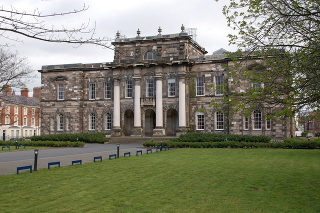
Assembly’s College, Belfast, opens for the training of Presbyterian clergy on December 5, 1853.

The Renaissance Revival style building with its grand Doric porch and Baroque attic is designed by Sir Charles Lanyon, the architect of the main building at Queen’s University Belfast and built with Scrabo stone at a cost of £5,000. Jean-Henri Merle d’Aubigné of Geneva participates in the opening ceremony alongside Henry Cooke, President of the Faculty. The five other professors in the new college are John Edgar, Robert Wilson, William Dool Killen, James G. Murphy and William Gibson.

There is a large influx of students in the wake of the 1859 Ulster revival and the south wing with its dining hall and student accommodations is added in 1869. Princeton Theological Seminary has an important influence in the shaping of the ethos of the College during this period as the Reverend Roberts Watts, who is appointed Professor of Systematic Theology in 1866, hopes to make “Belfast another Princeton.” The north wing with its wood-panelled chapel is designed by John Lanyon, son of original architect, and completed in 1881. The first degrees under the Royal Charter are conferred in 1883. However, the death of Watts in 1895 marks the beginning of the end of the Princetonian influence. A partial union takes place between the faculties in Belfast and Magee in 1922.

The newly formed Parliament of Northern Ireland meets in Assembly’s College from 1921 until 1932 while Stormont is being built with the House of Commons meeting in the Gamble Library and the Senate in the College chapel. During this period the College conducts classes in a house and provides library resources in a house on University Square. In 1926 the College becomes a Recognised College of Queen’s University. During this period the College comes under criticism for its embrace of theological liberalism. This culminates in a charge of heresy being brought against Professor James Ernest Davey in 1926-27. The College officially reopens in October 1932 and the inaugural lecture is delivered by the Scottish Historian Robert Rait.

Between 1941 and 1948 the Royal Ulster Constabulary, the city police, use the College as its own headquarters are bombed in the Belfast Blitz. In 1953, to mark the College’s centenary year, Prof. Davey is elected Moderator of the General Assembly.

In 1976 theological teaching at Magee College in Derry, County Londonderry, ceases and the two colleges amalgamate in 1978. The new college, constituted by an Act of Parliament, is named Union Theological College.

Today Union Theological College offers a full range of courses in Theology. The professors at the College constitute the Presbyterian Theological Faculty Ireland (PTFI) which was granted a Royal Charter in 1881 to confer academic degrees. The PTFI still awards degrees, diplomas and certificates. The majority of students are enrolled for degrees and diplomas, undergraduate and postgraduate, through the Institute of Theology of the Queen’s University of Belfast, in particular the BTh, BD, MTh and PhD.