seamus dubhghaill

Promoting Irish Culture and History from Little Rock, Arkansas, USA


Leave a comment

Birth of George Lee, Journalist, Presenter & Former Fine Gael Politician

George Lee, Irish economist, journalist, television and radio presenter, and former Fine Gael politician, is born in Templeogue, Dublin, on September 27, 1962. He has worked for RTÉ since 1992. Since 2019, he has been Environment Correspondent for RTÉ News. He previously was Economics Editor in 1996.

Lee’s father is a motor mechanic, and his mother is a hairdresser. He is the seventh in a family of eight children and grows up in Templeogue, Dublin. He attends Coláiste Éanna, a Christian Brothers’ School in the Dublin suburb of Ballyroan. He is a graduate of University College Dublin (UCD) and holds an MSc in Economics from the London School of Economics (LSE) where his specialist area is labour economics and unemployment.

Lee is married to Mary Lee (née Kitson) and they have two children, Alison and Harry, and live in Cabinteely. He famously travels to work at RTÉ using a Segway, once giving it a test ride live on Tubridy Tonight.

Lee joins the civil service as an executive officer in the Central Statistics Office (CSO). Two years later he enters University College Dublin where he studies economics under academics such as Brendan Walsh and Peter Neary.

Prior to his move into broadcasting, Lee lectures at NUI Galway and then works as a journalist with The Sunday Business Post. He is also a Senior Economist at Riada Stockbrokers. He also works as Treasury Economist with FTI and as a research economist with the Central Bank of Ireland.

From 1992 to 2009 Lee worked at RTÉ, the public broadcasting service of Ireland. He is appointed Economics Editor with RTÉ in 1996. He is named Irish Journalist of the Year, along with Charlie Bird, in 1998 after they uncover a major tax evasion and overcharging scandal at National Irish Bank. He has devised, researched and presented several television series, including Moneybox, More to Do, Winds of Change, and Beyond the Berlin Wall. He is thought of as an “economics guru.” He leaves RTÉ in the late 1990s to work for BCP Stockbrokers. He leaves the job and returns to his RTÉ post the next day.

Before embarking on his political career, Lee films a four-part series based on the fall of the Berlin Wall in 2008. It is aired on RTÉ One in November 2009.

Lee is parodied in the 1990s comedy Bull Island, where he is seen “menacingly staring down the lens of a camera,” and is also featured on RTÉ 2fm‘s Nob Nation.

On May 5, 2009, on RTÉ News at One on RTÉ Radio 1, Lee announces that he is resigning as Economic Editor with RTÉ and announces his intention to seek the Fine Gael nomination for the Dublin South by-election in 2009. He takes a year’s unpaid leave from RTÉ in May 2009. On May 6, 2009, he is chosen as the Fine Gael candidate for the by-election. He is the only candidate for the nomination.

Lee is elected on the first count to represent Dublin South on June 6, 2009. He receives over 53% of the 1st preference vote. In total he receives 27,768 1st preference votes. When elected, he is referred to as a “Celebrity TD.” His RTÉ position is filled by Europe editor Sean Whelan, but only as correspondent. Instead, David Murphy is promoted to Business Editor.

In an opinion poll concerning support for possible candidates in the 2011 Irish presidential election conducted by the Sunday Independent in October 2009, Lee places third, receiving 12% support, ahead of former Taoiseach Bertie Ahern and other high-profile politicians.

Lee highlights the failure of EMPG, the holding company for U.S. publisher Houghton Mifflin Harcourt, and the potential impact on the Irish taxpayers of the loans given by Anglo Irish Bank to the investors in EMPG on January 13, 2010. He sees this as another example for the urgent need of an investigation into the Irish banking crisis.

On February 8, 2010, Lee announces his resignation from Fine Gael and from Dáil Éireann, due to having “virtually no influence or input” into shaping Fine Gael’s economic policies at a time of economic upheaval. It emerges that on February 2, he met with the Fine Gael leader Enda Kenny and told him of his intention to resign. Kenny then offered Lee the frontbench position as spokesman on economic planning. Speaking to reporters outside Leinster House soon after his announcement, Lee says it would have been dishonest of him to accept the position. “I had absolutely no input for nine months. I think I had to be honest with myself and honest with the electorate about that and not pretend.” Asked if his resignation is a vote of no confidence in Kenny, he says there are “certainly lots of large mutterings at the moment in relation to the leader’s position.” He says he had “minimal involvement” with Fine Gael finance spokesman Richard Bruton.

Kenny notes Lee had been appointed chair of the party’s committee on economic policy and also its forum. “I had anticipated a very important role for [George Lee] in the coming period with Fine Gael.” Kenny’s spokesman later dismisses the proposition that the resignation had implications for his leadership. He cited the public endorsement of Kenny by 20 Dáil deputies over the course of the weekend. Former Fine Gael leader Michael Noonan says he is surprised at the decision. “I thought that George Lee was fitting in well,” adding that he believes he would have been a cabinet member in a Fine Gael-led government.

Lee is criticised after his resignation by Senator Eoghan Harris, who is speaking on the Lunchtime programme of Newstalk Radio. Harris suggests financial considerations and long working hours of politicians are the reasons for Lee’s resignation. Fine Gael TD Brian Hayes, who is Lee’s campaign manager in the Dublin South by-election, says that in discussions with Lee, the latter had complained about “a major reduction in his income” since leaving RTÉ to become a Dáil backbencher. Lee denies that financial considerations had anything to do with his decision to quit politics.

RTÉ receives a letter from Lee confirming his intentions to return after his leave of absence. The Sunday Tribune says on February 14, 2010, that he will have to wait for three months before returning to RTÉ. Exactly a year after leaving RTÉ, he returns to the broadcaster on May 5, 2010. He works as an advisor on the RTÉ business desk. He presents Mind Your Business on RTÉ Radio 1 on Saturday Mornings as a summer replacement for The Business.

When John Murray moves to present his own programme, Lee takes over The Business slot on September 4, 2010, on Saturday mornings on RTÉ Radio 1. In addition to the radio edition, he has presented a televised version on RTÉ One, also titled The Business.

Lee has been Environment Correspondent for RTÉ since June 27, 2019.

Leave a comment

Birth of Thomas Moore, Poet, Satirist & Composer

thomas-moore

Thomas Moore, poet, satirist, composer, and political propagandist, is born in Dublin on May 28, 1779. He is best remembered for the lyrics of “The Minstrel Boy” and “The Last Rose of Summer.” He is a close friend of Lord Byron and Percy Bysshe Shelley. As Lord Byron’s named literary executor, along with John Murray, Moore is responsible for burning Lord Byron’s memoirs after his death. In his lifetime he is often referred to as Anacreon Moore.

The son of a Roman Catholic wine merchant, Moore graduates from Trinity College, Dublin, in 1799 and then studies law in London. His major poetic work, Irish Melodies (1807–34), earns him an income of £500 annually for a quarter of a century. It contains such titles as “The Last Rose of Summer” and “Oft in the Stilly Night.” The Melodies, a group of 130 poems set to the music of Moore and of Sir John Stevenson and performed for London’s aristocracy, arouses sympathy and support for the Irish nationalists, among whom Moore is a popular hero.

Lalla-Rookh (1817), a narrative poem set in an atmosphere of Oriental splendour, gives Moore a reputation among his contemporaries rivaling that of Byron and Sir Walter Scott. It is perhaps the most translated poem of its time, and it earns what was until then the highest price paid by an English publisher for a poem (£3,000). His many satirical works, such as The Fudge Family in Paris (1818), portray the politics and manners of the Regency era.

In 1824 Moore becomes a participant in one of the most celebrated episodes of the Romantic era. He is the recipient of Byron’s memoirs, but he and the publisher John Murray burn them, presumably to protect Byron. He later brings out the Letters and Journals of Lord Byron (1830), in which he includes a life of the poet. His lifelong espousal of the Catholic cause leads him to produce such brilliant works as his parody of agrarian insurgency, The Memoirs of Captain Rock (1824), and his courageous biography of the revolutionary leader of the 1798 rebellion, The Life and Death of Lord Edward Fitzgerald (1831).

Moore’s personal life is dogged by tragedy including the deaths of all five of his children within his lifetime and a stroke in later life, which disables him from performances, the activity for which he is most renowned. Moore dies while being cared for by his wife, Elizabeth (nee Dyke), at Sloperton Cottage, Bromham, Wiltshire, England on February 26, 1852. His remains are in a vault at St. Nicholas churchyard, Bromham, within view of his cottage-home and beside his daughter Anastasia.

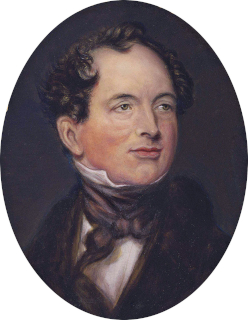
(Pictured: Thomas Moore, after a painting by Thomas Lawrence)


Leave a comment

Andrew Lewis Appointed Brigadier General of the Continental Army

andrew-lewis-statue

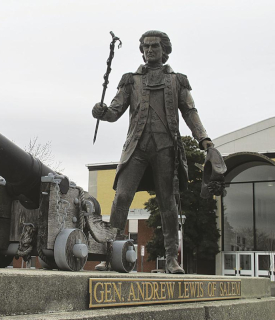
Irish-born Andrew Lewis is appointed a brigadier general in the Continental Army on March 1, 1776. He is most famous for his 1774 victory in the Battle of Point Pleasant in Lord Dunmore’s War. He also helps found Liberty Hall, later Washington and Lee University, when it is made into a college in 1776.

Lewis is born in County Donegal to Colonel John Lewis and his wife Margaret Lynn. In 1732 John Lewis, having killed his landlord in an altercation, flees to Virginia with his sons Andrew and Thomas. They become among the first settlers in western Augusta County.

Lewis receives a basic education and learns the skills of a surveyor. He spends at least fifteen years farming and working as a surveyor in southwestern Virginia. He also serves as county lieutenant and later captain in the Augusta County militia.

Early in the 1740s Lewis marries Elizabeth Givens, daughter of Samuel and Sarah (Cathey) Givens, formerly of County Antrim. They establish their own home, called Richfield, in what later becomes Roanoke County near Salem.

The Virginia frontier becomes a battleground in the French and Indian War, as do the frontiers of the more northerly colonies of Pennsylvania and Maryland. Virginia organizes a militia to defend settlers subject to attacks by Indians upset at encroachments into their territories. Lewis becomes a captain in George Washington‘s regiment. However, after the loss at the Battle of Fort Necessity in 1754, Washington is forced to surrender to the French. Lewis retreats across the Appalachian Mountains.

Washington proposes a series of frontier fortifications to protect settlers east of the Appalachians. Lewis initially serves to build Fort Dinwiddie on the Jackson River of present-day Bath County and is relieved of his command September 21, 1755. The Virginia assembly approves Lewis’ promotion to major and assigns him to oversee the region along the Greenbrier River. On February 18, 1756, he leads the Big Sandy expedition from Fort Frederick with a mixed force of militiamen and Cherokees to raid the Shawnee towns along the Big Sandy and Ohio rivers to retaliate for Shawnee attacks. He leads several expeditions against both Indian settlements and French outposts. During the Forbes Expedition, he is captured during Major James Grant‘s attack on Fort Duquesne during the Battle of Fort Duquesne in September 1758. Taken to Quebec, he remains a prisoner until late 1759.

Upon the formation of Botetourt County from Augusta County in 1769, Lewis is elected to the House of Burgesses and reelected several times until 1780, though the American Revolution precludes much attendance in later years.

When the American Revolution begins, Governor Dunmore suspends Virginia’s legislature. The Whigs form a provisional congress, which includes both Lewis and his brother Thomas as delegates. When the Continental Congress creates a Continental Army in 1775 and makes George Washington its commander, he asks that Lewis be made a brigadier general. However, initially the Continental Congress had decided there should be only one general from each state, and Charles Lee is the first Virginian commissioned as Brigadier General.

On March 1, 1776, Lewis becomes a brigadier general, overseeing Virginia’s defense and raising men for the Continental Army. Virginia’s Committee of Safety calls on Lewis to stop Governor Dunmore’s raids along the coast from his last stronghold, a fortified position on Gwynn’s Island in the Chesapeake Bay. On July 9, 1776, he leads Virginia’s forces which capture the island as Lord Dunmore escapes by sea, sailing to the Caribbean, never to return.

On April 15, 1777, Lewis resigns his commission, alleging poor health. However, he also faces discontent among his men and the army as a whole. Moreover, he is bypassed when promotions are announced for Major General in early 1777. George Washington, in need of every able officer, expresses his disappointment to Lewis.

Lewis remains active in the legislature, and in 1780, Governor Thomas Jefferson appoints him to the Executive Council. The following year, he falls ill while returning home from a council meeting. He dies of fever in Bedford County on September 26, 1781. He is buried in the family plot at his home. His gravesite is not marked. Colonel Elijah McClanahan, who marries Lewis’ granddaughter, Agatha Lewis McClanahan, attended his funeral as a young man, and later identifies his grave to Roanoke County’s Clerk of the Court. In 1887 General Lewis’ remains are re-interred in the East Hill Cemetery at Salem, Virginia.

(Pictured: Statue of General Andrew Lewis outside the Salem Civic Center)


Leave a comment

Death of Thomas Moore, Poet, Singer & Songwriter

thomas-moore

Thomas Moore, Irish poet, singer, songwriter, and entertainer, dies at Sloperton Cottage, Bromham, Wiltshire, England on February 25, 1852. He is best remembered for the lyrics of “The Minstrel Boy” and “The Last Rose of Summer.” He is a close friend of Lord Byron and Percy Bysshe Shelley.

The son of a Roman Catholic wine merchant, Moore is born at 12 Aungier Street in Dublin on May 28, 1779. From a relatively early age he shows an interest in music and other performing arts. He attends several Dublin schools including Samuel Whyte’s English Grammar School in Grafton Street where he learns the English accent with which he speaks for the rest of his life. In 1795 he graduates from Trinity College, Dublin in an effort to fulfill his mother’s dream of his becoming a lawyer.

Upon graduation from Trinity, Moore studies law in London. His major poetic work, Irish Melodies (1807–34), earns him an income of £500 annually for a quarter of a century. It contains such titles as “The Last Rose of Summer” and “Oft in the Stilly Night.” The Melodies, a group of 130 poems set to the music of Moore and Sir John Andrew Stevenson and performed for London’s aristocracy, arouses sympathy and support for the Irish nationalists, among whom Moore is a popular hero.

Lalla-Rookh (1817), a narrative poem set in an atmosphere of Oriental splendour, gives Moore a reputation among his contemporaries rivaling that of Byron and Sir Walter Scott. It is perhaps the most translated poem of its time, and it earns what is up until then the highest price paid by an English publisher for a poem (£3,000). His many satirical works, such as The Fudge Family in Paris (1818), portray the politics and manners of the Regency era.

In 1824 Moore becomes a participant in one of the most celebrated episodes of the Romantic era. He is the recipient of Byron’s memoirs, but he and the publisher John Murray burn them, presumably to protect Byron. He later brings out the Letters and Journals of Lord Byron: With Notices of his Life (1830), in which he includes a life of the poet. His lifelong espousal of the Catholic cause leads him to produce such brilliant works as his parody of agrarian insurgency, The Memoirs of Captain Rock (1824), and his courageous biography of the revolutionary leader of the Irish Rebellion of 1798, The Life and Death of Lord Edward Fitzgerald (1831).

Moore finally settles in Sloperton Cottage at Bromham, Wiltshire, England, and becomes a novelist and biographer as well as a successful poet. Around the time of the Reform Act he is invited to stand for parliament, and considers it, but nothing comes of it. In 1829 he is painted by Thomas Lawrence, one of the last works completed by the artist before his death.

Moore’s personal life is dogged by tragedy including the deaths of all five of his children within his lifetime and a stroke in later life, which disables him from performances – the activity for which he is most renowned. He dies being cared for by his wife at Sloperton on February 25, 1852. His remains are in a vault at St. Nicholas churchyard, Bromham, within view of his cottage-home, beside his daughter Anastasia.


Leave a comment

Birth of William Maginn, Journalist & Writer

william-maginn

William Maginn, journalist and miscellaneous writer, is born in Cork on July 10, 1794.

Maginn becomes a contributor to Blackwood’s Magazine and, after moving to London in 1824, becomes for a few months in 1826 the Paris correspondent to The Representative, a paper started by John Murray, the publisher. When its short career is run, he helps to found in 1827 the ultra Tory Standard, a newspaper that he edits along with a fellow graduate of Trinity College, Dublin, Stanley Lees Giffard. He also writes for the more scandalous Sunday paper, The Age.

In 1830 Maginn instigates and becomes one of the leading supporters of Fraser’s Magazine. His Homeric Ballads, much praised by contemporary critics, are published in Fraser’s between 1839 and 1842. In 1837, Bentley’s Miscellany is launched, with Charles Dickens as editor, and Maginn writes the prologue and contributes over the next several years a series of “Shakespeare Papers” that examine characters in counter-intuitive fashion. From “The Man in the Bell” (Blackwood’s, 1821) through “Welch Rabbits” (Bentley’s, 1842) Maginn is an occasional though skillful writer of short fiction and tales. His only novel, Whitehall (1827) pretends to be a historical novel set in 1820s England written in the year 2227. It is a droll spoof of the vogue for historical novels as well as the contemporary political scene.

In 1836, Maginn fights a duel with Grantley Berkeley, a member of Parliament. Berkeley had brutally assaulted magazine publisher James Fraser over a review Maginn wrote of Berkeley’s novel Berkeley Castle, and Maginn calls him out. Three rounds are fired but no one is struck.

One of the most brilliant periodical writers of his time, Maginn leaves little permanent work behind him. In his later years, his intemperate habits land him in debtor’s prison. When he emerges through the grace of the Insolvent Debtor’s Act he is in an advanced stage of tuberculosis. He writes until the end, including in the first volume of Punch, but he dies in extreme poverty in Walton-on-Thames, London on August 21, 1842, survived by his wife Ellen, and daughters Annie and Ellen, and son John. His nephew Francis Maginn, who is deaf, is a co-founder of the British Deaf and Dumb Association, now called the British Deaf Association (BDA).