seamus dubhghaill

Promoting Irish Culture and History from Little Rock, Arkansas, USA


Leave a comment

Birth of Cathal Brugha, Revolutionary & Politician

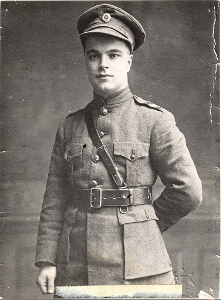
Cathal Brugha, Irish revolutionary and politician, is born in Dublin on July 18, 1874. He is active in the Easter Rising, the Irish War of Independence, and the Irish Civil War and is the first Ceann Comhairle (chairman) of Dáil Éireann as well as the first President of Dáil Éireann, then the title of the chief of government.

Born Charles William St. John Burgess, Brugha is the tenth of fourteen children and is educated at the Jesuit Belvedere College but is forced to leave at the age of sixteen because of the failure of his father’s business.

In 1899 Brugha join the Gaelic League, and he subsequently changes his name from Charles Burgess to Cathal Brugha. He meets his future wife, Kathleen Kingston, at an Irish class in Birr, County Offaly and they marry in 1912. They have six children, five girls and one boy. Brugha becomes actively involved in the Irish Republican Brotherhood (IRB) and in 1913 he becomes a lieutenant in the Irish Volunteers. He leads a group of twenty Volunteers to receive the arms smuggled into Ireland in the Howth gun-running of 1914.

He is second-in-command at the South Dublin Union under Commandant Éamonn Ceannt in the Easter Rising of 1916. On the Thursday of Easter Week, being badly wounded, he is unable to leave when the retreat is ordered. Brugha, weak from loss of blood, continues to fire upon the enemy and is found by Eamonn Ceannt singing “God Save Ireland” with his pistol still in his hands. He is initially not considered likely to survive. He recovers over the next year but is left with a permanent limp.

Brugha is elected speaker of Dáil Éireann at its first meeting on January 21, 1919, and he reads out the Declaration of Independence in Irish, which ratifies “the establishment of the Irish Republic.” On the following day, he is appointed president of the ministry pro tempore. He retains this position until April 1, 1919, when Éamon de Valera takes his place.

In October 1917 Brugha becomes Chief of Staff of the Irish Republican Army and holds that post until March 1919. He is elected as a Sinn Féin MP for the County Waterford constituency at the 1918 general election. In January 1919, Sinn Féin MPs refuse to recognise the Parliament of the United Kingdom and instead assemble at the Mansion House in Dublin as a revolutionary parliament called Dáil Éireann. Due to the absence of Éamon de Valera and Arthur Griffith, Brugha presides over the first meeting of Dáil Éireann on January 21, 1919.

Brugha has differences with Michael Collins, who, although nominally only the IRA’s Director of Intelligence, has far more influence in the organisation as a result of his position as a high-ranking member of the Irish Republican Brotherhood, an organisation that Brugha sees as undermining the power of the Dáil and especially the Ministry for Defence. Brugha opposes the oath of allegiance required for membership of the IRB and, in 1919, his proposition that all Volunteers should swear allegiance to the Irish Republic and the Dáil is adopted.

At a top-level IRA meeting in August 1920, Brugha argues against ambushes of Crown forces unless there is first a call to surrender, but it is dismissed as unrealistic by the brigade commanders present. Brugha also has the idea of moving the front line of the war to England but is opposed by Collins.

On January 7, 1922, Brugha votes against the Anglo-Irish Treaty. During the Treaty debates, he points out that Collins has only a middling rank in the Department of Defence, which supervises the IRA even though Arthur Griffith hails him as “the man who had won the war.” He leaves the Dáil and is replaced as Minister for Defence by Richard Mulcahy.

In the months between the Treaty debates and the outbreak of Civil War, Brugha attempts to dissuade his fellow anti-treaty army leaders including Rory O’Connor, Liam Mellows and Joe McKelvey from taking up arms against the Free State. When the IRA occupies the Four Courts, he and Oscar Traynor call on them to abandon their position. When they refuse, Traynor orders the occupation of the area around O’Connell Street in the hope of easing the pressure on the Four Courts and of forcing the Free State to negotiate.

On June 28, 1922, Brugha is appointed commandant of the forces in O’Connell Street. The outbreak of the Irish Civil War ensues in the first week of July when Free State forces commence shelling of the anti-treaty positions.

Most of the anti-Treaty fighters under Oscar Traynor escape from O’Connell Street when the buildings they are holding catch fire, leaving Brugha in command of a small rearguard. On July 5, he orders his men to surrender but refuses to do so himself. He then approaches the Free State troops, brandishing a revolver. He sustains a bullet wound to the leg which severs a major artery.

Cathal Brugha dies on July 7, 1922, eleven days before his 48th birthday. He has been re-elected as an anti-Treaty Teachta Dála (TD) at the 1922 Irish general election but dies before the Dáil assembles. He is buried in Glasnevin Cemetery.


1 Comment

Execution of IRA Officer Joe McKelvey

joe-mckelvey

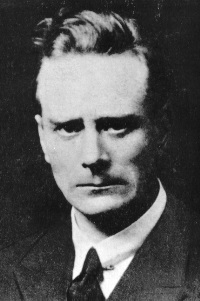
Joe McKelvey, Irish Republican Army (IRA) officer, is executed by firing squad along with three other Anti-Treaty militants, on December 8, 1922, during the Irish Civil War.

McKelvey is born into a nationalist family in Stewartstown, County Tyrone. He has a keen interest in the Gaelic Athletic Association and the Irish language. He studies as an accountant and gains some of the qualifications necessary for this profession, but never fully qualifies. He works for a time at the Income Tax Office on Queen’s Square in Belfast and later finds work in Belfast’s engineering industry with Mackies on Springfield Road. He joins the Irish Republican Brotherhood and the Irish Volunteers, which after 1919, become known as the Irish Republican Army (IRA). He is a founding member of the O’Donovan Rossa Club, Belfast, founded in 1916 on the Falls Road. Each year the club honours him with a juvenile hurling blitz, an invitational competition which is participated in by clubs throughout Ireland.

McKelvey participates in the Irish War of Independence (1919–1921) against the British, in which he commands the IRA’s Belfast Brigade. On August 22, 1920, he helps to organise the killing of Royal Irish Constabulary (RIC) Detective Oswald Swanzy in Lisburn. The killing itself is carried out by IRA men from Cork, but McKelvey arranges a taxi to carry the assassins to and from the scene and disposes of their weapons. In reprisal for this shooting, 300 Catholic homes in Lisburn are burned out. McKelvey is forced to lie low in Dublin for some time after these events.

In March 1921, the IRA is re-organised by its leadership in Dublin into Divisions and McKelvey is appointed commander of the Third Northern Division, responsible for Belfast and the surrounding area. In May 1921, McKelvey’s command suffers a severe setback, when fifty of his best men are sent to County Cavan to train and link up with the IRA units there, only to be surrounded and captured by the British Army on Lappanduff hill on May 9. In most of Ireland, hostilities are ended with a truce declared on July 11, 1921.

McKelvey is alone among the leadership of the Belfast IRA in going against the acceptance of the Anglo-Irish Treaty. Most of his comrades support Michael Collins‘ assurances that, although the Treaty accepts the partition of Northern Ireland from the rest of the country, this is only a temporary concession which will be dealt with later. McKelvey does not accept this. As a result, he leaves his command as head of the IRA Third Northern Division and joins the Anti-Treaty IRA in Dublin.

In March 1922, McKelvey participates in the anti-Treaty IRA‘s repudiation of the authority of the Dáil, the civil government of the Irish Republic declared in 1919, and is elected to the IRA Army Executive. In April 1922 he helps command the occupation of the Four Courts in defiance of the new Irish Free State. This action helps to spark the civil war between pro- and anti-Treaty factions. McKelvey is among the most hardline of the anti-Treaty republicans and briefly, in June 1922, becomes IRA Chief of Staff, replacing Liam Lynch.

On June 28, 1922, the new Irish Free State government shells the Four Courts to assert its authority over the militants defending it. The Republicans in the Four Courts surrender after two days of fighting and McKelvey is captured. He is held for the following five months in Mountjoy Prison in Dublin.

On December 8, 1922, Joe McKelvey is executed by firing squad along with three other Anti-Treaty militants, Rory O’Connor, Liam Mellows, and Richard Barrett. The executions are ordered in reprisal for the Anti-Treaty IRA’s murder of Sean Hales, a Pro-Treaty member of the Third Dáil.


Leave a comment

Cathal Brugha Fatally Wounded by Sniper

cathal-brugha

Cathal Brugha, a leading figure in the Anti-Treaty Irish Republican Army (IRA), is shot by a sniper on July 5, 1922, as he appears in the doorway of the Hammam Hotel during the Irish Civil War. He dies two days later.

Brugha is born in Dublin of mixed Roman Catholic and Protestant parentage. He is the tenth of fourteen children and is educated at the Jesuit Belvedere College but is forced to leave at the age of sixteen because of the failure of his father’s business.

In 1899, Brugha joins the Gaelic League, and subsequently changes his name from Charles Burgess to Cathal Brugha. He becomes actively involved in the Irish Republican Brotherhood (IRB) and in 1913 he becomes a lieutenant in the Irish Volunteers. He leads a group of twenty Volunteers to receive the arms smuggled into Ireland in the Howth gun-running of 1914.

Brugha is second-in-command at the South Dublin Union under Commandant Éamonn Ceannt in the Easter Rising of 1916. On the Thursday of Easter Week, being badly wounded, he is unable to leave when the retreat is ordered. Brugha, weak from loss of blood, continues to fire upon the enemy and is found by Éamonn Ceannt singing God Save Ireland with his pistol still in his hands. Initially not considered likely to survive, he recovers over the next year but is left with a permanent limp.

During the War of Independence, Brugha organises an amalgamation of the Irish Volunteers and the Irish Citizen Army into the Irish Republican Army (IRA). He proposes a Republican constitution at the 1917 Sinn Féin convention which is unanimously accepted. In October 1917, he becomes Chief of Staff of the Irish Republican Army and holds that post until March 1919.

Brugha is elected speaker of Dáil Éireann at its first meeting on January 21, 1919, and he reads out the Declaration of Independence in Irish. On the following day, he is appointed president of the ministry pro tempore and retains this position until April 1, 1919, when Éamon de Valera takes his place.

In the months between the Anglo-Irish Treaty debates and the outbreak of Civil War, Brugha attempts to dissuade his fellow anti-treaty army leaders, including Rory O’Connor, Liam Mellows, and Joe McKelvey, from taking up arms against the Free State. When the IRA occupies the Four Courts, he and Oscar Traynor call on them to abandon their position. When they refuse, Traynor orders the occupation of the area around O’Connell Street in the hope of easing the pressure on the Four Courts and of forcing the Free State to negotiate.

On 28 June 1922, Brugha is appointed commandant of the forces in O’Connell Street. The outbreak of the Irish Civil War ensues in the first week of July when Free State forces commence shelling of the anti-treaty positions.

Most of the anti-Treaty fighters under Oscar Traynor escape from O’Connell Street when the buildings they were holding catch fire, leaving Brugha in command of a small rearguard. On 5 July, he orders his men to surrender but refuses to do so himself. He then approaches the Free State troops, brandishing a revolver. He sustains a bullet wound to the leg which severs a major artery, ultimately causing him to bleed to death on July 7, 1922, eleven days before his 48th birthday. He is buried in Glasnevin Cemetery.


Leave a comment

Anti-Treaty Forces Abandon The Four Courts

free-state-troops-fire-on-the-four-courtsAnti-Treaty forces abandon The Four Courts in Dublin on June 30, 1922, after two days of bombardment under the orders of Michael Collins.

The occupation of the Four Courts by Anti-Treaty forces in April 1922 makes real the threat of violence that has existed only as a subtext to the treaty debates. That real fighting does not break out until the subsequent decision by the Pro-Treaty forces to forcibly retake the position in June 1922 shows just how reluctant the parties are to engage in more violence.

However, once the decision to fight is made neither side show much restraint. The shelling of the Four Courts and the ferocity of the fighting around the rest of Dublin during the initial phase of the war shows that neither side will balk at killing former friends if that is what is required.

Tragically, on the morning of June 30, a massive explosion destroys the western wing of the Four Courts and the Irish Public Records Office which houses official documents, archives, and artifacts from almost 1,000 years of Irish history. The explosion is thought to have been caused by fires from the artillery bombardment setting off munitions stored there. Free State troops, however, claim that the building is mined.

After two days of heavy fighting that sees the complex more or less destroyed, the Anti-Treaty forces, at this point under the command of Ernie O’Malley after Paddy O’Brien is wounded by shrapnel, surrenders. Their surrender is at the order of the senior commander of Anti-Treaty forces in the city, Oscar Traynor, who sends word that he cannot break through to help them.

They march out of a burning and wrecked Four Courts a compelling symbol for the damage the Civil War is to bring to the young state over the upcoming months and years. Members of the Irish Republican Army (IRA) Army Executive Liam Mellows, Rory O’Connor, Joe McKelvey, and Dick Barret are among the prisoners, but O’Malley himself escapes.