seamus dubhghaill

Promoting Irish Culture and History from Little Rock, Arkansas, USA


Leave a comment

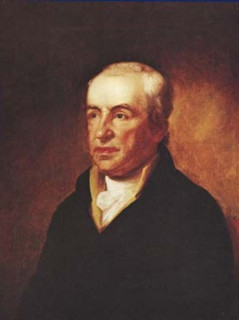
Death of John Dunlap, Printer of the Declaration of Independence

John Dunlap, Irish printer who printed the first copies of the United States Declaration of Independence and one of the most successful Irish American printers of his era, dies in Philadelphia, Pennsylvania on November 27, 1812.

Dunlap is born in 1747 in Strabane, County Tyrone, in what is now Northern Ireland. When he is ten years old, he goes to work as an apprentice to his uncle, William Dunlap, a printer and bookseller in Philadelphia. In 1766, William Dunlap leaves the business in the care of his nephew, who eventually purchases the business. Initially he makes a living by printing sermons, broadsides and handbills. In November 1771, he begins the publication of the Pennsylvania Packet, or General Advertiser, a weekly newspaper. In 1773 he marries Elizabeth Hayes Ellison.

During the American Revolutionary War, Dunlap becomes an officer in the First Troop Philadelphia City Cavalry and sees action with George Washington at the battles of Trenton and Princeton. He continues in the First City Troop after the war, rising to the rank of major, and leading Pennsylvania’s cavalry militia to help suppress the Whiskey Rebellion in 1794.

In 1776, Dunlap secures a lucrative printing contract for the Continental Congress. In July 1776, fighting between the American colonists and the British forces had been going on for over a year. On July 2, the Second Continental Congress votes on the Lee Resolution to secede. Two days later, they approve the final wording of a public declaration regarding their decision, which ultimately comes to be known as the Declaration of Independence. President of Congress John Hancock signs the fair copy with Secretary of Congress Charles Thomson attesting it. That evening Hancock orders Dunlap to print broadside copies of the declaration. He prints perhaps 200 broadsides, since known as the Dunlap broadsides, which are the first published versions of the Declaration.

Dunlap also prints items for Pennsylvania’s revolutionary government. In 1777 he takes over the printing of the Journals of the Continental Congress from Robert Aitken, but loses the contract in 1779 after printing in his newspaper a letter from Thomas Paine that leaks news of the secret French aid to the Americans.

In 1784, Dunlap’s paper becomes a daily with a new title: the North American and United States Gazette. It is not the first daily in the United States as the Pennsylvania Evening Post is the first in 1783, but it becomes the first successful daily.

Continuing to serve the changing needs of the government, Dunlap and his partner David Claypoole print the Constitution of the United States on September 19, 1787 for use by the Constitutional Convention, and later publish it for the first time in the Pennsylvania Packet.

Dunlap’s major financial success comes from real estate speculation. During the American Revolutionary War, he purchases property confiscated from Loyalists who refuse to take Pennsylvania’s new loyalty oath. After the war, he purchases land in Kentucky. By 1795, when he is forty-eight, he is able to retire with a sizable estate. Retirement does not agree with him, however. According to his friend, Dr. Benjamin Rush, he becomes a drunkard in his final years. He dies in Philadelphia on November 27, 1812.


Leave a comment

Hercules Mulligan Cleared of Suspicions by George Washington

hercules-mulligan

Hercules Mulligan, tailor and spy during the American Revolutionary War, is cleared of suspicions of possible Loyalist sympathies when George Washington has breakfast with him on November 25, 1783, the day after the British evacuate New York City and Washington enters it at the end of the war.

Mulligan is born in Coleraine, County Londonderry to Hugh and Sarah Mulligan. The family immigrates to North America in 1746, settling in New York City. Mulligan attends King’s College, now Columbia University, in New York City. After graduating, Mulligan works as a clerk for his father’s accounting business. He later goes on to open a tailoring and haberdashery business, catering to wealthy British Crown force officers.

Mulligan is introduced to Alexander Hamilton shortly after Hamilton arrives in New York. Mulligan helps Hamilton enroll at the Elizabethtown Academy in New Jersey, and later, the College of New Jersey at Princeton, now Princeton University. After Hamilton enrolls at King’s College, he lives with Mulligan in New York City. Mulligan has a profound impact on Hamilton’s desire for revolution.

In 1765, Mulligan is one of the first colonists to join the Sons of Liberty, a secret society formed to protect the rights of the colonists and to fight British taxation. He also helps to mob British soldiers in the Battle of Golden Hill. He is a member of the New York Committee of Correspondence, a group that rallies opposition to the British through written communications. In August 1775, he and the Corsicans, a New York volunteer militia company, under fire from HMS Asia, successfully raid four British cannons in the Battery. In 1776, Mulligan and the Sons of Liberty knock down a statue of King George III in Bowling Green, melting the lead in the center to cast bullets to use against the British. Mulligan continues to fight for liberty following the Declaration of Independence.

While staying with the Mulligan family, Alexander Hamilton comes to share Mulligan’s views. Initially siding with the British before coming to New York, Hamilton is persuaded to change his views and join the Sons of Liberty. As a result, Hamilton writes an essay in 1775 in favor of independence, which causes a sensation and helps hasten the Revolution. When George Washington speaks of his need for reliable information from within New York City in 1776, after the Continental Army is driven out, Hamilton recommends Mulligan due to his placement as tailor to British soldiers and higher-ups.

This proves to be incredibly successful, with Mulligan saving Washington’s life on two occasions. The first occurs when a British officer, who requests a watch coat late one evening, tells Mulligan of their plans. “Before another day, we’ll have the rebel general in our hands.” Mulligan quickly informs Washington, who changes his plans and avoids capture.

Mulligan’s slave, Cato, is a Black Patriot who serves as spy together with Mulligan, and often acts the role of courier, in part through British-held territory, by exploiting his status as a slave, letting him pass on intelligence to the Continental Army without being stopped.

It is not known what happened to Mulligan’s slave Cato. However, on January 25, 1785, Mulligan becomes one of the 19 founding members, along with Alexander Hamilton and John Jay, of the New York Manumission Society, an early American organization founded to promote abolition of slaves.

Following the Revolution, Mulligan’s tailoring business prospers. He retires at the age of 80 and dies five years later on March 4, 1825. Mulligan is buried in the Sanders tomb behind Trinity Church. When the church is enlarged, the Sanders tomb is covered. Today, there is a tombstone located in the southwest quadrant of the churchyard bearing Mulligan’s name.