seamus dubhghaill

Promoting Irish Culture and History from Little Rock, Arkansas, USA


Leave a comment

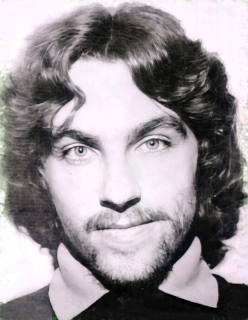
Birth of John Kelly, Northern Irish Politician & IRA Volunteer

John Kelly, Northern Irish republican politician, is born in the New Lodge area of Belfast, Northern Ireland, on April 5, 1936. He joins the Irish Republican Army (IRA) in the 1950s and is a founder member and a leader of the Provisional Irish Republican Army in the early 1970s.

Kelly is one of five sons and four daughters born to William Kelly, retail and wholesale fruitier, and his wife Margaret (née Maginness). Living off Carlisle Circus in a flashpoint area of north Belfast and close to Crumlin Road Gaol, the Kellys are a strongly republican family, regularly supplying republican inmates with fruit and assisting them on their release.

Later in life Kelly moves to Maghera, County Londonderry, where he lives until his death in 2007. He and his wife have a daughter. He is a dedicated member of local Gaelic Athletic Association (GAA) club Watty Graham’s GAC, Glen and a keen supporter of Gaelic games and the Irish language.

Kelly joins the IRA in the early 1950s when he is eighteen and takes part in the Border Campaign of 1956–62 but is arrested in December 1956 and imprisoned until 1963. He is a member of the Northern Ireland Civil Rights Association (NICRA) in 1967–69 which leads on to sectarian riots in Belfast. A leader of the newly formed Provisional IRA in 1969, he is involved in the formation of “citizens’ defence groups” to protect nationalist areas of Belfast from loyalist rioters who are largely unhampered by the police.

Kelly is jailed on three occasions for IRA related activity spending a total of fifteen years in prison in Northern Ireland and the Republic of Ireland. His first term is for his activity in the 1956 IRA border campaign. He also serves a six-month term in 1973 in the Republic of Ireland for being a member of the IRA.

Commenting later on the Troubles, Kelly says, “Yes, it was a terrible period. But you can’t turn the clock back. The Irish government did not create the Provisional IRA. What happened was as inevitable as the changing seasons.”

The citizens’ defence groups seek help from the government in Dublin in 1969, then led by Jack Lynch. Several ministers respond and arrange a fund of £100,000 but the planned arms shipment fails. Kelly later says, “These discussions were all about guns. The whole thing was government-sponsored, government-backed and government-related.” The planning includes travel to Britain, Europe, and on to the United States where he meets the founders of NORAID. He is one of the co-defendants in the subsequent Dublin “Arms Trial” with ministers Charles Haughey and Neil Blaney, accused of conspiring to import arms illegally into the Republic of Ireland. The trial eventually collapses from a lack of evidence, as the relevant government files are kept secret, but the Irish government sacks several ministers as a result.

Kelly goes into electoral politics, serving on Magherafelt District Council from 1997. At the 1998 Northern Ireland Assembly election he is elected to the Northern Ireland Assembly as a Sinn Féin member for Mid Ulster. He is deselected before the 2003 election, and criticises the decision by the Sinn Féin leadership to support policing reforms. In January 2006 he co-writes a letter with Brendan Hughes which casts doubt on the claims that dissident republicans have threatened Sinn Féin leaders and claims that the real threats are being made by the Sinn Féin leadership against those who seek a debate on policing. He leaves Sinn Féin which he considers too controlled from the centre, opposing the leadership “deceit and the philosophy of creative ambiguity,” and he retires from politics.

Kelly dies in Maghera following a long battle with cancer on September 5, 2007. Many tributes are paid to him including a minute’s silence before the Derry Senior Football Championship quarter final between St. Patrick’s GAC, Loup, and Dungiven GAC on September 8, 2007, at the home of his local club, Watty Graham GAC, Glen. A Na Piarsaigh Belfast GAC jersey is draped over his coffin before he is interred at Maghera Catholic Graveyard.

Leave a comment

Political Prisoner Francis Hughes Dies on Hunger Strike

Francis Joseph Sean Hughes, a volunteer in the Provisional Irish Republican Army (IRA) and an Irish political prisoner, dies on hunger strike in Long Kesh Detention Centre on May 12, 1981. He is the most wanted man in Northern Ireland until his arrest following a shoot-out with the British Army in which a British soldier is killed. At his trial, he is sentenced to a total of 83 years’ imprisonment.

Hughes is born in Bellaghy, County Londonderry, Northern Ireland, on February 28, 1956, into a republican family, the youngest of four brothers in a family of ten siblings. His father, Joseph, had been a member of the Irish Republican Army in the 1920s and one of his uncles had smuggled arms for the republican movement. This results in the Hughes family being targeted when internment is introduced in 1971, and his brother Oliver is interned for eight months without trial in Operation Demetrius. He leaves school at the age of 16 and starts work as an apprentice painter and decorator.

Hughes is returning from an evening out in Ardboe, County Tyrone, when he is stopped at an Ulster Defence Regiment (UDR) checkpoint. When the soldiers realise he comes from a republican family, he is badly beaten. His father encourages him to see a doctor and report the incident to the police, but he refuses, saying he “would get his own back on the people who did it, and their friends.”

Hughes initially joins the Official Irish Republican Army but leaves after the organisation declares a ceasefire in May 1972. He then joins up with Dominic McGlinchey, his cousin Thomas McElwee and Ian Milne, before the three decide to join the Provisional Irish Republican Army in 1973. He, Milne and McGlinchey take part in scores of IRA operations, including daylight attacks on Royal Ulster Constabulary (RUC) stations, bombings, and attacks on off-duty members of the RUC and UDR. Another IRA member describes the activities of Hughes:

“He led a life perpetually on the move, often moving on foot up to 20 miles for one night then sleeping during the day, either in fields and ditches or safe houses; a soldierly sight in his black beret and combat uniform and openly carrying a rifle, a handgun and several grenades as well as food rations.”

On April 18, 1977, Hughes, McGlinchey and Milne are travelling in a car near the town of Moneymore when an RUC patrol car carrying four officers signals them to stop. The IRA members attempt to escape by performing a U-turn but lose control of the car which ends up in a ditch. They abandon the car and open fire on the RUC patrol car, killing two officers and wounding another, before running off through the fields. A second RUC patrol comes under fire while attempting to prevent the men from fleeing, and despite a search operation by the RUC and British Army the IRA members escape. Following the Moneymore shootings, the RUC name Hughes as the most wanted man in Northern Ireland, and issue wanted posters with pictures of Hughes, Milne and McGlinchey. Milne is arrested in Lurgan, County Armagh, in August 1977, and McGlinchey later in the year in the Republic of Ireland.

Hughes is arrested on March 17, 1978, at Lisnamuck, near Maghera in County Londonderry, after an exchange of gunfire with the British Army the night before. British soldiers manning a covert observation post spot Hughes and another IRA volunteer approaching them wearing combat clothing with “Ireland” sewn on their jackets. Thinking they might be from the Ulster Defence Regiment, one of the soldiers stands up and calls to them. The IRA volunteers open fire on the British troops, who return fire. A soldier of the Special Air Service (SAS), Lance Corporal David Jones, is killed and another soldier wounded. Hughes is also wounded and is arrested nearby the next morning.

In February 1980, Hughes is sentenced to a total of 83 years in prison. He is tried for, and found guilty of, the murder of one British Army soldier (for which he receives a life sentence) and wounding of another (for which he receives 14 years) in the incident which leads to his arrest, as well as a series of gun and bomb attacks over a six-year period. Security sources describe him as “an absolute fanatic” and “a ruthless killer.” Fellow republicans describe him as “fearless and active.”

Hughes is involved in the mass hunger strike in 1980 and is the second prisoner to join the 1981 Irish Hunger Strike in the H-Blocks at the Long Kesh Detention Centre. His hunger strike begins on March 15, 1981, two weeks after Bobby Sands began his hunger strike. He is also the second striker to die, at 5:43 p.m. BST on May 12, after 59 days without food, refusing requests from the IRA leadership outside the prison to end the strike after the death of Sands. The journey of his body from the prison to the well-attended funeral near Bellaghy is marked by rioting as the hearse passes through loyalist areas. His death leads to an upsurge in rioting in nationalist areas of Northern Ireland.

Hughes’s cousin Thomas McElwee is the ninth hunger striker to die. Oliver Hughes, one of his brothers, is elected twice to Magherafelt District Council.

Hughes is commemorated on the Irish Martyrs Memorial at Waverley Cemetery in Sydney, New South Wales, Australia, and is portrayed by Fergal McElherron in the film H3.


Leave a comment

Birth of Dehra Parker, MP in the House of Commons of Northern Ireland

The Rt Hon. Dame Dehra S. Parker, GBE, PC (NI), the longest serving female MP in the House of Commons of Northern Ireland, is born in a military hospital in Dehradun, north of Delhi, India, on August 13, 1882.

Parker is born Dehra Kerr-Fisher, the only child of James Kerr-Fisher and his wife Annie. Her father, a native of Kilrea, County Londonderry, is a successful financier. She is educated in the United States, where her father holds extensive property holdings, and in Germany. The surname has been spelled, alternatively, as Ker-Fisher or Ker Fisher.

Parker is married twice. Her first husband is Lieutenant Colonel Robert Peel Dawson Spencer Chichester, MP, with whom she has one son and one daughter, Robert James Spencer Chichester (1902–1920) and Marion Caroline Dehra Chichester (1904–1976). She is predeceased by her son. On June 4, 1928, she marries her second husband, Admiral Henry Wise Parker (CB, CMG).

Parker is first elected as a Member of Parliament (MP) for Londonderry, as Dehra Chichester, as she is known prior to her second marriage in 1928, in the 1921 Northern Ireland general election. She stands down at the 1929 election just before her second marriage but is elected unopposed as Dehra Parker in the March 15, 1933 by-election for the South Londonderry constituency following the death of her son-in-law James Lenox-Conyngham Chichester-Clark. She serves until her resignation on June 15, 1960. Her grandson, James Chichester-Clark, is elected unopposed at the subsequent by-election. He later serves as the fifth Prime Minister of Northern Ireland from 1969 to 1971.

From her re-election in 1933 until her retirement in 1960, Parker faces opposition only once. During the 1949 Northern Ireland general election, with anti-partition agitation a common theme across the region, she is opposed in South Londonderry by a Nationalist Party candidate, T. B. Agnew, whom she defeats. She is a Parliamentary Secretary to the Ministry of Education from December 1, 1937, to March 15, 1944. She is also Chair of the Northern Ireland General Health Services Board from 1948 to 1949. She serves as Minister of Health and Local Government from August 26, 1949, to March 13, 1957, and becomes a member of the Privy Council of Northern Ireland in 1949. She is elevated to Dame Commander of the Order of the British Empire in the 1949 Birthday Honours “for public services,” having previously been appointed as an OBE, and is advanced to be a Dame Grand Cross of the Order of the British Empire (GBE) in 1957.

Parker’s promotion to the Cabinet at the age of 67 under Sir Basil Brooke (later created the 1st Viscount Brookeborough) is part of his so-called “reforming” premiership, his predecessor, J. M. Andrews, having been criticised for appointing elderly members to Cabinet. She is the first woman to serve in the Northern Ireland Cabinet.

Outside of parliamentary activities, Parker is a long-serving local councilor on Magherafelt District Council, president of both the Northern Ireland Physical Training Association and the Girls’ Training Corps, and chairman of the Ancient Monuments Advisory Committee. In 1944, she is appointed senior vice-chairman of the Council for the Encouragement of Music and the Arts (CEMA NI), and in 1949 she succeeds Sir David Lindsay Keir as President for CEMA, a position she holds until 1960. She is made an honorary member of the Ulster Society of Women Artists in 1958.

Parker dies at her home, Shanemullagh House, Castledawson, in the south of County Londonderry, on November 28, 1963, at age 81. She is interred two days later in the grounds of Christ Church, Castledawson.


Leave a comment

Birth of Ian Milne, Northern Ireland Politician

Ian Milne, Irish republican politician from Northern Ireland, is born in Bellaghy, County Londonderry, April 8, 1954.

Milne joins the Official Irish Republican Army-linked Fianna Éireann youth group soon after its formation, but the following year moves to join the Provisional Irish Republican Army. He is gaoled in 1971, after explosives go off in a car in which he is traveling. He is imprisoned in the Crumlin Road Gaol, but escapes in January 1973. The following year, he is arrested in the Republic of Ireland after stealing a Garda car and is sentenced to five years in Portlaoise Prison. However, he again escapes, and remains an active paramilitary based in Northern Ireland.

During the mid-1970s, the Royal Ulster Constabulary (RUC) describes Milne as one of its three “most wanted.” In 1977, he is arrested and sentenced to life for killing a British soldier. Serving time at Long Kesh Detention Centre, he participates in the blanket protest. He is released in 1992.

At the 2005 Northern Ireland local elections, Milne is elected to Magherafelt District Council for Sinn Féin, and he holds his seat in the 2011 elections. While on the council, he spends a period as chairman. In 2013, he is co-opted to the Northern Ireland Assembly in Mid Ulster, replacing Francie Molloy. He is elected to the Northern Ireland Assembly for Mid Ulster at the 2016 Northern Ireland Assembly election.

In September 2017 Milne is served civil writs for his alleged involvement in the murder of Jimmy Speer on November 9, 1976.

In December 2018, Milne resigns as Member of the Legislative Assembly (MLA) to seek reelection to local government. He is elected to Mid Ulster District Council in 2019 and continues to hold this position as of 2023.