seamus dubhghaill

Promoting Irish Culture and History from Little Rock, Arkansas, USA


Leave a comment

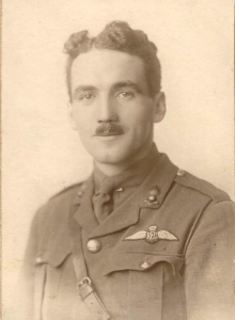
Death of “Mick” Mannock, British-Irish Flying Ace

Edward Corringham “Mick” Mannock VC, DSO & Two Bars, MC & Bar, a British-Irish flying ace who serves in the Royal Flying Corps (RFC) and Royal Air Force (RAF) during World War I, is killed on July 26, 1918, when his plane crashes behind German lines. He is a pioneer of fighter aircraft tactics in aerial warfare. At the time of his death, he has amassed 61 aerial victories, making him the fifth highest scoring pilot of the war. He is among the most decorated men in the British Armed Forces. He is honoured with the Military Cross (MC) twice, is one of the rare three-time recipients of the Distinguished Service Order (DSO) and is posthumously awarded the Victoria Cross (VC).

Mannock was born on May 24, 1887, to an English father, Edward Mannock, and an Irish mother, Julia Sullivan. His father serves in the British Army and in 1893, deeply in debt and exasperated with civilian life, he re-enlists, and the family moves to Meerut, India when he is five years old. In his early years, he is sickly and develops several ailments. Soon after arriving in Asia, he contracts malaria, narrowly avoiding death. Upon his return to England, he becomes a fervent supporter of Irish nationalism and the Irish Home Rule movement but becomes a member of the Independent Labour Party (ILP).

In 1914, Mannock is working as a telephone engineer in Turkey. After the Ottoman Empire‘s entry into the war on the side of the Central Powers he is interned. Poorly fed and cared for, his health rapidly declines in prison. Dysentery racks his intestines, and he is confined to a small cell. Turkish authorities repatriate him to Britain believing him to be unfit for war service. He recovers and joins the Royal Engineers (RE) and then the Royal Army Medical Corps (RAMC). He moves services again and in 1916 joins Royal Flying Corps (RFC). After completing his training, he is assigned to No. 40 Squadron RFC. He goes into combat on the Western Front, participating in three separate combat tours. After a slow start he begins to prove himself as an exceptional pilot, scoring his first victory on May 7, 1917.

By February 1918, Mannock has achieved sixteen victories and is appointed a Flight Commander in No. 74 Squadron. He amasses thirty-six more victories from April 12 — June 17, 1918. After returning from leave he is appointed commanding officer of No. 85 Squadron in July 1918, and scores nine more victories that month.

On July 26, Major Mannock offers to help a new arrival, Lt. Donald C. Inglis from New Zealand, obtain his first victory. After shooting down an enemy LVG two-seater behind the German front-line, Mannock is believed to have dived to the crash site to view the wreckage, seemingly breaking one of the unwritten rules of fellow pilots about the hazards of flying low into ground fire. In consequence, while crossing the trenches the fighters are met with a massive volley of ground fire. The engine of his aircraft is hit and immediately catches fire, and shortly thereafter the plane crashes behind German lines. His body is believed to have been found, though this is unproven, about 250 yards (250m) from the wreck of his plane, perhaps thrown, perhaps jumped. The body shows no gunshot wounds although he had vowed to shoot himself if shot down in flames.

The exact cause of Mannock’s death remains uncertain. A year later, after intensive lobbying by Ira Jones and many of his former comrades, he is awarded the Victoria Cross (VC).

Mannock’s body is not subsequently recovered by the Commonwealth War Graves Commission (CWGC), so officially he has no known grave. His name is commemorated on the Arras Flying Services Memorial to the missing at the Faubourg d’Amiens CWGC Cemetery in Arras, France. There is also a memorial plaque in his honour in Canterbury Cathedral.

Mannock’s name is listed on the Wellingborough War Memorial with the other fallen men from the town and the local Air Training Corps (ATC) unit bears his name – 378 (Mannock) Squadron. Additionally, Mannock Road, a residential street in Wellingborough, is named after him.

On June 24, 1988, a plaque is unveiled at 183 Mill Road, Wellingborough, by top scoring World War II British fighter pilot Air Vice-Marshal Johnnie Johnson. Mannock had lived at that address prior to the war after being befriended by the Eyles family.

Leave a comment

Birth of Fighter Pilot George Edward Henry McElroy

Captain George Edward Henry McElroy, a leading Irish-born fighter pilot of the Royal Flying Corps and Royal Air Force during World War I, is born at DonnybrookCounty Dublin, on May 14, 1893. He is credited with 47 aerial victories.

McElroy enlists promptly at the start of World War I in August 1914 and is shipped out to France two months later. He is serving as a corporal in the Motor Cyclist Section of the Royal Engineers when he is first commissioned as a second lieutenant on May 9, 1915. While serving in the Royal Irish Regiment he is severely affected by mustard gas and is sent home to recuperate. He is in Dublin in April 1916, during the Easter Rising, and is ordered to help quell the insurrection. McElroy refuses to fire upon his fellow Irishmen and is transferred to a southerly garrison away from home.

On June 1, 1916, McElroy relinquishes his commission in the Royal Irish Regiment when awarded a cadetship at the Royal Military Academy, Woolwich, from which he graduates on February 28, 1917, and is commissioned as a second lieutenant in the Royal Garrison Artillery.

McElroy is promptly seconded to the Royal Flying Corps, being trained as a pilot at the Central Flying School at Upavon, and is appointed a flying officer on June 28. On July 27 his commission is backdated to February 9, 1916, and he is promoted to lieutenant on August 9. On August 15 he joins No. 40 Squadron RFC, where he benefits from mentoring by Edward “Mick” Mannock. He originally flies a Nieuport 17, but with no success in battle. By the year’s end McElroy is flying Royal Aircraft Factory S.E.5s and claims his first victory on December 28.

An extremely aggressive dogfighter who ignores often overwhelming odds, McElroy’s score soon grows rapidly. He shoots down two German aircraft in January 1918, and by February 18 has run his string up to eleven. At that point, he is appointed a flight commander with the temporary rank of captain and transferred to No. 24 Squadron RFC. He continues to steadily accrue victories by ones and twos. By March 26, when he is awarded the Military Cross, he is up to 18 “kills.” On April 1, the Army’s Royal Flying Corps (RFC) and the Royal Naval Air Service (RNAS) are merged to form the Royal Air Force, and his squadron becomes No. 24 Squadron RAF. McElroy is injured in a landing accident on April 7 when he brushes a treetop while landing. By then he has run his score to 27. While he is sidelined with his injury, on April 22, he is awarded a bar to his Military Cross. Following his convalescence, McElroy returns to No. 40 Squadron in June, scoring three times, on the 26th, 28th, and 30th. The latter two triumphs are observation balloons. That runs his tally to thirty.

In July, he adds to his score almost daily, a third balloon busting on the 1st, followed by one of the most triumphant months in the history of fighter aviation, adding 17 victims during the month. His run of success is threatened on the 20th by a vibrating engine that entails breaking off an attack on a German two-seater and a rough emergency landing that leaves him with scratches and bruises. There is a farewell luncheon that day for his friend Gwilym Hugh “Noisy” Lewis. Their mutual friend Edward “Mick” Mannock pulls McElroy aside to warn him about the hazards of following a German victim down within range of ground fire.

On July 26, Mannock is killed by ground fire. Ironically, on that same day, “McIrish” McElroy receives the second Bar to his Military Cross. He is one of only ten airmen to receive the second Bar.

McElroy’s continues apparent disregard for his own safety when flying and fighting can have only one end. On July 31, 1918, he reports destroying a Hannoversche Waggonfabrik C for his 47th victory. He then sets out again. He fails to return from this flight and is posted missing. Later it is learned that McElroy has been killed by ground fire. He is 25 years old. McElroy is interred in Plot I.C.1 at the Laventie Military Cemetery in La Gorgue, northern France.

McElroy receives the Distinguished Flying Cross posthumously on August 3, citing his shooting down 35 aeroplanes and three observation balloons. The Bar arrives still later, on September 21, and lauds his low-level attacks. In summary, he shoots down four enemy aircraft in flames and destroys 23 others, one of which he shares with other pilots. He drives down 16 enemy aircraft “out of control” and out of the fight. He also destroys three balloons.