seamus dubhghaill

Promoting Irish Culture and History from Little Rock, Arkansas, USA


Leave a comment

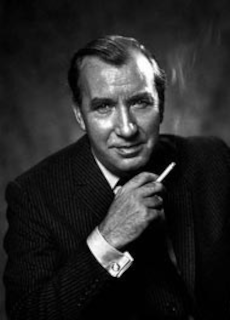
Death of Gerry Fitt, Northern Ireland Politician

Gerard FittNorthern Ireland politician, dies in London on August 26, 2005. He is a founder and the first leader of the Social Democratic and Labour Party (SDLP), a social democratic and Irish nationalist party.

Fitt is born in Belfast on April 9, 1926. He is educated at a local Christian Brothers school in Belfast. He joins the Merchant Navy in 1941 and serves on convoy duty during World War II. His elder brother Geordie, an Irish Guardsman, is killed at the Battle of Normandy.

Living in the nationalist Beechmount neighbourhood of the Falls, he stands for the Falls as a candidate for the Dock Labour Party in a city council by-election in 1956, but loses to Paddy Devlin of the Irish Labour Party, who later becomes his close ally. In 1958, he is elected to Belfast City Council as a member of the Irish Labour Party.

In 1962, he wins a seat in the Parliament of Northern Ireland from the Ulster Unionist Party, becoming the only Irish Labour member. Two years later, he left Irish Labour and joined with Harry Diamond, the sole Socialist Republican Party Stormont MP, to form the Republican Labour Party. At the 1966 general election, Fitt won the Belfast West seat in the Westminster parliament.

Many sympathetic British Members of Parliament (MPs) are present at a civil rights march in Derry on October 5, 1968, when Fitt and others are beaten by the Royal Ulster Constabulary. Fitt also supports the 1969 candidacy of Bernadette Devlin in the Mid Ulster by-election who runs as an anti-abstentionist ‘Unity‘ candidate. Devlin’s success greatly increases the authority of Fitt in the eyes of many British commentators, particularly as it produces a second voice on the floor of the British House of Commons who challenge the Unionist viewpoint at a time when Harold Wilson and other British ministers are beginning to take notice.

In August 1970, Fitt becomes the first leader of a coalition of civil rights and nationalist leaders who create the Social Democratic and Labour Party (SDLP). By this time Northern Ireland is charging headlong towards near-civil war and the majority of unionists remain hostile.

After the collapse of Stormont in 1972 and the establishment of the Northern Ireland Assembly in 1973 Fitt becomes deputy chief executive of the short-lived Power-Sharing Executive created by the Sunningdale Agreement.

Fitt becomes increasingly detached from both his own party and also becomes more outspoken in his condemnation of the Provisional Irish Republican Army. He becomes a target for republican sympathisers in 1976 when they attack his home. He becomes disillusioned with the handling of Northern Ireland by the British government. In 1979, he abstains from a crucial vote in the House of Commons which brings down the Labour government, citing the way that the government had failed to help the nationalist population and tried to form a deal with the Ulster Unionist Party.

In 1979, Fitt is replaced by John Hume as leader of the SDLP and he leaves the party altogether after he agrees to constitutional talks with British Secretary of State Humphrey Atkins without any provision for an ‘Irish dimension’ and then sees his decision overturned by the SDLP party conference. Like Paddy Devlin before him, he claims the SDLP has ceased to be a socialist force.

In 1981, he opposes the hunger strikes in the Maze prison in Belfast. His seat in Westminster is targeted by Sinn Féin as well as by the SDLP. In June 1983, he loses his seat in Belfast West to Gerry Adams, in part due to competition from an SDLP candidate. The following month, on October 14, 1983, he is created a UK life peer as Baron Fitt, of Bell’s Hill in County Down. His Belfast home is firebombed a month later and he moves to London.

Gerry Fitt dies in London on August 26, 2005, at the age of 79, after a long history of heart disease.

Leave a comment

Death of Cornelius Ryan, Irish American Journalist & Author

Cornelius Ryan, Irish American journalist and author mainly known for his writings on popular military history, dies in Manhattan on November 23, 1974. He is especially known for his World War II books The Longest Day: 6 June 1944 D-Day (1959), The Last Battle (1966), and A Bridge Too Far (1974).

Ryan is born in Dublin on June 5, 1920. He is educated at Synge Street CBS, Portobello, Dublin. He is an altar boy at St. Kevin’s Church, Harrington Street and studies the violin at the Irish Academy of Music in Dublin. He is a boy scout in the 52nd Troop of the Catholic Boy Scouts of Ireland and travels on their pilgrimage to Rome on the liner RMS Lancastria in 1934. He moves to London in 1940 and becomes a war correspondent for The Daily Telegraph in 1941.

Ryan initially covers the air war in Europe, flying along on fourteen bombing missions with the Eighth and Ninth United States Army Air Forces (USAAF). He then joins General George S. Patton‘s Third Army and covers its actions until the end of the European war. He transfers to the Pacific theater in 1945 and then to Jerusalem in 1946.

Ryan emigrates to the United States in 1947 to work for Time, where he reports on the postwar tests of atomic weapons carried out by the United States in the Pacific. He then reports for Time on the Arab-Israeli war in 1948. This is followed by work for other magazines, including Collier’s Weekly and Reader’s Digest.

Ryan marries Kathryn Morgan, a novelist, and becomes a naturalized citizen of the United States in 1951.

On a trip to Normandy in 1949 Ryan becomes interested in telling a more complete story of Operation Overlord than has been produced to date. He begins compiling information and conducting over 1,000 interviews as he gathers stories from both the Allies and the Germans, as well as the French civilians.

In 1956 Ryan begins to write down his World War II notes for The Longest Day: 6 June 1944 D-Day, which tells the story of the D-Day Invasion of Normandy, published three years later in 1959. It is an instant success, and he assists in the writing of the screenplay for the 1962 film of the same name. Darryl F. Zanuck pays the author U.S.$175,000 for the screen rights to the book.

Ryan’s 1957 book One Minute to Ditch! is about the successful ocean ditching of a Pan American Boeing 377 Stratocruiser. He had written an article about the ditching for Collier’s in their December 21, 1956, issue and then expanded it into the book.

Ryan’s next work is The Last Battle (1966), about the Battle of Berlin. The book contains detailed accounts from all perspectives: civilian, American, British, Russian and German. It deals with the fraught military and political situation in the spring of 1945, when the forces of the western allies and the Soviet Union contend for the chance to liberate Berlin and to carve up the remains of Germany.

This work was followed by A Bridge Too Far (1974), which tells the story of Operation Market Garden, the ill-fated assault by allied airborne forces on the Netherlands culminating in the Battle of Arnhem. It is made into a major 1977 film of the same name.

Ryan is awarded the French Legion of Honour and an honorary Doctor of Literature degree from Ohio University, where the Cornelius Ryan Collection is housed in the Alden Library. He is diagnosed with prostate cancer in 1970 and struggles to finish A Bridge Too Far during his illness. He dies in Manhattan on November 23, 1974, while on tour promoting the book, only two months after publication. He is buried in the Ridgebury Cemetery in northern Ridgefield, Connecticut.

Four years after his death, Ryan’s struggle with prostate cancer is detailed in A Private Battle, written by his widow, from notes he had secretly left behind for that purpose.


Leave a comment

Birth of Cornelius Ryan, Journalist & Author

cornelius-ryan

Cornelius Ryan, Irish journalist and author mainly known for his writings on popular military history, is born in Dublin in June 5, 1920. He is especially known for his World War II books The Longest Day: 6 June 1944 D-Day (1959), The Last Battle (1966), and A Bridge Too Far (1974).

Ryan is educated at Synge Street CBS, Portobello, Dublin. He is an altar boy at St. Kevin’s Church, Harrington Street and studies the violin at the Irish Academy of Music in Dublin. He is a boy scout in the 52nd Troop of the Catholic Boy Scouts of Ireland and travels on their pilgrimage to Rome on the liner RMS Lancastria in 1934. He moves to London in 1940 and becomes a war correspondent for The Daily Telegraph in 1941.

Ryan initially covers the air war in Europe, flying along on fourteen bombing missions with the Eighth and Ninth United States Army Air Forces (USAAF). He then joins General George S. Patton‘s Third Army and covers its actions until the end of the European war. He transfers to the Pacific theater in 1945 and then to Jerusalem in 1946.

Ryan emigrates to the United States in 1947 to work for Time, where he reports on the postwar tests of atomic weapons carried out by the United States in the Pacific. He then reports for Time on the Arab-Israeli war in 1948. This is followed by work for other magazines, including Collier’s Weekly and Reader’s Digest.

Ryan marries Kathryn Morgan, a novelist, and becomes a naturalized citizen of the United States in 1951.

On a trip to Normandy in 1949 Ryan becomes interested in telling a more complete story of Operation Overlord than has been produced to date. He begins compiling information and conducting over 1,000 interviews as he gathers stories from both the Allies and the Germans, as well as the French civilians.

In 1956 Ryan begins to write down his World War II notes for The Longest Day: 6 June 1944 D-Day, which tells the story of the D-Day Invasion of Normandy, published three years later in 1959. It is an instant success, and he assists in the writing of the screenplay for the 1962 film of the same name. Darryl F. Zanuck pays the author U.S.$175,000 for the screen rights to the book.

Ryan’s 1957 book One Minute to Ditch! is about the successful ocean ditching of a Pan American Boeing 377 Stratocruiser. He had written an article about the ditching for Collier’s in their December 21, 1956, issue and then expanded it into the book.

Ryan’s next work is The Last Battle (1966), about the Battle of Berlin. The book contains detailed accounts from all perspectives: civilian, American, British, Russian and German. It deals with the fraught military and political situation in the spring of 1945, when the forces of the western allies and the Soviet Union contend for the chance to liberate Berlin and to carve up the remains of Germany.

This work was followed by A Bridge Too Far (1974), which tells the story of Operation Market Garden, the ill-fated assault by allied airborne forces on the Netherlands culminating in the Battle of Arnhem. It is made into a major 1977 film of the same name.

Ryan is awarded the French Legion of Honour and an honorary Doctor of Literature degree from Ohio University, where the Cornelius Ryan Collection is housed in the Alden Library. He is diagnosed with prostate cancer in 1970 and struggles to finish A Bridge Too Far during his illness. He dies in Manhattan on November 23, 1974, while on tour promoting the book, only two months after publication. He is buried in the Ridgebury Cemetery in northern Ridgefield, Connecticut.

Four years after his death, Ryan’s struggle with prostate cancer is detailed in A Private Battle, written by his widow, from notes he had secretly left behind for that purpose.


Leave a comment

Birth of Richard Todd, Stage & Film Actor

richard-todd

Richard Andrew Palethorpe Todd OBE, an English soldier, stage and film actor and film director, is born in Dublin on June 11, 1919.

Todd spends a few of his childhood years in India, where his father, an officer in the British Army, serves as a physician. Later his family moves to Devon, and he attends Shrewsbury School. Upon leaving school, he trains for a potential military career at Royal Military Academy Sandhurst before beginning his acting training at the Italia Conti Academy of Theatre Arts in London. This change in career leads to estrangement from his mother. When he learns at age 19 that she has committed suicide, he does not grieve long for her, he admits in later life.

Todd first appears professionally as an actor at the Regent’s Park Open Air Theatre in 1936 in a production of Twelfth Night. He plays in regional theatres and then co-founds the Dundee Repertory Theatre in Scotland in 1939. He also appears as an extra in British films like Good Morning, Boys (1937), A Yank at Oxford (1938) and Old Bones of the River (1939).

At the beginning of World War II, Todd enlists in the British Army, receiving a commission in 1941. On June 6, 1944, as a captain, he participates in Operation Tonga during the Normandy landings. He is among the first British officers to land in Normandy as part of Operation Overlord.

After the war, Todd is unsure what direction to take in his career. His former agent, Robert Lennard, has become a casting agent for Associated British Picture Corporation and advises him to try out for the Dundee Repertory Company. He does so, performing in plays such as Claudia, where he appears with Claudia Grant-Bogle. Lennard arranges for a screen test and Associated British offers him a long-term contract in 1948. He is cast in the lead in For Them That Trespass (1949), directed by Alberto Cavalcanti. The film is a minor hit and his career is launched.

Having portrayed the role of Yank in the Dundee Repertory stage version of John Patrick‘s play The Hasty Heart, Todd is subsequently chosen to appear in the 1948 London stage version of the play, this time in the leading role of Cpl. Lachlan McLachlan. This leads to his being cast in that role in the Warner Bros. film adaptation of the play, which is filmed in the United Kingdom, alongside Ronald Reagan and Patricia Neal. He is nominated for the Academy Award for Best Actor for the role in 1949.

Todd is now in much demand. He appears in the thriller The Interrupted Journey (1949), Alfred Hitchcock‘s Stage Fright (1950), opposite Marlene Dietrich and Jane Wyman, Portrait of Clare (1950), Flesh and Blood (1951), The Story of Robin Hood and His Merrie Men (1952), 24 Hours of a Woman’s Life (1952), with Merle Oberon, Venetian Bird (1952), The Sword and the Rose (1953) and Rob Roy, the Highland Rogue (1953). In 1953, he appears in a BBC Television adaptation of the novel Wuthering Heights.

Todd’s career receives a boost when 20th Century Fox signs him to a non-exclusive contract. He appears the film version of Catherine Marshall‘s best-selling biography, A Man Called Peter (1955), which is a popular success. Other films in which he appears include The Dam Busters (1955), The Virgin Queen (1955), Marie Antoinette Queen of France (1956), D-Day the Sixth of June (1956), Yangtse Incident: The Story of H.M.S. Amethyst (1957), Saint Joan (1957), Chase a Crooked Shadow (1958), Intent to Kill (1958), Danger Within (1958), Never Let Go (1960) and The Long and the Short and the Tall (1961).

Todd’s career in films rapidly declines in the 1960s as the counter-culture movement in the Arts becomes fashionable in England, with social-realist dramas commercially replacing the more middle-class orientated dramatic productions that Todd’s performance character-type had previously excelled in.

In retirement, Todd lives in the village of Little Ponton and later in Little Humby, eight miles from Grantham, Lincolnshire. Suffering from cancer, he dies at his home on December 3, 2009. He is buried between his two sons, Seamus and Peter, at St. Guthlac’s Church in Little Ponton, Lincolnshire, England.