seamus dubhghaill

Promoting Irish Culture and History from Little Rock, Arkansas, USA


Leave a comment

Death of Anew McMaster, Touring Shakespearean Actor & Manager

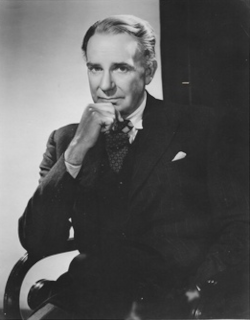
Anew McMaster, the last of the touring actor-managers who presents William Shakespeare’s plays throughout the United Kingdom, Ireland, Australia and the United States, dies in Dublin on August 24, 1962. For almost 35 years he tours as actor-manager of his own theatrical company performing the works of Shakespeare and other playwrights.

McMaster is born as Andrew McMaster on December 24, 1891, the son of Liverpool-born Andrew McMaster, a master stevedore, and Alice Maude (née Thompson). A number of sources make the erroneous claims, based on details supplied by McMaster himself, that he is born in 1893 or 1894 or even 1895 in County Monaghan in Ireland, but according to the Birth Register and the 1901 Census he is actually born in 1891 in Birkenhead, England. Like his future brother-in-law, Micheál Mac Liammóir, who is born in London as Alfred Willmore but who claims to have been born in Cork to Gaelic-speaking parents, McMaster reinvents himself as Irish and claims for himself the town of Monaghan as his birthplace, and Warrenpoint, County Down, as the scene of his earliest memories.

At the age of 19, McMaster gives up a career in banking to pursue one on the stage. He moves to Ireland and tours the country with the O’Brien-Ireland theatrical company from 1910 to 1914. Success quickly follows with his appearance as Jack O’Hara in Paddy the Next Best Thing at the Savoy Theatre in 1920. From 1921 he tours Australia in this and other plays, and in 1925 forms his own company, the McMaster Intimate Theatre Company, a “fit-up” company to tour in the works of Shakespeare, mainly in Ireland but also in Britain and Australia, touring with his theatrical company until 1959. One of the last actor-managers “of the old school – and an epitome of the type,” on occasions McMaster persuades a “big name” to act with his company as a draw for audiences, and Frank Benson (1928), Sara Allgood (1929) and Mrs. Patrick Campbell appear with him.

In 1933 at the Shakespeare Memorial Theatre in Stratford-upon-Avon McMaster appears as Hamlet opposite Esme Church as Gertrude, Coriolanus, Macduff in Macbeth, Leonato in Much Ado About Nothing, Prince Escalus in Romeo and Juliet, and Petruchio in The Taming of the Shrew. His greatest roles are as Othello and as Shylock in The Merchant of Venice, to which he adds King Lear in 1952. Just before World War II he and his company appear at the Chiswick Empire in a Shakespeare season. He tours the United States as James Tyrone in Eugene O’Neill‘s Long Day’s Journey into Night in 1956. Having “a great organ voice,” Harold Pinter, who acts in his company in Ireland from 1951 to 1953 and calls him “Perhaps the greatest actor-manager of his time,” later describes McMaster as “evasive, proud, affectionate, shrewd, merry.” In his brief biography Mac (1968), Pinter recalls, “Mac gave about a half dozen magnificent performances of Othello while I was with him… At his best he was the finest Othello I have seen. [He] stood dead in the centre of the role, and the great sweeping symphonic playing would begin, the rare tension and release within him, the arrest, the swoop, the savagery, the majesty and repose.”

McMaster’s only film role is an uncredited appearance as the Judge in Sword of Sherwood Forest (1960).

In 1924 McMaster marries the actress and designer Marjorie Willmore, the sister of Micheál Mac Liammóir. They have two children, the actors John Christopher McMaster and Mary-Rose McMaster.

McMaster dies at the age of 70 at his home in Dublin on August 24, 1962. He is buried with his wife in Dean’s Grange Cemetery in County Dublin.

McMaster trains a generation of actors who tour with his company and go on to achieve success as actors. These include Pauline Flanagan, Milo O’Shea, T. P. McKenna, Kenneth Haigh, Henry Woolf, Harold Pinter, Donal Donnelly and Patrick Magee. It is while they are touring with McMaster’s company that the actor and dramatist Micheál Mac Liammóir and the actor and producer Hilton Edwards first meet and begin their lifelong partnership.

McMaster’s biography, A Life Remembered: A Memoir of Anew McMaster, by his daughter Mary-Rose McMaster, is published in 2017. Harold Pinter also publishes a short biography, Mac, in 1968.

Leave a comment

Birth of Mary Manning, Novelist, Playwright & Film Critic

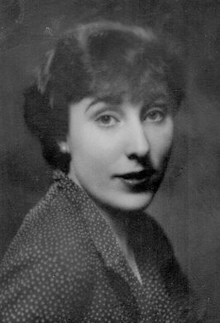
Mary Manning Howe Adams, Irish novelist, playwright and film critic, is born in Dublin on June 30, 1905.

Raised in Dublin, Manning goes to school in Morehampton House and Alexandra College, Dublin. She gets her theatre training in Sara Allgood‘s teaching class in the Abbey Theatre.

Prior to her career as a writer and filmmaker, Manning works as a film critic throughout the 1920s and 30s. She works as a film critic for The Irish Statesman for a year during that time until it goes out of business. She is known to disapprove of Hollywood‘s “unimaginable stories and its stereotypical portrayal of Ireland and the Irish.” She also works as a writer for the Gate Theatre. She adapts the short story “Guests of the Nation” for a film directed by Denis Johnston. She also helps found the Dublin Film Society in 1930 and co-founds the Gate Theatre arts magazine Motley in 1932.

From 1914 to 1926, Ireland experiences a surge of new film styles being produced, consisting of historical melodramas and romantic comedies. Following this, 1930 to 1935 births a second wave of industry produced silent films that are intended to be less cliche compared to the first wave. The films produced under the second wave are much more experimental and deal less with the commercial appeals of the first wave. There’s minimal information on how Manning specifically contributed to the second wave, however, it is stated that she plays an important role producing five out of the six films to come out of that wave.

In 1935, Manning moves to Boston where she marries Harvard Law School professor Mark De Wolfe Howe. They have three daughters, Fanny, Susan and Helen. When her husband dies, she returns to Dublin in 1967 and lives in Monkstown, County Dublin, for another ten years. During this time she writes for various publications such as The Hibernia Magazine, The Irish Times and The Atlantic. She later returns to live in Cambridge, Massachusetts.

Manning is a founder of the Poets’ Theatre in Cambridge, Massachusetts, and works as drama director at Radcliffe College during World War II. She marries Faneuil Adams of Boston, Massachusetts, in 1980.

Manning dies at the age of 93 on June 27, 1999, at Mt. Auburn Hospital in Cambridge, Massachusetts.


Leave a comment

Birth of Máire Nic Shiubhlaigh, Actress & Republican Activist

Máire Nic Shiubhlaigh, Irish actress and republican activist, is born Mary Elizabeth Walker in Charlemont Street, Dublin, on May 8, 1883. She starts acting in her teens and appears in the first Irish language play performed in Ireland. She is a founder-member of the Abbey Theatre and is leading lady on its opening night in 1904, when she plays the title role in W. B. Yeats‘s Cathleen ni Houlihan. She later joins the Theatre of Ireland, which she helps to found.

Nic Shiubhlaigh is born into a nationalist and Irish-speaking family. Her father, Matthew, comes from County Carlow and is a printer and publisher who becomes proprietor of the Gaelic Press. Her mother, Mary, is a dressmaker from Dublin. She grows up in 56 High Street in the Dublin Liberties.

Nic Shiubhlaigh joins the Gaelic League about 1898 and comes into contact with Arthur Griffith and William Rooney. She joins the cultural and revolutionary women’s group Inghinidhe na hÉireann in 1900. With the help of drama enthusiasts William and Frank Fay, she starts acting with the drama group of Inghinidhe na hÉireann. In 1901, the drama group takes part in a feis with two plays, Tobar Draoidheachta by Patrick S. Dinneen and Red Hugh by Alice Milligan. George Russell and W.B. Yeats, who are in attendance at the performance, are moved by the dedication of the amateur players. Russell, who had already offered the Fays his mythic play Deirdre, persuades Yeats to offer them his patriotic play, Cathleen ni Houlihan.

In 1902, Nic Shiubhlaigh joins W. G. Fay’s Irish National Dramatic Company, along with others such as Maire Quinn, Brian Callender, Charles Caulfield, James H. Cousins, P. J. Kelly, Dudley Digges and Frederick Ryan. Their first production of the two one-act plays, Cathleen ni Houlihan, with Maud Gonne in the lead role, and Deirdre, is on April 2, 1902. The company, which has no funds to speak of, acquires a couple of bare rooms at 34 Lower Camden Street, which with the help of friends from Irish-revival societies, they turn into a tiny theatre. They rehearse at the Coffee Palace and also use the Molesworth Hall for productions. In March 1903, with other members of her family, she appears in the first production of Yeats’ morality play, The Hour-Glass, in which she plays the part of the Angel.

In 1903, the playwrights and most of the actors and staff from these productions go on to form the Irish National Theatre Society, which has its registered offices in the Camden Street theatre. Nic Shiubhlaigh is a founder member and on the management committee of the society. Yeats is president, while Russell, Maud Gonne and Douglas Hyde are vice-presidents. William Fay is stage manager. The society founds the Abbey Theatre.

Nic Shiubhlaigh acts in the Abbey Theatre from the time of its founding. On its opening night on December 27, 1904, she plays the name part in Cathleen ni Houlihan. Her portrait is painted by John Butler Yeats for the occasion and hangs in the vestibule. She is the principal actress of the company after Máire Quinn’s departure to the United States, and when she leaves, the burden of the chief women’s rôles falls upon Sara Allgood.

In September 1905, the Abbey administrator and financial backer, an English theatre impresario called Annie Horniman, in hopes of improving the artistic quality of the productions at the Abbey, offers to guarantee salaries (a sum of £500 per year) for the actors and for Willie Fay as producer. To her mind, this will allow the actors and Fay to dispense with their day jobs and concentrate wholly upon their acting. The more nationally-minded members of the staff disagree. Nic Shiubhlaigh writes, “It was pointed out that the old Irish National Theatre Society had been founded in 1902 on the understanding that its independence as a national movement was to be secured only through the efforts of its members. It would be contrary to these ideals to accept a subsidy from an independent source.” For them it would mean a choice between a national theatre and an artistic theatre. At a meeting of the society, supported by Yeats, Gregory and Synge, the motion to accept Miss Horniman’s proposition is passed by a majority of shareholdings rather than a majority of votes. Nic Shiubhlaigh along with others resign, but they agree to remain until the end of the year, as part of an upcoming tour of England.

Nic Shiubhlaigh remains with the Abbey until December 1905, when along with Honor Lavelle (also known as Helen Laird), Emma Vernon, Máire Garvey, Frank Walker, Seumas O’Sullivan, Padraic Colum and George Roberts, she leaves. She joins the Theatre of Ireland, which she helps to found. This is formed in June 1906 with aims similar to the Irish National Theatre Society. She returns to the Abbey in 1910.

At the time of the 1916 Easter Rising, Nic Shiubhlaigh is living in Glasthule, a suburb of Dublin. She cycles into the city and, along with other members of Cumann na mBan, makes her way to Jacob’s Biscuit Factory, whose garrison under the command of Thomas MacDonagh guards the city against the troops of Portobello Barracks, and acts as an information and supplies hub for other garrisons around the city. She commands the women of the garrison. They remain there until the surrender, cooking and rendering first aid to the garrison, and bringing despatches through the city.

Nic Shiubhlaigh had retired from professional acting in 1912, and seldom works in professional theatre again. In 1929, she marries former IRA Director of Organisation, Major General Eamon “Bob” Price, and they move to Laytown, County Meath.

Nic Shiubhlaigh’s last stage appearance, alongside her sister Gypsy, is in a production of Gaol Gate at the Olympia Theatre, Dublin, on November 21, 1948, staged to mark the 150th anniversary of the death of Theobald Wolfe Tone.

Nic Shiubhlaigh dies on September 9, 1958, in the Drogheda cottage hospital.

Her book, The Splendid Years, written with the help of her nephew Edward Kenny, recalls the years of the national revival and the Easter Rising.

On July 23, 1966, a plaque bearing Nic Shiubhlaigh’s name is unveiled at the Abbey Theatre by the Taoiseach, Seán Lemass. The others named on the plaque are Ellen Bushell, Sean Connolly, Helena Molony, Arthur Shields, Peadar Kearney and Barney Murphy.

(Pictured: 1904 portrait of Máire Nic Shiubhlaigh, as painted by John Butler Yeats)


Leave a comment

Birth of Anew McMaster, Anglo-Irish Stage Actor

Anew McMaster, Anglo-Irish stage actor, is born in Birkenhead, England, on December 24, 1891. During his nearly 45 year acting career he tours Ireland, Britain, Australia and the United States. For almost 35 years he tours as actor-manager of his own theatrical company performing the works of Shakespeare and other playwrights.

McMaster is born as Andrew McMaster, the son of Liverpool-born Andrew McMaster (1855–1940), a master stevedore, and Alice Maude née Thompson (1865–1895). A number of sources make the erroneous claims, based on details supplied by McMaster himself, that he is born in 1893 or 1894 or even 1895 in County Monaghan in Ireland but, according to the Birth Register and the 1901 United Kingdom Census, he is actually born in 1891 in Birkenhead, England. Like his future brother-in-law Micheál Mac Liammóir, who is born in London as Alfred Willmore but claims to have been born in Cork to Gaelic-speaking parents, McMaster reinvents himself as Irish and claims for himself the town of Monaghan as his birthplace, and Warrenpoint, County Down, as the scene of his earliest memories.

At the age of nineteen McMaster gives up a career in banking to pursue one on the stage. He moves to Ireland and tours the country with the O’Brien-Ireland theatrical company from 1910 to 1914. Success quickly follows with his appearance as Jack O’Hara in Paddy the Next Best Thing at the Savoy Theatre (1920). From 1921 he tours Australia in this and other plays, and in 1925 forms his own company, the McMaster Intimate Theatre Company, a ‘fit-up‘ company to tour in the works of Shakespeare, mainly in Ireland but also in Britain and Australia, touring with his theatrical company until 1959. One of the last actor-managers “of the old school – and an epitome of the type,” on occasions he persuades a ‘big name’ to act with his company as a draw for audiences. Frank Benson (1928), Sara Allgood (1929) and Mrs. Patrick Campbell appear with him.

In 1933 at the Shakespeare Memorial Theatre in Stratford-upon-Avon McMaster appears as Hamlet opposite Esme Church as Gertrude, Coriolanus, Macduff in Macbeth, Leonato in Much Ado About Nothing, Prince Escalus in Romeo and Juliet, and Petruchio in The Taming of the Shrew. His greatest roles are as Othello and as Shylock in The Merchant of Venice, to which he adds King Lear in 1952. Just before World War II he and his company appear at the Chiswick Empire in a Shakespeare season. He tours the United States as James Tyrone in Eugene O’Neill‘s Long Day’s Journey into Night in 1956. Having ‘a great organ voice,’ Harold Pinter, who acts in his company in Ireland from 1951 to 1953 and calls him ‘perhaps the greatest actor-manager of his time,’ later describes McMaster as ‘evasive, proud, affectionate, shrewd, merry.’ In his brief biography Mac (1968), Pinter recalls, “Mac gave about a half dozen magnificent performances of Othello while I was with him… At his best he was the finest Othello I have seen. [He] stood dead in the centre of the role, and the great sweeping symphonic playing would begin, the rare tension and release within him, the arrest, the swoop, the savagery, the majesty and repose.”

McMaster’s only film role is an uncredited appearance as the Judge in Sword of Sherwood Forest (1960).

In 1924 McMaster marries the actress and designer Marjorie Willmore (1894–1970), the sister of Micheál Mac Liammóir. They have two children, the actors John Christopher McMaster (1925–1995) and Mary-Rose McMaster (1926–2018).

Anew McMaster dies at the age of 70 at his home in Dublin on August 24, 1962. He is buried with his wife in Deans Grange Cemetery in County Dublin.

McMaster trains a generation of actors who tour with his company and go on to achieve success as actors. These include Pauline Flanagan, Milo O’Shea, T. P. McKenna, Kenneth Haigh, Henry Woolf, Harold Pinter, Donal Donnelly and Patrick Magee. It is while they are touring with McMaster’s company that the actor and dramatist Micheál Mac Liammóir and the actor and producer Hilton Edwards first meet and begin their lifelong partnership.

McMaster’s biography, A Life Remembered: A Memoir of Anew McMaster by his daughter Mary-Rose McMaster, is published in 2017. Harold Pinter also publishes a short biography, Mac, in 1968.


Leave a comment

Birth of Actress Máire O’Neill

maire-oneill

Mary Agnes “Molly” Allgood, actress of stage and film under the stage name of Máire O’Neill, is born at 40 Middle Abbey Street in Dublin on January 12, 1885.

Allgood is one of eight children of compositor George and french polisher Margaret (née Harold) Allgood. Her father is sternly Protestant and against all music, dancing and entertainment, while her mother is a strict Catholic. After her father dies in 1896, she is placed in an orphanage. She is apprenticed to a dressmaker and her brother Tom becomes a Catholic priest.

Maud Gonne sets up Inghinidhe na hÉireann (Daughters of Ireland) in 1900 to educate women about Irish history, language and the arts, and Allgood and her sister Sara join the association’s drama classes around 1903. Their acting teacher, William “Willie” Fay, enrolls them in the National Theatre Society, later known as the Abbey Theatre. Allgood is part of the Abbey Theatre from 1906-1918 where she appears in many productions. In 1904 she is cast in a play by Irish playwright Teresa Deevy called Katie Roche where she plays the part of Margaret Drybone. There are 38 performances in this production.

In 1905 Allgood meets Irish playwright John Millington Synge, and they fall in love, a relationship regarded as scandalous because it crosses the class barriers of the time. In September 1907 he has surgery for the removal of troublesome neck glands, but a later tumour is found to be inoperable. They become engaged before his death in March 1909. Synge writes the plays The Playboy of the Western World and Deirdre of the Sorrows for Allgood.

In June 1911 Allgood marries G. H. Mair, drama critic of the Manchester Guardian, and later Assistant Secretary of the British Department of Information, Assistant Director of the League of Nations Secretariat in Geneva, and head of the League of Nations office in London, with whom she has two children. He dies suddenly on January 3, 1926. Six months later she marries Arthur Sinclair, an Abbey actor. They have two children, but the marriage ends in divorce.

Under her professional name Maire O’Neill, Allgood appears in films from 1930-53, including Alfred Hitchcock‘s film version of Seán O’Casey‘s play Juno and the Paycock (1930). She makes her American debut in New York City in 1914 in the play General John Regan at the Hudson Theatre.

Allgood dies at the age of 66 in Park Prewett Hospital, Basingstoke, England, on November 2, 1952, where she is receiving treatment after being badly burned in a fire at her London home.

Joseph O’Connor‘s 2010 novel, Ghost Light, is loosely based on Allgood’s relationship with Synge.