seamus dubhghaill

Promoting Irish Culture and History from Little Rock, Arkansas, USA


Leave a comment

Birth of Gaelic Footballer Bernard Brogan Jnr

Gaelic footballer Bernard Brogan Jnr is born on April 3, 1984, in Castleknock, Dublin. Born into a famous footballing family, he is the son of former All-Ireland winning and All Star player Bernard Brogan Snr and is the brother of former Dublin players Alan and Paul. His uncle Jim is also a former inter-county footballer for Dublin. Alongside most of his family, he attends St. Declan’s College on Navan Road.

Brogan wins the 2006 Sigerson Cup with Dublin City University (DCU). He scores one point in the game against Queen’s University Belfast (QUB). He is on the 2006 St. Oliver Plunketts/Eoghan Ruadh team that wins the Dublin AFL Division 2 league title with a win over Garda. He is named on the 2006 Dublin Bus/Evening Herald Blue Star football XV at left corner forward.

Brogan scores his first point for Dublin against Fermanagh in the 2007 National Football League (NFL). He makes his Championship debut for Dublin as a late sub in Dublin’s quarter-final win over Meath. He makes his first start for Dublin in the semi-final against Offaly but is substituted in the 45th minute. He regains his position for the final against Laois at Croke Park, scoring 1–01 in Dublin’s 3–14 to 1-14 Leinster title winning game. Along with brother Alan, he is nominated for an All Star Award in 2007 as half forward.

In 2008, Brogan wins the Dublin AFL Division 1 title with St. Oliver Plunketts/Eoghan Ruadh, scoring 1–05 in the final at Parnell Park. It is the first league title in the club’s history. With Dublin he wins the 2008 O’Byrne Cup by beating Longford in the final.

In 2009, Brogan wins another Leinster title with Dublin, but his season ends with defeat to Kerry in the All-Ireland quarter-final.

After an exceptional season for Dublin on the full forward line in 2010, Brogan is awarded an All Star and is named as 2010 Vodafone Footballer of the Year.

In 2011, Brogan wins an All-Ireland title with Dublin, the team’s first All-Ireland since 1995. He scores six points in the final against Kerry. He later reveals his celebrations were cut short as he had to do a drug test straight after the game. He passes with flying colours and resumes his celebrations.

In 2012, Brogan wins another Leinster title when Dublin beats Meath in the final. Then he misses an absolute sitter in the All-Ireland semi-final against Mayo. The miss haunts Brogan as Dublin loses the game by a narrow margin.

Brogan wins the 2013 NFL with Dublin against Tyrone at Cork. He scores five frees in the game. He then wins another Leinster title against Meath and is part of the Dublin team that wins the 2013 All-Ireland Senior Football Championship Final, defeating Mayo by 2–12 to 1-14. Brogan scores 2–03 in the match, is All-Ireland final man of the match and The Sunday Game names him their man of the match and includes him on their team of the year. He is then awarded an All Star for his performances in 2013.

Brogan wins the 2014 NFL with Dublin, but his season comes to an abrupt end when Donegal defeats Dublin in that year’s All-Ireland semi-final, a momentous result that sends shockwaves through the sport.

Following a third All-Ireland Senior Football title in September 2015, Brogan is appointed captain of the Ireland national international rules football team for the 2015 Series against Australia.

On October 24, 2019, Brogan announces his retirement from inter-county football. In total he plays 116 games for Dublin, league and championship, scoring 36 goals and 344 points (452), making him Dublin’s third top scorer of all time, behind Dean Rock (14-419; 461 in 89 games) and Jimmy Keaveney (30-402; 492 in 104 games).

In 2021, Brogan presents an episode of Shoulders of Giants, commissioned by Irish broadcaster RTÉ. In the programme, he charts the life and times of the former Dublin Gaelic footballer, and later manager, Kevin Heffernan, as well as the legacy he left Dublin football. The programme airs on RTÉ on December 12, 2021.


Leave a comment

Death of Gaelic Footballer Seán Purcell

Seán Purcell, Gaelic footballer who plays at senior level for the Galway county football team, dies in Blackrock, Dublin, on August 27, 2005, following a short illness.

Best known as a centre half-forward, Purcell plays in most outfield positions during his career. In 2009, he is named in the Sunday Tribune‘s list of the “125 Most Influential People in GAA History.”

Born in the family home on the Dublin Road, Tuam, County Galway, on December 17, 1928, the son of John Purcell, journalist and newsagent, and his wife Norah (née Kilkenny). He is educated at the Presentation Convent, Tuam Christian Brothers School and St. Jarlath’s College. He plays in the St. Jarlath’s College side that wins the Hogan Cup in 1947, beating St. Patrick’s Grammar School, Armagh, in the final at Croke Park in Dublin. His nickname “The Master” originates when he teaches at Strawberry Hill National School in Dunmore.

Purcell’s footballing career spans three decades, from the 1940s to the 1960s. He forms a successful on-field partnership with Frank Stockwell at Galway, culminating in the team winning their fourth All-Ireland championship in 1956 and leading to their nickname as the “Terrible Twins.”

Further successes in which Purcell is involved include winning the National Football League title in 1957, three Railway Cups, one of which he captains, the 1950 Sigerson Cup, appearances with the Combined Universities side and ten county titles with the Tuam Stars, including seven in a row from 1954 to 1960.

Purcell’s involvement in the GAA continues long after his playing days as he serves in a number of positions as team mentor and administrator in Galway.

In 1984, the GAA’s centenary year, Purcell is named on the GAA Football Team of the Century and the organisation’s Football Team of the Millennium in 1999. In 1984, the Sunday Independent invites readers to vote for their Team of the Century. Purcell wins more votes than any other player. In 1991, he is inducted into the All-Stars All-Time Hall of Fame. In 2003, he is named on the St. Jarlath’s All Stars team.

Purcell dies on August 27, 2005, at the age of 76, following a short illness at the Blackrock Clinic, County Dublin. He is buried in the Athenry Road graveyard at Tuam.

Purcell marries Rita Shannon in 1961. They have four daughters and two sons before the marriage ends. His son, Robert Purcell, marries Tessa Robinson, daughter of former Irish President Mary Robinson, in 2005. His grandson, Simon Carr, is a professional tennis player. Another grandson, Sam McCartan, has played Gaelic football at senior level for Westmeath. His teenage grandson, Rory Purcell, dies in 2022.


Leave a comment

Death of Moss Keane, Gaelic & Rugby Union Footballer

Maurice Ignatius “Moss” Keane, Gaelic footballer and a rugby union footballer who plays for Ireland and the British & Irish Lions, dies in Portarlington, County Laois, on October 5, 2010. The great Scottish rugby commentator Bill McClaren refers to Keane in his prime, “Maurice Ignatius Keane. Eighteen and a half stone of prime Irish beef on the hoof, I don’t know about the opposition but he frightens the living daylights out of me.”

Born at Currow, County Kerry on July 27, 1948, Keane starts out as a Gaelic footballer, playing at college level for University College Cork and in the process winning a number of medals including three Sigerson Cups, one Cork County Championship and a Munster Club Championship. He also plays in an All-Ireland Club Final. He represents Kerry Gaelic footballer’s at U-21 and Junior level as a full back, winning Munster Championships at both levels, playing in an All -Ireland at Junior level. In 2011 the Kerry County Board names the cup for the winners of the Intermediate Shield after him.

Keane then discovers rugby through a friend in college, playing for the UCC junior rugby team as ‘Moss Fenton,’ during the Gaelic Athletic Association‘s (GAA) ban on foreign games. When asked his first thoughts about rugby he answers, “It was like watching a pornographic movie – very frustrating for those watching and only enjoyable for those participating.” He makes his international debut for Ireland on January 19, 1974 against France in Paris, a game Ireland loses 9–6 in the 1974 Five Nations Championship.

Keane becomes the third Irish forward after Willie John McBride and Fergus Slattery to reach 50 international appearances. He scores his one and only test try in a 22–15 victory over Scotland in February 1980. He plays his 51st and final international against Scotland on March 3, 1984 in Dublin. Ireland loses the match 32–9. He is also a part of the famous Munster side that defeats the All Blacks in Thomond Park in 1978.

Keane tours New Zealand with Phil Bennett‘s British & Irish Lions in 1977, making one Test appearance, and is also a key man in Ireland’s 1982 Five Nations Championship win and their historic Triple Crown victory in 1982.

In 2005 Keane writes, with Billy Keane (no kin), his autobiography, called Rucks, Mauls and Gaelic Football.

Having gained a master’s degree in dairy science, Keane works for the Department of Agriculture during his rugby playing career and retires in July 2010. He keeps active playing golf on a weekly basis. In 1993 he is the victim of a vicious mugging.

In 2009 it is reported that Keane is being treated for colorectal cancer. He dies at the age of 62 on October 5, 2010. His funeral takes place on October 7 in St. Michael’s Church in Portarlington. Former Ireland international players, including Willie John McBride, Ollie Campbell, Tony Ward, Mick Galwey, Dick Spring, Donal Lenihan, Donal Spring and Ciaran Fitzgerald are in attendance. His coffin is adorned with the jerseys of Ireland, Munster, UCC, Kerry and Currow.

Many tributes are made including Taoiseach Brian Cowen saying, “one of the great gentleman of Irish sport would be sadly missed by his many fans and admirers worldwide. Moss Keane was one of the finest rugby players Ireland has ever produced. He was among rugby’s best known characters and a legend of the game at home and abroad.” Describing him as one of Irish rugby’s “most genuine characters and legends of the game,” the Irish Rugby Football Union (IRFU) pays tribute to Keane, “Moss had ability on the field that no one could doubt from his record at club, provincial and international level.” IRFU President Caleb Powell says, “UCC, Lansdowne, Munster, Ireland and the British & Irish Lions all benefited from his presence and ensured that his reputation will live long in the memories of not only Irish rugby, but world rugby.”

Keane is survived by his wife Anne and his two daughters Sarah and Anne Marie.


Leave a comment

Birth of John O’Keeffe, Gaelic Footballer

John O’Keeffe, former Gaelic footballer, is born on April 15, 1951 in Tralee, County Kerry. He plays with the local Austin Stacks GAA sports club and is a member of the Kerry GAA senior inter-county team from 1969 until 1984. He is a highly talented midfielder, and one of the most stylish and accomplished full-backs in Gaelic football history. He later becomes the Ireland international rules football team manager.

O’Keeffe’s father, Frank (1923-2014), is also a Gaelic footballer who plays as a left corner-forward for the Kerry senior team.

O’Keeffe wins seven All-Ireland Senior Football Championship medals and twelve Munster Senior Club Football Championship medals. Other honours won include seven National Football League medals and eight GAA Interprovincial Championship (Railway Cup) medals between Munster GAA and Combined Universities GAA. He also wins a Munster Junior Championship medal in 1969.

O’Keeffe is among the leading recipients of GAA GPA All Stars Awards, with five awards from 1973, 1975, 1976, 1978, and 1979. He is also named the Texaco Footballer of the Year in 1975.

O’Keeffe retires reluctantly on medical advice after the 1984 Munster Final with a serious hip complaint, having played relatively few games in the previous eighteen months. He has hip replacement surgery some twenty years later. His last game for Kerry is in the full back position against Tipperary in the 1984 Munster Senior Club Football Championship semi-final. He always maintains that his most dangerous opponent is likely Dublin‘s Jimmy Keaveney, with whom he enjoys several battles. His performance against Offaly‘s Matt Connor in the 1982 All-Ireland final is all the more remarkable considering he has little or no training preparation owing to injury. He is consistently named as full back in various GAA players/managers best ever team selections, particularly in the years leading up to the GAA’s Centenary and beyond.

O’Keeffe is captain of the Austin Stacks team that wins the 1976 County Senior Football Championship. He also wins medals in 1973, 1974, 1979 and 1986 (following a brief comeback), as well as a Munster Club Championship in 1976 and an All-Ireland in 1977. He also wins a County Minor Hurling Championship with the club in 1967. He also captains the St. Brendan’s College, Killarney side to the school’s first Hogan Cup title in 1969.

With the University College Dublin GAA team, O’Keeffe wins a Dublin County Championship in 1974, and the Leinster Club Championships and All-Ireland Club Championships in 1973-74 and 1974-75. He also wins Sigerson Cup medals in 1973, 1974, and 1975.

O’Keeffe teaches history, Social, Personal and Health Education (SPHE), and Physical Education at Tralee Christian Brothers School before retiring after forty years in 2011.

In May 2020, the Irish Independent places O’Keeffe at number ten in its “Top 20 footballers in Ireland over the past 50 years.”


Leave a comment

Birth of Colm O’Rourke, Footballer & Broadcaster

colm-orourke

Colm O’Rourke, sports broadcaster, columnist and former Gaelic footballer, is born on August 31, 1957. His league and championship career with the Meath GAA senior team spans twenty years from 1975 to 1995.

O’Rourke is born in Aughavas, County Leitrim, but is raised in Skryne, County Meath after his family moves there in his youth. He plays competitive Gaelic football during his schooling at St. Patrick’s Classical School in Navan. He first appears for the Skryne GFC at underage levels, before winning two county senior championship medals in 1992 and 1993. While studying at University College Dublin he wins a Sigerson Cup medal in 1979.

O’Rourke makes his debut on the inter-county scene when he is picked for the Meath minor team. He later joins the under-21 side but enjoys little success in these grades. He makes his senior debut during the 1975-1976 league. Over the course of the next twenty years he is a regular member of the starting fifteen and wins back-to-back All-Ireland medals in 1987 and 1988. He also wins five Leinster Senior Football Championship medals, three National Football League titles and is named Texaco Footballer of the Year in 1991. He plays his last game for Meath in July 1995.

In retirement from playing O’Rourke combines his teaching career with a new position as a sports broadcaster. His media career begins with RTÉ where he has worked as a studio analyst with the flagship programme The Sunday Game for over twenty-five years. He also writes a weekly column for the Sunday Independent.


Leave a comment

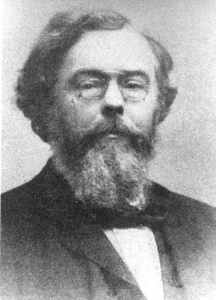
Birth of George Sigerson, Physician & Writer

george-sigerson

George Sigerson, Irish physician, scientist, writer, politician, and poet, is born at Holy Hill, near Strabane in County Tyrone on January 11, 1836. He is a leading light in the Irish Literary Revival of the late 19th century in Ireland.

Sigerson is the son of William and Nancy (née Neilson) Sigerson and has three brothers, James, John and William, and three sisters, Ellen, Jane, and Mary Ann. He attends Letterkenny Academy but is sent by his father, who developed the spade mill and who played an active role in the development of Artigarvan, to complete his education in France.

He studies medicine at the Queen’s College, Galway, and Queen’s College, Cork, and takes his degree in 1859. He then goes to Paris where he spends some time studying under Jean-Martin Charcot and Duchenne de Boulogne. Sigmund Freud is one of his fellow students.

Sigerson returns to Ireland and opens a practice in Dublin, specializing in neurology. He continues to visit France annually to study under Charcot. His patients included Maud Gonne, Austin Clarke, and Nora Barnacle. He lectures on medicine at the Catholic University of Ireland and is professor of zoology and later botany at the University College Dublin.

His first book, The Poets and Poetry of Munster, appears in 1860. He is actively involved in political journalism for many years, writing for The Nation. Sigerson and his wife Hester are by now among the dominant figures of the Gaelic Revival. They frequently hold Sunday evening salons at their Dublin home to which artists, intellectuals, and rebels alike attend, including John O’Leary, W.B. Yeats, Patrick Pearse, Roger Casement, and 1916 signatory Thomas MacDonagh. Sigerson is a co-founder of the Feis Ceoil and President of the National Literary Society from 1893 until his death. His daughter, Dora, is a poet who is also involved in the Irish literary revival.

Nominated to the first Seanad Éireann of the Irish Free State, Sigerson briefly serves as the first chairman on December 11-12, 1922, before the election of James Campbell, 1st Baron Glenavy. Sigerson dies at his home at 3 Clare Street, Dublin, on February 17, 1925, at the age of 89, after a short illness. On February 18, 1925, the day after his death, the Seanad Éireann pays tribute to him.

The Sigerson Cup, the top division of third level Gaelic football competition in Ireland is named in his honour. Sigerson donates the salary from his post at UCD so that a trophy can be purchased for the competition. In 2009, he is named in the Sunday Tribune‘s list of the “125 Most Influential People In GAA History.” The cup is first presented in 1911, with the inaugural winners being UCD GAA.