seamus dubhghaill

Promoting Irish Culture and History from Little Rock, Arkansas, USA


Leave a comment

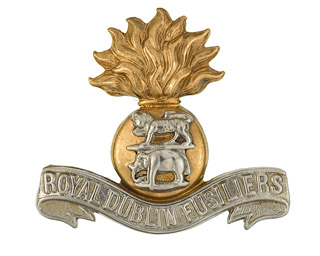
Formal Creation of the Royal Dublin Fusiliers


The Royal Dublin Fusiliers, an infantry regiment of the British Army, is created on July 1, 1881, as part of the British Army’s Childers Reforms by amalgamating the 102nd Regiment of Foot (Royal Madras Fusiliers) and the 103rd Regiment of Foot (Royal Bombay Fusiliers), both originally European regiments of the East India Company transferred to the British Army in 1861. The regiment’s home depot is located in Naas, County Kildare, and it recruits primarily from counties Dublin, Kildare, Wicklow, and Carlow. Initially, it consists of two regular battalions, with additional battalions raised during wartime.

The regiment serves in the Second Boer War (1899–1902) in Southern Africa, participating in key actions such as the Siege of Ladysmith and battles at Colenso and Tugela Heights. Notably, a detachment escorts an armoured train carrying war correspondent Winston Churchill, which is ambushed by Boer forces.

During World War I, the Royal Dublin Fusiliers expand to six additional battalions and see action on the Western Front, the Mediterranean, and the Middle East. The regiment suffers heavy casualties at battles such as Le Cateau and the Gallipoli landings at Helles, where only 11 of 1,100 men survive the landing. Members of the regiment are awarded three Victoria Crosses for acts of bravery during the war.

Following the establishment of the Irish Free State in 1922, the Royal Dublin Fusiliers, along with four other southern Irish regiments, is disbanded. The regiment’s history and the service of its soldiers are commemorated by the Royal Dublin Fusiliers Association, which maintains archives, exhibitions, and digitised collections of letters and records from World War I. These archives provide insight into the experiences of Irish soldiers and the conditions they face on the front lines.

The regiment is remembered for its courage and sacrifice, with dedicated websites and museum collections preserving its history, medals, and personal accounts of soldiers. The Royal Dublin Fusiliers remain a significant part of Irish military heritage, reflecting both the contributions of Irish soldiers to the British Army and the complex history of Ireland during the early 20th century.

Leave a comment

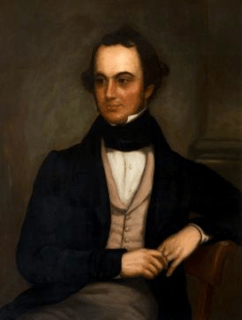
Birth of Charles Lanyon, Civil Engineer & Architect

Sir Charles Lanyon, DL, JP, civil engineer and architect, is born on January 6, 1813, at Eastbourne, Sussex, England, third son of John Jenkinson Lanyon, purser in the Royal Navy, and Catherine Lanyon (née Mortimer). His work is most closely associated with Belfast, Northern Ireland.

Following his local education, Lanyon becomes an apprentice civil engineer with Jacob Owen in Portsmouth. When Owen is made senior Engineer and Architect of the Irish Board of Works and moves to Dublin, Lanyon follows. In 1835 he marries Owen’s daughter, Elizabeth Helen. They have ten children, including Sir William Owen Lanyon, an army officer and future administrator of the Transvaal in southern Africa.

Lanyon is county surveyor in County Kildare briefly, a post he exchanges for its equivalent in County Antrim, based in Belfast, when the incumbent, Thomas Jackson Woodhouse, resigns in 1836. By 1842, he has built the Antrim coast road between Larne and Portrush, through spectacular natural surroundings. He designs the lofty three-arched Glendun viaduct on this route near Cushendun, an early example of his versatile talent for monumental display as well as the Ormeau Bridge over the River Lagan. He remains county surveyor of Antrim until 1861 when he resigns from the post to concentrate on private work and other interests.

Lanyon is elected Mayor of Belfast in 1862, and Conservative MP for the city between 1865 and 1868. In 1868 he is also knighted and serves on the Select Committee on Scientific Instruction.

Lanyon loses his Belfast parliamentary seat in 1868 to William Johnston but continues to serve as a Belfast Town councillor until 1871. From 1862 to 1886 he is Belfast Harbour Commissioner. He serves as Deputy Lieutenant for County Antrim and is appointed High Sheriff of Antrim in 1876. He is also a Justice of the Peace for many years.

Lanyon’s other business interests include being director of the Blackstaff Flax Spinning Company and chairman of several railway companies. He is made director of the Northern Counties Railway in 1870 but resigns in 1887 because of ill-health. Alongside his business activities he is an active Freemason and serves as Provincial Deputy Grand Master of Belfast and North Down between 1863 and 1868, Provincial Deputy Grand Master of Antrim between 1868 and 1883 and Provincial Grand Master of Antrim between 1883 and 1889.

Lanyon lives at The Abbey, a grand house in Whiteabbey, County Antrim, which eventually becomes a sanitorium during World War I and is now part of Whiteabbey Hospital. His wife dies in 1858, and his son William dies from cancer at the age of 44 in 1887. He dies at The Abbey on May 31, 1889, and is buried in Knockbreda Cemetery, Belfast, in a tomb also of his design.