seamus dubhghaill

Promoting Irish Culture and History from Little Rock, Arkansas, USA


Leave a comment

Passage & Royal Assent of the Toleration Act 1719

The Toleration Act 1719 (formally An Act for exempting the Protestant Dissenters of this kingdom from certain penalties, to which they are now subject) is passed by the Parliament of Ireland on November 2, 1719, and receives royal assent the same day. It is a landmark piece of legislation that grants limited religious freedoms to Protestant dissenters, primarily Presbyterians, but also including Quakers, Baptists, and other nonconformists.

The Act is enacted during the reign of King George I, amid the consolidation of Whig influence after the Hanoverian succession. It addresses long-standing grievances of Irish Dissenters, whose position has been precarious despite the English Toleration Act 1688, which does not fully protect them in Ireland due to the dominance of the Anglican Church in Dublin’s parliament.

Proponents, especially Presbyterians in Ulster, seek to depenalize nonconformist worship and education. The Act is also framed as a measure to bolster Protestant unity against the Catholic population, which remains subject to severe penal laws.

Key provisions of the Act include:

  • Exemption from certain penalties: Dissenters are relieved of punitive obligations to attend Anglican services or adhere to established church rituals.
  • Freedom of worship: Dissenters can maintain separate places of worship without fear of prosecution for nonconformity.
  • Education rights: The Act allows Dissenters to establish and staff schools, though it does not grant full civil equality.
  • Limitations: Nonconformists remain barred from holding public offices, corporations, and universities due to the sacramental test.

The Toleration Act marks a pivotal step toward depenalizing nonconformist worship in Ireland. It facilitates the growth of Presbyterian institutions in Ulster, contributing to the province’s economic and cultural distinctiveness. However, it does not resolve deeper tensions within the Protestant establishment, where concessions to Dissenters are seen by some as undermining ecclesiastical authority.

The Act is repealed in parts. The whole Act (except sections 4–8 and 14–16) is repealed by the Promissory Oaths Act 1871 (July 13, 1871). Section 8 is repealed by the Statute Law Revision Act 1950 (May 23, 1950).

In summary, the Toleration Act 1719 is a partial but significant liberalization of religious law in Ireland, offering Protestant dissenters practical freedom of worship and education while preserving many restrictions. It reflects both genuine religious reform and political strategy in the early 18th century, shaping Protestant–Catholic relations and the development of dissenting communities in Ireland.

Leave a comment

The Adventurers’ Act Receives Royal Assent

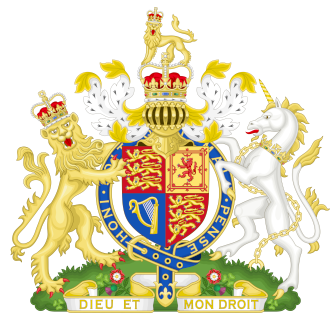
coat-of-arms-of-the-united-kingdom

The Adventurers’ Act 1640, an Act of the Parliament of England which specifies its aim as “the speedy and effectual reducing of the rebels in His Majesty’s Kingdom of Ireland,” receives Royal assent on March 19, 1642.

The Act is passed by the Long Parliament as a way of raising funds to suppress the Irish Rebellion of 1641, which had broken out five months earlier. It invites members of the public to invest £200 for which they will receive 1,000 acres of lands that are to be confiscated from rebels in Ireland. Two and a half million acres of Irish land are set aside by the English government for this purpose. The entire island of Ireland is about 20.9 million acres.

The enactment is done at the request of King Charles in the House of Lords, joined by the House of Commons, and is unanimously accepted without any debate. The Act had been placed before the Houses for inspection but is not formally read into the record. The title of the Act – “An Act for the speedy and effectual reducing of the Rebels, in His Majesty’s Kingdom of Ireland, to their due Obedience to His Majesty, and the Crown of England” – is read aloud to Parliament, followed by the statement: “Le Roy le veult.”

The “Adventurers” are so called because they are risking their money at a time when the Crown has just had to pay for the Bishops’ Wars in 1639–40. “Reducing” the rebels means leading them back to the legal concept of the “King’s Peace.” King Charles cannot subsequently enforce the Act, but it is realised by his political opponents following the Cromwellian conquest of Ireland in 1649–1653 and forms the main legal basis for the contentious Act for the Settlement of Ireland 1652.

Ironically, in May 1642 the Confederate Irish rebels draft the Confederate Oath of Association that recognises Charles as their monarch.

The Adventurers’ Act is extended and amended by three other acts – Lands of Irish Rebels; Adventurers’ Subscriptions Act 1640 (c. 34), Lands of Irish Rebels; Adventurers’ Subscriptions Act 1640 (c. 35), and Irish Rebels Act 1640 (c. 37). All four receive Royal Assent in the summer of 1642, just before the start of the English Civil War, but are usually referred to as 1640 acts, which is the year the Long Parliament started to sit and the 16th year of Charles I’s reign.

In July 1643, Parliament passes the Doubling Ordinance which doubles the allocation of land to anyone who increases their original investment by 25%. The purpose of the Act is twofold, firstly to raise money for Parliament to help suppress the rebellion in Ireland, and secondly to deprive the King of the lands seized from rebels that would be his by prerogative.

To enforce the Acts the Cromwellian conquest of Ireland is launched in 1649. In 1653, Ireland is declared subdued, and the lands are allocated to the subscribers in what becomes known as the Cromwellian Settlement.

The Adventurers Act and the other three statutes are repealed by the Statute Law Revision Act 1950.