seamus dubhghaill

Promoting Irish Culture and History from Little Rock, Arkansas, USA


Leave a comment

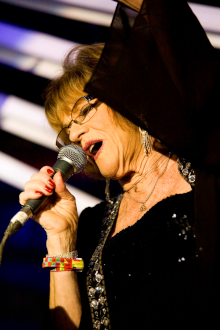
Birth of Anne Bushnell, Jazz & Blues Singer

Anne Bushnell, Irish jazz and blues singer and cabaret performer, is born Anne Kavanagh in the Rotunda Hospital, Dublin, on March 28, 1939.

Bushnell is one of four children of John Kavanagh and Evelyn (née Ledwidge). Her father is a motor mechanic with a business on Arnott Street, Portobello, with the family living in Milltown. She dances on the stage of the Theatre Royal as a child and is a junior Irish champion dancer. She attends the St. Louis convent school in Rathmines, where she performs in plays and musicals and sings in the school choir. The nuns disapprove of her musical influences and try to dissuade her interest in jazz and “the music of the night.” Due to the family’s financial circumstances, she leaves school at the age of 16 and takes a job as a typist. She marries Tony Bushnell in April 1961. He is a salesman who shares her interest in music. The couple moves to Templeogue, and have a daughter, Suzanne, and a son, Paul. Paul is now a session musician based in Los Angeles, and Suzanne sings with a female vocal harmony group, Fallen Angels.

Bushnell continues to perform in amateur musicals, and from the early 1960s she sings with an Irish céilí band. With help from her husband’s musical family, she sings in Dublin jazz clubs from 1967, emerging as a well-respected jazz and blues vocalist and cabaret performer. She competes in the national song contest in 1968 singing Ballad to a Boy and becomes a resident singer in the RTÉ Light Orchestra. By the late 1960s, she is one of the busiest singers in Ireland, singing jingles for radio and TV commercials, and featuring on showband records as a backing singer. She is a regular guest on RTÉ television variety shows from 1970, including hosting Girls, girls, girls.

From 1972 to 1974, Bushnell is part of a group called Family Pride, which is a group of session musicians who record together regularly. They compete in the 1973 national song contest, playing in Dublin venues and on radio shows. The group has two top ten Irish hits. Their 1973 album, Family Pride, is not a chart success, however. She represents Ireland at a number of international contests and festivals as a solo artist, releasing a few singles and an unsuccessful album with CBS Records, Are You Ready (1977). She is a backing singer for two of Ireland’s entries to the Eurovision Song Contest in 1974 and 1980. She is a regular in stage musicals from the mid to late 1970s, in productions such as the tribute shows to Jacques Brel (1974) and Bing Crosby (1978), sometimes performing alongside her brother John Kavanagh. From the late 1970s she appears in pantomimes with Maureen Potter.

In 1984 Bushnell stars in a musical based on the life of Édith Piaf, No Regrets, written specially for her by Leland Bardwell. She is lauded for capturing Piaf’s stage presence and husky voice. The show suffers when it has to move from the Gaiety Theatre to the National Stadium. She reworks it into a successful one-woman show called The Little Sparrow and also devises a one-woman tribute to Judy Garland. Her cabaret act in the late 1980s is highly successful, featuring big numbers by Brel, Garland, and Piaf. Due to her talent at singing blues and jazz, she is awarded the freedom of New Orleans by its mayor in 1986.

Bushnell struggles with depression brought on initially by an underactive thyroid and later exacerbated by her father’s death and her husband’s unemployment in the late 1980s. Disheartened by the lack of recognition in Ireland and her family’s financial difficulties, she considers emigrating or returning to her career as a typist. To aid with her depression, she takes up painting in 1992, holding a number of exhibitions in Dublin. She continues to sing regularly until her death, often at events for charity. She is awarded the Cheshire Foundation award in 1994 for her charitable work. She also appears in the film Agnes Browne.

Bushnell dies of cancer on April 21, 2011, in Tallaght University Hospital, County Dublin, and is cremated at Mount Jerome Crematorium.

Leave a comment

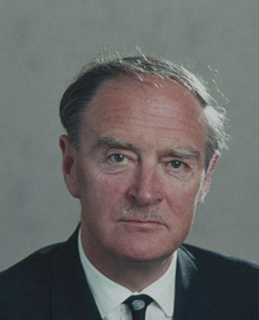
Birth of Liam Cosgrave, Sixth Taoiseach of Ireland

Liam Cosgrave, politician who serves as Taoiseach from February 1973 to July 1977, is born in Castleknock, Dublin, on April 13, 1920.

Cosgrave is the son of William Thomas Cosgrave, the first President of the Executive Council and head of the government of the Irish Free State during the first 10 years of its existence (1922–32). He is educated at Castleknock College, Dublin, studies law at King’s Inns and is called to the Irish bar in 1943. In that same year he enters Dáil Éireann (the lower house of the Oireachtas, the Irish parliament), and he retains his seat until his retirement from politics in 1981.

In 1948, when the first inter-party government replaces Éamon de Valera’s Fianna Fáil regime, which had been in power for the previous 16 years, Cosgrave becomes Parliamentary Secretary to the Taoiseach and to the Minister for Industry and Commerce. It is a short-lived administration, going out of power in 1951 after three years of rule. But in a second inter-party government (1954–57), he becomes Minister for External Affairs and leads the first Irish delegation to the United Nations General Assembly in 1956.

Cosgrave succeeds James Dillon as leader of the Fine Gael party in 1965. Eight years later, as leader of a coalition government in which Fine Gael combines forces with the Labour Party, he becomes Taoiseach. He and British Prime Minister Edward Heath are the main participants in the intergovernmental conference at Sunningdale in December 1973 that gives birth to Northern Ireland’s first, though short-lived, power-sharing executive (1973–74). A devout Roman Catholic, he is intensely conservative on social issues and shocks his cabinet colleagues by voting against his own government’s bill on liberalizing the sale of contraceptives in 1974. The National Coalition is defeated in the 1977 Irish general election, largely on the economic issues of inflation and unemployment.

Cosgrave retires at the 1981 Irish general election. In 1981, he retires as Dáil Deputy for Dún Laoghaire to be replaced by his son, Liam T. Cosgrave. He reduces his involvement in public life but makes occasional appearances and speeches.

Liam Cosgrave dies at the age of 97 on October 4, 2017, of natural causes. He had been at Tallaght Hospital for several months prior to his death there. His funeral is held on October 7, 2017, after which he is interred alongside his father at Inchicore‘s Goldenbridge Cemetery. He is the longest-lived Taoiseach, dying at the age of 97 years, 174 days.


Leave a comment

Death of Liam Cosgrave, 6th Taoiseach of Ireland

liam-cosgrave

Liam Cosgrave, politician who serves as Taoiseach from February 1973 to July 1977, dies at the age of 97 in Tallaght, Dublin on October 4, 2017. He is the longest-lived Taoiseach, dying at the age of 97 years, 174 days.

Born in Castleknock, Dublin on April 13, 1920, Cosgrave is the son of William Thomas Cosgrave, the first President of the Executive Council and head of the government of the Irish Free State during the first 10 years of its existence (1922–32). He is educated at Castleknock College, Dublin, studies law at King’s Inns and is called to the Irish bar in 1943. In that same year he enters Dáil Éireann (the lower house of the Oireachtas, the Irish parliament), and he retains his seat until his retirement from politics in 1981.

In 1948, when the first inter-party government replaces Éamon de Valera’s Fianna Fáil regime, which had been in power for the previous 16 years, Cosgrave becomes Parliamentary Secretary to the Taoiseach and to the Minister for Industry and Commerce. It is a short-lived administration, going out of power in 1951 after three years of rule. But in a second inter-party government (1954–57), he becomes Minister for External Affairs and leads the first Irish delegation to the United Nations General Assembly in 1956.

Cosgrave succeeds James Dillon as leader of the Fine Gael party in 1965. Eight years later, as leader of a coalition government in which Fine Gael combines forces with the Labour Party, he becomes Taoiseach. He and British Prime Minister Edward Heath are the main participants in the intergovernmental conference at Sunningdale in December 1973 that gives birth to Northern Ireland’s first, though short-lived, power-sharing executive (1973–74). A devout Roman Catholic, he is intensely conservative on social issues and shocks his cabinet colleagues by voting against his own government’s bill on liberalizing the sale of contraceptives in 1974. The National Coalition is defeated in the 1977 Irish general election, largely on the economic issues of inflation and unemployment.

Cosgrave retires at the 1981 Irish general election. In 1981, he retires as Dáil Deputy for Dún Laoghaire to be replaced by his son, Liam T. Cosgrave. He reduces his involvement in public life but makes occasional appearances and speeches.

Liam Cosgrave dies on October 4, 2017, at the age of 97 of natural causes. He had been at Tallaght Hospital for several months prior to his death there. His funeral is held on October 7, 2017, after which he is interred alongside his father at Inchicore‘s Goldenbridge Cemetery.


Leave a comment

Liam Cosgrave Elected Taoiseach of Ireland

liam-cosgrave

Liam Cosgrave is elected the sixth Taoiseach of Ireland on March 14, 1973. He serves in the position from March 1973 to July 1977.

Cosgrave is born on April 13, 1920, in Castleknock, County Dublin. His father, William Thomas Cosgrave, was the first President of the Executive Council and head of the government of the Irish Free State during the first 10 years of its existence (1922–32). The eldest son, he is educated at Synge Street CBS, Castleknock College, Dublin, studies law at King’s Inns and is called to the Irish bar in 1943. In that same year he enters Dáil Éireann (the lower house of the Oireachtas, the Irish parliament), and he retains his seat until his retirement from politics in 1981.

In 1948, when the first inter-party government replaces Éamon de Valera’s Fianna Fáil regime, which had been in power for the previous 16 years, Cosgrave becomes parliamentary secretary to the Taoiseach and to the Minister for Industry and Commerce. It is a short-lived administration, going out of power in 1951 after three years of rule. But in a second inter-party government (1954–57), he becomes Minister for External Affairs and leads the first Irish delegation to the United Nations General Assembly in 1956.

Cosgrave succeeds James Dillon as leader of the Fine Gael party in 1965. Eight years later, as leader of a coalition government in which Fine Gael combines forces with the Labour Party, he becomes Taoiseach. He and British Prime Minister Edward Heath are the main participants in the intergovernmental conference at Sunningdale in December 1973 that gives birth to Northern Ireland’s first, though short-lived, power-sharing executive (1973–74).

A devout Roman Catholic, Cosgrave is intensely conservative on social issues and shocks his cabinet colleagues by voting against his own government’s bill on liberalizing the sale of contraceptives in 1974. The National Coalition is defeated in the general election of June 1977, largely on the economic issues of inflation and unemployment.

In 1981, Cosgrave retires as Dáil Deputy for Dún Laoghaire to be replaced by his son, Liam T. Cosgrave. He reduces his involvement in public life, but he makes occasional appearances and speeches. In October 2010 he attends the launch of The Reluctant Taoiseach, a book about former Taoiseach John A. Costello written by David McCullagh. He also appears in public for the Centenary of the Easter Rising in 2016, watching from a car as the military parade marches through Dublin. On May 8, 2016, in a joint appearance with the grandsons of Éamonn Ceannt and Cathal Brugha, he unveils a plaque commemorating the 1916 Rising at St. James’s Hospital, the former site of the South Dublin Union.

Liam Cosgrave dies on October 4, 2017, at the age of 97 of natural causes. He had been at Tallaght Hospital for several months prior to his death there. His funeral is held on October 7, 2017, after which he is interred alongside his father at Inchicore‘s Goldenbridge Cemetery.

Taoiseach Leo Varadkar says “Liam Cosgrave was someone who devoted his life to public service; a grateful country thanks and honours him for that and for always putting the nation first. Throughout his life he worked to protect and defend the democratic institutions of our State and showed great courage and determination in doing so. He always believed in peaceful co-operation as the only way of achieving a genuine union between the people on this island, and in the 1970s he celebrated that this country had embarked, in his own words, ‘on a new career of progress and development in the context of Europe’. I had the honour on a few occasions to meet and be in the presence of Liam Cosgrave, and I was always struck by his commanding presence and great humility, which in him were complementary characteristics.”