seamus dubhghaill

Promoting Irish Culture and History from Little Rock, Arkansas, USA


2 Comments

The Second Warrington Bombing Attack

The second of two bombing attacks in early 1993 in Warrington, Cheshire, England, takes place on March 20, 1993. The first attack takes place on February 26, when a bomb explodes at a gas storage facility. This explosion causes extensive damage, but no injuries. In the March 20 attack, two smaller bombs explode in litter bins outside shops and businesses on Bridge Street. Two children are killed and 56 people are injured.

The attacks are carried out by the Provisional Irish Republican Army (IRA). From the early 1970s, the IRA had been carrying out attacks in both Northern Ireland and England with the stated goal of putting pressure on the UK Government to withdraw from Northern Ireland. The IRA is designated a terrorist organisation in the United Kingdom.

Shortly before midday on Saturday, March 20, 1993, the Samaritans in Liverpool receive a bomb warning by telephone. According to police, the caller says only that a bomb has been planted outside a Boots shop. Merseyside Police send officers to branches of Boots in Liverpool and warn the Cheshire Constabulary, who patrols nearby Warrington. About 30 minutes later, at about 12:25 p.m., two bombs explode on Bridge Street in Warrington, about 100 yards apart. The blasts happen within a minute of each other. One explodes outside Boots and McDonald’s, and the other outside the Argos catalogue store. The area is crowded with shoppers. Witnesses say that shoppers flee from the first explosion into the path of the second. It is later found that the bombs had been placed inside cast iron litter bins, causing large amounts of shrapnel. Buses are organised to ferry people away from the scene and twenty paramedics and crews from seventeen ambulances are sent to deal with the aftermath.

Three-year-old Johnathan Ball dies at the scene. He had been in town with his babysitter, shopping for a Mother’s Day card. The second victim, 12-year-old Tim Parry, is gravely wounded. He dies on March 25, 1993, when his life support machine is switched off, after tests find only minimal brain activity. Another 54 people are injured, four of them seriously. One of the survivors, 32-year-old Bronwen Vickers, the mother of two young daughters, has to have a leg amputated, and dies just over a year later from cancer.

The Provisional IRA issues a statement the day after the bombing, acknowledging its involvement but saying:

“Responsibility for the tragic and deeply regrettable death and injuries caused in Warrington yesterday lies squarely at the door of those in the British authorities who deliberately failed to act on precise and adequate warnings.”

A day later, an IRA spokesman says that “two precise warnings” had been given “in adequate time,” one to the Samaritans and one to Merseyside Police. He adds, “You don’t provide warnings if it is your intention to kill.” Cheshire’s assistant chief constable denies there had been a second warning and says, “Yes, a warning was given half-an-hour before, but no mention was made of Warrington. If the IRA think they can pass on their responsibility for this terrible act by issuing such a nonsensical statement, they have sadly underestimated the understanding of the British public.”

The deaths of two young children ensures that the March 20 bombings receive major coverage in the media and cause widespread public anger. Shortly after the bombings, a group called “Peace ’93” is set up in Dublin. The main organiser is Susan McHugh, a Dublin housewife and mother. On March 25, 1993, thousands hold a peace rally in Dublin. They sign a condolence book outside the General Post Office and lay bouquets and wreaths, with messages of sorrow and apology, to be taken to Warrington for the boys’ funerals. Some criticise Peace ’93 for focusing only on IRA violence and for not responding to the deaths of children in Northern Ireland.

On April 1, 1993, the Irish Government announces measures designed to make extradition easier from the Republic of Ireland to the United Kingdom.

On September 19, 1994, Irish rock band The Cranberries release the song “Zombie,” which is written in protest of the bombings. The song goes on to become their biggest hit.

On November 14, 1996, the Duchess of Kent officially inaugurates a memorial called The River of Life, depicting “a symbol of hope for future generations,” in Bridge Street. It is developed in the aftermath of the bomb attack and commissioned by the Warrington Borough Council. The project, consisting of a symbolic water sculpture that features a commemorative plaque, is designed by the local primary school and Stephen Broadbent.

The parents of Tim Parry set up the Tim Parry Trust Fund to promote greater understanding between Great Britain and Ireland. The Tim Parry Johnathan Ball Foundation for Peace works jointly with the National Society for the Prevention of Cruelty to Children (NSPCC) to develop The Peace Centre, close to Warrington town centre, which opens on the seventh anniversary of the attack in 2000. Its purpose is to promote peace and understanding amongst all communities affected by conflict and violence. The centre hosts an annual peace lecture, as well as being home to the local NSPCC and is the home of Warrington Youth Club until 2022.

The bombings receive further attention in 2019 after the Brexit Party selects former Living Marxism writer Claire Fox as their lead candidate in the North West England constituency for the 2019 European Parliament election. The Revolutionary Communist Party, of which Fox is a leading member in 1993, defends the IRA’s bombing in their party newsletter. Despite the controversy, which sees another Brexit Party candidate resign from the party list in protest at the comments, Fox and the Brexit Party top the poll in several areas of the North West, including in Warrington.

The killing of Ball and Parry is still on Cheshire Police’s list of unsolved murders.

A piece on BBC North West‘s Inside Out programme in September 2013 speculates that the bombing may have been the work of a “rogue” IRA unit, which was supported by the IRA but operated independently and who used operatives who were from England to avoid suspicion. The programme also examines a possible link between the attack and British leftist political group Red Action, though nothing is ever proven.

(Pictured: Army bomb disposal at the Warrington Bomb scene in March 1993, photo credit: Walker Howard)
Leave a comment

Birth of Noel Hogan, Lead Guitarist of The Cranberries

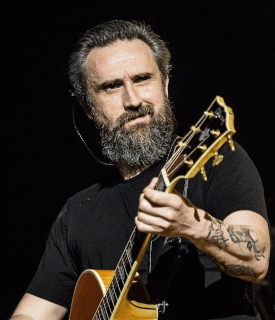
Noel Anthony Hogan, Irish musician and record producer best known as the lead guitarist and co-songwriter of the Irish alt-rock band the Cranberries, is born in Moyross, Limerick, County Limerick, on December 25, 1971.

Hogan forms the Cranberries with his brother Mike and drummer Fergal Lawler in 1989. The group recruits Dolores O’Riordan as lead singer soon after forming. The band goes on to sell in excess of 40 million records worldwide. In total, Hogan has released eight albums with the Cranberries.

The Cranberries go on a six-year hiatus from 2003 to 2009. During this time Hogan turns his focus to his own music. He begins working with programmer Matt Vaughan, who had already done work on unreleased Cranberries songs and Dolores O’Riordan’s solo material. Mono Band is born with Hogan as the sole band member. With vocals being supplied by Richard Walters, Alexandra Hamnede, Kate Havnevik, and other guest artists, he works with Cranberries’ veteran producer Stephen Street to compile a mix of 12 tracks. Working on his side project at the same time, sees their resulting debut album, Mono Band, released on May 20, 2005. He and Mono Band vocalist Richard Walters go on to form Arkitekt. Arkitekt releases two EPs at that time in 2009, working on new material.

After O’Riordan’s untimely death on January 15, 2018, Hogan confirms disbandment of the Cranberries, which occurs after the release of the posthumous album In the End in 2019, saying, “The Cranberries without Dolores just isn’t The Cranberries… we won’t replace our friend and lead singer.”

Hogan’s work independent of the Cranberries has been released on his own label, Gohan Records, and is published through Fairwood Music (UK) Ltd for the world.

Hogan also produces bands on the local music scene in Limerick. On July 10, 2009, Gohan Records releases Tonelist in collaboration with Limerick Live 95FM‘s Green and Live show. It is a collection featuring musicians in the Limerick music scene.

In 2022, Hogan debuts The Puro, a new duo alongside Brazilian singer Mell Peck.


Leave a comment

Funeral Mass of Dolores O’Riordan

dolores-o-riordan-funeral

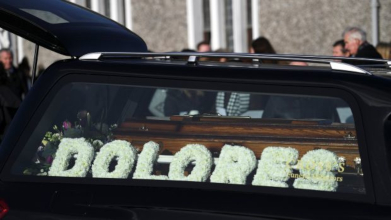
The voice of The Cranberries singer Dolores O’Riordan fills a rural church at the funeral mass in her hometown of Ballybricken, County Limerick on Tuesday, January 23, 2018. A duet of Ave Maria sung by O’Riordan and Luciano Pavarotti marks the start of the service in the Church of Saint Ailbe. The 46-year-old is found dead in a London hotel room on January 15, 2018.

Hundreds of people gather at the rural church to say goodbye to a singer renowned for her distinctive voice. The Cranberries enjoyed huge success in the 1990s with tracks including “Zombie” and “Linger.” O’Riordan, who was also a member of alternative rock group D.A.R.K., had been working on a new studio album with The Cranberries in the months before her death. Her boyfriend and fellow D.A.R.K. band member Olé Koretsky is among the mourners. Her three children – Taylor, Molly and Dakota – join the singer’s mother Eileen, her sister Angela and brothers Terence, Brendan, Donal, Joseph and PJ in the small parish church. Her former husband Don Burton is also in attendance.

At the outset of the mass, symbols associated with O’Riordan’s life are brought to the altar. Her niece Eileen and a long-time friend bring forward a guitar and a platinum disc award. A picture of Our Lady of Dolours, after whom Dolores is named, is placed at the altar, as is a book of poetry.

In his homily, Canon Liam McNamara recalls meeting the young O’Riordan in 1989 when she was singing and playing the keyboard in the church. “She did have a unique respect for everybody,” he said. “Coupled with that respect, her kind, loving and generous heart made her a source of great hope to the Church, during its stormy years. For that we sincerely thank her from our hearts.”

During Communion, O’Riordan’s version of the hymn “Panis Angelicus” is played in the church. Archbishop of Cashel and Emly Kieran O’Reilly says, “Since we heard of the sudden death of Dolores O’Riordan, many hearts in Ireland and around the world are heavy with sadness on hearing the news.”

“Indeed, the great outpouring of sympathy and love for Dolores which we have seen since her death is a witness and a tribute to her great musical talent and very special voice by her many fans and lovers of music. “Dolores put her God-given talents at the service of others.”

Archbishop O’Reilly hails O’Riordan’s voice as “unique, far reaching and distinctly Irish. Her gifts have resonated in the lives of many and will continue to do so as her music and her songs will continue to be played and listened to.”

At the close of the service, The Cranberries’ song “When You’re Gone” rings around the church as the singer’s coffin is carried to the adjacent Caherelly Cemetery for a private burial service. Mourners break into a spontaneous round of applause.

On Monday evening, tea light candles light the streets as family and close friends accompany O’Riordan’s remains to the church from Cross’s Funeral Home in Ballyneety. President of Ireland Michael D. Higgins pays his condolences to the singer’s family earlier in the day and signs a book of condolence. “It was very important to pay tribute to the contribution Dolores made,” says Higgins. “It is so moving, so profoundly sad, that somebody so young is taken from us. She was a star that shone bright from the very beginning,” he adds.

(From: “Voice of Dolores O’Riordan fills church at her funeral,” The Irish Times, January 23, 2018)


Leave a comment

Cranberries Single to Benefit Chernobyl Children

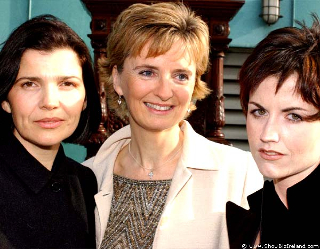
hewson-roche-o-riordan-2002Irish rock band The Cranberries announce on February 7, 2002 that proceeds from their new single, Time Is Ticking Out, will be donated to the Chernobyl Children Project International.

The band’s lead singer, Dolores O’Riordan, is joined by the project’s executive director and founder, Adi Roche, and patron Ali Hewson, wife of U2 frontman Bono, at the Clarence Hotel, Dublin, to make the announcement.

O’Riordan explains how she wrote the song in the Spring of 2001 after she had seen the children of Chernobyl. Having just given birth to her second child, the pictures of children born with so many illnesses moved her to tears, she said.

She says it is her hope that, as well as funds, the single will help raise awareness about the plight of the Chernobyl children. The band’s previous offering, Analyse, sold over 175,000 copies worldwide as of 2002.

Thanking the Cranberries, Roche says the song’s title is appropriate as the health problems caused by the Chernobyl nuclear disaster of April 26, 1986, are only beginning to emerge.

She says the effects are moving to the “next generation who are now witnessing soaring levels of infertility and genetic changes, especially among those who were less than six years of age when the accident happened.”

Founded in 1991, the Chernobyl Children Project International, now known as Chernobyl Children International, is an Irish charity that works to help the children who are living victims of the nuclear disaster. As of February 2002, it had sent €24 million in aid to the region.

(From “Cranberries single to benefit Chernobyl children”, The Irish Times, Thursday, February 7, 2002 | Pictured: (L to R) Ali Hewson, Adi Roche, and Dolores O’Riordan at the Clarence Hotel, February 7, 2002)


Leave a comment

Birth of Dolores O’Riordan, Singer & Songwriter

dolores-o-riordan

Dolores Mary Eileen O’Riordan, Irish musician, singer and songwriter, is born in Ballybricken, County Limerick on September 6, 1971. She leads the rock band The Cranberries from 1990 until their break-up in 2003. They reunite in 2009. She is known for her lilting mezzo-soprano voice, her emphasised use of yodeling, and her strong Limerick accent.

O’Riordan is the youngest of nine children, two of whom die in infancy. Her father, Terence Patrick “Terry” O’Riordan (1937–2011), is a farm labourer who is left unable to work due to brain damage caused by a motorbike accident in 1968. Her mother, Eileen, is a school caterer. She attends Laurel Hill Coláiste FCJ school in Limerick. She leaves school without any qualifications.

In 1989, brothers Mike and Noel Hogan form The Cranberry Saw Us with drummer Fergal Lawler and singer Niall Quinn, in Limerick. Less than a year later, Quinn leaves the band. The remaining band members then place an advertisement for a female singer. O’Riordan responds to the advertisement and auditions by writing lyrics and melodies to some existing demos. When she returns with a rough version of “Linger,” she is hired, and they record Nothing Left At All, a three-track EP released on tape by local record label Xeric Records, which sells 300 copies. The group changes their name to “The Cranberries.” The owner of Xeric Studios, Pearse Gilmore, becomes their manager and provides the group with studio time to complete another demo tape, which he produces. It features early versions of “Linger” and “Dreams,” which are sent to record companies throughout the United Kingdom (UK).

This demo earns the attention of both the UK press and record industry and sparks a bidding war between major British record labels. Eventually, the group signs with Island Records. As part of The Cranberries she releases along with them five albums: Everybody Else Is Doing It, So Why Can’t We? (1993), No Need to Argue (1994), To the Faithful Departed (1996), Bury the Hatchet (1999), and Wake Up and Smell the Coffee (2001), and a greatest-hits compilation, Stars: The Best of 1992–2002. In 2003, the band decides to take a temporary time-out to experiment on solo projects.

In 2003, O’Riordan embarks on a solo career which includes an appearance with the Italian artist Zucchero Fornaciari on the album Zu & Co., with the song “Pure Love.” The album also features other artists such as Sting, Sheryl Crow, Luciano Pavarotti, Miles Davis, John Lee Hooker, Macy Gray, and Eric Clapton.

In 2005, O’Riordan appears on the Jam & Spoon‘s album Tripomatic Fairytales 3003 as a guest vocalist on the track “Mirror Lover.” She makes a cameo appearance in the 2006 Adam Sandler comedy Click as a wedding singer performing an alternate version of The Cranberries’ “Linger” set to strings. Her first single, “Ordinary Day,” is produced by BRIT Awards winner Youth, whose previous credits include The Verve, Embrace, Primal Scream, U2, and Paul McCartney.

Are You Listening? is released in Ireland on May 4, 2007, in Europe on May 7, and in North America on May 15. In 2008, O’Riordan wins a European Border Breakers Award (EBBA) which is presented annually to recognize the success of ten emerging artists or groups who reach audiences outside their own countries with their first internationally released album in the past year. Her second album, No Baggage, featuring eleven tracks, is released in August 2009.

In January 2009, the University Philosophical Society at Trinity College, Dublin invites The Cranberries to reunite for a concert celebrating O’Riordan’s appointment as an honorary member of the Society, which leads the band members to consider reuniting for a tour and a recording session. On August 25, 2009, while promoting her solo album No Baggage in New York City on 101.9 RXP radio, O’Riordan announces the reunion of the Cranberries for a world tour. The tour begins in North America in mid-November, followed by South America in mid-January 2010 and Europe in March 2010. She remains in the band until her unexpected death.

She appears as a judge on RTÉ‘s The Voice of Ireland during the 2013–2014 season. In April 2014, O’Riordan joins and begins recording new material with the trio D.A.R.K.

On January 15, 2018, at the age of 46, while in London for a recording session, O’Riordan dies suddenly at the London Hilton on Park Lane hotel in Mayfair. The cause of death is not immediately made public. Police say it is not being treated as suspicious. The coroner’s office says the results of its inquiry would not be released until April 3 at the earliest. On April 3 the inquest is cancelled with no new date announced.

A three-day memorial in her hometown, with O’Riordan lying in repose, lasts from January 20-22 at St. Joseph’s church. On January 23, she is buried after a service at Saint Ailbe’s Roman Catholic Church, Ballybricken, County Limerick. It begins with the studio recording of “Ave Maria” as sung by O’Riordan and Luciano Pavarotti. She is buried alongside her father.