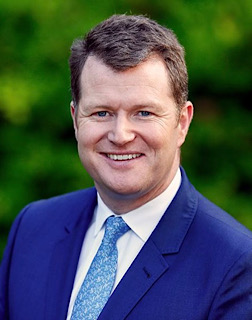
Byrne is Head of Communications with the Higher Education Authority (HEA) until 2019, and has been Vice-President of the National Youth Council of Ireland. In 2014, he is named as one of the European 40 Under 40, in the European Young Leaders Programme.
In January 2006, The Sun includes Byrne’s picture on the cover of its Irish edition beneath the headline “Bertie‘s FF Man in Gay Web Shame,” revealing that Byrne has a profile on the dating website Gaydar. He responds at the time, “I have not, nor have I ever, done anything illegal and I am not a hypocrite in any way. My views on gay rights issues are well known. I am not married with four children or anything like that, so there is no suggestion of hypocrisy.” His family and political career suffer as a result and he is not selected for candidacy in the 2007 Irish general election following this incident. He later describes how a journalist from The Gorey Echo first approaches him, “The first few questions were about roads. Then the journalist said, ‘Are you aware you have a profile on this dating website?'” When he confirms that the profile is his, he experiences a sleepless night before The Gorey Echo outs him locally: “I was ringing around people I knew and my parents were ringing around people … my grandmother didn’t know and a lot of my extended family and my friends didn’t know.” Gorey Echo group editor Tom Mooney defends the publication by saying he believes Byrne’s behaviour to be “unfitting of a public representative.”
Byrne contests the 2019 European Parliament election for Fianna Fail in the South constituency, having unexpectedly beaten Cork TD Billy Kelleher in the vote for the party’s nomination. However, Kelleher is later added to the ticket. Fianna Fáil then divides the constituency geographically, asking people in counties Carlow, Kilkenny, Laois, Offaly, Tipperary, Waterford, Wexford and Wicklow to vote for Byrne, and those in counties Cork, Kerry, Clare and Limerick to vote for Kelleher. Kelleher wins 11.69% of the first-preference votes (FPV) and is elected on the 17th count. Byrne wins 9.62% of the FPV, and is eliminated on the 16th count.
Byrne is elected as a TD at the 2019 Wexford by-election. Andrew Bolger is co-opted to Byrne’s seat on Wexford County Council following his election to the Dáil. His maiden speech is about housing solutions and the need to address the challenges facing Generation Rent. In an interview he says he can envisage a United Ireland where the 12th of July and Saint Patrick’s Day are public holidays and speaks about how Ireland needs to ensure Unionists feel at home in a new agreed state and that may mean addressing issues such as Ireland joining the Commonwealth.
Byrne loses his Dáil seat at the 2020 Irish general election, following what he calls “a dirty campaign.” His defeat after only 71 days makes him the TD with the second-shortest term of service, after the Anti H-Block TD Kieran Doherty, who dies on hunger strike in August 1981, only 52 days after his election.
On March 31, 2020, Byrne is elected to Seanad Éireann at the 2020 Seanad election. He is named as Fianna Fáil spokesperson on Higher Education, Innovation and Science by TaoiseachMicheál Martin in July 2020.
At the 2024 Irish general election, Byrne is elected to the Dáil. He is subsequently appointed Cathaoirleach of the Joint Committee on Artificial Intelligence.
Byrne is openly gay. As of 2020, he is single and describes politics as “almost like an addiction,” which makes relationships difficult. He lives in Gorey.
In March 2025, Byrne is injured during the theft of his phone in London.
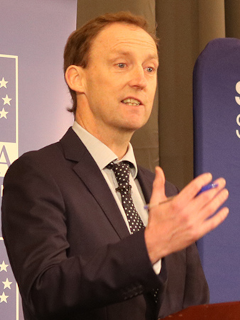
Andrews comes from a family with strong political connections. His grandfather, Todd Andrews, fought in the Irish War of Independence and became a founder-member of Fianna Fáil, and his grandmother, Mary Coyle, was a member of Cumann na mBan. His father, David Andrews, served as a TD from 1965 to 2002 and is a former Minister for Foreign Affairs, while his uncle, Niall Andrews, is a former Fianna Fáil TD and MEP and his cousin, Chris Andrews (son of Niall Andrews), has been a Sinn Féin TD since 2020 (having previously served as a Fianna Fáil TD from 2007 to 2011). In April 2018, Andrews is described as “part of Fianna Fáil royalty.”
Andrews is educated at Blackrock College and attends university at University College Dublin (UCD). Before entering political life, he works as a secondary school teacher in Dublin from 1991 until 1997, working in Senior College Ballyfermot, Sutton Park School and Bruce College. While a secondary school teacher, he studies law at King’s Inns and qualifies as a barrister in 1997. He is called to the Bar in 1997 and practices as a barrister until 2003.
In June 2006, Andrews leads a group of Fianna Fáil backbenchers in an unsuccessful attempt to establish a backbench committee to influence government policy. At the 2007 Irish general election, he retains his seat in Dún Laoghaire with 8,587 votes.
Andrews is appointed Minister of State for Children in May 2008. As Minister, he frames the Government response to the Ryan Report on Institutional Abuse. This includes an Implementation Plan that delivers an additional 200 social workers for the HSE Child and Family Services. In April 2009, he introduces the Early Childhood Care and Education (ECCE) Scheme, which provides, for the first time, free universal access to pre-school education. The scheme benefits 65,000 children in 2013.
After the release of the Murphy Report into child abuse in the Dublin diocese in November 2009, Andrews, speaking at a conference in Dublin Castle, is asked about the position of the Bishop of Limerick, Donal Murray. He says, “I think it’s everybody’s view that if adverse findings are made against an individual in a commission of inquiry, then it would be amazing that there be no consequences for them.” Bishop Murray subsequently apologises to survivors and resigns from office.
In December 2009, Andrews oversees the introduction of government policy to lower the legal age of consent to sixteen, citing a Joint Oireachtas Committee on the Constitution report which recommends the legal age be reduced to sixteen from the current seventeen. He expresses the view the existing laws are “inappropriate” and out of touch with the modern reality of sexual relations between young people and promises to publish legislation to change the age of consent to sixteen. He notes that Ireland and Malta are “the only countries in Europe with an age of consent of seventeen.” However, the law is not passed by the Oireachtas before the 2011 Irish general election in which Fianna Fáil cedes power to a Fine Gael-Labour coalition.
On January 31, 2011, in the run up to the general election, Andrews is named Health spokesman by the party leader, Micheál Martin. He loses his seat at the general election.
In September 2012, Andrew is appointed Fianna Fáil Director of Elections for the Children’s referendum.
In February 2019, Andrews is selected as the Fianna Fáil candidate for the Dublin constituency at the 2019 European Parliament election. He is elected in May 2019 receiving 14.1% of the 1st preference votes, but as the fourth candidate elected, he does not take his seat until after the UK leaves the European Union on January 31, 2020.
Andrews is appointed EU Chief Observer for the 2023 Nigerian Federal and State elections by High Representative Vice President Josep Borrell. A report on the election is subsequently produced highlighting that the election was marred by a lack of transparency, public mistrust in the Independent National Electoral Commission (INEC), violence, and vote buying, stressing the need for comprehensive electoral reforms.
Outside of his political career, Andrews is appointed chief executive of the Irish aid charity GOAL in November 2012, replacing the retiring founder, John O’Shea. In October 2016, he resigns from GOAL after it is revealed that other senior executives of GOAL have been involved in “large-scale fraud,” though there is no suggestion that he himself is involved in the scandal. In October 2017, the new CEO of GOAL announces a deficit of €31.6 million due to the fraud but says that it will survive after “one of the most challenging years” in its 40-year history.
In March 2017, Andrews is appointed as Director-General of the Irish State-supported EU think tank and advocacy body, the Institute of International and European Affairs (IIEA), with the Chairperson of the IIEA, former Leader of the Labour Party, Ruairi Quinn, describing him as having the “political and administrative skills” of value to the IIEA.
Andrews is married and has two sons and a daughter. His brother, David McSavage, is a comedian, and he is a first cousin of former RTÉ television and radio presenter Ryan Tubridy.
Cuffe joins the Green Party in 1982, and campaigns with Students Against the Destruction of Dublin (SADD) in the 1980s. He is twice elected to Dublin City Council, in 1991 and 1999, for the South Inner City electoral area. In 1996, he launches a free bikes scheme in which bicycles are placed around Dublin city centre for use by the public.
In June 2003, Cuffe steps down as the Green Party’s environment spokesperson after it is revealed that he held shares worth $70,000 in a number of oil exploration companies which he had inherited when his late mother had left him $1.3 million in her will. He is re-elected at the 2007 Irish general election.
Following the 2007 election, the Green Party forms a coalition government with two other political parties and a number of independent TDs. Just after the election, on May 28, 2007, Cuffe writes in his blog: “A deal with Fianna Fáil would be a deal with the Devil. We would be spat out after 5 years and decimated as a party.” He loses his seat at the 2011 Irish general election.
While Cuffe is minister, the Oireachtas enacts the Planning and Development (Amendment) Act 2010 to address land-use planning failures and over-zoning of development land. The legislation reforms the way development plans and local area plans are made and, for the first time in Irish legislation, includes a definition of Anthropogenic Climate Change and required energy use to be taken into account in planning decisions. He publishes the Climate Change Response Bill 2010, and an update of the National Spatial Strategy. He is head of the Irish delegation at the 2010 United Nations Climate Change Conference in Cancún, Mexico.
Cuffe promotes healthy eating for children, school gardens and local markets. He publishes bills to address climate change, noise pollution, and heritage protection. In January 2011, he launches a new policy of allowing bicycles on off-peak Dublin Area Rapid Transit (DART) trains.
Cuffe resigns as Minister of State on January 23, 2011, when the Green Party withdraws from government.
At the 2014 Irish local elections, Cuffe is elected to Dublin City Council for Dublin North Inner City area, on the 13th count. He is appointed chairperson for the Dublin City Council Transportation Committee in 2014. As a member of the Central Area Committee for Dublin City Council, he works to provide a site for the Gaelscoil Choláiste Mhuire primary school on Dominick Street in 2017. He introduces 30 km/h speed limits to residential and school areas of Dublin and also advocates for a car-free College Green. He calls for an increase in affordable housing in Dublin, specifically for people with different incomes. Speaking on the Strategic Development Zone in the Dublin Docklands, he states, “We have seen a lot of cranes in the Docklands but not a lot of homes. Particularly affordable homes.” He proposes a Motion declaring a Climate Emergency which is approved at a meeting of the Council on May 13, 2019.
Cuffe is selected as the Green Party candidate for the Dublin constituency at the 2019 European Parliament elections. He tops the poll, receiving 63,849 votes and is elected as an MEP on the 13th count, with 17.54% first preference votes. He is also re-elected to Dublin City Council, but due to the prohibition on a dual mandate, this seat is co-opted to fellow Green Party member Janet Horner.
Cuffe is President of the European Forum for Renewable Energy Sources (EUFORES), a cross-party European parliamentary network gathering members of European, regional and national parliaments of the EU, and works to promote renewable energy and energy efficiency.
The second of two bombing attacks in early 1993 in Warrington, Cheshire, England, takes place on March 20, 1993. The first attack takes place on February 26, when a bomb explodes at a gas storage facility. This explosion causes extensive damage, but no injuries. In the March 20 attack, two smaller bombs explode in litter bins outside shops and businesses on Bridge Street. Two children are killed and 56 people are injured.
The attacks are carried out by the Provisional Irish Republican Army (IRA). From the early 1970s, the IRA had been carrying out attacks in both Northern Ireland and England with the stated goal of putting pressure on the UK Government to withdraw from Northern Ireland. The IRA is designated a terrorist organisation in the United Kingdom.
Shortly before midday on Saturday, March 20, 1993, the Samaritans in Liverpool receive a bomb warning by telephone. According to police, the caller says only that a bomb has been planted outside a Boots shop. Merseyside Police send officers to branches of Boots in Liverpool and warn the Cheshire Constabulary, who patrols nearby Warrington. About 30 minutes later, at about 12:25 p.m., two bombs explode on Bridge Street in Warrington, about 100 yards apart. The blasts happen within a minute of each other. One explodes outside Boots and McDonald’s, and the other outside the Argos catalogue store. The area is crowded with shoppers. Witnesses say that shoppers flee from the first explosion into the path of the second. It is later found that the bombs had been placed inside cast iron litter bins, causing large amounts of shrapnel. Buses are organised to ferry people away from the scene and twenty paramedics and crews from seventeen ambulances are sent to deal with the aftermath.
Three-year-old Johnathan Ball dies at the scene. He had been in town with his babysitter, shopping for a Mother’s Day card. The second victim, 12-year-old Tim Parry, is gravely wounded. He dies on March 25, 1993, when his life support machine is switched off, after tests find only minimal brain activity. Another 54 people are injured, four of them seriously. One of the survivors, 32-year-old Bronwen Vickers, the mother of two young daughters, has to have a leg amputated, and dies just over a year later from cancer.
The Provisional IRA issues a statement the day after the bombing, acknowledging its involvement but saying:
“Responsibility for the tragic and deeply regrettable death and injuries caused in Warrington yesterday lies squarely at the door of those in the British authorities who deliberately failed to act on precise and adequate warnings.”
A day later, an IRA spokesman says that “two precise warnings” had been given “in adequate time,” one to the Samaritans and one to Merseyside Police. He adds, “You don’t provide warnings if it is your intention to kill.” Cheshire’s assistant chief constable denies there had been a second warning and says, “Yes, a warning was given half-an-hour before, but no mention was made of Warrington. If the IRA think they can pass on their responsibility for this terrible act by issuing such a nonsensical statement, they have sadly underestimated the understanding of the British public.”
The deaths of two young children ensures that the March 20 bombings receive major coverage in the media and cause widespread public anger. Shortly after the bombings, a group called “Peace ’93” is set up in Dublin. The main organiser is Susan McHugh, a Dublin housewife and mother. On March 25, 1993, thousands hold a peace rally in Dublin. They sign a condolence book outside the General Post Office and lay bouquets and wreaths, with messages of sorrow and apology, to be taken to Warrington for the boys’ funerals. Some criticise Peace ’93 for focusing only on IRA violence and for not responding to the deaths of children in Northern Ireland.
On September 19, 1994, Irish rock band The Cranberries release the song “Zombie,” which is written in protest of the bombings. The song goes on to become their biggest hit.
On November 14, 1996, the Duchess of Kent officially inaugurates a memorial called The River of Life, depicting “a symbol of hope for future generations,” in Bridge Street. It is developed in the aftermath of the bomb attack and commissioned by the Warrington Borough Council. The project, consisting of a symbolic water sculpture that features a commemorative plaque, is designed by the local primary school and Stephen Broadbent.
The parents of Tim Parry set up the Tim Parry Trust Fund to promote greater understanding between Great Britain and Ireland. The Tim Parry Johnathan Ball Foundation for Peace works jointly with the National Society for the Prevention of Cruelty to Children (NSPCC) to develop The Peace Centre, close to Warrington town centre, which opens on the seventh anniversary of the attack in 2000. Its purpose is to promote peace and understanding amongst all communities affected by conflict and violence. The centre hosts an annual peace lecture, as well as being home to the local NSPCC and is the home of Warrington Youth Club until 2022.
The bombings receive further attention in 2019 after the Brexit Party selects former Living Marxism writer Claire Fox as their lead candidate in the North West England constituency for the 2019 European Parliament election. The Revolutionary Communist Party, of which Fox is a leading member in 1993, defends the IRA’s bombing in their party newsletter. Despite the controversy, which sees another Brexit Party candidate resign from the party list in protest at the comments, Fox and the Brexit Party top the poll in several areas of the North West, including in Warrington.
The killing of Ball and Parry is still on Cheshire Police’s list of unsolved murders.
A piece on BBC North West‘s Inside Out programme in September 2013 speculates that the bombing may have been the work of a “rogue” IRA unit, which was supported by the IRA but operated independently and who used operatives who were from England to avoid suspicion. The programme also examines a possible link between the attack and British leftist political group Red Action, though nothing is ever proven.
(Pictured: Army bomb disposal at the Warrington Bomb scene in March 1993, photo credit: Walker Howard)
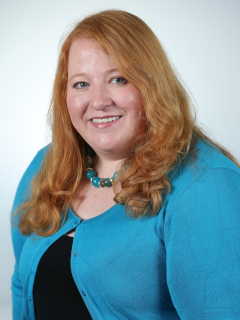
Long first takes political office in 2001 when she is elected to Belfast City Council for the Victoria ward. In 2003, she is elected to the Northern Ireland Assembly for Belfast East, succeeding her fellow party member John Alderdice. In 2006, she is named deputy leader of her party. In the 2007 Northern Ireland Assembly election, she more than doubles the party’s vote in the constituency, being placed second ahead of the leader of the Ulster Unionist Party (UUP). The overall UUP vote, however, is 22%. At 18.8%, her vote share is higher than that for Alderdice in 1998.
On December 10, 2012, Long receives a number of death threats, and a petrol bomb is thrown inside an unmarked police car guarding her constituency office. This violence erupts as a reaction by Ulster loyalists to the decision by Alliance Party members of Belfast City Council to vote in favour of restricting the flying of the Union flag at Belfast City Hall to designated days throughout the year, which at the time constitutes 18 specific days.
In January 2016, Long announces that she will return as an Assembly candidate in the 2016 Northern Ireland Assembly election having been nominated in place of incumbent Judith Cochrane. She is subsequently elected on the first count with 14.7% of first-preference votes. Following her return to the Assembly, she assumes positions on the Committee for Communities, the All-Party Group on Fairtrade, the All-Party Group for Housing, and chairs the All-Party Group on Science, Technology, Engineering and Mathematics.
In August 2016, Long calls for Sinn Féin‘s Máirtín Ó Muilleoir to stand aside as Minister of Finance during an investigation of the Stormont Finance Committee’s handling of its Nama inquiry, while Ó Muilleoir is a committee member. This follows allegations that his party had “coached” loyalist blogger Jamie Bryson prior to his appearance before the committee.
In November 2016, Long criticises Sinn Féin and the DUP for delaying the publication of a working group report on abortion, which recommends legislative changes in cases of fatal foetal abnormality, calling on the Executive “to act without further delay to help women who decide to seek a termination in these very difficult circumstances.”
On October 26, 2016, Long is elected Alliance leader unopposed following the resignation of David Ford. In the first manifesto released under her leadership, she affirms her commitment to building a “united, open, liberal and progressive” society. Her party’s legislative priorities are revealed to include the harmonisation and strengthening of equality and anti-discrimination measures, the introduction of civil marriage equality, development of integrated education and a Northern Ireland framework to tackle climate change.
In the 2017 Northern Ireland Assembly election, Long tops the poll in Belfast East and is returned to the Assembly with 18.9% of first-preference votes. The election is widely viewed as a success for Alliance, with the party increasing its vote share by 2 percentage points and retaining all of its seats in a smaller Assembly. The party subsequently holds the balance of power at Stormont.
Following the collapse of talks to restore devolution in February 2018, Long reiterates her view that the pay of MLAs should be cut in the absence of a functioning Executive. In March 2018, Alliance launches its “Next Steps Forward” paper, outlining a number of proposals aimed at breaking the deadlock and Stormont. At the 2019 Alliance Party Conference, she accuses Secretary of State for Northern IrelandKaren Bradley of an “appalling dereliction of duty” over the ongoing stalemate, saying that she had made “no concerted effort to end this interminable drift despite it allegedly being her top priority.”
In the 2019 Northern Ireland local elections, Alliance sees a 65% rise in its representation on councils. Long hails the “incredible result” as a watershed moment for politics in Northern Ireland.
Long is elected to the European Parliament as a representative for Northern Ireland in May 2019 with 18.5% of first-preference votes, the best ever result for Alliance. She is subsequently replaced in the Assembly by Máire Hendron, a founding member of the party and former deputy lord mayor of Belfast. She then replaces Hendron in the Assembly with effect from January 9, 2020.
In 2019, Long becomes the first Northern Ireland politician to have served at every level of government.
On January 11, 2020, following the restoration of the Northern Ireland Assembly after three years of stalemate, Long is elected Minister of Justice in the Northern Ireland Executive. On January 28, she announces that she will progress new domestic abuse legislation through the Assembly which will make coercive control a criminal offence in Northern Ireland. In June 2020, she commissions a review into the support available for prison officers following concerns about absence rates. That same month, she announces her intention to introduce unexplained wealth orders in Northern Ireland to target paramilitary and criminal finances.
In November 2020, Long says she is seriously reconsidering her position within the Executive following the DUP’s deployment of a cross-community vote to prevent an extension of COVID-19 regulations. She tells BBC News, “I have asked people to desist from this abuse of power because it will make my position in the executive unsustainable.”
In March 2022, Long tells the Alliance Party Conference that “some politicians are addicted to crisis and conflict and simply not up to the job of actually governing.” Long leads Alliance into the 2022 Northern Ireland Assembly election on a platform of integrated education, health reform, a Green New Deal, tackling paramilitarism and reform of the Stormont institutions.
Long is a member of Bloomfield Presbyterian Church. Following the Church’s decision to exclude those in same-sex relationships from being full members, she expresses “great concern” and states that she “didn’t know” if she would remain a member herself. She is married to Michael Long, an Alliance councillor on Belfast City Council and former Lord Mayor of Belfast, and son of the engineer Professor Adrian Long. Long and her husband are the first husband and wife to have both served as Lord Mayors of Belfast.
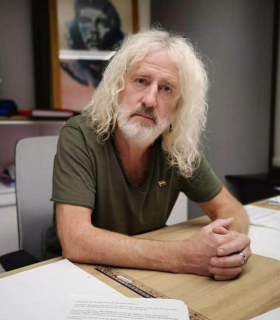
Wallace is born into a family of twelve children. He graduates from University College Dublin (UCD) with a teaching qualification. He marries Mary Murphy from Duncormick, County Wexford, in 1979. The couple has two sons, but the marriage ends when the children are young. He has two more children from another relationship in the 1990s.
Prior to entering politics, Wallace owns a property development and construction company completing developments such as the Italian Quarter in the Ormond Quay area of the Dublin quays. The company later collapses into liquidation, with him finally being declared bankrupt on December 19, 2016.
On December 15, 2011, Wallace helps to launch a nationwide campaign against the household charge which is introduced as part of the 2012 Budget.
Wallace is the listed officer of the Independents 4 Change, which is registered to stand for elections in March 2014 and, along with Clare Daly, is one of two MEPs which represent the party in the European parliament. During their time in the Dáil, Wallace and Daly, the Dublin North TD, become friends and political allies, and work together on many campaigns, including opposition to austerity and highlighting revelations of alleged Garda malpractices, including harassment, improper cancellation of penalty points and involvement of officers in the drug trade. They are partially active in protesting the Garda whistleblower scandal, which eventually leads to the resignation of Minister for JusticeFrances Fitzgerald, although she is later cleared of wrongdoing by the Charleton Tribunal.
In July 2014, Wallace and Daly are arrested at Shannon Airport while trying to board a U.S. military aircraft. He says the airport is being used as a U.S. military base and that the government should be searching the planes to ensure that they are not involved in military operations or that there are no weapons on board. He is fined €2,000 for being in an airside area without permission and chooses not to pay. He is sentenced to 30 days in prison in default, and in December 2015 is arrested for non-payment of the fine.
In December 2015, Wallace and independent TDs Clare Daly and Maureen O’Sullivan each put forward offers of a €5,000 surety for a man charged with membership of an unlawful organisation and with possession of a component part of an improvised explosive device.
At the 2016 Irish general election, Wallace stands as an Independents 4 Change candidate and is re-elected, finishing third on the first-preference count with 7,917 votes.
In 2017, Wallace calls on Ireland to join the Boycott, Divestment and Sanctions movement against Israel and “condemn the illegal expansion of Israeli settlements on Palestinian lands as well as the ongoing human rights abuses against Palestinians.”
Wallace is criticised for supporting Venezuela, Ecuador, China, Russia, Belarus and Syria during his period as an MEP. In November 2020, he refers to Belarusian opposition presidential candidate Svetlana Tikhanovskaya as a “pawn of western neoliberalism.” In February 2021, he is reprimanded for using a swear word during a session of the European Parliament. He has referred to Venezuelan opposition leader Juan Guaidó as being an “unelected gobshite.”
In April 2021, Wallace and Daly are called “embarrassments to Ireland” by Fianna Fáil‘s Malcolm Byrne after the two MEPs had travelled to Iraq and visited the headquarters of the Popular Mobilization Forces, an Iraqi militia supported by Iran.
Wallace questions the director general of the Organisation for the Prohibition of Chemical Weapons (OPCW), Fernando Arias, in the European Parliament in April 2021. He accuses the OPCW of falsely blaming the government of Bashar al-Assad for the 2018 Douma chemical attack. He says that, while he does not know what had happened in Douma, the White Helmets were “paid for by the U.S. and UK to carry out regime change in Syria.” Fianna Fáil’s Barry Andrews calls his accusation against the White Helmets a conspiracy theory and disinformation. French MEP Nathalie Loiseau describes his comments as “fake news” and apologises on his behalf to NGO groups in Syria.
In June 2021, Wallace and Daly are among the MEPs censured by the European Parliament’s Democracy Support and Election Coordination Group for acting as unofficial election-monitors in the December 2020 Venezuelan parliamentary election and April 2021 Ecuadorian general election without a mandate or permission from the EU. They are barred from making any election missions until the end of 2021. They are warned that any further such action may result in their ejection from the European parliament under the end of their terms in 2024.
Wallace has stated his opposition to vaccination certificates. He says, “I’m not anti-vax but we’re going down a dangerous path with COVID pass” and expresses concerns about civil liberties. Both Wallace and Daly have refused to present vaccination certs upon entering the European Parliament, resulting in them being reprimanded by the European Parliament.
In April 2022, Wallace and Daly initiate defamation proceedings against RTÉ.
In November 2022, Wallace criticises protests in Iran following the death of Mahsa Amini, accusing some protestors of violence and destruction and saying it “would not be tolerated anywhere.”
In February 2023, Wallace claims on social media that he has “three wine bars in Dublin.” This arouses alarm from his European parliamentary group, as no such assets were listed on his mandatory declaration of financial interests. After the chair of his parliamentary group calls any omission from the declaration “unacceptable” and not “worthy of our political group,” he amends his declaration to state that he is an “advisor” to the three wine bars and receives up to €500 a month in income for this role.
Founded in 1970 from the New Ulster Movement, the Alliance Party originally represents moderate and non-sectarian unionism. However, over time, particularly in the 1990s, it moves towards neutrality on the Union, and has come to represent wider liberal and non-sectarian concerns. It supports the Good Friday Agreement but maintains a desire for the reform of the political system toward a non-sectarian future. In the Northern Ireland Assembly, it is designated as neither unionist nor Irish nationalist, but “Other.”
The Alliance Party wins their first seat in the UK House of Commons in the 2010 United Kingdom general election, unseating the former Belfast EastMPPeter Robinson, First Minister of Northern Ireland and leader of the Democratic Unionist Party (DUP). Naomi Long is the first MP from the Alliance Party since Stratton Mills, who joined the party from the Ulster Unionist Party (UUP) in 1973. However, the DUP regains the seat at the 2015 United Kingdom general election following an electoral pact with the UUP. In the 2019 United Kingdom general election, the Alliance Party regains its presence in the House of Commons when Stephen Farry wins the North Down seat vacated by the independent unionist, Sylvia Hermon. Earlier in the year, the party’s leader, Naomi Long, wins the party’s first seat in the European Parliament in the last European election before Brexit. Under Long’s leadership, the Alliance Party exceeds expectations in the 2022 Northern Ireland Assembly election and gains numerous seats in the Northern Ireland Assembly.
Daly’s father, Kevin Daly, was a colonel in the Irish Army, where he was Director of Signals. She is an atheist, while her brother and an uncle are Catholic priests. She studies accountancy at Dublin City University (DCU). She is twice elected president of the DCU Students’ Union and is active in the students’ movement as a campaigner for abortion rights and information. On leaving college she takes a job in the catering section of Aer Lingus on a low wage and becomes SIPTU‘s shop steward at Dublin Airport when the airline is engaged in extensive cost-cutting and outsourcing.
Since 2012, Daly has formed a close political association with Mick Wallace. After Wallace is condemned by left-wing TDs following the revelation his building company had avoided €2.1 million in taxes, she resigns from the Socialist Party in August 2012 in protest and redesignates herself as a United Left Alliance TD, before switching party again in 2015 to her current party, Independents 4 Change.
At the 2019 European Parliament elections, Daly is elected for the Dublin constituency. Since becoming an MEP, she has gained international attention for her foreign policy views, particularly regarding Russia and China, which have been the subject of controversy and criticism.
A report by The Irish Times in April 2022 describes Daly and Wallace’s media profile in China, and discusses how since January 2021, Daly has been featured in more Chinese-language news articles than any other Irish person, while Wallace has the second most Chinese-language news articles. In April 2022, Daly and Wallace initiate defamation proceedings against RTÉ.