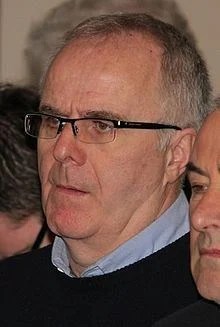
McCartney takes part in the civil rights march in Derry on January 30, 1972, an event widely known as Bloody Sunday. One of his cousins, James Wray, is one of fourteen men shot and killed by the 1st Battalion, Parachute Regiment of the British Army on that march. As a result of this incident, he joins the Provisional IRA several months later. In 1974, Martin McGuinness, who commands the IRA in Derry, instructs him to beat up an Irish National Liberation Army (INLA) man, Patsy O’Hara, who McGuinness calls a “scumbag” and a “hood.” On January 12, 1979, at Belfast‘s Crown Court, he and another man, Eamonn MacDermott, are convicted of the murder of Detective Constable Patrick McNulty of the Royal Ulster Constabulary (RUC), who was shot several times outside a garage in Derry on January 27, 1977. He is also convicted of IRA membership and the murder of businessman Jeffery Agate in February 1977 and is sentenced to life imprisonment. The murder convictions are overturned in 2007.
McCartney spends 53 days on hunger strike, from October 27 to December 18. From 1989–91 he is Officer Commanding of the IRA prisoners in the H-Blocks and is released in 1994.
Following his release, McCartney is active with ex-prisoners’ groups Tar Abhaile and Coiste na n-Íarchimí, and is the first member of Sinn Féin to hear his own voice heard on television after the lifting of the British broadcasting ban in 1994. He is arrested on April 4, 2002, following a breach of security at Belfast’s police headquarters, but is released without charge the following day. Later that year, on September 5, he is the first former IRA member to appear before the Bloody Sunday Inquiry, and encourages anyone with information, including paramilitaries, to come forward. He is a member of the Legislative Assembly (MLA) for Foyle from July 15, 2004, until February 3, 2020.
On February 15, 2007, McCartney and MacDermott have their murder convictions quashed by the Court of Appeal, following an investigation by the Criminal Cases Review Commission (CCRC) in 2002. The Secretary of State for Northern Ireland declines to compensate McCartney and MacDermott on the grounds that they have not proven themselves innocent. The decision is appealed to the Supreme Court of the United Kingdom which, in May 2011, finds in favour of the applicants, opening the way for a substantial compensation claim from both for their prison terms of 15 and 17 years.
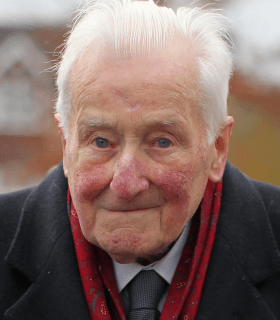
McKee joins Fianna Éireann in 1936. He is arrested following a raid on a Gaelic Athletic Association (GAA) club in 1938, being imprisoned in Crumlin Road Gaol for several months. Following his release from prison, he joins the Irish Republican Army (IRA) in 1939. During World War II, the IRA carries out a number of armed actions in Northern Ireland known as the Northern Campaign. He is arrested and imprisoned in Crumlin Road Gaol until 1946 for his role in this campaign. In 1956, the IRA embarks on another armed campaign against partition, known as the Border Campaign. He is again arrested and interned for the duration of the campaign. He is released in 1962.
As the 1960s proceed, McKee drifts away from the IRA. He grows very disillusioned with the organisation’s increasing emphasis on socialism and reformist politics over “armed struggle.” He is a devout Roman Catholic, who attends Mass daily. As a result, he is very uncomfortable with what he feels are “communist” ideas coming into the republican movement.
During the 1969 Northern Ireland riots, severe rioting breaks out in Belfast between Irish Catholicnationalists, Protestantloyalists, and the RUC. McKee is highly critical of the IRA’s failure to defend Catholic areas during these disturbances. On August 14, 1969, McKee, Joe Cahill and a number of other Irish Republican activists occupy houses at Kashmir Street, however, being poorly armed they fail to prevent Irish Catholics in Bombay Street and parts of Cupar Street and Kashmir Street being driven from their homes in the sectarian rioting that engulfs parts of the city. In the aftermath of the riots, he accuses Billy McMillen, the IRA’s Belfast commander, and the Dublin-based IRA leadership, of having failed to direct a clear course of action for the organization in civil disturbances. On September 22, 1969, he and a number of other IRA men arrive with weapons at a meeting called by McMillen and try to oust him as head of the Belfast IRA. They are unsuccessful but announce that they will no longer be taking orders from the IRA leadership in Dublin. In December 1969, the IRA splits into the Provisional IRA which is composed of traditional militarists like McKee, and the Official IRA which is composed of the remnants of the pre-split Marxist leadership and their followers. He sides with the Provisionals and joins the IRA Army Council in September 1970.
McKee becomes the first OC of the Provisional IRA Belfast Brigade. From the start, there is intermittent feuding between McKee’s men and his former comrades in the Official IRA, as they vie for control of nationalist areas. However, the Provisionals rapidly gain the upper hand, due to their projection of themselves as the most reliable defenders of the Catholic community.
McKee himself contributes greatly to this image by an action he undertakes on June 27, 1970, the Battle of St Matthew’s. Rioting breaks out in the Ardoyne area of north Belfast after an Orange Order parade, and three Protestants are killed in gun battles between the Provisional IRA and loyalists. In response, loyalists prepare to attack the vulnerable Catholic enclave of Short Strand in east Belfast. When McKee hears about this, he drives to Short Strand with some men and weapons and takes up position at St Matthew’s Church. In the ensuing five-hour gun battle, he is wounded and one of his men is killed, along with at least four Protestants.
On April 15, 1971, McKee, along with Proinsias Mac Airt, is arrested by the British Army when found in possession of a handgun. He is charged and convicted for possession of the weapon and imprisoned in Crumlin Road Gaol, and Joe Cahill takes over as OC of the Belfast Brigade.
In 1972, McKee leads a hunger strike protest in an effort to win recognition of IRA prisoners as political prisoners. Republicans who are interned already have special status, but those convicted of crimes do not. On June 19, the 35th day of hunger strike, he is close to death, William Whitelaw concedes Special Category Status (SCS) which, although not officially awarding political status, is tacit recognition of the political nature of the incarceration. Prisoners wear their own clothes, have no prison work, can receive one visit and food parcel per week and unlimited letters.
McKee is released on September 4, 1974, and resumes his position as OC of the Belfast Brigade. At this time the Provisional IRA calls a ceasefire, and he is involved, with Ruairí Ó Brádaigh, in secret peace talks in Derry with the Northern Ireland Office. He is also involved in talks with Protestant clergy in Feakle, County Clare, in December 1974, where he voices his desire to end the violence.
However, in the same period, McKee authorises a number of sectarian attacks on Protestants as well as renewed attacks on rival republicans in the Official IRA. For this he is heavily criticised by a group of Provisional IRA activists grouped around Gerry Adams.
A faction led by Adams manages to get McKee voted off the IRA Army Council in 1977, effectively forcing him out of the leadership of the organisation. His health suffers in this period, and he does not resume his IRA activities. He joins Republican Sinn Féin after a split in Sinn Féin in 1986. At age 89, reflecting on his involvement in the Republican cause he says, “From the time I was 15 until 65 I was in some way involved. I have had plenty of time since to think if I was right or I was wrong. I regret nothing.”
In later years McKee, Brendan Hughes and Tommy McKearney are critical of the Belfast Agreement and of the reformist politics of Sinn Féin. In 2016 he sends a message of support to the launch of the hardline new Republican party Saoradh, reportedly the political wing of the New IRA.
McKee dies in Belfast at the age of 97 on June 11, 2019. His funeral takes place on June 15, 2019, in west Belfast. His coffin is carried on a gun carriage. He is buried in Milltown Cemetery.
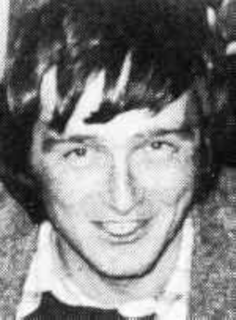
McKearney joins the Provisional IRA and is first arrested in 1972 on charges of blowing up the post office in Moy. He spends six weeks on remand but is released due to insufficient evidence. In December 1973 he is arrested again and later sentenced to seven years for possession of a rifle. He is imprisoned in Long Kesh Detention Centre and later in Magilligan Prison. During this time, a younger brother, Seán, also an IRA paramilitary, is killed on May 13, 1974. He is released in 1977 but is sentenced to 14 years in August 1980 after being caught by the British Army with a loaded Sten gun along with fellow IRA member Gerard O’Callaghan. That same year an older brother, Tommy McKearney, who had been sentenced to life imprisonment for the murder of an off-duty Ulster Defence Regiment (UDR) soldier who worked as a postman in 1977, nearly dies on hunger strike after refusing food for 53 days. Another brother, Kevin, and an uncle, Jack McKearney, are both murdered by Loyalist paramilitaries in revenge attacks upon the family.
On September 25, 1983, McKearney takes part in the Maze Prison escape along with 37 other prisoners. At the beginning of 1984 he rejoins IRA activity in his native East Tyrone with the Provisional IRA East Tyrone Brigade. He advocates the commencement of the “third phase” of the armed struggle, the ‘strategic defensive,’ in which the Royal Ulster Constabulary (RUC), Ulster Defence Regiment and British Army would be denied all support in selected areas following repeated attacks on their bases. In 1985 Patrick Kelly becomes commander of the Provisional IRA East Tyrone Brigade, and it is under his leadership that this strategy is pursued. Remote Royal Ulster Constabulary bases are attacked and destroyed, and building contractors who try to repair them are targeted and sometimes murdered, as occurs with the attack on the Ballygawley barracks in December 1985, which results in the death of two policemen, and The Birches police station in August 1986.
McKearney is shot dead by the British Army on May 8, 1987, during an IRA attack that he is taking part in upon Loughgall police station, which also claims the lives of seven other IRA members. His body is buried at his hometown of Moy.
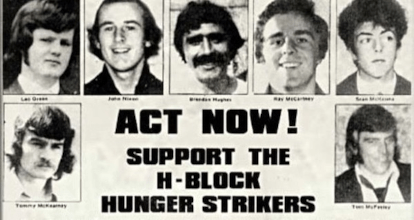
Irish political prisoners confined in the infamous H-Blocks of Long Kesh Detention Centre commence a hunger strike on October 27, 1980. The hunger strike is to continue until their demands for political status and for an end to British torture are met, or until death.
On December 1, three female prisoners, Mary Doyle, Mairéad Farrell and Mairéad Nugent, join the strike in Armagh Prison. Thirty more republican prisoners join later.
Despite being deceived into ending prematurely after 53 days, it sets the scene for a second hunger strike the following March, led by Bobby Sands. The first hunger strike announcement is made in a statement which is reprinted in full below.
“We the Republican POWs in the H-Blocks, Long Kesh, demand the right of political recognition and that we be accorded the status of political prisoners. We claim this right as captured combatants in the continuing struggle for national liberation and self-determination. We refute most strongly the tag of criminal with which the British have attempted to label us and our struggle, and we point to the devisive, partitionist institution of the six-county state as the sole criminal aspect of the present conflict.
“All of us were arrested under repressive laws, interrogated and often tortured in RUC barracks, and processed through special non-jury courts, where we were sentenced to lengthy terms of imprisonment. After this we were put in the H-Blocks and were expected to bow the knee before the British administration and wear their criminal uniform. Attempts to criminalise us were designed to depoliticise the Irish national struggle.
“We don’t have to recite again the widespread, almost total forms of punishment, degradations and deprivations we have been subjected to. All have failed to break our resistance.
“For the past four years we have endured this brutality in deplorable conditions. We have been stripped naked and robbed of our individuality, yet we refuse to be broken. Further repression only serves to strengthen our resolve and that of our gallant female comrades’ enduring the same hardships in Armagh jail.
“During this period many individuals, religious figures and political organisations and sections of the media have condemned the way we have been treated. Yet despite appeals for a resolution of the H-Block protest, the British government has remained intransigent and has displayed vindictive arrogance in dealing with the problem. They refuse to treat this issue in a realistic manner which is just another reflection of their attitude to the entire Irish question.
“Bearing in mind the serious implications of our final step, not only for us but for our people, we wish to make it clear that every channel has now been exhausted, and not wishing to break faith with those from whom we have inherited our principles, we now commit ourselves to a hunger strike.
“We call on the Irish people to lend us their support for our just demands and we are confident that this support will be very much in evidence in the coming days.
“We call on all solidarity and support groups to intensify their efforts and we also look forward with full confidence to the support of our exiled countrymen in America and Australia.
“We declare that political status is ours of right and we declare that from Monday, October 27th, 1980, a hunger strike by a number of men representing H- Blocks 3, 4, and 5 will commence.
“Our widely recognised resistance has carried us through four years of immense suffering, and it shall carry us through to the bitter climax of death, if necessary.”

 seamus dubhghaill