
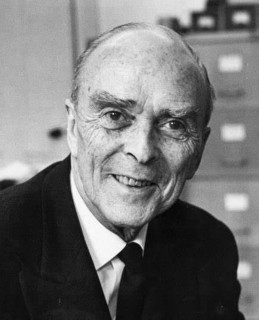
Seán MacBride, Irish Clann na Poblachta politician who serves as Minister for External Affairs from 1948 to 1951, Leader of Clann na Poblachta from 1946 to 1965 and Chief of Staff of the Irish Republican Army (IRA) from 1936 to 1937, receives the Nobel Peace Prize in Oslo on December 10, 1974. He also serves as a Teachta Dála (TD) from 1947 to 1957.
Rising from a domestic Irish political career, MacBride founds or participates in many international organisations of the 20th century, including the United Nations, the Council of Europe and Amnesty International. In addition to the Nobel Peace Prize, he receives the Lenin Peace Prize for 1975–76 and the UNESCO Silver Medal for Service in 1980.
MacBride is awarded the Peace Prize for his efforts on behalf of human rights, among other things as one of the founders of Amnesty International. He is described as a man who “mobilised the conscience of the world in the fight against injustice.” In December 1973, he is elected United Nations Commissioner for Namibia, a position he holds until January 1, 1977. In 1974 he is also Chairman of the International Peace Bureau and Under-Secretary-General of the United Nations.
MacBride, nevertheless, has had a violent past. His father is executed following the Easter Rising of 1916, the Irish struggle for liberation from Great Britain. He is only 13 when he joins the Irish Republican Army (IRA). He takes part in the concluding battles of the Irish War of Independence against the British before the Irish Republic is founded in 1921, and in the Irish Civil War that follows. He backs Éamon de Valera in the latter’s refusal to accept Northern Ireland‘s continuing union with England. In the 1930s, he breaks with the IRA and qualifies in law. He defends IRA prisoners in Irish prisons who had been condemned to death.
After World War II he is for a few years Minister for External Affairs for Ireland. He plays a leading part in the establishment of the Council of Europe, and in the preparation of the European Convention on Human Rights of 1950.
MacBride dies in Dublin on January 15, 1988, eleven days before his 84th birthday. He is buried in Glasnevin Cemetery in a grave with his mother and wife, who died in 1976.

 The prolific Irish
