seamus dubhghaill

Promoting Irish Culture and History from Little Rock, Arkansas, USA


Leave a comment

The First Vietnamese Boat People Arrive in Ireland

On August 9, 1979, Ireland welcomes its first group of Vietnamese refugees, known as the “boat people,” under a United Nations High Commissioner for Refugees (UNHCR) resettlement initiative. These are Vietnamese who have fled the communist takeover of Vietnam after the fall of Saigon in 1975, enduring perilous journeys across the South China Sea in small boats.

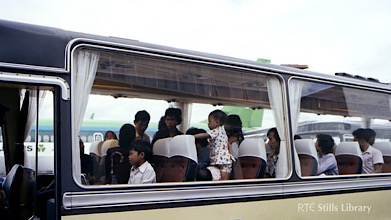
The first arrivals come on a flight from Hong Kong, with 58 Vietnamese refugees disembarking at Dublin Airport. They are met by members of the Irish Red Cross and Minister for Foreign Affairs Michael O’Kennedy, who assures them of Ireland’s willingness to help. The refugees are taken by bus to a Red Cross centre in Blanchardstown for initial accommodation.

Many of the refugees have spent months in refugee camps in Hong Kong and Malaysia, often rescued from overcrowded boats after long, dangerous voyages. Some, like Tri Quoc Nguyen, recall the smell of vomit and sweat from days at sea, and the trauma of internment for family members. Delays in resettlement elsewhere—such as the United States—leads some to choose Ireland for its perceived safety and shorter wait.

The Irish government invites these refugees, and religious and non-governmental organisations play a major role in resettlement. The first group of about 212 Vietnamese is dispersed to various Irish towns, including Tralee, Portlaoise, and Cork. Many later move to Dublin, where they begin building new lives.

Over the decades, the Vietnamese-Irish community has grown into a well-established ethnic minority in Ireland, with contributions in business, education, and culture. Many open Vietnamese restaurants and community businesses, and maintain strong family and cultural ties.

This August 9, 1979 event marks the beginning of a significant chapter in Irish migration history, symbolising Ireland’s role in humanitarian resettlement during the late 20th century.

(Photo credit: RTÉ Stills Library)


Leave a comment

Birth of Aengus Finucane, Roman Catholic Missionary

Aengus Finucane, Roman Catholic missionary of the Spiritan Fathers order, is born on April 26, 1932, in Limerick, County Limerick. He organizes food shipments from Ireland to the Igbo people during the Nigerian Civil War. His younger brother, Jack Finucane, also becomes a Holy Ghost priest, and a sister of theirs becomes a nun.

Finucane is educated by the Congregation of Christian Brothers until 1950. He joins the Holy Ghost Fathers in Kimmage Manor, and studies Philosophy, Theology and Education at University College Dublin. He is ordained in Clonliffe College in 1958.

Finucane contributes humanitarian aid during the Nigerian Civil War (also known as the “Nigerian-Biafran War”), from 1967 to 1970. The Nigerian government had blocked food supplies to the successionist state of Biafra causing starvation in the country. This is reported on international television stations and receives worldwide condemnation.

In an effort to save the population from starvation, Finucane organizes food to be sent through makeshift airstrips, including one at Uli, Bafaria, and cargo trips with other Dublin-based workers. This leads to the formation of the organisation Concern Worldwide in 1968. He works with Concern for 41 years and views his mission as “love in action.”

Finucane is banished from Nigeria in January 1970. Following this, he gains a diploma in development studies and a Master of Arts degree in Third World poverty studies from the Swansea University. In 1971, he is again giving food supplies to the population during the operations which are ongoing in Bangladesh and flies often with Mother Teresa during the drop-offs.

The United Nations High Commissioner for Refugees (UNHCR) invites Finucane to lead a survey of people displaced in Southeast Asia. During the 1980s and 1990s he leads Concern Worldwide, becoming involved in the response to famine in Ethiopia, Sudan, Somalia and Rwanda. While in Somalia, he is in a convoy that is attacked and results in the death of nurse Valerie Place.

Finucane dies of cancer at the age of 77 on October 6, 2009, in a Dublin Spiritan Fathers’ nursing home in Kimmage Manor. His funeral is held at the Church of the Holy Spirit, Kimmage and is attended by hundreds. The Minister for Foreign Affairs, Micheál Martin, and Minister for Overseas Development, Peter Power, dub him as a “tireless force for good across the globe for more than four decades.” He is buried at Dardistown Cemetery, in the Spiritan plot.

Finucane’s biography, Aengus Finucane: In the Heart of Concern, written by Deirdre Purcell is published by New Island Books in January 2015.