Many of the refugees have spent months in refugee camps in Hong Kong and Malaysia, often rescued from overcrowded boats after long, dangerous voyages. Some, like Tri Quoc Nguyen, recall the smell of vomit and sweat from days at sea, and the trauma of internment for family members. Delays in resettlement elsewhere—such as the United States—leads some to choose Ireland for its perceived safety and shorter wait.
The Irish government invites these refugees, and religious and non-governmental organisations play a major role in resettlement. The first group of about 212 Vietnamese is dispersed to various Irish towns, including Tralee, Portlaoise, and Cork. Many later move to Dublin, where they begin building new lives.
Over the decades, the Vietnamese-Irish community has grown into a well-established ethnic minority in Ireland, with contributions in business, education, and culture. Many open Vietnamese restaurants and community businesses, and maintain strong family and cultural ties.
This August 9, 1979 event marks the beginning of a significant chapter in Irish migration history, symbolising Ireland’s role in humanitarian resettlement during the late 20th century.
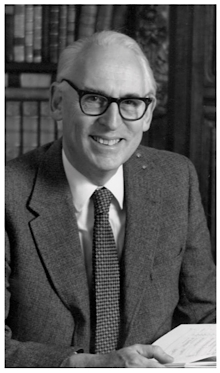
Whyte is born on April 30, 1928, in Penang, Malaysia. His father is manager of a rubber plantation on the mainland. His family leaves Malaysia and returns to Europe when he is three, eventually settling in Rostrevor, County Down, Northern Ireland. The Whytes are a well-known County Down family recorded in the area since at least 1713. The family is said to have come to Ireland from South Wales with Strongbow in 1170 and settled in Leinster. He is educated locally, at Ampleforth College and Oriel College Oxford, from which he takes a degree in Modern History in 1949. Continuing studies some two years later he is awarded a B.Litt degree for further research, which is to form the nebula of his first book which is published in 1958.
Whyte undertakes national service during the 1950s and works as a history teacher in his old school before being appointed lecturer in Modern History at Makerere University, Uganda. In 1962, he returns to Ireland having been appointed first “lecturer in empirical politics” at the then expanding University College Dublin (UCD). In 1966, he weds fellow academic Dr. Jean Murray and moves to Queen’s University Belfast (QUB) to undertake further studies.
In his book, Preventing the Future: Why Was Ireland So Poor for So Long?, Whyte’s successor as Professor of Politics at UCD, Tom Garvin, gives an account as to the clerical politics prevalent at the time at UCD which causes Whyte’s untimely departure:
A little later, in 1966, McQuaid provoked, possibly unintentionally, the resignation of John Whyte, a distinguished Catholic political scientist, from University College Dublin’s Department of Ethics and Politics. This resignation and move to Belfast on Whyte’s part in 1966 almost certainly was the unintended result of an extraordinary piece of clerical interference and bullying that rebounded upon McQuaid and on UCD. Whyte was in the midst of writing his standard history of the Catholic Church in independent Ireland, later published in 1969; at McQuaid’s apparent instigation, his professor and head of Department attempted to forbid him from continuing with this work. The irony was that the resultant scholarly book, finished in Belfast rather than Dublin, deeply underestimated clerical power in the Irish state and gave the Catholic Church a rather easy ride. Another irony was that Whyte, as a Roman Catholic historian and political scientist, was apparently rather favoured by McQuaid. However in 1966 bishops didn’t know they needed friends. Whyte was to come back to UCD and was professor of Ethics and Politics between 1984 and 1990. In a very real sense, McQuaid was the patriarchal and eccentric governor of Dublin Archdiocese, where one-third of the stat’s population lived; he attempted to run an urban society of a million people as though it were a large feudal community.
At Queen’s, Whyte spends seventeen years as lecturer and reader, and from 1982 Professor of Irish Politics during which he seeks to bring together political scientists from across the island and develop an All-Ireland political science fellowship. From 1973 to 1974 he works at as a research fellow at Harvard University’s Centre for International Affairs, and in 1975 he helps lead a team of researchers investigating the Northern Ireland conflict, then at its height. He also works as research fellow at the Netherlands Institute for Advanced Studies during the late 1970s and is elected Member of the Royal Irish Academy (RIA) in 1977, serving as Vice-President from 1989 to 1990.
In 1984, Whyte returns to University College Dublin, then faced with stringent fiscal cuts and wider problems in Irish third-level education. In his second period at UCD, he leads the Department, which he now heads, through a troubled period of financial cuts while supervising a reorganisation of the undergraduate curriculum. In his last years at UCD he completes his seminal work, the widely regarded Interpreting Northern Ireland. He finishes correcting the proofs and compiling the index of this work only a week before his death. While en route to an academic conference at Airley House, Virginia, he collapses at John F. Kennedy International Airport, New York, is taken to a local hospital, and dies there on May 16, 1990. He is survived by his wife, two sons, and one daughter.
Following his death, Whyte’s family, friends, and colleagues set up the John Whyte Trust Fund to continue Whyte’s work, honour his memory and encourage “informed dialogue and interaction at graduate level among people who are likely to be leaders and opinion-shapers.” To date the fund has awarded one fully paid scholarship and a number of part-paid scholarships as well as essay prizes annually. The fund also hosts an annual John Whyte Memorial Lecture. Speakers have included Paul Bew and Brendan O’Leary.
Scallon is born Rosemary Brown, the fifth of seven children of a King’s Cross railway station porter and trumpet player originally from Derry, Northern Ireland. When she is five, the family moves back to Derry where she grows up in the Creggan housing estate and Bogside. She attends St. Eugene’s Primary School and then enrolls at Thornhill College. A singing talent from childhood, she wins several local contests while also participating in local choirs and taking piano, violin and ballet lessons.
In the early 1960s Scallon forms a trio with two of her sisters, often performing at charity concerts organized by their father. When one sister leaves, the remaining duo lands a summer-long booking at the Palladium and a recording contract with Decca Records. Her other sister, however, leaves to join her new husband, a United States airman, in America. Stricken with stage fright, Scallon the solo singer manages to win a folk competition at the Embassy Ballroom with her eyes shut. The contest’s sponsor, teacher and music promoter Tony Johnston, helps her complete her equivalency degree and records a demo that convinces Decca Records to sign her on as a solo artist. She releases a single in 1967 that brings some attention from local TV and radio.
Performing under her school nickname “Dana,” Scallon becomes a fixture in Dublin‘s cabaret and folk clubs. She is crowned “Queen of Cabaret” and feted with a parade and a reception at Clontarf Castle on the Saturday before Easter 1968.
At the suggestion of Decca Record’s local agent, Phil Mitton, Scallon auditions for the Irish National Song Contest, a preliminary for the 1969 Eurovision competition. She reaches the finals in Dublin but comes in second.
RTÉ Television chief Tom McGrath invites Scallon back to compete the following year. She accepts even though she is preparing to retire from active performing to pursue teaching. The song, “All Kinds of Everything” by Derry Lindsay and Jackie Smith, is picked for her by McGrath and propels her to victory. She goes on to represent Ireland in the 1970 Eurovision contest, held in Amsterdam. She performs perched on a stool on stage and defeats England’s Mary Hopkin and Spain‘s Julio Iglesias to secure Ireland’s victory.
Scallon is given a hero’s welcome upon her return to Ireland, especially in Northern Ireland. “All Kinds of Everything” shoots to #1 on the Irish Singles Chart, as well as the UK Singles Chart. It is also successful in Australia, Austria, Germany, Israel, Malaysia, the Netherlands, New Zealand, Singapore, South Africa, Switzerland and Yugoslavia, on its way to passing 1 million sales. She quickly records an album, with orchestral accompaniment. Her follow-up single, “I Will Follow You,” fails to make much of a splash. Given the choice of giving up, she decides to fight for her recording career, and succeeds with Paul Ryan‘s “Who Put the Lights Out,” which spends eleven weeks on the UK charts.
In 1974 Scallon switches to GTO Records. Her first single on that label, “Please Tell Him That I Said Hello,” returns her to the top 10. Her 1975 holiday single “It’s Gonna be a Cold Cold Christmas” by Roger Greenaway and Geoff Stephens, reaches #4 and remains a classic. Now an established Irish singing star she appears in films and festivals and sells out a week of concerts at the London Palladium. She also maintains her “Queen of the Cabaret” reputation with regular appearances in top London clubs. The BBC gives her two shows of her own: a series called A Day with Dana in 1974 and four-part series of Wake Up Sunday in 1979. BBC Radio follows suit with a series of I Believe in Music in 1977.
Meanwhile, Scallon begins performing stage pantomime in a blockbuster production of Cinderella in Oxford. In September 1976, however, she is hospitalized with a non-malignant growth on her left vocal cord, requiring surgery. The single “Fairytale” is sustained in the charts with the publicity from her dire medical prognosis. The experience strengthens her religious faith. On October 5, 1978, she marries Damien Scallon, a hotel-owner from Newry, at St. Eugene’s Cathedral in Derry.
In 1979, recovered from her surgery, Scallon records a new album entitled The Girl is Back, which has modest success. Pope John Paul II‘s visit to Ireland that year inspires her to write a song based on his personal motto, “Totus Tuus,” which tops the Irish charts. Long associated with Christian causes and Sunday-morning programs, she and her husband look for opportunities to reach a broader market for Christian music and find one in the United States. They attend the National Religious Broadcasters conference in Washington, D.C. in 1980 and secure a contract with Word Records.
Scallon’s first album of Christian songs, Totally Yours, is released on Word Records in 1981. She continues to record pop music, including the 1982 album Magic and the official 1982 FIFA World Cup song for the Northern Ireland team, “Yer Man.” She also continues her stage career, starring in Snow White and the Seven Dwarfs at Hull and later in London’s West End and Wolverhampton. She tours the United States in 1984, including appearances at Billy Graham‘s Boston crusades. She pens an autobiography in 1985. She performs “Totus Tuus” before a packed Superdome crowd during John Paul II’s visit to New Orleans in 1987.
Also in 1987, after one of her husband’s hotels is damaged for the seventh time by a terrorist bomb, he takes a job managing retreats for EWTN and moves the family to Alabama. They rent a house in the Cherokee Bend area of Mountain Brook and enroll their children at Saint Rose Academy. Scallon is welcomed to the network as well, hosting the Say Yes and We Are One Body programs. She leaves Word Records and signs with Heart Beat Records for her later Catholic albums. In 1993 she again performs for the Pope at a World Youth Day event in Denver, Colorado.
Scallon is naturalized as a dual citizen of the United States and Northern Ireland in 1997 and moves back there a year later because she has been drafted as an independent candidate for President of Ireland. She garners 15% of the popular vote, finishing third in the race won by Mary McAleese, ahead of the Labour Party candidate. Most of her votes come from rural districts where conservative values are more strongly held.
In 1999 Scallon wins a seat on the European Parliament, representing Connacht-Ulster on a family values and anti-abortion platform. During her five-year term she opposes the development of a European constitution. She also speaks out against a 2001 proposal to amend the Irish constitution to legalize the “morning-after pill” and intrauterine contraceptive devices. With the support of the mainstream parties, the amendment is put to a popular referendum, which fails in 2002. That same year she is defeated in a campaign to represent Galway West in the Dáil Éireann, the lower house of the Irish parliament. In 2004 she fails to hold her seat in the European Parliament and also does not secure a nomination for President.
Leaving politics behind, Scallon joins a weight-loss challenge on RTÉ’s The Afternoon Show in 2005. In 2006 she competes with Ronan McCormack on Celebrity Jigs ‘n’ Reels, finishing second on the popular dance contest.
That same year, Scallon and her husband launch their own music label, DS Music Productions, and release a compilation of songs deidcated to John Paul II’s memory. That is followed by Good Morning Jesus: Prayers and Songs for Children of All Ages, which is featured in a special series on EWTN. Heart Beat Records files a lawsuit against DS Music Productions for alleged copyright violations.
In 2007 Scallon appears as a guest judge for Young Star Search, a Belfast CityBeat radio contest. In 2009 she is brought on as a judge for The All Ireland Talent Show. That same year she returns to EWTN as host of Dana and Friends.