seamus dubhghaill

Promoting Irish Culture and History from Little Rock, Arkansas, USA


2 Comments

Birth of Patrick Coveney, Prelate of the Catholic Church

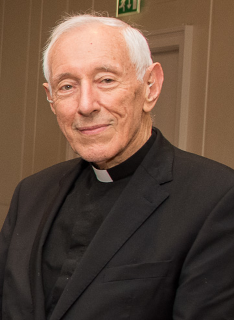
Patrick Coveney, Irish prelate of the Catholic Church who works in the diplomatic service of the Holy See from 1966 to 2009, is born in Tracton, County Cork, on July 29, 1934. He becomes an archbishop in 1985 and fulfills several assignments as Apostolic Nuncio, including stints in Zimbabwe, Ethiopia, New Zealand, and Greece.

Coveney obtains the academic degree of Bachelor of Arts in classical languages and literature at Maynooth College, and the Licentiate of Sacred Theology at the Pontifical Irish College in Rome, Italy. He is ordained as a priest at the age of twenty-four on February 21, 1959, by the archbishop vicegerent (deputy vicar general of Rome) Luigi Traglia in the Archbasilica of Saint John Lateran.

After doing parish work in Kidlington, England, Coveney teaches in St. Finbarr’s College, the minor seminary of the Diocese of Cork and Ross in Cork from 1960 to 1966. When use of the vernacular language is introduced into the celebration of the Roman Rite Mass, he edits a lectionary in English.

In September 1966, Coveney goes to work in the English-language section of the Secretariat of State in the Vatican. This sometimes involves acting as interpreter at audiences of Pope Paul VI, as when the Pope receives the three astronauts of the Apollo 11 mission that first lands human beings on the Moon.

At the Pontifical Lateran University Coveney obtains the degree of Doctor of Canon Law in 1969.

To prepare for a diplomatic career Coveney enters the Pontifical Ecclesiastical Academy in 1969 and enters the diplomatic service of the Holy See in 1971.

Coveney serves with the rank of Secretary in the Apostolic Nunciature in Buenos Aires from 1972 to 1976, returning then to the Secretariat of State in the Vatican. He is counselor of the nunciatures in New Delhi (1982–1984) and Khartoum (1984–1985).

On July 27, 1985, Coveney is appointed titular Archbishop of Satrianum and Apostolic Pro-Nuncio to Zimbabwe and Apostolic Delegate to Mozambique. He is ordained to the episcopate on September 15, 1985, in the Cathedral of St. Mary and St. Anne, Cork. The principal consecrator is the Cardinal Secretary of State Agostino Casaroli. The principal co-consecrators are Archbishop Gaetano Alibrandi, Apostolic Nuncio to Ireland, and Bishop Michael Murphy, Bishop of Cork and Ross. In Harare, capital of Zimbabwe, he represents the Holy See at the 8th Summit Conference of the Non-Aligned Movement on September 1–6, 1986.

On January 25, 1990, Coveney is appointed Nuncio to Ethiopia and also becomes Apostolic Delegate to Djibouti on March 26, 1992, and Nuncio to Eritrea on September 30, 1995.

Coveney becomes Apostolic Nuncio to New Zealand, Tonga, the Marshall Islands, and Samoa, and Apostolic Delegate for Oceania on hpril 27, 1996. His remit is expanded to include Apostolic Nuncio to Fiji, Kiribati, the Federated States of Micronesia, and Vanuatu on October 15, 1996, and Apostolic Nuncio to Nauru on December 7, 1996. He is also named Apostolic Nuncio to the Cook Islands and Palau on July 14, 2001. As the longest-serving resident diplomatic representative to New Zealand, Archbishop Coveney serves for a time as Dean of the Diplomatic Corps. While based in Wellington, he also represents the Holy See at the inauguration of Chen Shui-bian as president of the Republic of China (Taiwan) on May 18, 2004.

Coveney’s last diplomatic appointment is as Apostolic Nuncio to Greece on January 25, 2005. On November 5, 2008, he officiates at the presentation to the Acropolis Museum in Athens of a fragment of the Parthenon Frieze on loan from the Vatican Museums. He resides in Athens until his retirement in 2009.

Coveney returns to the Diocese of Cork and Ross to reside in Crosshaven Parish. He assists in Crosshaven parish and celebrates the Sacrament of Confirmation in many parishes throughout the Diocese of Cork and Ross. He dies at the age of 88 on October 22, 2022.
Leave a comment

Birth of Patrick Brontë, Anglican Priest & Author

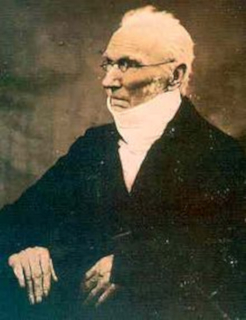
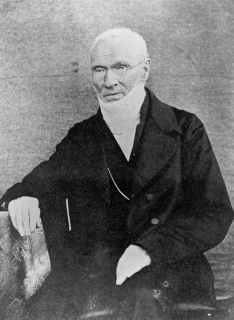
Patrick Brontë, Irish Anglican priest and author, is born at Drumballyroney, near RathfrilandCounty Down, on March 17, 1777. He is the father of the writers Charlotte, Emily, Anne and Branwell Brontë.

Brontë is the first of ten children born to Hugh Brunty, a farm labourer, and Alice McClory. At one point in his adult life, he formally changes the spelling of his name from Brunty to Brontë. He spends most of his adult life in England.

Brontë has several apprenticeships until he becomes a teacher in 1798. He moves to England in 1802 to study theology at St. John’s College, Cambridge, and receives his BA degree in 1806. He is then appointed curate at Wethersfield, Essex, where he is ordained a deacon of the Church of England in 1806, and into the priesthood in 1807.

In 1809, Brontë becomes assistant curate at Wellington, Shropshire, and in 1810 his first published poem, Winter Evening Thoughts, appears in a local newspaper, followed in 1811 by a collection of moral verses, Cottage Poems. He moves to the West Riding of Yorkshire in 1811 as assistant curate at Hartshead, where he serves until 1815. In the meantime he is appointed a school examiner at a Wesleyan academy, Woodhouse Grove School, near Guiseley. In 1815 he moves again on becoming perpetual curate of Thornton. At Guiseley, Brontë meets Maria Branwell, whom he marries on December 29, 1812.

Brontë is offered the perpetual curacy of St. Michael and All Angels’ Church, Haworth in June 1819, and he takes the family there in April 1820. His sister-in-law Elizabeth Branwell, who had lived with the family at Thornton in 1815, joins the household in 1821 to help to look after the children and to care for Maria Brontë, who is suffering the final stages of uterine cancer. She decides to move permanently to Haworth to act as housekeeper.

After several attempts to seek a new spouse, Brontë comes to terms with widowhood at the age of 47, and spends his time visiting the sick and the poor, giving sermons, communion, and extreme unction, leaving his children alone with their aunt and a maid, Tabitha Aykroyd (Tabby), who tirelessly recounts local legends in her Yorkshire dialect while preparing the meals.

Brontë is responsible for the building of a Sunday school in Haworth, which he opens in 1832. He remains active in local causes into his old age, and between 1849 and 1850 organises action to procure a clean water supply for the village, which is eventually achieved in 1856.

In August 1846, Brontë travels to Manchester, accompanied by Charlotte, to undergo surgery on his eyes. On August 28 he is operated upon, without anaesthetic, to remove cataracts. Surgeons do not yet know how to use stitches to hold the incision in the eye together and as a consequence the patient is required to lie quietly in a darkened room for weeks after the operation. Charlotte uses her time in Manchester to begin writing Jane Eyre, the book which is to make her famous.

Following the death of his last surviving child, Charlotte, nine months after her marriage, he co-operates with Elizabeth Gaskell on the biography of his daughter. He is also responsible for the posthumous publication of Charlotte’s first novel, The Professor, in 1857. Charlotte’s husband, Arthur Bell Nicholls, who had been Brontë’s curate, stays in the household until he returns to Ireland after Patrick Brontë’s death, at the age of 84, on June 7, 1861 in Haworth, Yorkshire, England. Brontë outlives not only his wife (by 40 years) but all six of his children.


Leave a comment

Irish Government Announces New Zealand Embassy

The Irish Government confirms on October 24, 2017, that it plans to open an embassy in New Zealand. The announcement comes as President Michael D. Higgins meets Governor-General Patsy Reddy on the first day of his State visit to New Zealand.

The new Embassy in New Zealand brings to six the number of new Embassies or Consulates announced by the Government in the recent weeks. The new Missions announced on Budget Day are an Embassy in Santiago, Chile; an Embassy in Bogotá, Colombia; an Embassy in Amman, Jordan; a Consulate General in Vancouver, Canada; and a Consulate General in Mumbai, India.

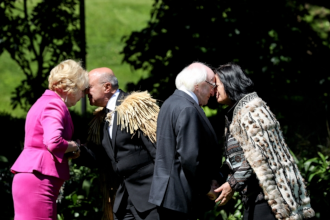
The President along with his wife Sabina Higgins meet with Governor-General Reddy and Sir David Gascoigne on the first day of their State visit to New Zealand.

According to a statement released by the President’s office, “the decision to establish an embassy reflects an exceptionally close partnership between Ireland and New Zealand in international affairs, including at the United Nations.” New Zealand also announces plans to open an embassy in Ireland.

Diplomatic relations between Ireland and New Zealand are established in 1965. Ireland’s Ambassador to Australia is also accredited to New Zealand. Niamh McMahon serves as Ireland’s Honorary Consul in Auckland, New Zealand.

The President visits Wellington, Christchurch, Auckland and Waitangi while in New Zealand, a country in which there are almost 14,000 Irish born people and one in six people claim Irish heritage.

President Higgins also meets with the prime minister-elect of New Zealand, Jacinda Ardern, who becomes the third woman to lead a government in her country.

(Pictured: President Michael D. Higgins and Sabina Higgins receive a traditional Maori welcome from Governor-General of New Zealand Dame Patsy Reddy and Sir David Gascoigne, Government House, Wellington)


Leave a comment

Birth of William Massey, New Zealand Prime Minister

william-ferguson-massey

William Ferguson Massey, New Zealand statesman, Prime Minister from 1912 to 1925, and founder of the Reform Party, is born in Limavady, County Derry in what is now Northern Ireland on March 26, 1856. He is a lifelong spokesman for agrarian interests and opponent of left-wing movements. His Reform Party ministries include leadership of the country during World War I.

The Massey family arrives in New Zealand on October 21, 1862, on board the Indian Empire as Nonconformist settlers, although William remains in Ireland for an additional eight years to complete his education. After arriving on December 10, 1870, on the City of Auckland, he works as a farmhand for some years before acquiring his own farm in Mangere, south Auckland, in 1876.

While managing his own farm, Massey assumes leadership in farmers’ organizations. He enters Parliament in 1894 as a conservative and from 1894 to 1912 is a leader of the conservative opposition to the Liberal ministries. He becomes prime minister in 1912 and promptly signs legislation enabling freeholders to buy their land at its original value. The first years of his ministry see labour strikes by miners in Waihi in 1912 and wharf workers in Wellington in 1913. His harsh repression of them give impetus to the formation of the Labour Party in 1916. He also improves federal administration by putting civil service positions under a nonpolitical commission.

A coalition with the Liberal Party led by Sir Joseph Ward enables Massey to continue his ministry in 1915. He participates in the Imperial War Cabinet (1917–18) and signs the Treaty of Versailles at the Paris Peace Conference of 1919, making New Zealand a founding member of the League of Nations. He opposes separate sovereign status for dominions within the British Commonwealth.

Following the war, farmers are troubled by depressed prices resulting from the sharply reduced British demand for their products, and they also face inflation in land prices, aggravated by increased demand for land by returning servicemen. Massey responds to these problems by establishing the Meat Control Board (1922) and the Dairy Export Control Board (1923), but rural and urban unrest resulting from rising prices continue to mount in the final years of his ministry.

In 1924 cancer forced Massey to relinquish many of his official duties, and he dies on May 10, 1925, at Wellington, New Zealand. The Massey Memorial is erected as his mausoleum in Wellington, paid for mostly by public subscription. Massey University is named after him, the name chosen because the university had a focus on agricultural science, matching Massey’s own farming background.


Leave a comment

Death of Anglican Priest & Author Patrick Brontë

File source: http://commons.wikimedia.org/wiki/File:Patrickbronte.jpg

Patrick Brontë, Irish Anglican priest and author who spends most of his adult life in England, dies in Haworth, Yorkshire, England on June 7, 1861. He is the father of the writers Charlotte, Emily, Anne and Branwell Brontë.

Brontë is the first of ten children born to Hugh Brunty, a farm labourer, and Alice McClory, in Drumballyroney, County Down. At one point in his adult life, he formally changes the spelling of his name from Brunty to Brontë.

Brontë has several apprenticeships until he becomes a teacher in 1798. He moves to England in 1802 to study theology at St. John’s College, Cambridge, and receives his BA degree in 1806. He is then appointed curate at Wethersfield, Essex, where he is ordained a deacon of the Church of England in 1806, and into the priesthood in 1807.

In 1809, Brontë becomes assistant curate at Wellington, Shropshire, and in 1810 his first published poem, Winter Evening Thoughts, appears in a local newspaper, followed in 1811 by a collection of moral verses, Cottage Poems. He moves to the West Riding of Yorkshire in 1811 as assistant curate at Hartshead, where he serves until 1815. In the meantime he is appointed a school examiner at a Wesleyan academy, Woodhouse Grove School, near Guiseley. In 1815 he moves again on becoming perpetual curate of Thornton. At Guiseley, Brontë meets Maria Branwell, whom he marries on December 29, 1812.

Brontë is offered the perpetual curacy of St. Michael and All Angels’ Church, Haworth in June 1819, and he takes the family there in April 1820. His sister-in-law Elizabeth Branwell, who had lived with the family at Thornton in 1815, joins the household in 1821 to help to look after the children and to care for Maria Brontë, who is suffering the final stages of uterine cancer. She decides to move permanently to Haworth to act as housekeeper.

After several attempts to seek a new spouse, Brontë comes to terms with widowhood at the age of 47, and spends his time visiting the sick and the poor, giving sermons, communion, and extreme unction, leaving his children alone with their aunt and a maid, Tabitha Aykroyd (Tabby), who tirelessly recounts local legends in her Yorkshire dialect while preparing the meals.

Brontë is responsible for the building of a Sunday school in Haworth, which he opens in 1832. He remains active in local causes into his old age, and between 1849 and 1850 organises action to procure a clean water supply for the village, which is eventually achieved in 1856.

In August 1846, Brontë travels to Manchester, accompanied by Charlotte, to undergo surgery on his eyes. On August 28 he is operated upon, without anaesthetic, to remove cataracts. Surgeons do not yet know how to use stitches to hold the incision in the eye together and as a consequence the patient is required to lie quietly in a darkened room for weeks after the operation. Charlotte uses her time in Manchester to begin writing Jane Eyre, the book which is to make her famous.

Following the death of his last surviving child, Charlotte, nine months after her marriage, he co-operates with Elizabeth Gaskell on the biography of his daughter. He is also responsible for the posthumous publication of Charlotte’s first novel, The Professor, in 1857. Charlotte’s husband, Arthur Bell Nicholls, who had been Brontë’s curate, stays in the household until he returns to Ireland after Brontë’s death, at the age of 84, on June 7, 1861. Brontë outlives not only his wife (by 40 years) but all six of his children.