seamus dubhghaill

Promoting Irish Culture and History from Little Rock, Arkansas, USA


Leave a comment

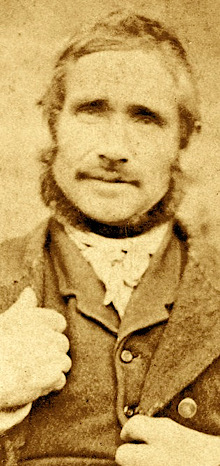
Death of Maolra Seoighe, Wrongly Convicted & Hanged

Maolra Seoighe (English: Myles Joyce), is an Irish man who is wrongfully convicted and hanged on December 15, 1882. He is found guilty of the Maumtrasna Murders and is sentenced to death. Though he can only speak Irish, the case is heard in English without any translation service. He is posthumously pardoned in 2018.

Seoighe is the most prominent figure in a controversial trial in 1882 that takes place while Ireland is part of the United Kingdom. Three Irish language speakers are condemned to death for the murder of a local family (John Joyce, his wife Brighid, his mother Mairéad, his daughter Peigí and son Mícheál) in Maumtrasna, on the border between County Mayo and County Galway. It is presumed by the authorities to be a local feud connected to sheep rustling and the Land War. Eight men are convicted on what turns out to be perjured evidence and three of them condemned to death: Maolra Seoighe (a father of five children), Pat Casey and Pat Joyce.

Covering the incident, The Spectator writes the following:

“The Tragedy at Maumtrasna, investigated this week in Dublin, almost unique as it is in the annals of the United Kingdom, brings out in strong relief two facts which Englishmen are too apt to forget. One is the existence in particular districts of Ireland of a class of peasants who are scarcely civilised beings, and approach far nearer to savages than any other white men; and the other is their extraordinary and exceptional gloominess of temper. In remote places of Ireland, especially in Connaught, on a few of the islands, and in one or two mountain districts, dwell cultivators who are in knowledge, in habits, and in the discipline of life no higher than Maories or other Polynesians.”

The court proceedings are carried out in a language the accused do not understand (English), with a solicitor from Trinity College Dublin (TCD), who does not speak Irish. The three are executed in Galway by William Marwood for the crime in 1882. The role of John Spencer, 5th Earl Spencer, who is then Lord Lieutenant of Ireland, is the most controversial aspect of the trial, leading most modern scholars to characterise it as a miscarriage of justice. Research carried out in The National Archives by Seán Ó Cuirreáin, has found that Spencer “compensated” three alleged eyewitnesses to the sum of £1,250, equivalent to €157,000 (by 2016 rates).

As of 2016, nobody has issued an apology or pardon for the executions, though the case has been periodically taken up by various political figures. The then MP for WestmeathTimothy Harrington, takes up the case, claiming that the Crown Prosecutor for the case George Bolton, had deliberately withheld evidence from the trial. In 2011, two sitting members of the House of Lords, the Liberal Democrat life peers David Alton and Eric Lubbock, request a review of the case. Crispin Blunt, Tory Parliamentary Under-Secretary of State for Prisons and Youth Justice, states that Seoighe was “probably an innocent man,” but he does not seek an official pardon.

Seoighe’s final words are: “Feicfidh mé Iosa Críost ar ball beag – crochadh eisean san éagóir chomh maith. … Ara, tá mé ag imeacht … Go bhfóire Dia ar mo bhean agus a cúigear dílleachtaí.” (I will be seeing Jesus Christ soon – he too was also unjustly hanged … I am leaving … the blessings of God on my wife and her five orphans.)

On April 4, 2018, Michael D. Higgins, the President of Ireland, issues a pardon on the advice of the government of Ireland saying “Maolra Seoighe was wrongly convicted of murder and was hanged for a crime that he did not commit”. It is the first presidential pardon relating to an event predating the foundation of the state in 1922 and the second time a pardon has been issued after an execution. Seoighe’s case is not an isolated one, and there are strong similarities with the case of Patrick Walsh who was hanged in the Galway jail on September 22, 1882, just three months before Seoighe for the murders of Martin and John Lydon. The same key players and political factors are active in both cases and his conviction is just as questionable as that of Seoighe.

In September 2009, the story is featured on RTÉ‘s CSI programme under an episode entitled CSI Maamtrasna Massacre. A dramatised Irish language film regarding the affair, entitled Murdair Mhám Trasna, produced by Ciarán Ó Cofaigh is released in 2017.

Leave a comment

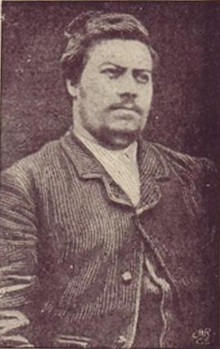
The Execution of Joe Brady

joe-brady

Joe Brady is hanged at Kilmainham Gaol in Kilmainham, Dublin on May 14, 1883 for the murder of Lord Frederick Cavendish in Phoenix Park, Dublin. Four others are also executed for the murders.

Brady is a member of the Irish National Invincibles, usually known as the Invincibles, a splinter group of the Irish Republican Brotherhood. This group of assassins is active in Dublin between late 1881 and 1883, with an intent to kill the authorities in Dublin Castle.

After numerous attempts on his life, Chief Secretary for Ireland William Edward “Buckshot” Forster resigns in protest of the Kilmainham Treaty. The Invincibles settle on a plan to kill the Permanent Under Secretary Thomas Henry Burke at the Irish Office. The newly installed Chief Secretary for Ireland, Lord Frederick Cavendish, is walking in Phoenix Park with Burke on Saturday, May 6, 1882, the day of his arrival in Ireland, when the assassins strike.

The first assassination in the park is committed by Brady, who attacks Burke with a 12-inch knife, followed in short order by Tim Kelly, who knifes Cavendish. Both men use surgical knives. The British press expresses outrage and demands that the “Phoenix Park Murderers” be brought to justice.

A large number of suspects are arrested. By playing one suspect against another, Superintendent Mallon of G Division of the Dublin Metropolitan Police gets several of them to reveal what they know. The Invincibles’ leader, James Carey, and Michael Kavanagh agree to testify against the others. Carey is ultimately given passage to South Africa but is shot on board the Melrose Castle by Patrick O’Donnell. O’Donnell is brought back to England and hanged in December 1883.

Brady, Michael Fagan, Thomas Caffrey, Dan Curley and Tim Kelly are hanged by William Marwood in Kilmainham Gaol in Dublin beginning with Brady’s execution on May 14 and and continuing until June 4. Others are sentenced to long prison terms.

No member of the founding executive, however, is ever brought to trial by the British government. John Walsh, Patrick Egan, John Sheridan, Frank Byrne, and Patrick Tynan are welcomed in the United States, where sentiment toward the murders is less severe, although not celebratory.

Brady by all accounts was a mountain of a man. The Times writes following his execution: “He was brought up as a stonemason of herculean strength, his occupation developing the muscular power of his arms, which told with such terrible effect when he drove the knives into the bodies of Lord Cavendish and his secretary T. H. Burke.”

Kilmainham Gaol contains the graves of the Invincibles convicted and executed for the Phoenix park stabbings.


Leave a comment

The Phoenix Park Murders

phoenix-park-murders

Lord Frederick Cavendish, newly appointed Chief Secretary for Ireland, and Thomas Henry Burke, the Permanent Undersecretary, are fatally stabbed in Phoenix Park, Dublin, on May 6, 1882 in what becomes known as the Phoenix Park Murders.

Cavendish, who is married to Lucy Cavendish, the niece of British Prime Minister William Ewart Gladstone, and has worked as Gladstone’s personal secretary, arrives in Ireland on the day he is murdered. Cavendish and Burke are attacked as they walk to the Viceregal Lodge, which is the out-of-season residence of the Lord Lieutenant of Ireland. Thomas Myles, resident surgeon at nearby Dr. Steevens’ Hospital, is summoned to render medical assistance to the victims. The then Lord Lieutenant, Lord Spencer, describes suddenly hearing screams, before witnessing a man running to the Lodge grounds shouting “Lord Frederick Cavendish and Mr. Burke are killed.” Responsibility for the assassinations is claimed by a small hitherto unheard-of Republican organisation called the Irish National Invincibles.

The hunt for the perpetrators is led by Superintendent John Mallon, a Catholic man from Armagh. Mallon has a pretty shrewd idea of who has committed the crime and suspects a number of former Fenian activists. A large number of suspects are arrested and kept in prison by claiming they are connected with other crimes. By playing one suspect against another, Mallon gets several of them to reveal what they know.

James Carey, leader of The Invincibles, Michael Kavanagh, and Joe Hanlon agree to testify against the others. Joe Brady, Michael Fagan, Thomas Caffrey, Dan Curley, and Tim Kelly are convicted of the murders and all are hanged by William Marwood in Kilmainham Gaol in Dublin between May 14 and June 9, 1883. Others, convicted as accessories to the crime, are sentenced to long prison terms. The getaway driver, James Fitzharris, is acquitted of murder but is retried as an accessory and convicted.

Only the case of Tim Kelly gives any real difficulty as he is only nineteen and generally said to look much younger. By referring to him as “a child” his defence counsel creates enough unease for two juries to disagree. He is found guilty only after an unprecedented third trial.

Charles Stewart Parnell makes a speech condemning the murders in 1882, which increases his already huge popularity in both Britain and Ireland. He has just enabled some reforms under the Kilmainham Treaty four days prior to the murders. Parnell’s reputation increases in Ireland, being seen as a more moderate reformer who would never excuse such tactics.

However, Parnell’s policy of allying his party to Gladstone’s Liberal Party in 1886 to enable Home Rule is also ultimately defeated by the murders. Gladstone’s Minister, Lord Hartington, is the elder brother of Lord Frederick Cavendish. Infuriated by the manner of his brother’s early death, Hartington splits with Gladstone on the Home Rule bills of 1886 and 1893 and leads the breakaway Liberal Unionist Association which allies itself to Lord Salisbury‘s conservative governments. In the ensuing 1886 general election, the Conservatives and Liberal Unionists sweep the board. This delays Home Rule by twenty-eight years, when the Third Irish Home Rule Bill is passed in 1914 but never effected.

In March 1887, The Times prints letters purportedly from Parnell claiming sympathy with the murderers and that his public denunciation of them was insincere. It emerges that the letters are forgeries written by journalist Richard Pigott. Parnell is personally vindicated by the Parnell Commission in 1888–89.