seamus dubhghaill

Promoting Irish Culture and History from Little Rock, Arkansas, USA


Leave a comment

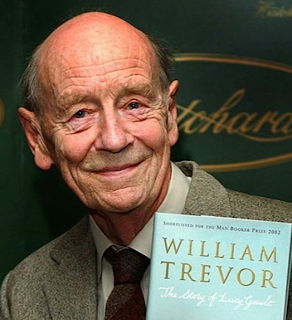
Death of William Trevor, Writer & Playwright

William Trevor Cox KBE, Irish novelist, playwright, and short story writer, dies in Crediton, Devon, England, on November 20, 2016. One of the elder statesmen of the Irish literary world, he is widely regarded as one of the greatest contemporary writers of short stories in the English language. He wins the Whitbread Prize three times and is nominated five times for the Booker Prize, the last for his novel Love and Summer (2009), which is also shortlisted for the International Dublin Literary Award in 2011. His name is also mentioned in relation to the Nobel Prize in Literature.

Trevor wins the 2008 International Nonino Prize in Italy. In 2014, he is bestowed with the title of Saoi within Aosdána. He resides in England from 1954 until his death in 2016, at the age of 88.

Trevor is born as William Trevor Cox on May 24, 1928, in Mitchelstown, County Cork, to a middle classAnglo-Irish Protestant (Church of Ireland) family. He moves several times to other provincial locations, including SkibbereenTipperaryYoughal and Enniscorthy, as a result of his father’s work as a bank official.

Trevor is educated at a succession of schools including St Columba’s College, Dublin (where he is taught by Oisín Kelly) and at Trinity College Dublin (TCD), from which he receives a degree in history. He works as a sculptor under the name Trevor Cox following his graduation from TCD, supplementing his income by teaching

Trevor marries Jane Ryan in 1952 and emigrates to England, working as a teacher, a sculptor and then as a copywriter for an advertising agency. During this time he and his wife have their first son. In 1952, he becomes an art teacher at Bilton Grange, a prep school near Rugby. He is commissioned to carve reliefs for several churches, including All Saints’ ChurchBraunstonNorthamptonshire. In 1956, he moves to Somerset to work as a sculptor and carries out commissions for churches. He stops wood carving in 1960. 

Trevor’s first novel, A Standard of Behaviour, is published in 1958 by Hutchinson & Co. of London, but receives little critical success. He later disowns this work, and, according to his obituary in The Irish Times, “refused to have it republished.” It is, in fact, republished in 1982 and in 1989.

In 1964, at the age of 36, Trevor is awarded the Hawthornden Prize for The Old Boys. This success encourages him to become a full-time writer.

In 1971, he and his family move from London to Devon in South West England, first to Dunkeswell, then in 1980 to Shobrooke, where he lives until his death. Despite having spent most of his life in England, he considers himself to be “Irish in every vein”.

Trevor dies peacefully in his sleep, at the age of 88, at Crediton, Devon, England, on November 20, 2016.

Leave a comment

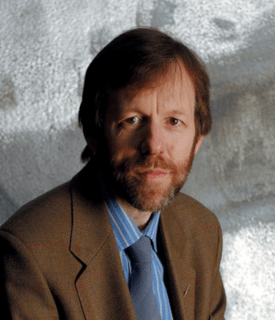
Death of Dennis O’Driscoll, Poet, Essayist, Critic and Editor

Dennis O’Driscoll, Irish poet, essayist, critic and editor, dies suddenly on December 24, 2012, in Naas, County Kildare. Regarded as one of the best European poets of his time, Eileen Battersby considers him “the lyric equivalent of William Trevor” and a better poet “by far” than Raymond Carver. Gerard Smyth regards him as “one of poetry’s true champions and certainly its most prodigious archivist.” His book on Seamus Heaney is regarded as the definitive biography of the Nobel laureate.

Born on January 1, 1954 in Thurles, County Tipperary, O’Driscoll is the child of James O’Driscoll and Catherine Lahart, a salesman/horticulturist and a homemaker. He is educated by the Congregation of Christian Brothers. After completing his secondary education in 1970 at the age of sixteen, he is offered a job at Ireland’s Office of the Revenue Commissioners, the internal revenue and customs service. Specializing in “death duties, stamp duties, and customs,” he is employed for over thirty years full-time. He lives in Naas, County Kildare, until his sudden death.

In the 1970s and 80s, O’Driscoll holds many part-time jobs and positions in association with his writing. He takes a position as part-time editor of Tax Briefing, a technical journal produced in Ireland, as well as reviewing poetry for Hibernia, and The Crane Bag. He also serves on the council of the Irish United Nations Association from 1975–80. After this, he marries Julie O’Callaghan, a poet and writer, in September 1985. He stays in the revenue business for as long as he does due to the advice of a colleague, who teels him, “If you ever leave your job, you will stop writing.” Thus, revenue becomes a sort of fall back option for him; a career that pays regularly and provides a pension. Whereas poetry is his art. Even so, in his memoir entitled, Sing for the Taxman, he states, “I have always regarded myself as a civil servant rather than a ‘poet’ or ‘artist’ – words I would find embarrassing and presumptuous to ascribe to myself.”

After thirty-eight years in Revenue, in early 2008, O’Driscoll is asked to write a poem marking the opening of the Revenue Museum in Dublin Castle, marking the first time his job and his art intermingle. This poem, At The Revenue Museum, which is originally brought to life to be printed in a program for the opening ceremony, now hangs as an exhibit in the museum itself.

Prior to the publication of his own poems, O’Driscoll publishes widely in journals and other print publications as both an essayist and poetry reviewer, for which he is very widely known. He writes nine books of poetry, three chapbooks, and two collections of essays and reviews. The majority of his works are characterised by the use of economic language and the recurring motifs of mortality and the fragility of everyday life. In 1987, he temporarily becomes a writer-in-residence at the National University of Ireland. He also serves for a short time as editor of Poetry Ireland Review.

O’Driscoll dies suddenly at the age of 58 on December 24, 2012. He is rushed to hospital after becoming ill but quickly succumbs to his fate. The arts world is shocked by his sudden demise. His wife and siblings – brothers Proinsias, Seamus, Declan, and sisters, Marie and Eithne – survive him.

President Michael D. Higgins notes that O’Driscoll is “held in the highest regard not only by all those associated with Irish and European poetry.” Joe Duffy, with whom O’Driscoll had appeared on air on the very week of his death, calls him a “generous, caring and witty man.” Fellow writer Belinda McKeon says he was “a scholar, a gentleman, a character, a friend.” English poet and critic David Morley describes him as a “fine poet and great critic.” Irish PEN mourns his death.


Leave a comment

Birth of William Trevor, Novelist, Playwright & Short Story Writer

William Trevor KBE, Irish novelist, playwright and short story writer, is born William Trevor Cox in Mitchelstown, County Cork, on May 24, 1928. One of the elder statesmen of the Irish literary world, he is widely regarded as one of the greatest contemporary writers of short stories in the English language.

Trevor is born to a middle-class, Anglo-Irish Protestant family. They move several times to other provincial towns, including Skibbereen, Tipperary, Youghal and Enniscorthy, as a result of his father’s work as a bank official. He is educated at St. Columba’s College, Dublin, and at Trinity College, Dublin, from which he receives a degree in history. He works as a sculptor under the name Trevor Cox after his graduation from Trinity College, supplementing his income by teaching. He marries Jane Ryan in 1952 and emigrates to Great Britain two years later, working as a copywriter for an advertising agency. It is during this time that he and his wife have their first son.

Trevor’s first novel, A Standard of Behaviour, is published in 1958 by Hutchinson of London, but has little critical success. He later disowns this work and, according to his obituary in The Irish Times, “refused to have it republished.” It was, in fact, republished in 1982 and in 1989.

In 1964, at the age of 36, Trevor wins the Hawthornden Prize for Literature for The Old Boys. The win encourages him to become a full-time writer. He and his family then move to Devon in South West England, where he resides until his death. In 2002, he makes honorary KBE for services to literature. Despite having spent most of his life in England, he considers himself to be “Irish in every vein.”

Trevor writes several collections of short stories that are well received. His short stories often follow a Chekhovian pattern. The characters in his work are typically marginalised members of society. The works of James Joyce influence his short-story writing, and “the odour of ashpits and old weeds and offal” can be detected in his work, but the overall impression is not of gloominess since, particularly in his early work, his wry humour offers the reader a tragicomic version of the world. He adapts much of his work for stage, television and radio. In 1990, Fools of Fortune is made into a film directed by Pat O’Connor, along with a 1999 film adaptation of Felicia’s Journey, which is directed by Atom Egoyan.

Trevor’s stories are set in both England and Ireland. They range from black comedies to tales based on Irish history and politics. His early books are peopled by eccentrics who speak in a pedantically formal manner and engage in hilariously comic activities that are recounted by a detached narrative voice. Instead of one central figure, the novels feature several protagonists of equal importance, drawn together by an institutional setting, which acts as a convergence point for their individual stories. The later novels are thematically and technically more complex. The operation of grace in the world is explored, and several narrative voices are used to view the same events from different angles.

Trevor wins the Whitbread Prize three times and is nominated five times for the Booker Prize, the last for his novel Love and Summer (2009), which is also shortlisted for the International Dublin Literary Award in 2011. His name is also mentioned in relation to the Nobel Prize in Literature. In 2014, he is bestowed Saoi by the Aosdána.

William Trevor dies peacefully in his sleep at the age of 88 on November 20, 2016, in Somerset, England.