Stewart grows up in Dublin. He begins playing guitar when he is thirteen, influenced by guitarists Les Paul and Barney Kessel. He begins his professional career performing in Dublin showbands. In 1968 he wins an award as best soloist at the Montreux Jazz Festival. Soon after, he spends three years with Benny Goodman.
In 1981, ahead of his debut in the United States as a leader, The New York Times states, “Mr. Stewart seems to have his musical roots in be-bop. He leans toward material associated with Charlie Parker and he spins out single note lines that flow with an unhurried grace, colored by sudden bright, lively chorded phrases. His up-tempo virtuosity is balanced by a laid-back approach to ballads, which catches the mood of the piece without sacrificing the rhythmic emphasis that keeps it moving.” In a review of Stewart’s 1995 album Overdrive, AllMusic states, “Louis Stewart is one of the all-time greats, and it is obvious from the first notes he plays on any occasion.”
Stewart receives an honorary doctorate from Trinity College, Dublin, in 1998. In 2009, he is elected to Aosdána, an Irish affiliation of people engaged in literature, music, and visual arts that was established by the Arts Council of Ireland in 1981 to honour those whose work has made an outstanding contribution to the creative arts in Ireland.
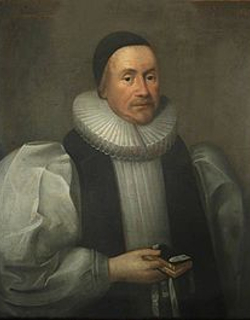
Early in life Ussher is determined to pursue a career with the Church of England, a resolve quite similar to that of the Biblical Judge, Samuel.
A gifted polyglot, Ussher enters Dublin Free School and then the newly founded Trinity College, Dublin on January 9, 1594, at the age of thirteen (not an unusual age at the time). He receives his Bachelor of Arts degree by 1598 and is a fellow and MA by 1600. In May 1602, he was ordained in the Trinity College Chapel as a deacon (and possibly priest on the same day) in the ProtestantChurch of Ireland by his uncle Henry Ussher, the Archbishop of Armagh and Primate of All Ireland.
At the age of 26, Ussher becomes Professor and Chairman of the Department of Divinity at Dublin University, and he holds his professorship from 1609 to 1621. In 1625, he becomes Archbishop of Armagh, an office he apparently holds until his death. In 1628, King James I makes him a Privy Councillor.
Ussher is considered well-read and well-versed in history, a subject that soon becomes his primary focus. He writes several histories of the doings of the Irish and English churches dating back to Roman times. He also makes himself an expert in Semitic languages, an expertise that informs his argument in favor of the Masoretic Text of the Bible in preference to the Septuagint.
Ussher’s Confessions appear in 1643, followed in 1646 by his fifth work, Here I Stand. His most famous work, the dating of the creation as calculated from the Biblical record, appears in writing in the 1650s.
In 1656, Ussher goes to stay in the Countess of Peterborough’s house in Reigate, Surrey. On March 19, he feels a sharp pain in his side after supper and takes to his bed. His symptoms seem to have been those of a severe internal haemorrhage. Two days later, on March 21, 1656, he dies at the age of 75. His last words are reported as: “O Lord, forgive me, especially my sins of omission.” His body is embalmed and is to have been buried in Reigate, but at Oliver Cromwell‘s insistence he was given a state funeral on April 17 and was buried in the chapel of St. Erasmus in Westminster Abbey.
Ussher’s extensive library of manuscripts, many of them Middle Eastern originals, become part of the collection at Dublin University.
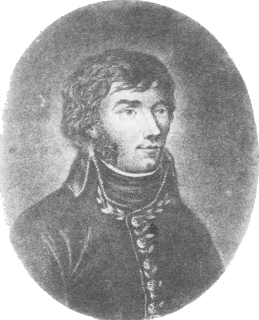
In 1794, after serving in the Army of the Coasts of Brest, Humbert serves under Louis Lazare Hoche in the Army of the Rhin-et-Moselle. Charged to prepare for an expedition against Ireland, he takes command of the Légion des Francs under Hoche, sailing in the ill-fated Expédition d’Irlande against Bantry Bay in 1796, and is engaged in actions at sea against the Royal Navy. Contrary weather and enemy action force this expedition to withdraw. The trip home ends in a naval battle, the Action of 13 January 1797, during which Humbert, on the French ship Droits de l’Homme (1794), narrowly escapes death. As the ship is destroyed and sinks, hundreds of men perish, but Humbert is among the last to escape.
On his return to France, Humbert serves in the Army of the Sambre-et-Meuse, before being appointed to command the troops in another attempt to support a rising in Ireland in 1798. His command chiefly consists of infantry of the 70th demi-brigade with a few artillerymen and some cavalry of the 3rd Hussars, however by the time he arrives off the Irish coast the United Irish rising has already suffered defeat. The expedition is able to land in Ireland at Killala on Thursday August 23, 1798, meeting with initial success in the Battle of Castlebar where he routs the Irish Militia. Humbert subsequently declares a Republic of Connacht, with hopes of taking Dublin. However, Humbert’s small force is defeated at the Battle of Ballinamuck by the Irish Royal Army, and he is taken as a prisoner of war by the authorities. The British send the French officers home in two frigates and then massacre their Irish supporters. Humbert makes no attempt to save the Irish who bravely supported him.
Humbert is shortly repatriated in a prisoner exchange and appointed in succession to the Armies of Mayence, Danube and Helvetia, with which he serves at the Second Battle of Zurich. He then embarks for Santo Domingo and participates in several Caribbean campaigns for Napoleon Bonaparte before being accused of plundering by General Brunet. It is also rumored that he engages in an affair with Pauline Bonaparte, the wife of his commanding officer Charles Leclerc. He is returned to France by order of General Leclerc in October 1802, for “prevarications, and liaison relationships with organisers of the inhabitants and with leaders of brigands.” A committed Republican, his displeasure at Napoleon’s Imperial pretensions lead to him being dismissed in 1803 and he retires to Morbihan in Brittany.
In 1810, after brief service in the Army of the North, Humbert emigrates to New Orleans, where he makes his acquaintance with French pirate Jean Lafitte. In 1813, Humbert joins the revolutionary Juan Bautista Mariano Picornell y Gomila in an unsuccessful attempt to foment rebellion in Spanish Mexico, but the effort fails. In 1814, Humbert again leaves New Orleans and joins the rebelling forces of Buenos Aires, briefly commanding a corps, before returning home. Humbert last fights the British at the Battle of New Orleans, as a volunteer private soldier in U.S. ranks, in the War of 1812, wearing his Napoleonic uniform. General Andrew Jackson thanks him for his assistance there after the American victory in January 1815. Thereafter Humbert lives peacefully as a schoolteacher until his death on January 3, 1823.
A monument to General Humbert depicting Mother Ireland stands on Humbert Street, Ballina, County Mayo. In 1989, sculptor Carmel Gallagher unveils a bust of General Humbert in Killala, Ireland, to mark the upcoming bicentennial of the Irish Rebellion of 1798.
A bronze life-size statue of Fungie, also known as the Dingle Dolphin, is unveiled in a special millennium ceremony in Dingle, County Kerry on January 2, 2000.
Fungie is a common bottlenose dolphin who lives in very close contact with humans in Dingle Bay. According to locals he is first seen in the harbour in 1983, and continues to seek out human contact over thirty years later. Dolphins have been known to live to 48 years of age. Fungie is a 13-foot male fully grown bottlenose dolphin weighing in at around 500 pounds.
Fungie is known to interact playfully with swimmers, surfers, kayakers and divers in the water. There have not been any recorded cases of Fungie being aggressive towards humans. Although it is normal for social animals like dolphins to live in close contact with each other, it is still a rare occurrence for them to seek out human contact, and Fungie is the first recorded occurrence of a dolphin interacting positively with humans in the wild in Ireland. Fungie has been observed eating garfish, something not previously known to be eaten by dolphins.
Benn’s grandfather, Jonn Benn, came from Cumberland about 1760 as engineer of the Newry Canal. His father, also John Benn (1767-1853), was proprietor of a brewery in Belfast. He is educated at the Belfast Academy, under Rev. Dr. Bruce and afterwards under Sheridan Knowles, then a teacher of English at Belfast. He enters the collegiate classes of the Royal Belfast Academical Institution in 1816, being one of the original alumni, and takes gold medals in logic (1817) and moral philosophy (1818).
In 1819 the faculty prize is offered for the “best account of a parish.” Benn is the successful essayist, with the parish of Belfast as his theme. He also gains in 1821 the faculty prize (The Crusades), and Dr. Tennant’s gold medal (Sketch of Irish Authors in the Seventeenth and Eighteenth Centuries). His essay of 1819 attracts the attention of James M’Knight, LL.D., then editor of the Belfast News-Letter who offers to print and publish it. It is issued anonymously in an enlarged form in 1823, with three maps and sixteen engravings by J. Thomson. For so young a writer it is a work of uncommon judgment and research, exceedingly well written, with an eye for scenery and a taste for economics as well as for antiquities. It is not superseded by Benn’s later labours.
Benn, with his brother Edward (1798- 1874), engages in distilling near Downpatrick. Subsequently the brothers spend the prime of their days on an estate they purchase at Glenravel, near Ballymena. Here, in an unimproved district, they plant the hillsides, plough the moors, build good houses, and collect a valuable library. They endeavour to create a new industry by an experiment in the manufacture of potato spirit, but excise regulations in place at the time frustrate their object. The cost of the experiment, and the losses from potato disease, induce the brothers to undertake a business in Liverpool for some years. Returning to Glenravel, a casual circumstance leads to a rich discovery of iron ore in the Glenravel hills. The first specimen is smelted in 1851 under Edward Benn’s direction. In 1866 an agreement is made with James Fisher, of Barrow-in-Furness, to work the mineral beds. Hence comes a new and valuable addition to the commercial products of Ulster, which has since attained important proportions.
Meanwhile, Edward Benn is contributing antiquarian articles to various journals and forming a fine archaeological collection, now in the Ulster Museum. It his proposed to George to resume and complete the history of Belfast. He modestly indicates, as more fit for the task, William Pinkerton, who collects some materials, but dies in 1871 without having begun the history. Pinkerton’s papers are submitted to Benn for publication, but he finds employment of them impracticable, and states in his preface to his history, “It is all my own work from beginning to end.”
Benn returns to Belfast after his brother’s death in 1874, publishing A History of the Town of Belfast in 1877. A second volume appears in 1880. This supplementary volume, though the proof-sheets are “corrected by a kind friend,” the late John Carlisle, head of the English department in the Royal Academical Institution, bears evidence of the author’s affecting statement: “Before I had proceeded very far, my sight entirely failed.” Benn dies on January 8, 1882.
Edward and George Benn are members of the nonsubscribing presbyterian body, but wide in their sympathies and broad in their charities beyond the limits of their sect. Edward is the founder, and George the benefactor, of three hospitals in Belfast and their gifts to educational institutions are munificent.


 A bronze life-size statue of
 seamus dubhghaill