
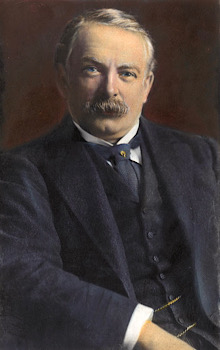
On July 23, 1920, the Lloyd George Coalition Government holds a Cabinet meeting in London, part of the post-war peacetime governance under a coalition mainly of Liberals and Conservatives, addressing issues of reconstruction, Ireland, and war reparations.
The Coalition Government, led by Prime Minister David Lloyd George, is in power from 1918 to 1922 following the end of World War I, continuing the wartime alliance that has included Liberals and Conservatives. By 1920, the Cabinet is navigating Spain’s post-war reconstruction, the political unrest in Ireland, social welfare issues, and economic stabilization following wartime disruption. This period also sees preparation for negotiations over Germany’s reparations and engagement with international diplomacy after the Treaty of Versailles.
During this period, in addition to Lloyd George, the peacetime Cabinet includes key ministers including Bonar Law (Chancellor of the Exchequer and Leader of the House of Commons), Austen Chamberlain (Chancellor of the Exchequer until January 1920; replaced by Sir Robert Horne on trade matters), Arthur Balfour (Secretary of State for Foreign Affairs), Winston Churchill (Secretary for War and Air) and George Curzon (Lord President of the Council and Leader of the House of Lords).
The Coalition Cabinet keeps detailed minutes and memoranda, which are recorded in the CAB 23 series as “Cabinet Conclusions,” starting from November 1919 into the interwar years. These records summarize discussions and decisions but are not verbatim transcriptions.
While the specific agenda for July 23 is not directly cited in the sources, relevant Cabinet business during July 1920 includes:
- Reconstruction and Post-War Economy: Addressing unemployment, social welfare of returning servicemen, and government budgetary priorities.
- Ireland and Home Rule Legislation: Oversight of the Government of Ireland Act 1920, which has received royal assent earlier in the year, establishing separate parliaments for Northern and Southern Ireland.
- International Diplomacy and Reparations: Review of ongoing negotiations concerning German reparations after World War I, potentially preparing for discussions later in London and Paris.
Regarding Ireland, the Cabinet is divided on how to proceed. Some Liberal ministers and Dublin Castle officials are in favour of offering dominion status to Ireland. Conservative ministers argue that the Government must crush the insurgency and proceed with the Government of Ireland Bill. Debate continues after the meeting, with Walter Long warning of “the gravest consequences in Ulster” if the Government changes course.
In summary, the Coalition Cabinet convenes on July 23, 1920, in the context of post-war governance, with ministers like Lloyd George, Bonar Law, Curzon, Balfour, and Churchill participating. While exact meeting details require consulting official CAB series records, the issues at hand involve post-World War I economic recovery, Irish affairs, and international obligations stemming from the Treaty of Versailles.
(Pictured: Prime Minister of the United Kingdom David Lloyd George)


