seamus dubhghaill

Promoting Irish Culture and History from Little Rock, Arkansas, USA


Leave a comment

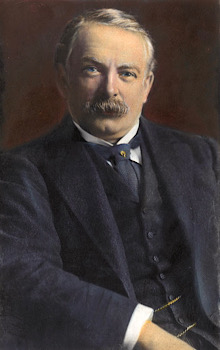
Coalition Government’s Cabinet Meets in London

On July 23, 1920, the Lloyd George Coalition Government holds a Cabinet meeting in London, part of the post-war peacetime governance under a coalition mainly of Liberals and Conservatives, addressing issues of reconstruction, Ireland, and war reparations.

The Coalition Government, led by Prime Minister David Lloyd George, is in power from 1918 to 1922 following the end of World War I, continuing the wartime alliance that has included Liberals and Conservatives. By 1920, the Cabinet is navigating Spain’s post-war reconstruction, the political unrest in Ireland, social welfare issues, and economic stabilization following wartime disruption. This period also sees preparation for negotiations over Germany’s reparations and engagement with international diplomacy after the Treaty of Versailles.

During this period, in addition to Lloyd George, the peacetime Cabinet includes key ministers including Bonar Law (Chancellor of the Exchequer and Leader of the House of Commons), Austen Chamberlain (Chancellor of the Exchequer until January 1920; replaced by Sir Robert Horne on trade matters), Arthur Balfour (Secretary of State for Foreign Affairs), Winston Churchill (Secretary for War and Air) and George Curzon (Lord President of the Council and Leader of the House of Lords).

The Coalition Cabinet keeps detailed minutes and memoranda, which are recorded in the CAB 23 series as “Cabinet Conclusions,” starting from November 1919 into the interwar years. These records summarize discussions and decisions but are not verbatim transcriptions.

While the specific agenda for July 23 is not directly cited in the sources, relevant Cabinet business during July 1920 includes:

  1. Reconstruction and Post-War Economy: Addressing unemployment, social welfare of returning servicemen, and government budgetary priorities.
  2. Ireland and Home Rule Legislation: Oversight of the Government of Ireland Act 1920, which has received royal assent earlier in the year, establishing separate parliaments for Northern and Southern Ireland.
  3. International Diplomacy and Reparations: Review of ongoing negotiations concerning German reparations after World War I, potentially preparing for discussions later in London and Paris.

Regarding Ireland, the Cabinet is divided on how to proceed. Some Liberal ministers and Dublin Castle officials are in favour of offering dominion status to Ireland. Conservative ministers argue that the Government must crush the insurgency and proceed with the Government of Ireland Bill. Debate continues after the meeting, with Walter Long warning of “the gravest consequences in Ulster” if the Government changes course.

In summary, the Coalition Cabinet convenes on July 23, 1920, in the context of post-war governance, with ministers like Lloyd George, Bonar Law, Curzon, Balfour, and Churchill participating. While exact meeting details require consulting official CAB series records, the issues at hand involve post-World War I economic recovery, Irish affairs, and international obligations stemming from the Treaty of Versailles.

(Pictured: Prime Minister of the United Kingdom David Lloyd George)


Leave a comment

Birth of Robert Stewart, 2nd Marquess of Londonderry

Robert Stewart, 2nd Marquess of Londonderry, KG, GCH, PC, PC (Ire), Anglo-Irish politician and statesman usually known as Lord Castlereagh, derived from the courtesy title Viscount Castlereagh by which he is styled from 1796 to 1821, is born in Dublin on June 18, 1769. As secretary to the Viceroy of Ireland, he works to suppress the Irish Rebellion of 1798 and to secure passage in 1800 of the Irish Act of Union. As the Foreign Secretary of the United Kingdom from 1812, he is central to the management of the coalition that defeats Napoleon and is British plenipotentiary at the Congress of Vienna. In the post-war government of Lord Liverpool, he is seen to support harsh measures against agitation for reform.

Stewart is born in 28 Henry Street, in Dublin’s Northside. He is the second and only surviving child of Robert Stewart (the elder) and his wife Sarah Frances Seymour-Conway. His parents marry in 1766. He has recurring health problems throughout his childhood, and is sent to The Royal School, Armagh, rather than to England for his secondary education. At the encouragement of Charles Pratt, 1st Earl Camden, who takes a great interest in him and treats him as if he is a grandson by blood, he later attends St. John’s College, Cambridge (1786–87), where he applies himself with greater diligence than expected from an aristocrat and excels in his first-year examinations. But he then withdraws, pleading an illness that he admits to Camden is something “which cannot be directly acknowledged before women,” i.e. something sexually transmitted.

Early in his career in Ireland, and following a visit to revolutionary France, Stewart recoils from the democratic politics of his Presbyterian constituents in Ulster. Crossing the floor of the Irish House of Commons in support of the government, he takes a leading role in detaining members of the republican conspiracy, the United Irishmen, his former political associates among them. After the 1798 Rebellion, as Chief Secretary for Ireland, he pushes the Act of Union through the Irish Parliament. But it is without the Catholic Emancipation that both he and British Prime Minister William Pitt believe should have accompanied the creation of a United Kingdom.

From 1805 Stewart serves under Pitt and then the Duke of Portland as Secretary of State for War. In 1809 he is obliged to resign after fighting a duel with the Foreign Secretary, George Canning, in a dispute over the Walcheren Campaign. In 1812 he returns to government serving Lord Liverpool as Foreign Secretary and as Leader of the House of Commons.

Stewart organises and finances the alliance that defeats Napoleon, bringing the powers together at the Treaty of Chaumont in 1814. After Napoleon’s second abdication in 1815, he works with the European courts represented at the Congress of Vienna to frame the territorial, and broadly conservative, continental order that holds until mid-century. He blocks harsh terms against France believing that a treaty based on vengeance and retaliation will upset a necessary balance of powers. France is restored to the frontiers of 1791, and her British-occupied colonies are returned. In 1820 Stewart enunciates a policy of non-intervention, proposing that Britain hold herself aloof from continental affairs.

After 1815, at home, Stewart supports repressive measures that link him in public opinion to the Peterloo Massacre of 1819. Widely reviled in both Ireland and Great Britain, overworked, and personally distressed, he commits suicide on August 12, 1822. He is found in a dressing room seconds after he has cut his own throat using a small knife. He collapses and dies almost instantly.

(Pictured: “Robert Stewart, 2nd Marquess of Londonderry,” oil on canvas by Thomas Lawrence, National Portrait Gallery)