
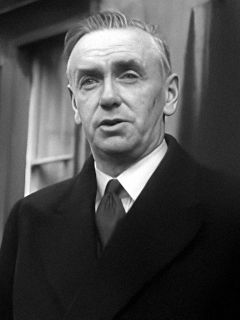
On September 7, 1948, Taoiseach John A. Costello makes a surprise announcement in Ottawa that the Irish Free State will become a republic and sever all remaining dominion ties with Great Britain. This comes after months of political maneuvering and public debate over Ireland’s constitutional status.
The Executive Authority (External Relations) Act 1936 has removed most internal references to the Crown but retains a symbolic role for the British monarch in Ireland’s external relations. This is Ireland’s last formal link to the British Commonwealth. Éamon de Valera has long argued that the Act provides a diplomatic “umbrella” for resolving Anglo-Irish disputes, including Northern Ireland’s status.
By 1947, de Valera’s government has begun drafting legislation to repeal the Act. Initially, the bill does not mention a republic, but by January 1948 it includes a reference to the state as a republic. Costello, as Taoiseach, introduces the bill in November 1948, citing irritation over the British invitation to King George VI to open the Canadian Parliament — seen as a slight to Irish sovereignty.
On September 7, 1948, Costello tells reporters in Ottawa that Ireland will repeal the External Relations Act, thereby ending the Crown’s role in Irish external affairs. The British government is not informed until a month later, and relations remain cordial until Ireland formally leaves the Commonwealth in April 1949.
The Republic of Ireland Act 1948 is passed by the Oireachtas in December 1948 and signed by President Seán T. O’Kelly on December 21, 1948. It repeals the External Relations Act 1936, declares the state’s description as the Republic of Ireland and vests executive power in the President for external relations on the advice of the Government. The Act takes effect on April 18, 1949 (Easter Monday), marking the symbolic completion of Ireland’s transition from dominion to republic.
The Parliament of the United Kingdom passes the Ireland Act 1949, acknowledging Ireland’s new status, preserving Northern Ireland’s constitutional position, and maintaining rights of Irish citizens in Britain. This ensures continuity in trade, travel, and citizenship without major disruption.
The significance of the 1948–1949 process is a definitive assertion of Irish sovereignty, aligning Ireland’s legal framework with its de facto republican governance. It ends the last constitutional vestige of the British monarchy in Ireland and marks Ireland’s formal departure from the Commonwealth.
(Pictured: Taoiseach John Aloysius Costello)


