seamus dubhghaill

Promoting Irish Culture and History from Little Rock, Arkansas, USA


Leave a comment

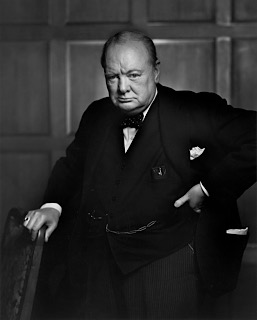
Winston Churchill’s House of Commons Speech on Irish Ports

On November 5, 1940, British Prime Minister Winston Churchill addresses the House of Commons of the United Kingdom to report on Britain’s wartime situation after six months in office. While the speech’s main focus is on the resilience of British cities and the ongoing Battle of Britain, he does note the loss of certain overseas ports, including Irish ones, as part of the broader context of Allied shipping losses and strategic vulnerability, bemoaning the fact that the Irish ports had been returned to the Republic of Ireland government in 1938.

Churchill becomes Prime Minister on May 10, 1940, following the fall of France and the evacuation at Dunkirk. By late November, Britain is engaged in the Battle of Britain, with the Luftwaffe targeting industrial centres and ports across the country. The night before the speech, November 4, is the first night in eight weeks without air raids over London, but the Luftwaffe has shifted focus to other strategic locations.

While the Hansard record for November 5, 1940 does not list Irish ports by name, Churchill’s remarks on shipping losses and the vulnerability of ports are part of his broader assessment of the war’s impact on Britain’s global trade and naval operations. “The fact that we cannot use the South and West Coasts of Ireland to refuel our flotillas and aircraft and thus protect the trade by which Ireland as well as Great Britain lives, is a most heavy and grievous burden and one which should never have been placed on our shoulders, broad though they be.”

The loss of Irish ports are relevant because:

  • Ireland’s ports, such as Dublin, Cork, and Limerick, are key to Allied supply lines in the Atlantic.
  • Their vulnerability to German U-boat attacks and air raids is a growing concern as the Battle of the Atlantic intensifies.
  • Churchill’s speech reflects the reality that many ports—both British and Allied—are under threat, disrupting supply chains and naval operations.

In his address, Churchill addresses the broader wartime situation:

  • Civilian casualties of 14,000 killed, 20,000 wounded, mostly in London.
  • Military losses of approximately 300 killed and 500 wounded.
  • Minimal infrastructure damage to vital services like water, fuel, electricity, and gas.
  • There are challenges in transportation but they are improving.
  • Extensive plans are underway for shelters and winter preparations.

The mention of Irish ports in Churchill’s speech underscores the global nature of the war and the strategic importance of Ireland as a neutral but vital Allied base. The loss of such ports would have implications for naval operations, supply routes, and Britain’s ability to sustain its war effort.

To read the full text of Churchill’s November 5, 1940 speech, it is preserved in the National Churchill Museum’s 1940 speeches collection and in the UK Parliament’s Hansard archives.


Leave a comment

The Droppin’ Well Bombing

The Droppin’ Well bombing or Ballykelly bombing occurs on December 6, 1982, when the Irish National Liberation Army (INLA) explodes a time bomb at a disco in Ballykelly, County Londonderry, Northern Ireland. The disco, known as the Droppin’ Well, is targeted because it is frequented by British Army soldiers from nearby Shackleton Barracks. The bomb kills eleven soldiers and six civilians and 30 people are injured, making it the most deadly attack during the INLA’s paramilitary campaign and the most deadly attack during The Troubles carried out in County Londonderry.

The bomb is manufactured by the INLA in nearby Derry. One of those involved later reveals that the INLA unit had carried out reconnaissance missions to the Droppin’ Well to see if there were enough soldiers to justify the likelihood of civilian casualties.

On the evening of December 6, 1982, an INLA member leaves a bomb inside the pub. There are about 150 people inside. The Royal Ulster Constabulary (RUC) believe that the bomb, estimated to be 5 to 10 pounds of commercial (Frangex) explosives, is small enough to fit into a handbag. It has, however, been left beside a support pillar and, when it explodes at about 11:15 PM, the blast brings down the roof. Many of those killed and injured are crushed by fallen masonry.

Following the blast, it takes a few hours to pull survivors from the rubble. The last survivor is freed at 4:00 AM, but it is not until 10:30 AM that the last of the bodies is recovered. Ultimately, 17 people die and 30 are injured, some seriously. Five of the civilians are young women and three (Alan Callaghan, Valerie McIntyre and Angela Maria Hoole) are teenagers. Angela Hoole is celebrating her engagement to one of the soldiers who survives the incident. Of the eleven soldiers who die, eight are from the 1st Battalion Cheshire Regiment, two from the Army Catering Corps and one from The Light Infantry. One of those on the scene is Bob Stewart, then a company commander in the Cheshire Regiment. He loses six soldiers from his company and is deeply affected as he tends to the dead and injured.

Suspicion immediately falls upon the Provisional Irish Republican Army (IRA), who denies involvement. By December 8, the British Army is blaming the INLA on grounds that the IRA, in a mixed village, would have made greater efforts not to risk killing civilians. Shortly afterwards, the INLA issues a statement of responsibility.

The INLA describes the civilians killed as “consorts.” The attack is criticised by many on both sides of the conflict in Northern Ireland due to the high loss of civilian lives. Soon after the INLA had issued its statement, the government of the Republic of Ireland bans the INLA, making membership punishable by seven years imprisonment.

In an interview after the bombing, INLA leader Dominic McGlinchey says that the Droppin’ Well’s owner had been warned six times to stop offering entertainment to British soldiers. He adds that the owner, and those who socialise with the soldiers, “knew full well that the warnings had been given and that the place was going to be bombed at some stage.” It later emerges that the INLA may also have targeted Ballykelly because it believed that the military base was part of NATO‘s radar and communications network.

Six days after the bombing, RUC officers shoot dead INLA members Seamus Grew and Roddie Carroll near a vehicle checkpoint in Armagh. The officers say they believed that the two men were ferrying McGlinchey into Northern Ireland. Neither was armed, nor was McGlinchey in their car.

In June 1986, four INLA members, sisters Anna Moore and Helena Semple, Eamon Moore (no blood relation) and Patrick Shotter, receive life sentences for the attack. Anna Moore later marries loyalist Bobby Corry while both are in prison. Anna’s daughter, Jacqueline Moore, is given ten years for manslaughter as the court believes she had been coerced into involvement. She is pregnant during her arrest and later gives birth in jail. All of those convicted are from Derry.

(Pictured: The Droppin’ Well bar and disco in Ballykelly destroyed by a Irish National Liberation Army bomb in 1982. Credit: PA Wire)