seamus dubhghaill

Promoting Irish Culture and History from Little Rock, Arkansas, USA


Leave a comment

Birth of Playwright George Bernard Shaw

george-bernard-shaw

George Bernard Shaw, Irish playwright, critic, and polemicist, is born on July 26, 1856, at 3 Upper Synge Street in Portobello, a lower-middle-class area of Dublin. Shaw’s influence on Western theatre, culture, and politics extends from the 1880s to his death and beyond.

Shaw writes more than sixty plays, including major works such as Man and Superman (1902), Pygmalion (1912) and Saint Joan (1923). With a range incorporating both contemporary satire and historical allegory, Shaw becomes the leading dramatist of his generation, and in 1925 is awarded the Nobel Prize in Literature.

Shaw moves to London in 1876, where he struggles to establish himself as a writer and novelist and embarks on a rigorous process of self-education. By the mid-1880s he has become a respected theatre and music critic. Following a political awakening, he joins the gradualist Fabian Society and becomes its most prominent pamphleteer. Shaw has been writing plays for years before his first public success, Arms and the Man in 1894. Influenced by Henrik Ibsen, he seeks to introduce a new realism into English-language drama, using his plays as vehicles to disseminate his political, social, and religious ideas. By the early twentieth century his reputation as a dramatist is secured with a series of critical and popular successes that include Major Barbara, The Doctor’s Dilemma, and Caesar and Cleopatra.

Shaw’s expressed views are often contentious. He promotes eugenics and alphabet reform and opposes vaccination and organised religion. He courts unpopularity by denouncing both sides in World War I as equally culpable, and although not a republican, castigates British policy on Ireland in the postwar period. These stances have no lasting effect on his standing or productivity as a dramatist.

The inter-war years see a series of often ambitious plays, which achieve varying degrees of popular success. In 1938 he provides the screenplay for a filmed version of Pygmalion for which he receives an Academy Award. His appetite for politics and controversy remains undiminished. By the late 1920s he has largely renounced Fabian gradualism and often writes and speaks favourably of dictatorships of the right and left — he expresses admiration for both Mussolini and Stalin. In the final decade of his life, he makes fewer public statements but continues to write prolifically until shortly before his death, refusing all state honours including the Order of Merit in 1946.

During his later years, Shaw enjoys tending the gardens at Shaw’s Corner. He dies on November 2, 1950, at the age of 94 of renal failure precipitated by injuries incurred when falling while pruning a tree. His body is cremated at Golders Green Crematorium on November 6, 1950. His ashes, mixed with those of his wife Charlotte, are scattered along footpaths and around the statue of Saint Joan in their garden.

Since Shaw’s death scholarly and critical opinion has varied about his works, but he has regularly been rated as second only to Shakespeare among English-language dramatists. Analysts recognise his extensive influence on generations of playwrights. The word “Shavian” has entered the language as encapsulating Shaw’s ideas and his means of expressing them.


Leave a comment

The Peace Preservation Force is Established

robert-peel

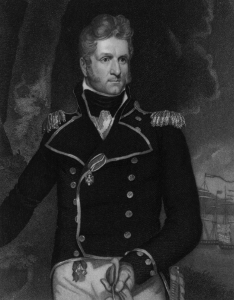
Robert Peel (pictured), chief secretary of Ireland (1812-18), establishes the Peace Preservation Force to counter rural unrest on July 25, 1814. This rudimentary paramilitary police force is designed to provide policing in rural Ireland, replacing the 18th century system of watchmen, baronial constables, revenue officers, and British military forces.

Peel masterminds Act 54, George III, c.131, which is passed on July 25, 1814, to “provide for the better execution of the Laws in Ireland, by appointing Superintending Magistrates and additional Constables in Counties in certain cases.” On foot of this Act, Peel forms the Peace Preservation Force.

The Peace Preservation Force is at the disposal of the Lord Lieutenant of Ireland for use in any district that has been “proclaimed” in a disturbed area. The first resident magistrates are appointed under the 1814 Act.

Sir Richard Willcocks, a former Dublin Magistrate and Special Government Magistrate, is the first appointed Chief Magistrate of the Peace Preservation Force and is allocated to the Barony of Middlethird, County Tipperary, with twenty constables who are ex-cavalry sergeants operating from a base at Cashel. He is appointed Inspector General of Munster and Stipendiary Magistrate. He dies in Dublin and is buried in Chapelizod Church of Ireland Cemetery.

The cost of the Peace Preservation Force operation has to be paid for by the area “proclaimed,” and when tranquility is restored the force will be either withdrawn or disbanded. Between 1814 and 1922 a total of four members of the Peace Preservation Force are killed on duty, namely, Sub Constable Thomas Manning is shot dead on August 16, 1821 when his patrol challenges a gang of insurgents; Chief Police Magistrate Richard Going, is shot dead on October 14, 1821 by a gang of four men while out riding; Sub Constable Hugh Colligan is killed on January 31, 1822 when his barracks are attacked; Sub Constable Thomas Knox is killed on March 10, 1822 while on sick leave and is identified as a policeman.


Leave a comment

Death of John Moore Neligan, Physician & Medical Teacher

atlas-of-cutaneous-diseases

John Moore Neligan, one of the foremost physicians and medical teachers of his day, dies on July 24, 1863. Neligan, son of a medical practitioner, is born at Clonmel, County Tipperary, in 1815. He graduates M.D. at Edinburgh in 1836, and begins practice in his birthplace. He later moves to Cork, where he lectures on materia medica and medical botany in a private school of anatomy, medicine, and surgery in Warren’s Place.

In 1840 he takes a house in Dublin, and in 1841 is appointed physician to the Jervis Street Hospital. He also gives lectures on materia medica from 1841 to 1846, and on medicine from 1846 to 1857, in the Dublin school of Peter Street. He publishes in 1844 Medicines, their Uses and Mode of Administration, which gives an account of all the drugs mentioned in the London, Scottish, and Irish pharmacopœias, and of some others. Their sources, medicinal actions, doses, and most useful compounds are clearly stated. The compilation, though containing no original matter, is useful to medical practitioners, and goes through many editions.

Neligan enjoys the friendship of Robert James Graves, the famous lecturer on medicine, and in 1848 edits the second edition of his Clinical Lectures on the Practice of Medicine. In the same year he publishes The Diagnosis and Treatment of Eruptive Diseases of the Scalp, which is printed at the Dublin University Press. He describes as inflammatory diseases herpes, eczema, impetigo, and pityriasis, and as non-inflammatory porrigo, and gives a lucid statement of their characteristics in tabular form. He is unaware, however, of the parasitic nature of herpes capitis, as he calls ringworm, and seems not to have noticed the frequent relation between eczema of the occiput and animal parasites.

From 1849 to 1861 he edits the Dublin Quarterly Journal of Medical Science, and publishes many medical papers of his own in it. In 1852 he publishes A Practical Treatise on Diseases of the Skin, and, like most men who attain notoriety as dermatologists, issues in 1855 a coloured Atlas of Skin Diseases. His treatise is a compilation from standard authors, with a very small addition from his own experience. The subject is well arranged, and so set forth as to be useful to practitioners. It is much read, and leads to his treating many patients with cutaneous affections.

Neligan suffers from kidney disease in his final years. On July 17, he begins to feel unwell and returns to his country residence, Clonmel House, and goes to bed, from which he never rises again. Over the next few days his kidneys ceased to function altogether and he slips into a coma. John Moore Neligan dies on July 24, 1863.


Leave a comment

St. Vincent’s Hospital Opens on St. Stephen’s Green, Dublin

st-vincents-hospital-dublin

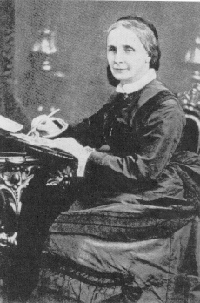
St. Vincent’s Hospital, a teaching hospital currently located at Elm Park, south of the city of Dublin, opens on July 23, 1834, at its original location on St. Stephen’s Green, Dublin. The hospital is founded by Mother Mary Aikenhead, foundress of the Roman Catholic order Religious Sisters of Charity. It is open to all who can afford its services, irrespective of their religious persuasion.

The hospital subsequently moves to its current site in Elm Park in 1970, and in 1999 is renamed St. Vincent’s University Hospital (SVUH), to highlight its position as a principal teaching hospital of University College Dublin (UCD).

Today St. Vincent’s University Hospital serves as a regional centre for emergency medicine and medical care at an inpatient and outpatient level. Many patients from regional and tertiary hospitals are referred to SVUH for specialist care, and it is the national referral centre for liver transplantation and adult cystic fibrosis. Tied closely to the University, it serves as a training ground for doctors, nurses, radiographers and physiotherapists, teaching students from UCD’s undergraduate degree courses.

The hospital provides in excess of forty medical, surgical, and allied specialities, and has 479 in-patient suites, incorporating 7-day, 5-day, and day care. A major multimillion-euro extension building is completed in 2005 and officially opens in 2006. This development contains a new emergency department, endoscopy department, outpatient clinics, intensive care unit, diagnostic laboratories and operating theatres, as well as a state-of-the-art radiology department (incorporating Multislice CT-Scanners, Nuclear Medicine and MRI).

The on-campus Education & Research Centre serves as home to a number of research groups allied to clinical departments within the hospital including the Centre for Colorectal Disease, the National Liver Transplant Unit, and the Department of Rheumatology, and maintains close academic links to nearby UCD.


Leave a comment

Pádraig Harrington Wins the 2007 Open Championship

padraig-harrington

Pádraig Harrington of Dublin becomes the first Irish golfer to win the British Open in 60 years on July 22, 2007, when he snatches victory from the jaws of defeat at Carnoustie Golf Links in Scotland.

At the 2007 Open Championship, Harrington defeats Sergio García in a four-hole playoff at Carnoustie, becoming the first Irishman to win The Open Championship in 60 years, and the first ever from the Republic of Ireland. Both players go into the playoff having shot a 7-under 277 for the championship. Harrington subsequently wins by one stroke in the playoff.

Harrington is the first European golfer to secure a major victory since Paul Lawrie on the same course in 1999 and Ireland’s first since Fred Daly in 1947. President Mary McAleese is the first to convey her congratulations to Harrington, while Labour sports spokesman Jack Wall says, “Pádraig Harrington’s magnificent victory in the Open without doubt represents one of the greatest days in the history of Irish sport.”

A year later at the 2008 Open Championship, it is unclear if Harrington would get a chance to defend his Open title at Royal Birkdale Golf Club as eight days prior to the event he injures his wrist. However, he successfully defends his title, overcoming a 2-shot deficit to Greg Norman with a final round 69. He shoots a four-under-par 32 on the back nine, which enables him to pull away from Norman and Ian Poulter. His eagle on the par-5 17th all but seals the tournament. He is the first European golfer since James Braid in 1906 to retain the Claret Jug. The win moves him from fourteenth to third in the world rankings, behind only Tiger Woods and Phil Mickelson.

Just three weeks after winning the 2008 Open Championship, Harrington wins the PGA Championship over the South Course of the Oakland Hills Country Club, for his third major. Although at five over par after two rounds, he shoots eight under par for the weekend, carding successive scores of 66 in both the third and fourth rounds. His three under par 277 is two shots ahead of Sergio García and Ben Curtis. Harrington becomes the first European to win the PGA Championship since Tommy Armour in 1930 and is the first winner from Ireland.

Harrington’s victory in the PGA Championship secures his position as the number one player in Europe, earning him a spot in the 2008 European Ryder Cup team under captain Nick Faldo.


Leave a comment

Bloody Friday in Belfast

bloody-friday-1972

At least twenty Provisional Irish Republican Army (IRA) bombs explode in Belfast on July 21, 1972, during the Troubles in what has become known as “Bloody Friday.” Most of the bombs are car bombs and most target infrastructure, especially the transport network. Nine people are killed, including two British soldiers and five civilians, while 130 are injured.

In late June and early July 1972, a British government delegation led by William Whitelaw holds secret talks with the Provisional IRA leadership. As part of the talks, the IRA agrees to a temporary ceasefire beginning on June 26. The IRA leaders seek a peace settlement that includes a British withdrawal from Northern Ireland by 1975 and the release of republican prisoners. However, the British refuse and the talks break down. The ceasefire comes to an end on July 9.

Bloody Friday is the IRA’s response to the breakdown of the talks. According to the IRA’s Chief of Staff, Seán Mac Stíofáin, the main goal of the bombing operation is to wreak financial harm. It is a “message to the British government that the IRA could and would make a commercial desert of the city unless its demands were met.” Some also see it as a reprisal for Bloody Sunday in Derry six months earlier. The attack is carried out by the IRA’s Belfast Brigade and the main organiser is Brendan Hughes, the brigade’s Officer Commanding.

The bombings occur during an 80-minute period on the afternoon of Friday, July 21. At least 24 bombs are planted. At least 20 explode and the rest fail to detonate or are defused. At the height of the bombing, the middle of Belfast “resembled a city under artillery fire; clouds of suffocating smoke enveloped buildings as one explosion followed another, almost drowning out the hysterical screams of panicked shoppers.” According to The Guardian, “for much of the afternoon, Belfast was reduced to near total chaos and panic. Thousands streamed out of the stricken city…and huge traffic jams built up. All bus services were cancelled, and on some roads, hitchhikers frantically trying to get away lined the pavements.”

Nine people are killed and 130 are injured, some of them horrifically mutilated. Of those injured, 77 are women and children. All of the deaths are caused by two of the bombs – at Oxford Street bus depot and at Cavehill Road. The Oxford Street bomb kills two British soldiers and four Ulsterbus employees. One employee is a Royal Ulster Constabulary (RUC) reservist, one is an Ulster loyalist paramilitary, and the other two are civilians. The Cavehill Road bomb kills three civilians.

The IRA’s Belfast Brigade claims responsibility for the bombings and says that it had given warnings to the security forces before the bombs exploded. It says that the Public Protection Agency, the Samaritans and the press “were informed of bomb positions at least 30 minutes to one hour before each explosion.” Mac Stíofáin says, “It required only one man with a loud hailer to clear each target area in no time” and alleged that the warnings for the two bombs that claim lives are deliberately ignored by the British for “strategic policy reasons.”


Leave a comment

Birth of “Jem” Finer, Founding Member of The Pogues

jem-finerJeremy Max “Jem” Finer, English musician, artist, composer, and one of the founding members of The Pogues, is born in Stoke-on-Trent, England on July 20, 1955.

After college at Keele University, Finer travels around Europe and spends some time working on a barge in France. He settles in London and becomes the bass player in a group called The Petals and lives in 32 Burton Street, a house which he sometimes shares with Spider Stacey and Shane MacGowan. Together with James Fearnley they found The Pogues. Primarily a banjoist, he also plays other instruments, including mandola, saxophone, hurdy-gurdy, and the guitar. Apart from Shane MacGowan, Finer is the most prolific composer for the band.

Finer appears on all the band’s albums until their breakup in 1996. He continues working as a musician and composer after leaving The Pogues.

On January 1, 2000, the Finer-composed Longplayer piece of music is started and is designed to last 1,000 years without ever repeating itself. It currently exists in both computer-generated and live versions. Longplayer represents a convergence of many of his concerns, particularly those relating to systems, long-durational processes, and extremes of scale in both time and space.

Finer serves as “Artist in Residence” at the Astrophysics Sub-department of the University of Oxford between October 2003 and June 2005. Finer and Hamburg-based swamp pop legend DM Bob begin recording and performing together in 2005, releasing their album Bum Steer in August of that year and co-producing the debut album by experimental pop band Marseille Figs. In July 2005, Finer wins the PRS Foundation New Music Award on the basis of his proposal to build a device that will automatically “compose” a song of indeterminate length by harnessing the creative force of the weather.

In March 2012, Mobile Sinfonia, a global composition for ringtones is launched, developed during a year Finer spends as a non-resident artist at the University of Bath. This piece concerns mutual invasion of soundscape via ringtones.

Finer is currently working on a number of new projects continuing his interest in long-term sustainability and the reconfiguring of older technologies, including Spiegelei, a spherical camera obscura featuring Finer’s innovative 360-degree projection system and the Supercomputer in Cambridge, a 5-bit mechanical sculpture which will compute minimal musical scores.


Leave a comment

Death of Frank McCourt, Author of “Angela’s Ashes”

frank-mccourt

Francis “Frank” McCourt, Irish American teacher and writer, dies of cancer in Manhattan, New York City, on July 19, 2009.

A New York city schoolteacher for more than thirty years, McCourt achieves literary fame later in life with his best-selling childhood memoir of the misery and squalor of his childhood, Angela’s Ashes. With a first printing of just 25,000 copies, the book becomes an instant favourite with critics and readers and is perhaps the ultimate case of the non-celebrity memoir, the extraordinary life of an ordinary man.

McCourt wins the annual Pulitzer Prize for Biography or Autobiography in 1997 and one of the annual National Book Critics Circle Awards for the book, which is eventually published in 25 languages and 30 countries. It is a bestseller and makes him a millionaire. Three years later, a movie version of Angela’s Ashes opens to mixed reviews with Northern Irish actor Michael Legge playing McCourt as a teenager.

McCourt is also the author of ‘Tis (1999), which continues the narrative of his life, picking up from the end of Angela’s Ashes and focusing on his life after returning to New York. He subsequently writes Teacher Man (2005) which details his teaching experiences and the challenges of being a teacher.

McCourt writes the book for a 1997 musical entitled The Irish…and How They Got That Way, which features an eclectic mix of Irish music – everything from the traditional Danny Boy to U2‘s I Still Haven’t Found What I’m Looking For.

It is announced in May 2009 that McCourt has been treated for melanoma and that he is in remission, undergoing home chemotherapy. On July 19, 2009, he died from the cancer, with meningeal complications, at a hospice in Manhattan.


Leave a comment

Nelson Mandela Awarded the Freedom of the City of Dublin

nelson-mandela-freedom-of-dublin

Nelson Rolihlahla Mandela, the first president of South Africa to be elected in a fully representative democratic election, is awarded the Freedom of the City of Dublin on his 70th birthday, July 18, 1988. Mandela is not available to receive his award on the date it is conferred, however, as he is a prisoner in South Africa at the time. On July 1, 1990, after his release from prison, Mandela  finally receives the Freedom of the City of Dublin at a ceremony in the Mansion House Dublin.

The Freedom of the City of Dublin is awarded by Dublin City Council after approving a person nominated by the Lord Mayor of Dublin. Eighty people have been honoured under the current process introduced in 1876. Most honourees have made a contribution to the life of the city or of Ireland in general, including politicians, public servants, humanitarians, artists, and entertainers. Others have been distinguished members of the Irish diaspora and foreign leaders, honoured visiting Dublin. Honourees sign the roll of freedmen in a ceremony at City Hall or the Mansion House and are presented with an illuminated scroll by the Lord Mayor.

Mandela is honoured with the Freedom of Dublin city for his contribution to society and commitment to the study and promotion of Human Rights and also his work in the area of development and social inclusion, which has enhanced the lives of local communities in Ireland and fostered global links with institutions and organisations.

Among the notable recipients of this award are American presidents John F. Kennedy and Bill ClintonMikhail Gorbachev, Éamon de Valera, Mother Teresa, Pope John Paul II, Aung San Suu Kyi, all four members of U2, Bob Geldof, and Ronnie Delaney.

Holders of this award have some ancient privileges and duties such as the right to bring goods into Dublin through the city gates without paying customs duties, the right to pasture sheep on common ground within the city boundaries including College Green and St. Stephen’s Green (this right is exercised as a publicity stunt by U2 members the day after their 2000 conferring), and the right to vote in municipal and parliamentary elections. Some of the ancient duties are that freemen/women must be ready to defend the city of Dublin from attack and, at short notice, can be called up to join a city militia. Also a law which was passed in 1454 states that freemen/women must own a bow, a coat of mail, a helmet, and a sword.


Leave a comment

The Abbey Theatre Destroyed by Fire

abbey-theatre-fire-1951

Fire destroys the Abbey Theatre in Dublin on July 17, 1951, with only the Peacock, a small experimental theatre in the ground floor of the main theatre surviving intact. The play earlier in the evening closes with soldiers on stage singing Keep the Home Fires Burning.

In February 1961, the ruins of the Abbey are demolished. The board has plans for rebuilding with a design by the Irish architect Michael Scott. On September 3, 1963, the President of Ireland, Éamon de Valera, lays the foundation stone for the new theatre. The Abbey reopens on July 18, 1966, at its new location at 26 Lower Abbey Street, Dublin 1.

The Abbey Theatre first opens its doors to the public on December 27, 1904. Despite the loss of the original building to the 1951 fire, it has remained active to the present day. The Abbey is the first state-subsidized theatre in the English-speaking world. From 1925 onwards it receives an annual subsidy from the Irish Free State.

In its early years, the theatre is closely associated with the writers of the Irish Literary Revival, many of whom are involved in its founding and most of whom have plays staged there. The Abbey serves as a nursery for many of the leading Irish playwrights and actors of the 20th century, including William Butler Yeats, Lady Gregory, Seán O’Casey, and John Millington Synge. In addition, through its extensive programme of touring abroad and its high visibility to foreign, particularly American, audiences, it has become an important part of the Irish tourist industry.