On June 21, 1877, a day that will long be remembered as Black Thursday, ten members of the Molly Maguires, an Irish labor organization, are executed in Pennsylvania, the first of twenty executions that make up the largest mass execution of any group by the U.S. federal government in history.
The Molly Maguires is an Irish 19th-century secret society active in Ireland, Liverpool, and parts of the eastern United States, best known for their activism among Irish American and Irish immigrant coal miners in Pennsylvania. The Mollies are believed to have been present in the anthracite coal fields of Pennsylvania in the United States since at least the Panic of 1873.
Members of the Mollies are accused of murder, arson, kidnapping and other crimes, in part based on allegations by Franklin B. Gowen and the testimony of a Pinkerton detective, James McParland, a native of County Armagh. Fellow prisoners testified against the defendants, who were arrested by the Coal and Iron Police. Gowen acts as a prosecutor in some of the trials. The Molly Maguires become largely inactive following the executions of 1877 and 1878.
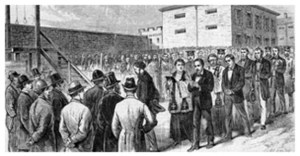
On June 21, 1877, the first ten executions take place. Six Mollies – James Carroll, James Roarity, Hugh McGehan, James Boyle, Thomas Munley, and Thomas Duffy – are hanged in the prison at Pottsville, Pennsylvania. The sheriff hangs them successively two-by-two rather than build special gallows to accommodate six. An immense crowd gathers covering the surrounding hills. Boyle carries a blood-red rose and McGehan has two roses in his lapel. Carrol and Roarity declare their innocence from the scaffold. In County Donegal, McGehan’s relatives meet in the kitchen and, it is said, the sky blackens at the moment of hanging.
On the same date, Alexander Campbell, John “Yellow Jack” Donohue, Michael J. Doyle, and Edward J. Kelly are hanged at a Carbon County prison in Mauch Chunk for the murders of John P. Jones and Morgan Powell, both mine bosses. Here gallows have been erected to accommodate four hangings and the four are hung at the same instant. Campbell, just before his execution, allegedly slaps a muddy handprint on his cell wall stating, “There is proof of my words. That mark of mine will never be wiped out. It will remain forever to shame the county for hanging an innocent man.” The handprint remains to this day.
Ten more condemned, Thomas Fisher, John “Black Jack” Kehoe, Patrick Hester, Peter McHugh, Patrick Tully, Peter McManus, Dennis Donnelly, Martin Bergan, James McDonnell, and Charles Sharpe, are hanged at Mauch Chunk, Pottsville, Bloomsburg, and Sunbury over the next year. Peter McManus is the last Molly Maguire to be tried and convicted for murder at the Northumberland County Courthouse in 1878.
Five Irish J-1 visa students and one Irish American die and seven others are injured in Berkeley, California, on June 16, 2015, after a fourth-floor balcony on which they are standing collapses. Thirteen people fall from the balcony and four are pronounced dead at the scene while two die later at the hospital.
One of the six killed is a dual Irish American citizen, Ashley Donohoe, 22, of Rohnert Park, California. The other five are Olivia Burke (Donohue’s cousin), Eoghan Culligan, Niccolai ‘Nick’ Schuster, Lorcán Miller, and Eimear Walsh, all aged 21 and from Dublin.
In June 2015, Berkeley Mayor Tom Bates promises a broad and wide-ranging investigation into the cause of the accident with the likely cause being that the balcony of the building had not been constructed properly leading to the development of dry rot, leading to the balcony becoming structurally compromised. Overwhelming evidence points to dry rot as the cause of the collapse, and not the weight of the 13 students on it at the time.
TheNew York Times publishes an article reporting the deaths and suggesting the deceased are to blame for the collapse. The paper states that Irish students coming to the U.S. on J-1 visas are an “embarrassment to Ireland.” TaoiseachEnda Kenny and former President Mary McAleese criticise the newspaper for “being insensitive and inaccurate” in its handling of the story. The newspaper subsequently apologizes, although the article remains available at its website.
Alameda County prosecutors open up a criminal investigation on the accident on June 25. They state that involuntary manslaughter charges could be filed. Berkeley District Attorney Nancy O’Malley denies that pressure from the Irish community have led to the collapse inquiry.
On July 3, 2015, the Alameda County Superior Court rejects a restraining order bid against the examination of evidence by construction company Segue Builders. D.A. O’Malley had argued that the granting of a restraining order would amount to an interference in her duty to investigate the tragedy.
In December 2015, a court is told that the collapse happened because contractors cut corners to save costs. It is alleged that Greystar, the management company for the building, ignored a “red flag” when students who rented the apartment complained about the presence of mushrooms growing on the balcony. Legal cases by some of the victims are set to be combined and heard together sometime in 2016.
A joint funeral service for Olivia Burke and her cousin Ashley Donohoe takes place on June 20, four days after the collapse, in a church in Cotati, California. Funeral services are held in Dublin for the remaining victims.
Doyle is born in Killorglin, County Kerry, on October 25, 1869, and emigrates with his family to the United States when he is a child, settling in Holyoke, Massachusetts. After attending Fordham University, Doyle embarks on a baseball career that lasts 70 years. He makes his first appearance at the major league level by signing and playing two years for the Columbus Solons of the American Association. Doyle plays for ten clubs between 1889 and 1905, batting .299 in 1,564 games with 516 stolen bases. He begins as a catcher–outfielder and becomes a first baseman in 1894. His best years are in 1894, when he bats .367 for the New York Giants, and in 1897, when he hits .354 with 62 stolen bases for the Baltimore Orioles.
Because of his aggressive playing style, Doyle is known as “Dirty Jack”, often feuding with umpires, fans, opposing players, and even at times, his own teammates. He carries on a lengthy feud with John McGraw that starts when they are teammates in Baltimore. McGraw, of course, has to have the last word. In 1902, McGraw is appointed manager of the Giants and his first act is to release Doyle, even though he is batting .301 and fielding .991 at the time. Even with these seemingly out-of-control traits, Doyle is deemed a natural leader and is selected as team captain in New York, Brooklyn and Chicago, and serves as an interim manager for the Giants in 1895 and Washington Senators in 1898.
In 1905, after playing one game with the New York Highlanders, Doyle becomes manager of Toledo of the Western Association. One year later, he is named the manager of the Des Moines Champions, so named because they won the league championship the previous year, and they win it again under Doyle’s helm. Following his championship season at Des Moines, he manages Milwaukee in 1907.
In 1908–1909, the only years of his adult life spent outside of baseball, Doyle serves as police commissioner of his hometown of Holyoke. He returns to baseball as an umpire and works in the National League for 42 games in 1911. He later joins the Chicago Cubs as a scout in 1920. He remains in that capacity until his death at age 89 on New Year’s Eve 1958. Doyle is buried at St. Jerome Cemetery in Holyoke.
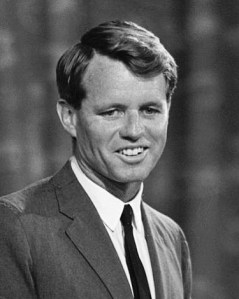
After winning the California and South Dakota primary elections for the Democratic nomination for President of the United States and speaking to supporters in a ballroom at the Ambassador Hotel, Kennedy walks through the kitchen area frequently shaking hands with those he encounters. Kennedy starts down a passageway narrowed by an ice machine against the right wall and a steam table to the left. He turns to his left and shakes hands with busboy Juan Romero just as Sirhan Sirhan, a 24-year-old Palestinian/Jordanian immigrant, steps down from a low tray-stacker beside the ice machine and repeatedly fires what is later identified as a .22 caliber Iver-Johnson Cadet revolver.
After Kennedy had falls to the floor, former FBI agent William Barry sees Sirhan holding a gun and hits him twice in the face while others force Sirhan against the steam table and disarmed him as he continues firing his gun in random directions. Five other people are also wounded.
Kennedy is transferred several blocks to Good Samaritan Hospital for surgery. Surgery begins at 3:12 AM PDT and lasts three hours and 40 minutes. Despite extensive neurosurgery to remove bullet and bone fragments from his brain, his condition remains extremely critical until he dies at 1:44 AM PDT on June 6, nearly 26 hours after the shooting.
Sirhan pleads guilty on April 17, 1969, and is sentenced to death. The sentence is commuted to life in prison in 1972 after the California Supreme Court, in its decision in California v. Anderson, invalidates all pending death sentences imposed in California prior to 1972. Since that time, Sirhan has been denied parole fifteen times and is currently confined at the Richard J. Donovan Correctional Facility in southern San Diego County.
As with his brother’s death, Kennedy’s assassination and the circumstances surrounding it have spawned a variety of conspiracy theories. Kennedy remains one of only two sitting United States Senators to be assassinated, the other being Huey Long.
U.S. President Ronald Reagan visits his ancestral home in Ballyporeen, County Tipperary, on June 3, 1984. Reagan’s great-grandfather, Michael Regan, who later changed the spelling of his name, is baptised in the village in 1829. Around 1851, after the Great Famine, he emigrates to London and ultimately the United States in 1857.
Surrounded by throngs of photographers and security people, Reagan slowly makes his way through the tiny village in the bright green hills of County Tipperary. Speaking to 3,000 applauding and cheering visitors gathered under drizzly skies at the main crossroads of Ballyporeen, Reagan explains that until recently he had never known of his roots because his father had been orphaned before reaching the age of six.
“And now,” Reagan tells the exuberant crowd, “thanks to you and the efforts of good people who have dug into the history of a poor immigrant family, I know at last whence I came. And this has given my soul a new contentment. And it is a joyous feeling. It is like coming home after a long journey.”
Reagan, joined by his wife, Nancy, aides, dignitaries, and townspeople worship at the modest Church of the Assumption in Ballyporeen, where his great-grandfather was supposedly baptized in 1829.
After the service, Reagan makes his way down Church Street, shaking the hands of well-wishers. Amid the handshaking, a marching bagpipe corps plays A Nation Once Again and other patriotic tunes.
At the town center, the Reagans visit the pub run by John O’Farrell, who first capitalizes on the news of the President’s lineage and names his establishment “The Ronald Reagan” in 1981. Reagan unveils a plaque for the President Reagan tourist center that is to be built here. While the building housing the pub still stands, the pub closes in 2004 and the following year its fittings and external signage are transported to the Ronald Reagan Presidential Library in Simi Valley, California, where it still stands today.
There is some opposition to Reagan’s visit to Ireland. Authorities keep approximately 600 protesters behind barriers on the outskirts of the village and they are not permitted into the village until after the presidential party had departed. The main focus of the protesters is toward the Reagan administration’s foreign policy, in particular its support of the Contras in Nicaragua.
First elected Mayor of Baltimore in 1999, O’Malley is re-elected as mayor in 2003. Considering a run for governor in 2002, O’Malley instead focuses on his mayoralty. In 2006, nearing the end of his second term as mayor, O’Malley announces his candidacy for Governor of Maryland, an office he wins by a sizeable margin. He is re-elected by a wider margin in a rematch against Bob Ehrlich in 2010. O’Malley has been seen as a potential presidential candidate since at least November 2012.
O’Malley’s announcement includes a swing at Democratic candidate Hillary Rodham Clinton and Republican candidate Jeb Bush, “Recently, the CEO of Goldman Sachs let his employees know that he’d be just fine with either Bush or Clinton. Well, I’ve got news for the bullies of Wall Street—the presidency is not a crown to be passed back and forth by you between two royal families.”
During his speech, O’Malley cast Baltimore’s recent racial unrest, including a night of riots after the funeral of Freddie Gray who died of injuries sustained in police custody, as a symptom of a larger American problem. “What took place here was not only about race…not only about policing in America. It’s about everything it is supposed to mean to be an American,” he said. “The scourge of hopelessness that happened to ignite here that evening, transcends race or geography.”
O’Malley also takes swings at Wall Street. “Tell me how it is, that you can get pulled over for a broken taillight in our country, but if you wreck the nation’s economy you are untouchable.”
Highlighting his record as Maryland’s governor, O’Malley notes that he supported a successful bid to legalize gay marriage and helped raise the minimum wage.
The first recorded parade honoring the Catholic feast day of St. Patrick, the patron saint of Ireland, is held in New York City on March 17, 1762 – fourteen years before the signing of the Declaration of Independence. The parade is comprised of a band of homesick, Irish ex-patriots and Irish military members serving with the British Army stationed in the colonies in New York. They march to an inn of one John Marshall located near the present-day intersection of Barclay and Church streets in lower Manhattan.
Early Irish settlers to the American colonies, many of whom are indentured servants, bring the Irish tradition of celebrating St. Patrick’s feast day to America. This is at a time when the wearing of green is a sign of Irish pride but is banned in Ireland. In the 1762 parade, participants revel in the freedom to speak Irish, wear green, sing Irish songs, and play the pipes to Irish tunes that are meaningful to the Irish immigrants of the time.
With the dramatic increase of Irish immigrants to the United States in the mid-19th century, the March 17th celebration becomes widespread. Today, across the United States, millions of Americans of Irish ancestry celebrate their cultural identity and history by enjoying Saint Patrick’s Day parades and engaging in general revelry.
Saint Patrick, born in the late 4th century, is one of the most successful Christian missionaries in history. Born in Britain to a Christian family of Roman citizenship, he is taken prisoner at the age of sixteen by a group of Irish raiders during an attack on his family’s estate. They transport him to Ireland where he spends six years in captivity before escaping back to Britain. Believing he has been called by God to Christianize Ireland, he joins the Catholic Church and studies for 15 years before being consecrated as the church’s second missionary to Ireland. Patrick begins his mission to Ireland in 432 and the island is almost entirely Christian at the time of his death in 461.
For the first time in the 230-year history of the New York City St. Patrick’s Day parade, members of an LGBT group, the Irish Lesbian & Gay Organisation, are allowed to march in the parade on March 16, 1991.
New York Mayor David N. Dinkins gives up the traditional lead-off position in the parade and instead marches with the Irish gay group more than two hours later. It marks the first time in memory that a New York City mayor has declined to lead a St. Patrick’s Day Parade.
On March 14, Dinkins agrees to march with the gay group “for reasons we all understand” as part of a compromise to get the group into the parade. The mayor and the 135-member gay group are guests of Division 7 of the Ancient Order of Hibernians, the midtown Manhattan chapter of the fraternal order that sponsors and organizes the parade.
Normally, politicians jockey for high-profile spots in the parade, which is billed as the world’s largest civilian parade. No mayor has ever been in the difficult spot of trying to resolve such a public dispute between Irish American groups, which have long been political powers in New York City, and gay groups, which have gained strength and are an important part of the coalition that helped bring Dinkins to office.
Police officials have 3,100 officers along the parade route to provide security for the estimated one million spectators and 150,000 people marching in the parade. The parade costs the city more than $500,000 in overtime for police, sanitation, traffic, and other employees.
Dinkins is booed for nearly 40 blocks, briefly showered with beer, and dodges two thrown beer cans as he and other elected officials march up Fifth Avenue with the gay Irish group.
Governor Mario M. Cuomo also gives up a place at the front of the parade, marching with a group of handicapped children in wheelchairs that had been denied a place among the bands and bagpipes until they threatened to sue the parade organizers.
As in previous years, some marchers wear green sashes reading, “Free Joe Doherty,” referring to the Irish Republican Army soldier jailed in New York City. Others wear yellow ribbons to honor soldiers returning home from the Persian Gulf war. But the dispute about the homosexuals is the focus for much of the march.
After the parade, Dinkins says although he expected to draw protests for marching with the lesbian and gay group, he is surprised by the depth of anger directed against him and the homosexual marchers. “It was like marching in Birmingham, Alabama during the civil rights movement,” he said. “I knew there would be deep emotions, but I did not anticipate the cowards in the crowd. There was far, far too much negative comment.”
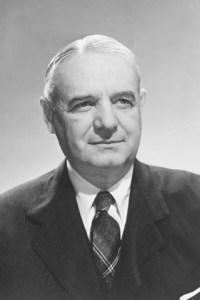
Of Irish descent, Donovan is born in Buffalo, New York, to first generation immigrants Anna Letitia “Tish” Donovan (née Lennon) of Ulster and Timothy P. Donovan of County Cork. His grandfather, Timothy O’Donovan, Sr., is from the town of Skibbereen, and marries Mary Mahoney, who belongs to a propertied family of substantial means who disapprove of him. They move first to Canada and then to New York, where their son Timothy, Jr., Donovan’s father, attempts to engage in a political career but with little success.
William attend St. Joseph’s Collegiate Institute and Niagara University before starring on the football team at Columbia University, where he earns the nickname “Wild Bill”, which remains with him for the rest of his life. He graduates from Columbia in 1905. He then attends and graduates from Columbia Law School, after which he becomes an influential Wall Street lawyer.
In 1912, Donovan forms and leads a troop of cavalry of the New York National Guard, which is mobilized in 1916 and serves on the U.S.-Mexico border during the American government’s campaign against Pancho Villa.
During World War I, Major Donovan organizes and leads the 1st battalion of the 165th Regiment of the 42nd Division. For his service near Landres-et-St. Georges, France, on October 14-15, 1918, he receives the Medal of Honor. By the end of the war, he receives a promotion to colonel, as well as the Distinguished Service Cross and Purple Heart.
Donovan serves as U.S. Attorney for the Western District of New York from 1922 to 1924. Due to his energetic enforcement of Prohibition in the United States, there are a number of threats to assassinate him and to dynamite his home, but he is not deterred. In 1924, President Calvin Coolidge names Donovan to the United States Department of Justice’s Antitrust Division as a deputy assistant to Attorney General Harry M. Daugherty. Donovan runs unsuccessfully for Lieutenant Governor of New York (1922) and for Governor of New York (1932) as a Republican.
During the years between the world wars, Donovan earns the attention and friendship of President Franklin D. Roosevelt. Although the two men were from opposing political parties, they were very similar in personality. In 1940 and 1941, Donovan traveled as an informal emissary to Britain, where he is urged by U.S. Secretary of the Navy Frank Knox and Roosevelt to gauge Britain’s ability to withstand Germany’s aggression. During these trips Donovan meets with key officials in the British war effort, including Winston Churchill and the directors of Britain’s intelligence services. Donovan returns to the U.S. confident of Britain’s chances and enamored of the possibility of founding an American intelligence service modeled on that of the British.
On July 11, 1941, Donovan is named Coordinator of Information (COI) where he is to oversee America’s foreign intelligence organizations which, at the time are fragmented and isolated from each other. He is plagued over the course of the next year with jurisdictional battles as few of the leaders in the intelligence community are willing to part with any of their power. Nevertheless, Donovan begins to lay the groundwork for a centralized intelligence program.
In 1942, the COI becomes the Office of Strategic Services (OSS) and Donovan is returned to active duty in the U.S. Army. He is promoted to brigadier general in March 1943 and to major general in November 1944. Under his leadership the OSS eventually conducts successful espionage and sabotage operations in Europe and parts of Asia. By 1943, relations with the British are becoming increasingly strained, partly due to British concerns that OSS operations are sometimes regarded as ill-disciplined and irresponsibly managed. MI6 chief Stewart Menzies is extremely hostile towards the idea of OSS operations anywhere in the British Empire and categorically forbids them to operate within the U.K.
After the end of World War II and the death of President Roosevelt in early April 1945, Donovan’s political position is substantially weakened as he finds himself opposed by President Harry S. Truman, J. Edgar Hoover, and others. Truman disbands the OSS in September 1945 and Donovan returns to civilian life. Several departments of the OSS survive the dissolution and, less than two years later, the Central Intelligence Agency is founded.
Donovan does not have an official role in the newly formed CIA, but he is instrumental in its formation. His opinions meet strong opposition from the State, War, and Navy Departments, as well as J. Edgar Hoover. President Truman is also unenthusiastic about some of Donovan’s arguments, but he prevails, and they are reflected in the National Security Act of 1947 and the Central Intelligence Agency Act of 1949.
After the end of the war ended, Donovan returns to his lifelong role as a lawyer and serves as special assistant to chief prosecutor Robert H. Jackson at the Nuremberg War Crimes Tribunal in Germany. On August 3, 1953, President Dwight Eisenhower appoints Donovan Ambassador to Thailand, and he serves in that capacity from September 4, 1953, until his resignation on August 21, 1954.
Donovan dies from complications of vascular dementia on February 8, 1959, at the age of 76, at Walter Reed Army Medical Center in Washington, D.C. He is buried in Section 2 of Arlington National Cemetery. President Eisenhower remarks, “What a man! We have lost the last hero.”
Clinton travels frequently to Ireland as First Lady and as U.S. Secretary of State, and often talks about the end of the civil strife, known as The Troubles, as a crowning foreign policy achievement of her husband’s administration. On her visit to Belfast in 2012, she pledges to continue to support peace in Ireland in whatever way possible.
“Hillary Rodham Clinton is one of the unsung heroes of the success of the Irish peace process,” says Niall O’Dowd, publisher of Irish America magazine. “As First Lady, U.S. Senator, and Secretary of State she always gave the issue top priority to help ensure it remained at the top of the U.S. foreign policy agenda. During that historic first trip to Northern Ireland with Bill Clinton in 1995, which I was privileged to be on, she galvanized women’s groups on both sides by meeting with them, shaping their agenda, and making sure they always had a friend in the U.S. administration. More than that, she constantly stayed involved, never giving up her focus on bringing an end to Europe’s longest conflict at the time.”
On the eve of St. Patrick’s Day, Clinton delivers the keynote address at the luncheon in Manhattan of high profile Irish-Americans who each year honor elected officials and others. She describes sitting at a table in Belfast, over cups of tea, with women from both sides of the conflict and watching as they discover how much they share.
She does not portray herself as instrumental to the Good Friday Agreement that President Clinton brokered in 1998, but says her outreach to women in Belfast on multiple visits during that period had played a critical role.
“You cannot bring peace and security to people just by signing an agreement,” she says. “In fact, most peace agreements don’t last.” She says that when “the work of peace permeates down to the kitchen table, to the backyard, to the neighborhood, around cups of tea, there’s a much greater chance the agreement will hold.”
Previous inductees into the Irish America Hall of Fame include former President John F. Kennedy, former President Bill Clinton, Vice President Joseph R. Biden, Jr., and former Maryland Governor Martin O’Malley, who addressed the luncheon in 2014 in a mix of English and Irish.



 U.S. President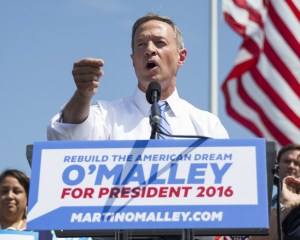


 On February 2, 2015, Irish America magazine announces that
  seamus dubhghaill