seamus dubhghaill

Promoting Irish Culture and History from Little Rock, Arkansas, USA


Leave a comment

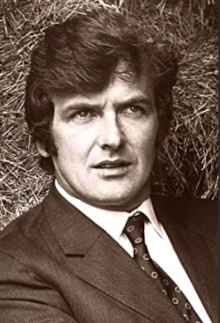
Birth of Brendan O’Reilly, Athlete, Journalist, Actor & Singer

Brendan O’Reilly, Olympic high jumper, journalist, actor, singer-songwriter, is born on May 14, 1929, in Granard, County Longford.

O’Reilly is one of six children of James P. O’Reilly, shopkeeper and musician, and Catherine O’Reilly (née Donegan). The family moves to Dublin when he is nine years old. He is educated at the Christian Brothers school in James’s Street, where he excels at Gaelic football and develops an interest in drama and music. Toward the end of his schooldays, he begins to participate in athletics, particularly the high jump, and is coached by Jack Sweeney, a leading athletics coach.

Always a man of many talents and interests, after leaving school O’Reilly combines working in the insurance business with an athletics career with Donore Harriers and evening drama classes. He wins several Irish titles, including the high jump, javelin, and decathlon, and sets a national record in the high jump. In 1954 he wins the British AAA Championships high jump title, beating the Commonwealth champion into second place, and setting a championship record of 6 ft. 5 in. (1.96 m). As a result, he secures a United States athletics scholarship to the University of Michigan, Ann Arbor, where he takes a degree in liberal arts, majoring in speech and drama. While at Michigan he improves his Irish record to 6 ft. 7 in. (2.007 m). His athletic career, however, is dogged with bad luck. He is selected to compete in the high jump at the European Athletics Championships in Bern, Switzerland, in 1954 but fractures an ankle in practice and fails to advance beyond the qualifying round. Although he competes at international level for ten years (1952–62), he is unlucky to never take part in the Olympic Games. A victim of sporting politics in 1952, as an NCAA athlete he is not entitled to compete. He is selected for the 1956 Summer Olympics in Melbourne but is unable to attend when, at the last minute, his club cannot provide the finance for him to attend. Earlier that year he wins the Big Ten Conference high jump title.

On leaving Michigan O’Reilly moves to New York City, where he embarks on an acting career with the Irish Players, but he returns to Dublin in 1959, where, after brief spells working as a teacher and for an advertising agency, he applies to Ireland’s new television station for a position. He is looking for an acting job but ends up being offered a position as a presenter, joining Teilifís Éireann in 1961 as an announcer/interviewer. His relaxed and unobtrusive style appeals to viewers and his light entertainment show, The Life of O’Reilly, is the most popular programme on Irish television in the day, eclipsing even a fledgling The Late Late Show. It is as a sports presenter and commentator, however, that O’Reilly is primarily remembered, as he becomes the face of sport on RTÉ Television for many years. He attends five Olympic Games as a broadcaster, from Mexico in 1968 to Los Angeles in 1984, commentating on athletics and gymnastics. The first presenter of RTÉ’s flagship Saturday afternoon sports programme Sports Stadium in 1984, he continues to present it over its fourteen-year life, co-presenting the final programme in December 1997. He also is the regular presenter of RTÉ’s Wimbledon Championships tennis coverage for many years, the sports results on news broadcasts on TV and radio, and Sunday Sport on RTÉ Radio, as well as commentating on individual sports such as ice-skating.

Although sports presenting is a natural progression for an athlete with his talents, O’Reilly’s real love is the arts. He continues to act, playing the part of Detective Inspector Michael Roarke in the classic children’s film Flight of the Doves (1971) with Ron Moody and Willie Rushton. He is also an accomplished singer and songwriter, and writes and performs his own one-man show, Across the Spectrum, comprising his own poems and songs in 1992. As well as a book of poems, The Great Explosion (1977), he releases a number of albums and tops the charts with his own song, “The Ballad of Michael Collins,” in 1981. He has a great admiration for Michael Collins, and this leads to his becoming the first non-political figure to give the oration at the annual Collins commemoration at Béal na Bláth, County Cork, in 1981. He also writes the song “Let the Nations Play” (1985), inspired by the boycotts of the Olympic games of 1980 and 1984, and the song is adopted as an anthem of the international Olympic movement.

Tall and slim in build, O’Relly is affable, modest, and self-deprecating in character. His relaxed style is no mere public affectation. He often exasperates colleagues by turning up just in time for broadcasts, and his ability to ad-lib is important in a live television environment. He once describes himself as “a champion high-jumper who could enunciate properly and keep my hair neatly combed” (The Irish Times, April 7, 2001). Despite the disappointments in his sporting career, he maintains that his other interests more than compensated. In relation to the Olympics he is quoted as saying, “If you asked me whether I’d have preferred to win a medal or have written the song, I’d honestly say I would have preferred to have written the song” (Longford Leader, April 6, 2001).

O’Reilly lives in Ranelagh, Dublin, and is married twice. He meets his first wife Linda Herbst (née Kuhl) in New York in the late 1950s. His second marriage is to Johanna Lowry. He has four children. After a lengthy illness, he dies on April 1, 2001, in St. Vincent’s Hospital, Fairview, Dublin. He is buried at Mount Venus cemetery, Rathfarnham.

(From: “O’Reilly, Brendan” by Jim Shanahan, Dictionary of Irish Biography, http://www.dib.ie, October 2009)


Leave a comment

Death of Brendan O’Reilly, Athlete, Journalist, Actor & Singer

Brendan O’Reilly, Olympic high jumper, journalist, actor, singer-songwriter, dies in Dublin on April 1, 2001.

O’Reilly is born on May 14, 1929, in Granard, County Longford, one of six children of James P. O’Reilly, shopkeeper and musician, and Catherine O’Reilly (née Donegan). The family moves to Dublin when he is nine years old. He is educated at the Christian Brothers school in James’s Street, where he excels at Gaelic football and develops an interest in drama and music. Toward the end of his schooldays, he begins to participate in athletics, particularly the high jump, and is coached by Jack Sweeney, a leading athletics coach.

Always a man of many talents and interests, after leaving school O’Reilly combines working in the insurance business with an athletics career with Donore Harriers and evening drama classes. He wins several Irish titles, including the high jump, javelin, and decathlon, and sets a national record in the high jump. In 1954 he wins the British AAA Championships high jump title, beating the Commonwealth champion into second place, and setting a championship record of 6 ft. 5 in. (1.96 m). As a result, he secures a United States athletics scholarship to the University of Michigan, Ann Arbor, where he takes a degree in liberal arts, majoring in speech and drama. While at Michigan he improves his Irish record to 6 ft. 7 in. (2.007 m). His athletic career, however, is dogged with bad luck. He is selected to compete in the high jump at the European Athletics Championships in Bern, Switzerland, in 1954 but fractures an ankle in practice and fails to advance beyond the qualifying round. Although he competes at international level for ten years (1952–62), he is unlucky to never take part in the Olympic Games. A victim of sporting politics in 1952, as an NCAA athlete he is not entitled to compete. He is selected for the 1956 Summer Olympics in Melbourne but is unable to attend when, at the last minute, his club cannot provide the finance for him to attend. Earlier that year he wins the Big Ten Conference high jump title.

On leaving Michigan O’Reilly moves to New York City, where he embarks on an acting career with the Irish Players, but he returns to Dublin in 1959, where, after brief spells working as a teacher and for an advertising agency, he applies to Ireland’s new television station for a position. He is looking for an acting job but ends up being offered a position as a presenter, joining Teilifís Éireann in 1961 as an announcer/interviewer. His relaxed and unobtrusive style appeals to viewers and his light entertainment show, The Life of O’Reilly, is the most popular programme on Irish television in the day, eclipsing even a fledgling The Late Late Show. It is as a sports presenter and commentator, however, that O’Reilly is primarily remembered, as he becomes the face of sport on RTÉ Television for many years. He attends five Olympic Games as a broadcaster, from Mexico in 1968 to Los Angeles in 1984, commentating on athletics and gymnastics. The first presenter of RTÉ’s flagship Saturday afternoon sports programme Sports Stadium in 1984, he continues to present it over its fourteen-year life, co-presenting the final programme in December 1997. He also is the regular presenter of RTÉ’s Wimbledon Championships tennis coverage for many years, the sports results on news broadcasts on TV and radio, and Sunday Sport on RTÉ Radio, as well as commentating on individual sports such as ice-skating.

Although sports presenting is a natural progression for an athlete with his talents, O’Reilly’s real love is the arts. He continues to act, playing the part of Detective Inspector Michael Roarke in the classic children’s film Flight of the Doves (1971) with Ron Moody and Willie Rushton. He is also an accomplished singer and songwriter, and writes and performs his own one-man show, Across the Spectrum, comprising his own poems and songs in 1992. As well as a book of poems, The Great Explosion (1977), he releases a number of albums and tops the charts with his own song, “The Ballad of Michael Collins,” in 1981. He has a great admiration for Michael Collins, and this leads to his becoming the first non-political figure to give the oration at the annual Collins commemoration at Béal na Bláth, County Cork, in 1981. He also writes the song “Let the Nations Play” (1985), inspired by the boycotts of the Olympic games of 1980 and 1984, and the song is adopted as an anthem of the international Olympic movement.

Tall and slim in build, O’Relly is affable, modest, and self-deprecating in character. His relaxed style is no mere public affectation. He often exasperates colleagues by turning up just in time for broadcasts, and his ability to ad-lib is important in a live television environment. He once describes himself as “a champion high jumper who could enunciate properly and keep my hair neatly combed” (The Irish Times, April 7, 2001). Despite the disappointments in his sporting career, he maintains that his other interests more than compensated. In relation to the Olympics he is quoted as saying, “If you asked me whether I’d have preferred to win a medal or have written the song, I’d honestly say I would have preferred to have written the song” (Longford Leader, April 6, 2001).

O’Reilly lives in Ranelagh, Dublin, and is married twice. He meets his first wife Linda Herbst (née Kuhl) in New York in the late 1950s. His second marriage is to Johanna Lowry. He has four children. After a lenghty illness, he dies on April 1, 2001, in St. Vincent’s Hospital, Fairview, Dublin. He is buried at Mount Venus cemetery, Rathfarnham.

(From: “O’Reilly, Brendan” by Jim Shanahan, Dictionary of Irish Biography, http://www.dib.ie, October 2009)


Leave a comment

Birth of Maeve Kyle, Olympic Athlete & Hockey Player

Maeve Esther Enid Kyle, OBE, Irish Olympic athlete and hockey player, is born Maeve Esther Enid Shankey in County Kilkenny on October 6, 1928.

Kyle briefly attends Kilkenny College where her father C.G. Shankey is headmaster, before attending Alexandra College and finally, Trinity College, Dublin. She is the granddaughter of William Thrift.

Kyle competes in the 100m and 200m in the 1956 Summer Olympics in Melbourne, Australia, and subsequently in the 1960 Summer Olympics in Rome, Italy, and the 1964 Summer Olympics in Tokyo, Japan, where she reaches the semi-finals of both the 400m and 800m. She takes the bronze medal in the 400m at the 1966 European Athletics Indoor Championships in Dortmund, Germany. She wins four gold medals in W45 Category at the 1977 World Masters Athletics Championships in Gothenburg, Sweden, in the 100m, 400m, high jump and long jump. She holds World Masters records at W40 for the 100m (12:00 secs) and 400m (55.30 secs) and W45 100m (12.50 secs) and W50 long jump at 5.04m.

In field hockey, Kyle gains 58 Irish caps as well as representing three of the four Irish provinces (Leinster, Munster and Ulster) at different stages of her career. She is named in the World All Star team in 1953 and 1959. She is also a competitor in tennis, swimming, sailing and cricket and works as a coach. She is chair of Coaching NI. In 2006, she is awarded the honorary degree of Doctor of the University (DUniv) from the University of Ulster.

Kyle is awarded the Lifetime Achievement Award at the 2006 Coaching Awards in London in recognition of her work with athletes at the Ballymena and Antrim Athletics Club. Earlier in 2006 she is one of 10 players who are initially installed into Irish hockey’s Hall of Fame. She is appointed Officer of the Order of the British Empire (OBE) in the 2008 New Year Honours.


Leave a comment

Birth of Michael Carruth, Olympic Boxing Gold Medalist

Michael Carruth, a southpaw Irish Olympic boxer, is born in Dublin on July 9, 1967. He is best known for winning the welterweight gold medal at the 1992 Summer Olympics in Barcelona, Spain. He turns Pro in 1994 but retires in 2000.

Boxing as a lightweight at the 1988 Summer Olympics in Seoul, South Korea, following a bye in the first round, Carruth defeats Satoru Higashi of Japan before being defeated by George Scott of Sweden.

In the 1992 Summer Olympics in Barcelona, Carruth steps up to the welterweight class. Following a bye in the round of 32, he defeats Mikaele Masoe of American Samoa on points in the round of 16. He defeats Andreas Otto of Germany on points in the quarterfinals and Arkhom Chenglai of Thailand in the semi-final. In the final he defeats Juan Hernández Sierra of Cuba on points.

Carruth’s medal is Ireland’s first ever gold medal in boxing, only a couple of hours after teammate Wayne McCullough has to settle for the silver in bantamweight. It is also the first Olympic gold medal for Ireland since Ron Delany won the Men’s 1500m event at the 1956 Summer Olympics in Melbourne, Australia.

Within a few days of Carruth winning his Olympic medal the Government of Ireland announces that he has been instantly promoted to sergeant within the Irish Army in recognition of his achievement at the Olympics. And, on the day of his return to Ireland, local pubs drop the price of beer to that of 1956.

Carruth turns pro in 1994 after taking leave from his job as a soldier in the Irish Army. He is trained by former Irish boxing great Steve Collins. He has limited success as a pro, losing in both of his defining pro bouts: in 1997 against Mihai Leu for the World Boxing Organization (WBO) Welterweight title and in 2000 against Adrian Stone for the International Boxing Organization (IBO) Light Middleweight title. He retires in 2000, after the loss to Stone, with a career professional record of 18-3-0.

In 2006, Carruth competes on the TV series Celebrity Jigs ‘n’ Reels. He serves as an expert boxing analyst for RTÉ‘s Olympic coverage in 2008, 2012 and 2016. In 2020, he appears in the fourth season of the Irish edition of Dancing with the Stars. He and his professional partner, Karen Byrne, are eliminated on February 3, 2020.

During his short spell as senior Westmeath county football team manager, Brendan Hackett appoints Carruth as masseur in 2009.


Leave a comment

Birth of Ron Delany, Olympic Gold Medalist

ron-delany

Ronald Michael Delany, athlete who specialises in middle distance running, is born in Arklow, County Wicklow on March 6, 1935. He wins a gold medal in the 1500 metres event at the 1956 Summer Olympics in Melbourne. He later earns a bronze medal in the 1500 metres event at the 1958 European Athletics Championships in Stockholm.

Delany moves with his family to Sandymount, Dublin 4 when he is six. He later goes to Sandymount High School and then to Catholic University School. He studies commerce and finance at Villanova University in the United States. While there he is coached by the well-known track coach James F. “Jumbo” Elliott.

Delany’s first achievement of note is reaching the final of the 800 metres at the 1954 European Athletics Championships in Bern. In 1956, he becomes the seventh runner to join the club of four-minute milers but nonetheless struggles to make the Irish team for the 1956 Summer Olympics, held in Melbourne.

Delany qualifies for the Olympic 1500 metres final, in which local runner John Landy is the big favourite. Delany keeps close to Landy until the final lap, when he starts a crushing final sprint, winning the race in a new Olympic record. He thereby becomes the first Irishman to win an Olympic gold medal in athletics since Bob Tisdall in 1932. The Irish people learn of its new champion at breakfast time. He would be Ireland’s last Olympic champion for 36 years, until Michael Carruth wins the gold medal in boxing at the 1992 Summer Olympics in Barcelona.

Delany wins the bronze medal in the 1500 metres event at the 1958 European Athletics Championships. He goes on to represent Ireland once again at the 1960 Summer Olympics held in Rome, this time in the 800 metres. He finishes sixth in his quarter-final heat.

Delany continues his running career in North America, winning four successive Amateur Athletic Union (AAU) titles in the mile, adding to his total of four Irish national titles, and three NCAA titles. He is next to unbeatable on indoor tracks over that period, which includes a 40-race winning streak. He breaks the World Indoor Mile Record on three occasions. In 1961 he wins the gold medal in the World University Games in Sofia, Bulgaria.

Delany retires from competitive running in 1962, securing his status as Ireland’s most recognisable Olympian as well as one of the greatest sportsmen and international ambassadors in his country’s history.